

TL;DR:
- Effective forklift safety training requires hands-on, site-specific instruction delivered by well-trained internal instructors. Implementing a structured train the trainer program enhances compliance, builds safety culture, and reduces incident risk. Investing in peer-led, scenario-based training yields long-term safety and operational benefits that surpass external contractor approaches.
Most safety professionals assume a good online module or a vendor-led seminar is enough to keep their forklift operation compliant. The reality is more complicated. Effective forklift safety doesn’t live in a video library or a printed handout. It lives on the warehouse floor, in the hands of someone your operators actually trust and work beside every day. Train the trainer programs exist to put that knowledge exactly where it belongs, and the organizations that build them correctly see dramatically better results than those that don’t.
| Point | Details |
|---|---|
| Multiply training impact | Train the trainer programs let you scale expert knowledge throughout your workplace quickly and effectively. |
| Meet OSHA requirements | Certified trainers ensure your forklift operators get compliant, high-retention safety instruction. |
| Boost safety outcomes | Interactive, hands-on training led by internal trainers results in fewer workplace incidents and better engagement. |
| Customize to site hazards | In-house trainers adapt instruction to local risks, making safety programs much more effective. |
A train the trainer program is exactly what it sounds like: a structured process that certifies your own employees to deliver forklift safety training to their peers. Instead of calling in an outside vendor every quarter or relying on a static e-learning course, you build in-house capacity. Your certified trainer understands your facility layout, your equipment quirks, and the informal habits your operators have developed over time. That local knowledge is worth more than any generic script.
The difference between passive and active learning is significant in this context. Consider two approaches to forklift training delivery methods:
| Training method | Learner engagement | Knowledge retention | Site specificity | Cost over time |
|---|---|---|---|---|
| Video/lecture-based | Low | Low to moderate | None | Recurring vendor fees |
| Online modules only | Moderate | Moderate | Limited | Subscription costs |
| In-house train the trainer | High | High | Strong | Lower after setup |
| Blended with peer instruction | Very high | Very high | Strong | Most efficient long-term |
This comparison matters because hands-on training boosts learning outcomes and engagement far more than video or lecture alone in safety training. When operators learn from someone standing next to the actual equipment, demonstrating a real maneuver, the lesson sticks. Abstract concepts become concrete. Mistakes become teachable moments rather than compliance checkboxes.
Here’s what a well-built train the trainer program typically delivers:
Think about the real impact of hands-on training on operator confidence. When a new hire is taught by a coworker who runs the same dock doors they’ll operate tomorrow, anxiety drops and competence builds faster. That’s not theory. That’s what peer-led instruction does when it’s structured well.
OSHA standard 29 CFR 1910.178(l) is specific: forklift operators must be trained and evaluated by personnel with the knowledge, training, and experience to train and evaluate operators. That phrase “knowledge, training, and experience” is where many companies get into trouble. Simply designating a senior operator as the trainer doesn’t satisfy that requirement unless they’ve been formally trained on how to train.
A certified train the trainer program fills that gap. It creates a documented, scalable pool of qualified instructors who can legally sign off on operator certifications. For HR managers overseeing multiple shifts or multiple facilities, this scalability is a practical necessity. Waiting on an outside trainer to schedule a site visit every time you hire a new operator is neither efficient nor compliant.
Here’s a practical compliance checklist for HR managers building or auditing a train the trainer system:
Notice that Step 4 specifically addresses site-specific hazards. This is where OSHA training cuts incidents significantly compared to generic programs. When your trainer knows that the loading dock in Bay 3 has a visibility issue on Tuesday mornings due to truck delivery angles, that knowledge gets incorporated into training. An outside vendor will never know that.
Following a structured lift certification process also keeps your documentation airtight. OSHA inspectors don’t just look for evidence that training happened. They look for evidence that it was thorough, site-specific, and conducted by someone qualified to do it. A train the trainer program covers all three of those requirements when implemented correctly.
Pro Tip: Rotate your certified trainers between departments or facilities periodically. A trainer who only ever works in the freezer storage unit will develop blind spots about hazards in the shipping yard. Cross-site exposure builds broader hazard recognition and makes your entire trainer team more effective.
Not every train the trainer program delivers equal results. The features you build into your program, or demand from a provider, determine how much real safety improvement you actually get. Here’s what separates the programs that change behavior from the ones that just generate paperwork.
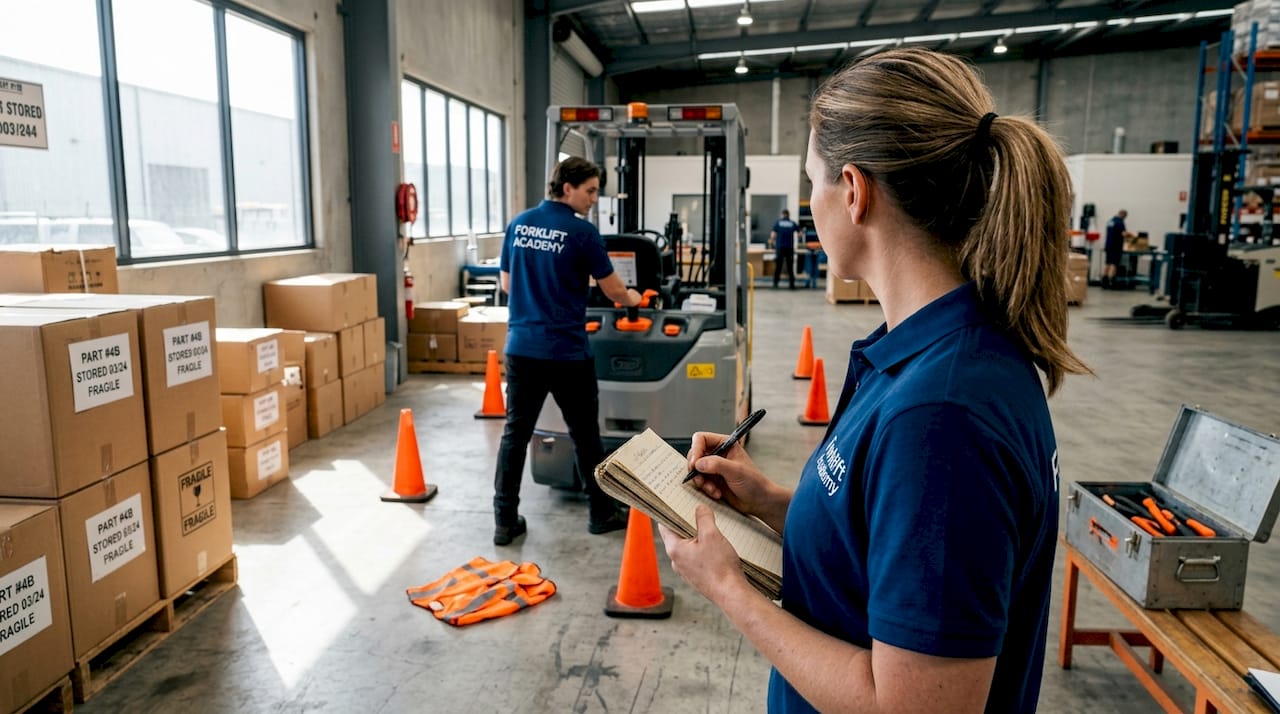
Scenario-based learning is non-negotiable. Trainers should practice delivering instruction through realistic situations, not just reciting rules. A scenario might involve a simulated pedestrian entering a forklift lane, a load that’s unbalanced, or a narrow aisle with limited sight lines. When trainers practice these scenarios themselves, they become far more effective at guiding operators through them.
Site-specific adaptation matters more than most people realize. Trainers need site-specific knowledge such as cold storage traction challenges, and rotating trainers across environments builds broader hazard recognition. A standardized presentation that doesn’t account for your facility’s actual conditions is a wasted opportunity. Good programs build in a customization step where trainers document and address the unique risks of their specific site.
Regular trainer evaluations keep quality high. Even experienced trainers develop habits or drift from best practices. Build in an annual review where a senior safety officer or program administrator observes the trainer in action and provides structured feedback. This keeps instruction sharp and catches any gaps before they affect operator performance.
Here are the features worth prioritizing when you evaluate any program:
A common pitfall is over-reliance on standardized slide presentations. These modules are useful as a starting point, but trainers who lean on them too heavily miss the local hazards that cause real accidents. The hands-on training advantages for employers are most visible when trainers step away from the slides and take operators to the actual equipment.
“The most dangerous moment in forklift safety is when operators believe they’ve learned everything they need to know from a screen.”
That reality is why the best programs invest in training methods for compliance that are interactive, iterative, and grounded in the physical environment where operators actually work.
Pro Tip: Build a monthly review of recent incident reports into your trainer team’s routine. Near-misses and minor incidents are early warning signals. When trainers analyze them together, they identify training gaps before those gaps become injuries or OSHA violations.
Understanding what makes a program effective sets you up for success when putting it all into practice. Here’s how to bring these lessons to your workplace.
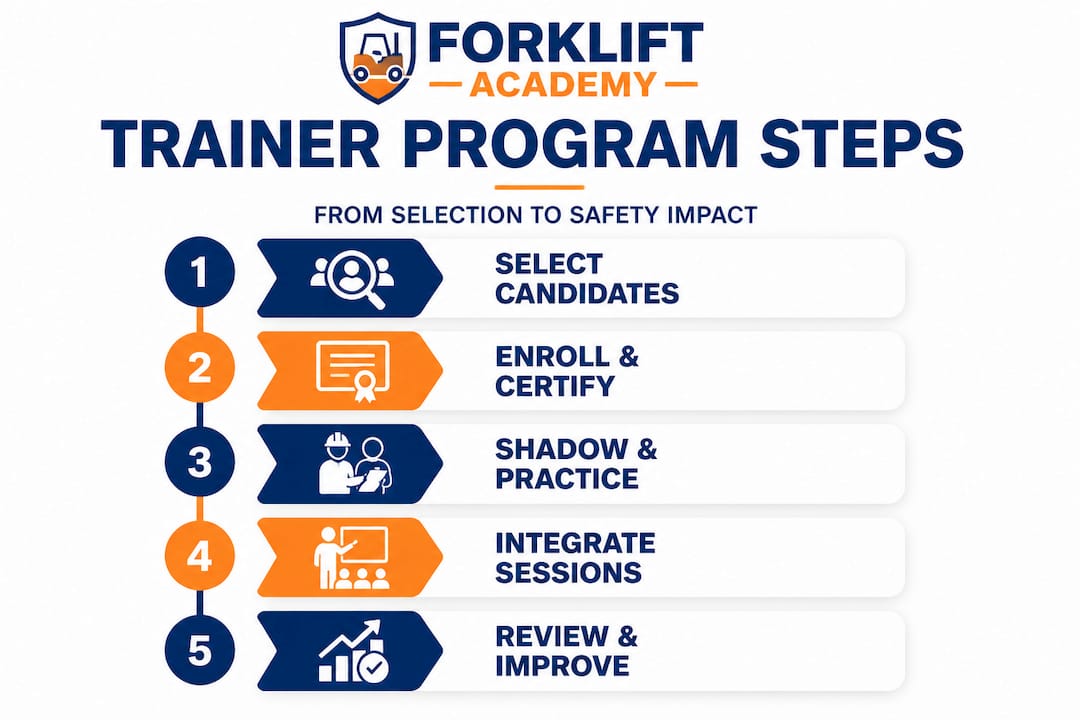
Step 1: Select the right trainer candidates. Look for employees who already demonstrate strong safety habits, communicate clearly, and earn the respect of their coworkers. Technical knowledge matters, but so does the ability to explain and demonstrate under pressure. A trainer who is technically skilled but can’t connect with learners will struggle to change behavior.
Step 2: Enroll candidates in a certified program. A structured onsite training for OSHA compliance program provides the formal credentialing that OSHA requires and gives your candidates the instructional skills they need. Look for programs that cover not just forklift operation standards but also adult learning principles, evaluation techniques, and documentation requirements.
Step 3: Transition from classroom to floor gradually. New trainers benefit from a shadow period where they observe an experienced trainer before running sessions independently. Follow that with a co-facilitation phase where they lead a session while a mentor observes and debriefs. This structured transition builds confidence without dropping new trainers into high-stakes situations unprepared.
Step 4: Integrate trainer sessions into your broader safety program. Forklift training shouldn’t exist in isolation. Connect it to your incident reporting system, your pre-shift inspection protocols, and your emergency response procedures. When trainers see their work as part of a larger safety ecosystem, they approach it with greater purpose.
Step 5: Monitor outcomes and adapt. Track key indicators including incident rates, near-miss reports, operator evaluation scores, and time to competency for new hires. Hands-on interactive methods consistently produce better outcomes, but only when programs are actively monitored and refined. If incident rates aren’t improving after six months, review your trainer evaluations and session content before assuming the problem is with the operators.
Here’s an ongoing sustainability checklist for your safety program:
Building a sustainable system also means planning for boosting safety and efficiency over time. The initial investment in trainer certification pays off quickly when you eliminate recurring vendor fees and reduce the administrative burden of managing outside training contracts.
Here’s an uncomfortable observation after more than two decades in forklift safety education: most HR and safety leads know that peer-led training is more effective, and they still choose a vendor contract or a generic online module because it feels like less work upfront. That trade-off is a false economy, and the accident reports prove it.
What external training almost never addresses is the informal behavior on your floor. The shortcuts operators take when they think no one is watching. The workarounds that become habits because a standard procedure doesn’t account for a specific equipment quirk. An internal trainer sees those behaviors every shift. They’re positioned to correct them in real time, before a near-miss becomes a fatality.
There’s also a trust dynamic that outside trainers can never replicate. When your operator community sees a respected coworker step into the trainer role, safety knowledge becomes a shared value rather than a compliance obligation. That shift in perception is what drives sustainable behavior change. Rules that come from above are often resented. Lessons that come from peers are absorbed.
The companies that build the strongest safety cultures don’t outsource that culture. They invest in technology in forklift training and in the people who can translate that technology into real-world skills on the floor. Internal trainers are the bridge between what your safety program says and what your operators actually do.
The organizations that resist this investment often cite cost or complexity. But the cost of a single serious forklift incident, including OSHA fines, workers’ compensation, legal exposure, and productivity loss, dwarfs the investment in a well-built train the trainer program many times over.
Building a strong train the trainer program starts with the right foundation, and that’s where Forklift Academy steps in.
Forklift Academy offers a fully structured online train the trainer program designed to certify your internal trainers quickly and keep your operation OSHA-compliant. Whether you need flexible online delivery or onsite instruction, the resources are there to match your team’s needs. You can also walk through the complete OSHA lift certification process to understand exactly what documentation and evaluation steps are required. For a full picture of what your organization needs to stay compliant, the guide on OSHA forklift certification requirements breaks it down clearly so your HR and safety teams can act with confidence.
It is a certification program that trains employees to become qualified instructors who deliver peer-to-peer forklift safety training within their own organization. These programs cover both forklift operation standards and instructional techniques, ensuring that interactive training methods are built into every session the internal trainer conducts.
OSHA does not mandate in-house trainers specifically, but it does require that forklift operators be trained and evaluated by personnel with the knowledge and experience to do so effectively. Certified in-house trainers satisfy this requirement while also bringing site-specific knowledge that outside vendors typically lack.
Trainers should update their credentials whenever OSHA revises relevant standards or when your workplace introduces new equipment, workflows, or identified hazards. Annual reviews of trainer performance are a best practice regardless of regulatory changes.
Programs that prioritize hands-on scenario-based learning combined with site-specific content customization consistently produce the strongest safety improvements. Peer-driven instruction and regular trainer evaluations are also key differentiators between programs that change behavior and those that simply check a box.