
TL;DR:
- Structured forklift safety programs can reduce incidents by 60-75 percent.
- Effective safety requires daily inspections, proper training, and a strong safety culture.
- Compliance with OSHA and CSA standards includes training, inspections, and ongoing documentation.
Forklift operations carry more risk than most people realize. Facilities that skip structured safety programs don’t just face fines; they face injuries, lawsuits, and shutdowns. The good news is that facilities with consistent programs see a 60-75% drop in incidents and equipment damage. That’s not a minor improvement. That’s a fundamental shift in how a workplace functions. This article breaks down the real cost of neglecting forklift safety, what U.S. and Canadian regulations actually require, and what your safety program needs to deliver results that go beyond paperwork.
Table of Contents
- The true cost of neglecting workplace safety
- What regulations really require: U.S. and Canada compared
- How effective safety programs deliver results
- Key practices for a safer workplace
- Why safety culture beats box-checking compliance
- Take your next step to a safer workplace
- Frequently asked questions
Key Takeaways
| Point | Details |
|---|---|
| Cost of unsafe practices | Ignoring safety leads to injury, fines, and lost productivity. |
| Legal requirements | Both OSHA and CSA/OHS require trained operators, inspections, and compliance. |
| Program effectiveness | Structured safety programs can dramatically reduce incidents. |
| Key safety practices | Daily checks, regular training, and open reporting create safer workplaces. |
| Safety culture matters | Long-term success comes from engaged teams, not just compliance. |
The true cost of neglecting workplace safety
Understanding why safety matters starts by seeing what’s at stake when safety is ignored. Most business owners think about fines first. But the financial hit from a single forklift incident goes much deeper than a regulatory penalty.
Consider the visible costs: medical bills, equipment repair, workers’ compensation claims, and legal fees. Then consider the hidden ones: lost productivity while an investigation runs, overtime to cover for an injured worker, retraining costs, and the long-term hit to your insurance premiums. One serious incident can easily cost a mid-sized operation six figures when all of it is added up.
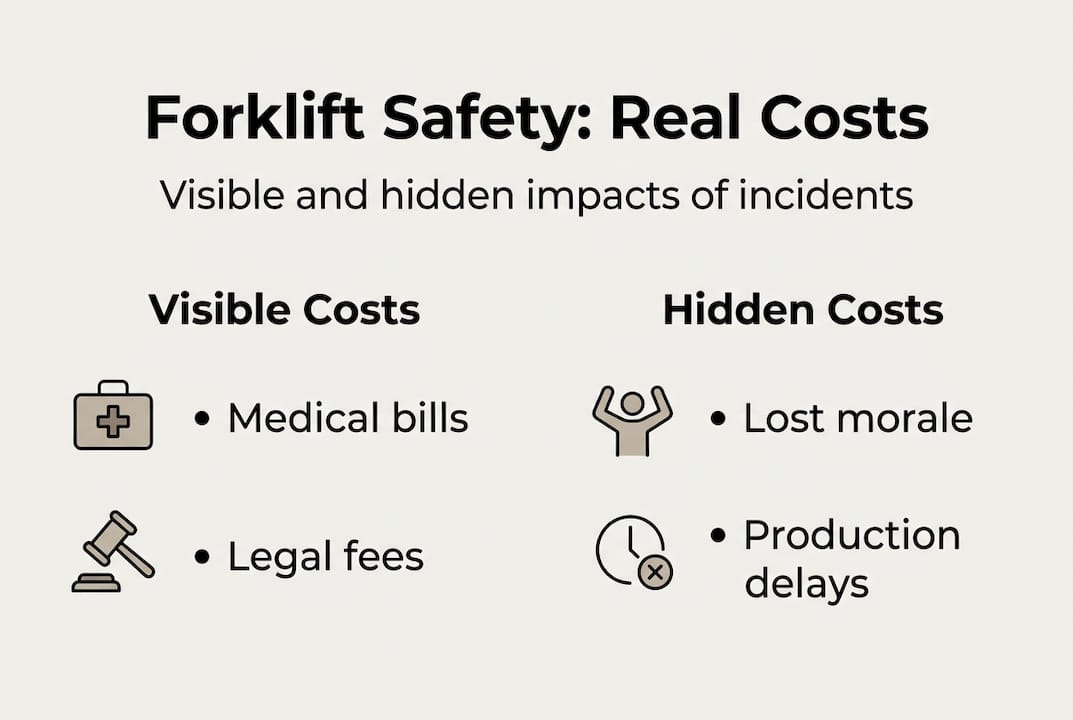
The human cost is just as significant. Forklift incidents cause significant financial and human loss annually across North American workplaces. Injuries don’t just affect the worker involved. They affect morale, trust, and your ability to retain skilled staff. A workforce that doesn’t feel safe doesn’t perform at its best.
Here’s what’s actually at risk when safety is neglected:
- Worker injuries and fatalities, which carry both legal and moral weight
- Equipment damage, which disrupts operations and triggers costly repairs
- OSHA citations and fines, which can reach tens of thousands of dollars per violation
- Increased insurance premiums, which compound costs over years
- Reputational damage, which affects your ability to attract clients and talent
- Business interruption, which can cascade into contract losses
In the U.S., OSHA enforces forklift standards under 29 CFR 1910.178. In Canada, provincial Occupational Health and Safety (OHS) regulations and CSA standards apply. Both frameworks carry real enforcement teeth. Willful violations in the U.S. can result in penalties exceeding $15,000 per instance. Repeat violations cost even more.
“One preventable incident doesn’t just hurt one worker. It can unravel years of operational stability.”
The smartest incident prevention strategies treat safety as a business investment, not a cost center. When you frame it that way, the math becomes obvious: prevention is always cheaper than response.
What regulations really require: U.S. and Canada compared
With the risks clear, the next step is understanding the rules you must follow. Both U.S. and Canadian regulations are more specific than many managers realize.
OSHA sets the standard for forklift operation and training in the U.S., while CSA B335-15 and provincial OHS define requirements in Canada. Both frameworks share core elements, but the details matter.
| Requirement | OSHA (U.S.) | CSA/OHS (Canada) |
|---|---|---|
| Formal operator training | Required | Required |
| Practical evaluation | Required | Required |
| Pre-shift inspection | Required | Required |
| Recertification cycle | Every 3 years | Varies by province |
| Written records | Required | Required |
| Trainer qualifications | Must be competent | Must be competent |
Both systems require training that covers formal instruction, practical hands-on evaluation, and a workplace-specific assessment. Neither accepts online-only training as a complete solution. Operators must demonstrate they can actually handle the equipment safely in their specific environment.
Here’s what a fully compliant program must include:
- Formal instruction covering operating procedures, safety rules, and hazard awareness
- Practical training on the actual equipment the operator will use
- Operator evaluation conducted by a qualified trainer
- Pre-shift inspections documented before every shift
- Recertification every three years or after any incident or observed unsafe behavior
- Workplace-specific training that accounts for your facility’s unique layout and hazards
Provinces in Canada may layer additional requirements on top of the CSA baseline. Alberta, Ontario, and British Columbia each have their own OHS codes that add specifics around documentation and trainer credentials. Use a forklift compliance checklist to make sure you’re covering both the federal and regional requirements that apply to your location.
Check your forklift inspection requirements carefully. Daily pre-shift inspections are non-negotiable in both countries.
Pro Tip: Compliance isn’t a once-a-year event. Inspectors look for ongoing documentation, not just a binder that gets updated before audit season. Consistent daily records are your strongest defense.
How effective safety programs deliver results
Knowing the laws is only part of the story; making safety real comes from your program’s effectiveness. The difference between a compliant workplace and a truly safe one comes down to how the program runs day to day.
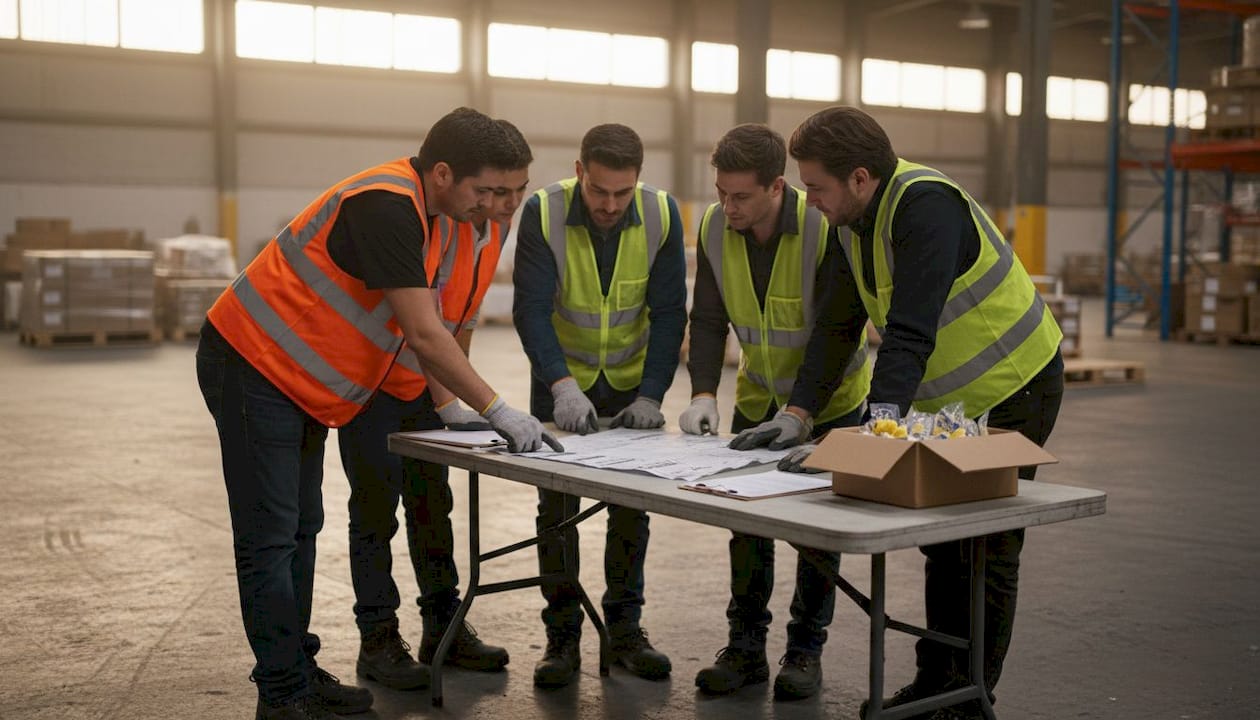
Consistent safety programs can reduce forklift-related incidents by 60-75%. That kind of result doesn’t happen by accident. It comes from specific program elements working together.
| Program element | Impact on safety outcomes |
|---|---|
| Daily pre-shift checklists | Catches mechanical issues before they cause incidents |
| Clearly marked traffic lanes | Reduces pedestrian and vehicle conflicts |
| Hands-on refresher training | Reinforces correct habits and corrects drift |
| Incident review process | Identifies root causes and prevents recurrence |
| Peer observation protocols | Surfaces unsafe behaviors that supervisors miss |
Every one of these elements contributes to a measurable reduction in risk. The programs that see the biggest improvements aren’t just checking boxes. They’re building systems that catch problems before they escalate.
A strong safety program must include:
- Hands-on training on the specific equipment and environment operators work in
- Clear written protocols for loading, unloading, speed limits, and pedestrian zones
- Incident review meetings that focus on learning, not blame
- Regular equipment maintenance documented and tracked
- Refresher training triggered by incidents, near-misses, or performance observations
These warehouse safety tips aren’t complicated. What makes them effective is consistency. A safety program that runs well 80% of the time still leaves significant exposure.
Pro Tip: Peer observation is one of the most underused tools in forklift safety. When operators watch each other and give structured feedback, they catch risks that supervisors and cameras miss entirely. Build it into your monthly routine.
Strong hazard awareness strategies also account for changing conditions: new seasonal workers, facility layout changes, and equipment upgrades all create new risk windows that your program needs to address proactively.
Key practices for a safer workplace
Effective results are built through everyday actions; here’s what to prioritize. These practices are not theoretical. They are the specific actions that separate high-performing safety programs from ones that only look good on paper.
- Conduct pre-shift inspections every day. Operators should check brakes, steering, tires, lights, forks, and fluid levels before every shift. Document it every time.
- Enforce traffic patterns strictly. Mark pedestrian lanes clearly and enforce them. Mixed foot and vehicle traffic is one of the leading causes of forklift incidents.
- Run refresher training after any incident or near-miss. Don’t wait for the three-year recertification cycle. Address unsafe behavior the moment it appears.
- Maintain equipment on a scheduled basis. Reactive maintenance is more expensive and more dangerous than scheduled upkeep.
- Build a reporting culture. Operators who feel safe reporting near-misses give you the data you need to prevent actual incidents.
Effective programs use daily checklists, clearly segregate foot and vehicle traffic, and conduct refreshers as a standard part of operations, not just after something goes wrong.
Additional practices to lock in both safety and compliance:
- Keep certification records updated and accessible for every operator
- Post speed limits and load capacity ratings visibly throughout the facility
- Schedule quarterly safety meetings that include operators, not just managers
- Review near-miss reports within 24 hours and document corrective actions
- Audit your forklift safety rules against current OSHA standards at least once per year
Each of these practices reinforces the others. When your OSHA compliance is built into daily operations rather than treated as a separate task, it stops feeling like a burden and starts functioning as a business advantage.
Why safety culture beats box-checking compliance
Here’s the uncomfortable truth most safety consultants won’t say directly: a workplace that treats compliance as the goal will always underperform one that treats safety as a value.
When your team follows safety rules because they fear an OSHA fine, the rules get followed when someone is watching. When they follow them because they genuinely believe safety protects their coworkers, the rules get followed all the time. That distinction is where the real results live.
Leadership attitude shapes everything. If managers cut corners under pressure, operators learn that safety is optional when things get busy. If leadership treats forklift-related hazards as a serious operational concern, that attitude filters down to every shift.
The workplaces with the best safety records also tend to have lower turnover, stronger morale, and better productivity. Safety culture and business performance aren’t in tension. They reinforce each other. The best investment you can make isn’t a new piece of equipment. It’s building a team that looks out for each other.
Take your next step to a safer workplace
If you’re ready to raise safety standards, here’s where to start. Forklift Academy has spent over 20 years helping businesses across the U.S. and Canada build training programs that meet and exceed OSHA and CSA requirements.
Whether you need forklift certification for your business or want to build internal capacity with a train the trainer program, we have solutions that fit your operation. Online access means your team can get certified regardless of location or shift schedule. Use our OSHA compliance guide to map your current program against what’s required and identify the gaps. Getting started now reduces legal exposure and puts you on the path to the kind of safety outcomes that actually protect your people.
Frequently asked questions
What are the minimum forklift safety requirements in the U.S.?
OSHA 29 CFR 1910.178 requires formal operator training, a practical hands-on evaluation, daily pre-shift inspections, and certification that must be renewed every three years. Individual states may add requirements on top of the federal baseline.
How often do forklift operators need to be recertified?
OSHA certification is valid for three years, but recertification is also required after an incident, after an operator switches to a different type of equipment, or when unsafe behavior is observed. Don’t wait for the three-year mark if performance issues arise earlier.
Are forklift safety standards in Canada different from the U.S.?
CSA B335-15 and provincial OHS laws mirror many OSHA requirements but include regional variations in documentation, trainer credentials, and recertification timelines. Both systems require training, inspections, and demonstrated operator competency.
What results can we expect from structured safety programs?
Benchmarked companies saw a 60-75% reduction in incidents and equipment damage after implementing consistent safety programs. The programs that deliver these results combine daily inspections, hands-on training, and a strong reporting culture.
Recommended
- Workplace forklift safety: OSHA compliance explained – Top Osha Forklift Certification
- Warehouse Safety: Reduce Forklift Risks & OSHA Compliance – Top Osha Forklift Certification
- Forklift incident prevention: reduce warehouse risks – Top Osha Forklift Certification
- Master forklift safety rules: essential guide for warehouses – Top Osha Forklift Certification