

TL;DR:
- Forklift accidents cause high fatalities and injuries, resulting in substantial direct and indirect costs that threaten operational stability. Investing in safety training and technology yields significant returns through reduced incidents, improved productivity, and regulatory compliance, protecting the bottom line. Building a safety culture with proactive tracking of near misses and hazards ensures long-term risk mitigation and operational excellence.
Forklift accidents are expensive in ways most business owners never see coming. The question of why invest in forklift safety is not about compliance checkboxes or regulatory headaches. It is about protecting your bottom line, your workforce, and your ability to operate without interruption. Forklift accidents cause approximately 85 to 100 fatalities and 35,000 to 62,000 serious injuries annually in the U.S. Those numbers represent real financial exposure sitting inside your facility right now. This article breaks down what those risks actually cost, what safety investments return, and how to build a program that pays for itself.
| Point | Details |
|---|---|
| Accidents carry hidden costs | Indirect costs of forklift incidents can be 4 to 10 times greater than direct medical expenses alone. |
| Training delivers measurable ROI | Every $1 invested in forklift safety training returns $4 to $6 in avoided costs and productivity gains. |
| Compliance protects your budget | Powered industrial trucks rank in OSHA’s Top 10 violations, and proactive investment prevents costly citations. |
| Technology multiplies safety gains | Proximity sensors and pre-shift inspection programs can prevent the majority of forklift incidents before they happen. |
| Culture sustains long-term results | Tracking near misses and hazard elimination rates separates facilities with lasting safety gains from reactive ones. |
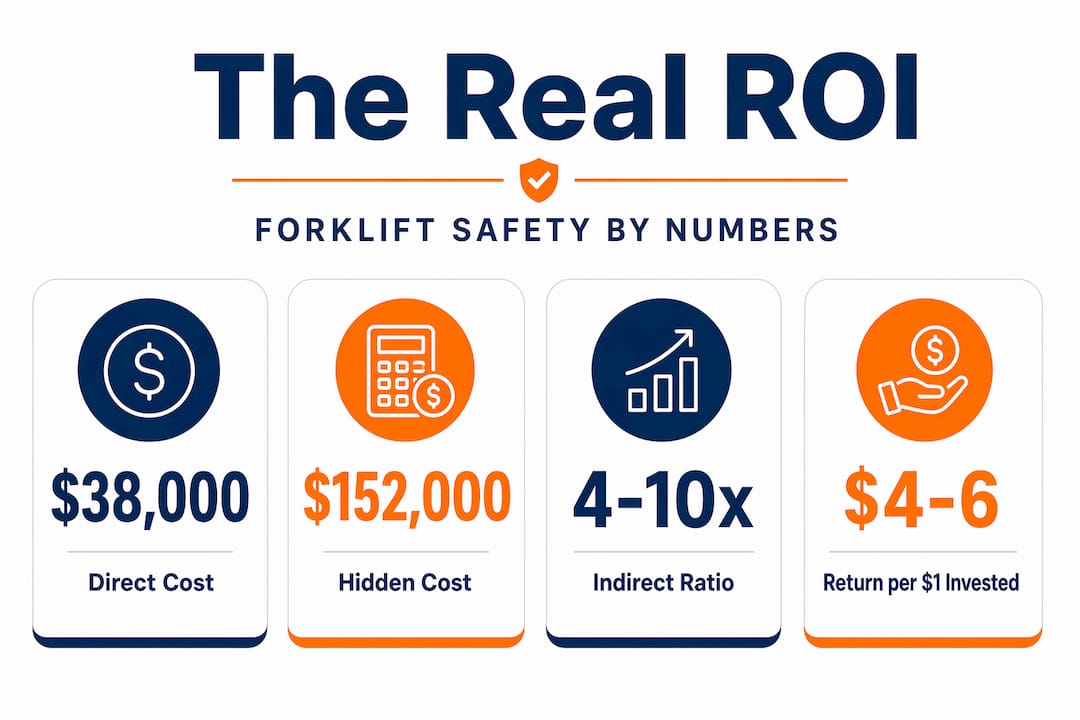
Most managers track direct accident costs: the emergency room bill, the workers’ comp claim, the damaged pallet rack. What rarely appears in a budget meeting is the full picture. Indirect costs can be 4 to 10 times greater than direct medical expenses. Investigation time, supervisor hours pulled from production, equipment repairs, workflow disruptions, and rising insurance premiums all accumulate in the months and years after a single incident.
The average direct cost of a forklift incident runs around $38,000. Multiply that by a hidden cost ratio of 4x to 10x, and a single accident can expose your operation to $150,000 or more in total impact. That figure does not include reputational damage, contract losses from delayed shipments, or the cost of recruiting and training a replacement worker.
Here is what the data looks like on frequency and severity:
| Accident type | Share of incidents | Key impact |
|---|---|---|
| Tip-overs | 24 to 42% of incidents | Fatalities, equipment loss |
| Pedestrian strikes | 36% of fatalities | Severe injury, OSHA scrutiny |
| Falling loads | Significant portion | Worker injury, product damage |
| DART cases | 40,513 annually | Sustained operational disruption |
Forklift-related incidents result in an average of 16+ days off work per injury, meaning a single serious event can knock out an experienced operator for weeks. Add overtime costs for coverage, the productivity gap from an inexperienced fill-in, and you are looking at compounding losses that stretch far beyond the original incident.
“The real financial impact of forklift incidents includes hidden indirect costs such as investigation time, equipment repairs, lost productivity, and long-term increased insurance premiums, often overshadowing direct costs.” — Justifying Forklift Safety Investment
Understanding the cost of forklift accidents at this level changes the conversation entirely. Safety stops being an overhead line item and starts looking like the most underfunded risk-reduction tool in your operation. You can explore specific incident prevention strategies to see where your facility is most exposed.
OSHA’s standards for powered industrial trucks are not suggestions. Powered industrial trucks ranked 6th in OSHA’s Top 10 violations list, generating thousands of citations annually. A citation is not just a fine. It triggers follow-up inspections, creates documented liability in future litigation, and signals to your workforce that leadership is not serious about their safety.
Investing in safety training changes that trajectory. Certified operator training reduces accident rates, improves operator confidence, and creates a documented record of due diligence that protects the company legally. Forklift safety training improves productivity by up to 30% and reduces insurance costs by 15 to 20%. Trained operators move loads more efficiently, make fewer handling errors, and require less supervisory oversight over time.
Beyond training, physical safety technology produces measurable results:
Each of these investments addresses a specific, documented cause of forklift incidents. They are not theoretical. They target the exact failure modes that OSHA citations and injury reports consistently identify. For a structured look at what compliance requirements apply to your facility, the OSHA forklift compliance checklist covers the current federal standards in detail.
Pro Tip: Document every training session, equipment inspection, and safety upgrade. That paper trail is your first line of defense in an OSHA audit or workers’ comp dispute.
The financial case for investing in safety training becomes clear when you work through the numbers. Every $1 invested in effective forklift safety training yields $4 to $6 in avoided costs. That return comes from multiple directions simultaneously: fewer accidents, lower insurance premiums, reduced downtime, less equipment damage, and higher throughput from better-trained operators.
Here is how to frame the business case in practical terms:
| Metric | Before training | After training |
|---|---|---|
| Annual accident rate | Baseline | 30% to 50% reduction |
| Insurance premiums | Baseline | 15 to 20% lower |
| Operator productivity | Baseline | Up to 30% improvement |
| OSHA violation risk | High | Substantially reduced |
Pro Tip: Run a pilot safety program on one shift or one equipment class first. Collect 90 days of incident and productivity data, then present that data to leadership as the basis for a full facility rollout. Numbers close budget discussions faster than arguments do.
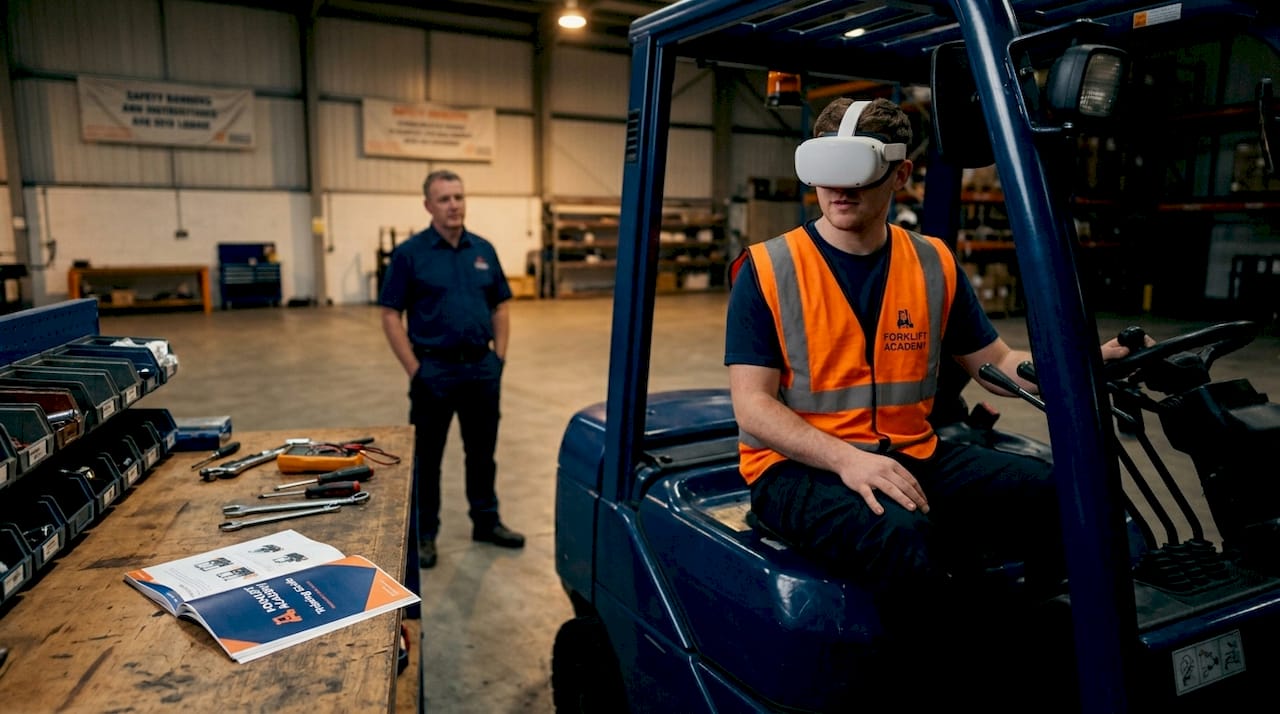
One technology worth noting: VR and AR training improves retention by 75% compared to traditional methods, and in one mining industry case study cut training time from 8 hours to 2 while reducing injuries by 43%. Immersive training is not a luxury item. For high-turnover environments, it is a cost reducer.
Numbers drive initial investment decisions. Culture is what keeps those investments delivering returns over time. Successful companies view safety expenditures as strategic investments that protect profit margins by developing a confident, healthy workforce, not as costs to be minimized.
The distinction between a reactive safety program and a mature one comes down to what you measure. Most operations track lagging indicators: injury counts, DART cases, workers’ comp claims. These tell you what already went wrong. Leading indicators tell you what is about to go wrong.
Leading indicators like near-miss reporting and hazard elimination rates provide early warnings that enable proactive safety management. Track these consistently and you start catching problems before they become incidents.
Practically, this means:
“A strong safety culture reduces turnover and fosters employee engagement, enhancing long-term operational performance.” — Justifying Forklift Safety Investment
When your workforce sees leadership actively tracking near misses and closing hazards, they understand that safety is a real organizational priority. That perception drives voluntary compliance, hazard reporting, and the kind of peer accountability that no training program alone can manufacture.
Getting started does not require a complete program overhaul on day one. A phased approach lets you demonstrate results quickly and build internal support for larger investments.
Pro Tip: Tie your safety program metrics directly to operational KPIs your leadership already tracks. Frame safety investment outcomes in terms of uptime, throughput, and labor cost, not just injury rates.
I have watched operations run lean on safety spending until the incident that changes everything. An operator is seriously hurt. A fatality investigation begins. Insurance premiums spike. OSHA opens an inspection. Leadership scrambles to certify everyone and upgrade equipment in the aftermath. The cost is staggering, and the whole thing was preventable.
What strikes me most is that the resistance to investing in safety almost never comes from malice. It comes from a genuine belief that the facility is running fine and that the risk is theoretical. The problem is that forklift accidents are not distributed evenly. Some facilities run years without a serious incident and then cluster three events in one quarter. The risk is always present. What varies is when it surfaces.
The companies I find most impressive treat safety spending the way they treat equipment maintenance. They do not wait for a breakdown to justify the cost. They build it into operations because preventing failure is always cheaper than responding to it. That mindset shift from reactive to proactive is where the real return on forklift safety investment comes from.
My advice to any manager reading this: do not wait for your incident. Run your current accident cost numbers, price out a certification program, and present the ROI case to leadership before something forces your hand.
— Juiced
Forkliftacademy has spent over 20 years building OSHA-compliant forklift certification programs specifically for warehouse and industrial operations like yours. Whether you need to certify a single operator or build internal training capacity across a large facility, the programs are structured to deliver compliance without pulling your team off the floor for days.
The OSHA forklift certification course is available online, making it practical for busy operations to complete on a schedule that works. For managers who want to build long-term training capacity in-house, the train-the-trainer program enables your own staff to certify operators on an ongoing basis, reducing per-operator training costs significantly over time. Both options include the documentation your operation needs for OSHA compliance and audit readiness. Getting certified is the single most direct step you can take today to reduce risk, lower insurance costs, and keep your workforce operating safely.
The average direct cost of a forklift incident is approximately $38,000, but indirect costs including investigation, downtime, and insurance increases can push the total to $150,000 or more per event.
Every $1 invested in effective forklift safety training returns $4 to $6 in avoided costs, according to safety industry research tracking accident reduction, productivity gains, and insurance savings.
Forklift accidents generate 85 to 100 fatalities and up to 62,000 serious injuries annually in the U.S., making them one of the highest-impact and most preventable operational risks in any warehouse environment.
Certified training creates documented proof of operator competency, directly addressing OSHA’s powered industrial truck standards, which consistently rank among the top 10 most cited workplace violations.
Near-miss reports, hazard elimination completion rates, and pre-shift inspection compliance rates are the most effective leading indicators for identifying risks before they become reportable incidents.