
TL;DR:
- Proper forklift training reduces accidents by teaching operators to recognize hazards and handle loads safely. It ensures OSHA compliance, lowers insurance costs, and enhances workplace morale and productivity. Investing in ongoing training creates a safer, more efficient, and more reliable workforce over time.
Forklift accidents happen more often than most employers expect, and the root cause is almost always the same. Most forklift accidents stem from operator error, including unsafe turns, speeding, and poor load handling linked directly to deficient training. The benefits of forklift training go well beyond checking a regulatory box. For businesses and individuals alike, proper training means fewer injuries, lower costs, stronger compliance with OSHA standards, and a workforce that operates with real confidence. This article breaks down exactly what you gain when training is taken seriously.
Table of Contents
- Key takeaways
- 1. Benefits of forklift training: reduced accidents and injuries
- 2. Ensuring OSHA compliance and avoiding serious penalties
- 3. Improved operational efficiency and productivity
- 4. Lower insurance premiums and operational costs
- 5. Stronger employee morale and workplace culture
- 6. Better use of equipment and fewer costly mistakes
- 7. Side-by-side look at the core benefits
- My honest take on why most companies underinvest in training
- Get your operators certified with Forkliftacademy
- FAQ
Key takeaways
| Point | Details |
|---|---|
| Safety improves immediately | Trained operators recognize hazards and avoid the errors that cause tip-overs and pedestrian strikes. |
| OSHA compliance protects the business | Certification satisfies OSHA 1910.178 requirements and shields employers from significant fines and legal exposure. |
| Productivity rises with skill | Skilled forklift operators reduce delays, equipment damage, and costly downtime across the operation. |
| Insurance costs drop | Documented training programs lead to fewer workers’ compensation claims and more favorable insurer assessments. |
| Morale and retention improve | Investing in operator training signals respect for worker safety and reduces costly employee turnover. |
1. Benefits of forklift training: reduced accidents and injuries
No other benefit lands harder than this one. Tip-overs cause 24 to 42% of forklift incidents, and pedestrian strikes account for 36% of forklift fatalities. Both of these outcomes are overwhelmingly tied to operators who were never properly trained.
Forklift training teaches operators to recognize the specific conditions that lead to these incidents before they happen. That includes understanding load weight limits, proper turning speeds, blind spot awareness, and how to communicate clearly with pedestrians sharing the workspace. These are not instincts. They are learned behaviors.
The role of forklift training in accident prevention also connects to a broader warehouse safety strategy that includes physical barriers and technology. When operators know what to look for, active and passive safety systems work far better because the human and environmental controls reinforce each other.
Key hazards that structured training addresses:
- Tip-overs caused by improper load positioning or excessive speed on turns
- Pedestrian strikes in high-traffic warehouse areas without proper communication
- Unsafe load handling that shifts center of gravity unexpectedly
- Visibility errors when operating in reverse or around blind corners
Pro Tip: Train operators on the specific forklift types and workplace environments they will actually use. Generic training alone does not account for the hazards unique to your facility layout.
2. Ensuring OSHA compliance and avoiding serious penalties
OSHA standard 1910.178 is not optional, and the consequences of ignoring it are not minor. Employers can face criminal liability in extreme cases for allowing uncertified operators to run powered industrial trucks. Civil fines alone can reach tens of thousands of dollars per violation.
The compliance requirements cover more than initial certification. OSHA mandates that certification is renewed every three years, and refresher training is required any time an operator is observed operating unsafely, is involved in an accident, or receives an evaluation that reveals deficiencies. Understanding the importance of forklift operator training means understanding that compliance is an ongoing process, not a one-time event.
Proper documentation is equally critical. Benefits of OSHA forklift training extend to your record-keeping. When an incident occurs and regulators investigate, the first thing they request is training records. Companies with current, organized documentation consistently fare better in inspections and audits.
What solid OSHA compliance documentation looks like:
- Signed training completion records for every certified operator
- Records of the trainer’s qualifications, including importance of certified forklift trainers on your team
- Documentation of the specific equipment types each operator is cleared to use
- Refresher training logs tied to incident reports or scheduled evaluations
3. Improved operational efficiency and productivity
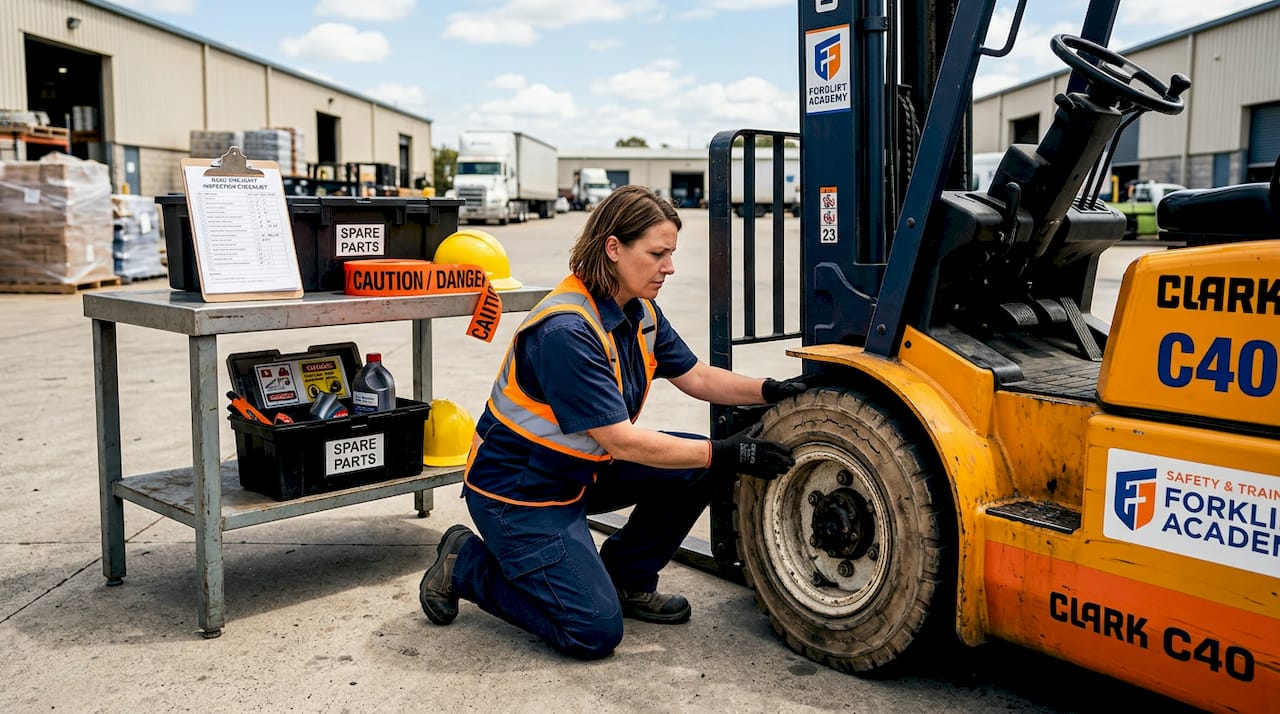
Efficiency gains from training are real, measurable, and often underestimated. Trained operators handle loads correctly the first time. They maneuver through tight warehouse aisles with precision. They complete pre-shift inspections without being reminded. Each of these behaviors compounds over an eight-hour shift into meaningful time savings.
Trained operators perform pre-shift checks and handle loads with proper technique, which directly reduces equipment breakdowns and repair delays. When a forklift is out of service for repairs that proper operation would have prevented, the entire workflow suffers. Downtime is expensive in ways that rarely appear on a single line item.
The importance of forklift operator training also shows up in how operators adapt to different equipment types and attachments. A trained operator switching from a counterbalance truck to a reach truck does not need to figure things out on the floor. That flexibility keeps operations moving during staffing shifts or peak demand periods.
Pro Tip: Pair operator training with brief team briefings at the start of each shift. A two-minute review of the day’s hazards or workflow changes keeps trained behavior sharp and situationally aware.
Training also builds operator confidence. Confident operators make faster, safer decisions in tight situations, which keeps the entire facility moving at pace without the hesitation that causes bottlenecks.
4. Lower insurance premiums and operational costs
Insurance underwriters pay attention to your safety programs. Documented training programs result in lower workers’ comp claims and more favorable reviews from insurers, which translates directly into reduced premiums over time. This is not a theory. Businesses that demonstrate consistent training and updated certification records are treated differently by carriers.
The financial case for why you should train forklift operators goes deeper than insurance premiums:
- Fewer accidents mean fewer medical expenses, legal fees, and OSHA fines
- Reduced equipment damage lowers repair and replacement budgets
- Less downtime from breakdowns or incident investigations keeps revenue flowing
- Lower turnover from a safer, more satisfied workforce reduces recruitment costs
The math is straightforward. A single forklift accident involving a serious injury can cost hundreds of thousands of dollars when you factor in medical costs, equipment damage, lost productivity, regulatory fines, and increased insurance rates. A comprehensive training program costs a fraction of that. The question is not whether training is worth it. The question is why any business would delay it.
5. Stronger employee morale and workplace culture
When a company invests in forklift training, it sends a message that is not subtle. Workers notice when their employer takes their safety seriously, and that perception directly affects how engaged they are on the job. Safety culture transformations driven by supervisor involvement and training programs consistently improve accident rates and near-miss reporting.
Operators who feel confident and valued show up differently. They report hazards instead of ignoring them. They follow procedures instead of cutting corners. They stay. High turnover in warehouse and logistics roles is a persistent problem, and organizations that prioritize safety see measurably better employee engagement and retention.
There is also a reputational dimension that many businesses overlook. Clients, partners, and prospective employees pay attention to how a company manages workplace safety. A track record of certifications, low incident rates, and transparent training programs positions your business as one that can be trusted to operate responsibly. That matters in contract negotiations, facility audits, and attracting skilled labor in a competitive hiring market.
6. Better use of equipment and fewer costly mistakes
One of the most practical advantages of forklift certification is that operators stop misusing equipment, often without realizing they ever were. Untrained operators routinely overload forks, travel with loads elevated, or use the wrong forklift type for a given task. Each of these behaviors accelerates equipment wear and creates significant accident risk.
Training programs that combine classroom instruction with practical evaluation produce the most consistent results. Operators learn not only the rules but the reasons behind them, which means they apply the correct behavior in situations that do not look exactly like the training scenario. That transfer of knowledge is what separates genuinely prepared operators from those who passed a checklist.
Understanding the common forklift hazards in your specific environment also becomes part of how trained operators think. They assess the surface condition before moving a load. They check clearances before entering a rack aisle. These habits, built through structured training, protect both the equipment and the people working nearby.
7. Side-by-side look at the core benefits
Seeing these benefits laid out together helps you prioritize where training has the most immediate impact for your operation.
| Benefit | Primary impact | Who gains most |
|---|---|---|
| Reduced accidents and injuries | Fewer fatalities, injuries, near-misses | All workers in the facility |
| OSHA compliance | Avoidance of fines, legal liability | Employers, safety managers |
| Operational efficiency | Faster throughput, less downtime | Operations and logistics teams |
| Lower insurance and costs | Reduced premiums, fewer claims | Finance and ownership |
| Employee morale and retention | Lower turnover, higher engagement | HR and team managers |
| Better equipment use | Longer equipment life, fewer repairs | Maintenance and operations |
Every one of these benefits overlaps with the others. Better-trained operators drive safer, which reduces accidents, which lowers insurance costs, which improves profitability, which funds better training. The cycle reinforces itself once it starts.
My honest take on why most companies underinvest in training
I’ve watched businesses approach forklift training the same way they approach fire drills: do the minimum required, document it, and move on. I understand the pressure. Training takes time, costs money, and the benefits are not always visible until something goes wrong.
But here’s what I’ve learned after years of observing how safety programs perform in the real world. The companies that treat training as a recurring commitment rather than a compliance obligation consistently look different. Their incident rates are lower, yes. But their operators also work faster, their equipment lasts longer, and their safety managers spend less time on reactive crisis management.
The misconception I hear most often is that forklift training setup is complicated and disruptive. It does not have to be. Modern OSHA-compliant programs are designed to fit around real operational schedules. Going beyond the minimum, meaning treating evaluation and refresher training as genuine learning moments rather than paperwork exercises, is where the real return appears.
The businesses that get the most out of forklift certification are the ones that see it as a performance investment, not a regulatory burden.
— Juiced
Get your operators certified with Forkliftacademy
If you’re ready to act on what this article covers, Forkliftacademy makes it straightforward. With over 20 years of experience delivering OSHA-compliant programs across the U.S. and Canada, the platform offers flexible options built for real operational demands. Whether you need to certify a single operator or build an internal training infrastructure for your entire facility, there’s a path that fits.
For companies looking to run training in-house, the Train the Trainer program gives your designated trainer the credentials and tools to certify your workforce on your schedule. For broader organizational compliance, explore Forkliftacademy’s business certification options to find the right fit for your team size and equipment types. Getting compliant does not have to be complicated when the right resources are already built for you.
FAQ
What are the main benefits of forklift training?
The core benefits of forklift training include reduced workplace accidents, OSHA compliance, improved productivity, lower insurance costs, and stronger employee retention. Trained operators make fewer errors and help the entire facility run more safely and efficiently.
Why does forklift training matter for OSHA compliance?
OSHA standard 1910.178 requires all forklift operators to be trained, certified, and evaluated at least every three years. Without current documentation, employers face significant fines and potential criminal liability for allowing uncertified operators to work.
How often do forklift operators need to be recertified?
Forklift certification must be renewed every three years under OSHA regulations. Refresher training is also required after any observed unsafe operation, workplace incident, or evaluation that reveals a performance gap.
Does forklift training actually reduce insurance costs?
Yes. Businesses with documented forklift training programs and low incident records consistently receive more favorable assessments from insurance carriers, resulting in lower workers’ compensation premiums and reduced liability exposure over time.
Why should companies go beyond the minimum training requirements?
Operators who receive thorough, practical training perform better, make faster decisions in complex situations, and report hazards proactively. Organizations that treat training as ongoing development rather than a one-time compliance step see the strongest long-term gains in safety and productivity.
Recommended
- Role of Trainers in Forklift Safety: Cut 35,000 Injuries – Top Osha Forklift Certification
- Top 6 Advantages of Hands-On Forklift Training for Employers – Top Osha Forklift Certification
- Hands-On Forklift Training: Real Impact on Safety – Top Osha Forklift Certification
- Cost Vs. Benefit: The ROI Of Forklift Training For Businesses – Top Osha Forklift Certification