
Warehouse managers face mounting pressure to maintain OSHA forklift compliance while juggling operational demands and worker safety. Daily pre-operation inspections per 29 CFR 1910.178(q)(7) are mandatory, yet incomplete documentation and missed checks expose facilities to accidents, fines, and liability. A comprehensive checklist transforms compliance from a reactive burden into a proactive safety culture, streamlining inspections and protecting your team. This guide delivers the essential framework warehouse managers need to build bulletproof forklift safety protocols that satisfy OSHA requirements and reduce workplace incidents.
Table of Contents
- 1. OSHA Criteria For Forklift Inspections And Safety
- 2. Detailed Forklift Pre-Operation Checklist Items
- 3. Safe Forklift Operating Practices For Load Handling
- 4. Advanced Considerations: Vehicle Variants And Technology Impacts
- Enhance Your OSHA Forklift Compliance With Expert Training
Key takeaways
| Point | Details |
|---|---|
| Daily inspections required | OSHA mandates pre-operation checks before every shift to verify forklift safety and functionality. |
| Critical components to verify | Brakes, tires, hydraulics, forks, mast, safety devices, and data plate must pass inspection standards. |
| Load handling protocols | Carry loads 4-6 inches off ground with mast tilted back, never exceeding rated capacity. |
| Documentation is mandatory | Inspection logs and training records must be retained for 1-3 years per OSHA regulations. |
| Technology enhances accuracy | Digital checklists and AI systems eliminate pencil whipping and detect unsafe operator behaviors. |
1. OSHA criteria for forklift inspections and safety
OSHA establishes clear regulatory criteria that warehouse managers must follow to maintain compliant forklift operations. Understanding these foundational requirements helps you build inspection protocols that protect workers and satisfy federal auditors.
OSHA requires daily inspections before each shift under 29 CFR 1910.178(q)(7). This regulation applies to all powered industrial trucks regardless of facility size or industry. Inspections must cover operational safety elements and mechanical integrity to identify defects before operators start work.
Core components demand systematic verification. Tires must show adequate tread depth and no visible damage. Brakes require functional testing for both service and parking systems. Steering mechanisms need smooth operation without excessive play. Hydraulic systems must maintain pressure without leaks. Forks cannot have cracks, bends, or wear exceeding 10% of original thickness. The mast assembly requires inspection for structural integrity and proper chain tension. Safety devices including horns, lights, backup alarms, and seatbelts must function correctly. The data plate must remain legible to confirm load capacity ratings.
Documentation transforms inspections from checkbox exercises into legal compliance records. You must maintain written logs that identify the forklift, date, inspector name, items checked, and any defects found. Forklift inspection procedures detail how to structure these records for OSHA review. Training documentation must prove operators received initial certification and evaluation within the past three years. Retention periods typically span one to three years depending on record type.
Tag out procedures protect workers when defects surface. Any forklift failing inspection must be immediately removed from service with a visible warning tag. Only qualified maintenance personnel can authorize return to operation after repairs. This protocol prevents unauthorized use of unsafe equipment.
Pro Tip: Assign specific inspection zones to operators based on their work areas. This creates accountability and ensures every forklift receives daily scrutiny from someone familiar with its normal operating condition.
2. Detailed forklift pre-operation checklist items
A systematic pre-operation checklist ensures no critical safety element escapes verification before operators start their shifts. This detailed approach catches mechanical failures and safety device malfunctions before they cause accidents.
Key inspection items form the backbone of daily compliance. Start with visual tire inspection for cuts, gouges, and proper inflation. Check fluid levels including hydraulic oil, engine oil, coolant, and battery electrolyte for electric models. Test brake function with both service and parking brakes before moving the forklift. Verify steering responds smoothly without binding or excessive free play. Inspect hydraulic cylinders and hoses for leaks or damage. Examine forks for cracks, bends, or excessive wear on heel and blade surfaces. Check mast chains for proper tension, lubrication, and wear indicators. Confirm the overhead guard remains structurally sound without cracks or missing components.
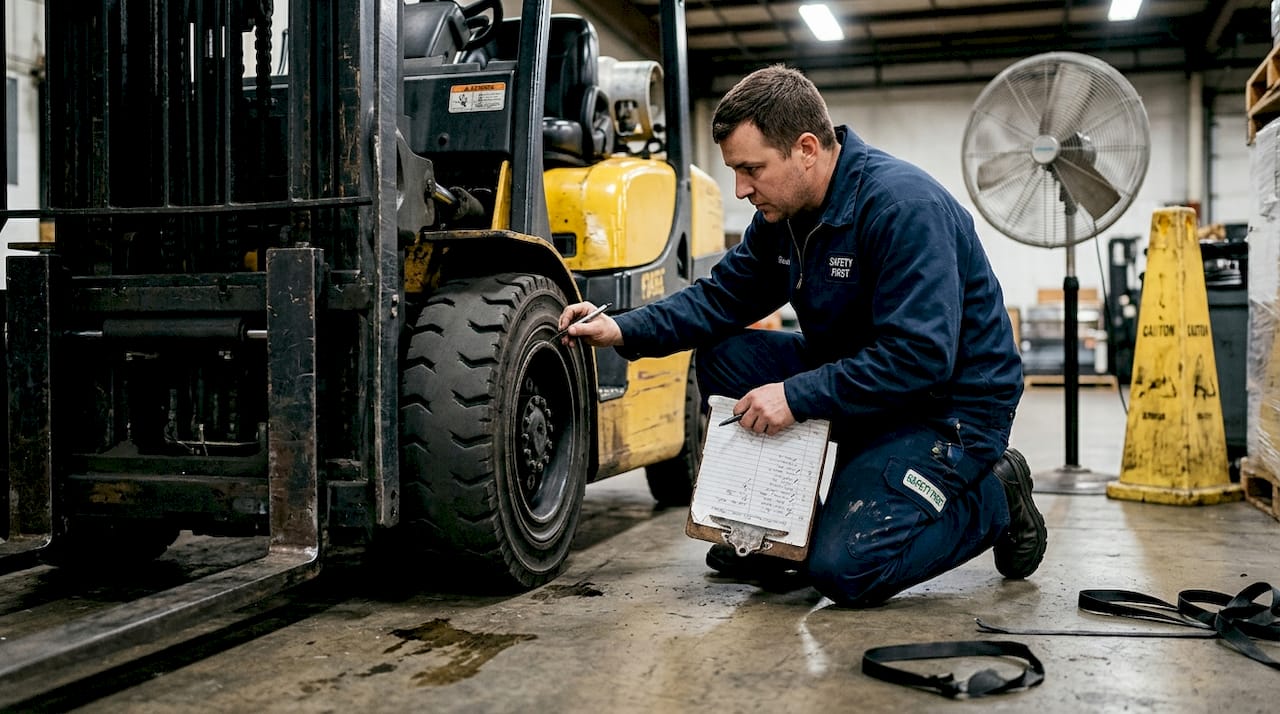
Safety devices require functional testing, not just visual checks. Sound the horn to verify audible warning capability. Test all lights including headlights, taillights, and warning flashers. Activate the backup alarm if equipped. Fasten and release the seatbelt to confirm proper latch operation. For propane units, inspect the tank for damage and test the shutoff valve. Electric forklifts need battery connector inspection and charge level verification.
| Component | Check Method | Pass Criteria |
|---|---|---|
| Tires | Visual and pressure | No cuts, proper inflation |
| Brakes | Function test | Stops smoothly, holds position |
| Forks | Visual measurement | No cracks, wear under 10% |
| Hydraulics | Visual and operation | No leaks, smooth lift/tilt |
| Safety devices | Function test | All lights, horn, seatbelt work |
Data plate legibility matters more than managers realize. This metal plate displays the forklift’s rated capacity, which determines safe load limits. Operators cannot make informed loading decisions if paint, dirt, or damage obscures capacity ratings. Clean or replace illegible data plates immediately.
Brake and steering functionality testing must occur under actual operating conditions. Slowly move the forklift forward and apply service brakes to verify stopping power. Park on a slight incline and engage the parking brake to confirm it holds position. Turn the steering wheel through its full range while stationary and moving to detect binding or unusual resistance.
Pro Tip: Digital checklist applications eliminate incomplete paper records through required field completion and automatic timestamping. The OSHA forklift inspection process becomes more reliable when technology enforces thoroughness and creates audit trails managers can review remotely.
3. Safe forklift operating practices for load handling
Proper load handling prevents the tipping, falling load, and crushing incidents that account for the majority of forklift accidents. OSHA guidelines establish specific techniques that operators must follow during every material movement.
Loads must be carried 4-6 inches off the ground with the mast tilted back for stability. This low travel height maintains the center of gravity and prevents tip overs on uneven surfaces. Never raise loads to full height while traveling, as this dramatically increases instability. Keep the load uphill when traveling on ramps or inclines to maintain control.
Capacity limits are non-negotiable safety boundaries. The data plate specifies maximum load weight at a specific load center, typically 24 inches. Loads with centers of gravity beyond this distance reduce safe capacity. Operators must calculate actual load weight and center before lifting. Exceeding capacity causes rear wheel lift off, leading to backward tip overs that crush operators.
Common mistakes create predictable hazards:
- Traveling with forks raised high reduces stability and blocks forward visibility
- Tilting the mast forward while elevated drops loads onto workers or equipment
- Turning at excessive speed on corners causes side tip overs
- Operating with damaged or mismatched forks compromises load security
- Ignoring overhead clearances results in mast or load contact with structures
| Unsafe Practice | OSHA Recommended Technique |
|---|---|
| High travel with load | Keep forks 4-6 inches off ground |
| Forward mast tilt while elevated | Only tilt forward at ground level |
| Speed through turns | Slow down before corners |
| Exceeding capacity | Verify weight before lifting |
| Poor visibility | Travel in reverse if load blocks view |
Load positioning on forks directly affects stability. Center the load on both forks with weight distributed evenly. Slide forks fully under the load to the back stops. Uneven loading creates lateral instability that causes loads to slip or tip during turns.
Step by step safe travel procedure:
- Position forks under load completely and lift 4-6 inches
- Tilt mast back to secure load angle
- Check forward visibility or prepare to travel in reverse
- Sound horn at intersections and blind corners
- Maintain safe speed for conditions and load
- Lower load completely before making sharp turns
- Keep clear of pedestrians with 10 foot minimum distance
Forklift operator responsibilities extend beyond mechanical operation to situational awareness and judgment. Operators must refuse to handle loads that appear unstable, exceed capacity, or lack proper packaging. This authority to stop unsafe work protects everyone in the facility.
4. Advanced considerations: Vehicle variants and technology impacts
Forklift type variations and emerging technologies reshape how managers approach compliance and safety protocols. Understanding these differences ensures your checklist covers model specific requirements and leverages innovation to reduce incidents.
Electric forklifts need battery checks including electrolyte levels, cable connections, and charge status. Propane models require leak testing around tank connections and valve inspection for damage. Rough terrain forklifts demand specific tire tread patterns and deeper inspection of suspension components. Test brakes on actual inclines that match your facility’s slopes, as rough terrain units face more demanding stopping conditions.
Battery maintenance for electric units goes beyond simple charging. Inspect battery cases for cracks or acid leaks that create hazardous conditions. Check cable terminals for corrosion and secure connections. Verify water levels in flooded batteries meet manufacturer specifications. Battery rooms must have proper ventilation, eyewash stations, and spill containment per OSHA requirements.
Propane safety inspections focus on fuel system integrity. Examine the tank exterior for dents, rust, or other damage that compromises structural strength. Test the emergency shutoff valve for smooth operation. Check hose connections for cracks or wear. Smell for gas leaks around all connections while the engine runs. Replace any questionable fuel system components immediately.
Rough terrain forklift considerations extend beyond basic mechanical checks:
- Inspect larger, more aggressive tire treads for embedded debris and cut damage
- Verify suspension components show no cracks or excessive wear
- Test four wheel drive engagement if equipped
- Confirm ROPS (rollover protection structure) remains intact without modifications
- Check that load backrest extensions are properly secured
Technology transforms traditional compliance approaches. Autonomous forklifts and laser guides show accident reductions of 50-59% in controlled studies. These systems eliminate human error factors like distraction, fatigue, and poor judgment. However, they introduce new inspection requirements for sensors, cameras, and navigation equipment.
| Traditional Forklift Safety | Technology Assisted Safety |
|---|---|
| Manual pre-operation inspection | Automated system diagnostics |
| Operator judgment for speed | AI governed speed control |
| Visual load assessment | Weight sensors and alerts |
| Periodic training refreshers | Continuous behavior monitoring |
| Paper inspection logs | Cloud based compliance tracking |
AI powered safety systems detect unsafe behaviors in real time. Cameras identify phone use, seatbelt violations, and pedestrian proximity. Speed sensors trigger warnings when operators exceed safe limits for conditions. Impact detection logs collisions and near misses for investigation. This continuous monitoring supplements traditional training with immediate feedback.
Forklift safety technology trends indicate growing adoption of telematics and IoT sensors. These systems transmit operational data to management dashboards, revealing patterns that predict maintenance needs before failures occur. Managers gain visibility into fleet utilization, operator performance, and compliance gaps across multiple facilities.
Pro Tip: When evaluating technology investments, prioritize solutions that integrate with your existing inspection workflows rather than creating parallel systems. Unified platforms reduce training burden and ensure data flows seamlessly from daily checks to long term compliance reporting.
Enhance your OSHA forklift compliance with expert training
Building a comprehensive checklist is just the first step toward sustained compliance and safety excellence. Professional training ensures your operators and supervisors understand not just what to inspect, but why each element matters and how to respond when defects surface.
Forkliftacademy.com delivers OSHA compliant certification programs that transform checklist knowledge into practical operator competency. Our courses cover inspection procedures, load handling techniques, and emergency response protocols that directly support your daily compliance efforts. Online and onsite formats accommodate any facility’s scheduling needs.
Train the trainer programs empower your supervisors to deliver ongoing education and evaluation without external dependencies. This approach reduces certification costs while maintaining OSHA standards. Your trained instructors can immediately address unsafe behaviors and reinforce proper inspection habits as situations arise.
Regular renewal keeps your team current with evolving regulations and emerging best practices. OSHA compliance requirements mandate evaluation every three years at minimum, but leading facilities conduct annual refreshers to maintain sharp skills and safety awareness.
Frequently asked questions
What is included in an OSHA forklift compliance checklist?
An OSHA compliant checklist covers daily inspection items including tires, brakes, steering, hydraulics, forks, mast, safety devices like horns and lights, and data plate legibility. It also addresses operational safety practices for load handling, capacity adherence, and travel procedures. Documentation requirements ensure inspections are recorded with date, inspector, and any defects found.
How often should forklift inspections be conducted according to OSHA?
Inspections must be done daily before each shift starts per OSHA regulation 29 CFR 1910.178(q)(7). This applies to every forklift regardless of how recently it was inspected. Proper documentation of each inspection is mandatory and must be retained for OSHA review.
What records must be kept for OSHA forklift compliance?
Keep inspection and training records for one to three years as OSHA requires. Inspection logs must identify the forklift, date, inspector, items checked, and defects. Training records prove operators received certification and evaluation. Tag out any forklift found defective with visible warnings until qualified maintenance personnel complete repairs and authorize return to service.
Can technology improve OSHA forklift checklist compliance?
Digital checklists enhance accuracy and accountability over paper forms by requiring field completion and creating automatic timestamps. AI powered systems can identify unsafe operator habits like phone use, speed violations, and seatbelt non-compliance in real time. Forklift safety technology provides managers with data driven insights into compliance gaps and operator performance trends across entire fleets.
Recommended
- Forklift safety checklist 2026: ensure OSHA compliance – Top Osha Forklift Certification
- Forklift Safety Checklist Guide for OSHA Compliance – Top Osha Forklift Certification
- Forklift operator responsibilities list: 2026 compliance – Top Osha Forklift Certification
- Business forklift training guide: OSHA compliance 2026 – Top Osha Forklift Certification