
Many warehouse managers believe forklift incidents are simply part of doing business in high-volume operations. This misconception costs companies thousands in injuries, downtime, and OSHA penalties every year. The reality is that forklift incidents can be dramatically reduced through strategic prevention methods. This guide explains proven strategies for preventing forklift incidents while maintaining OSHA compliance, helping you create a safer warehouse environment and protect your team from preventable accidents.
Table of Contents
- Key takeaways
- Understanding forklift incident causes and OSHA requirements
- Effective forklift operator training and certification strategies
- Regular equipment maintenance and workplace safety protocols
- Implementing comprehensive forklift incident prevention programs
- Enhance your forklift safety with expert training and certification
- FAQ
Key Takeaways
| Point | Details |
|---|---|
| Hazard identification practices | Comprehensive hazard identification dramatically reduces forklift incidents by addressing root causes before they trigger accidents. |
| Operator training and certification | Well designed training improves hazard recognition, adherence to protocols, and quick response to unexpected situations. |
| Regular inspections | Daily inspections of forklifts and workplace conditions prevent common failures and unsafe environments. |
| Proactive safety culture | A safety mindset that eliminates hazards before incidents occur reduces downtime and boosts morale. |
| OSHA compliance baseline | Meeting or exceeding OSHA requirements provides legal protection while supporting safer warehouse operations. |
Understanding forklift incident causes and OSHA requirements
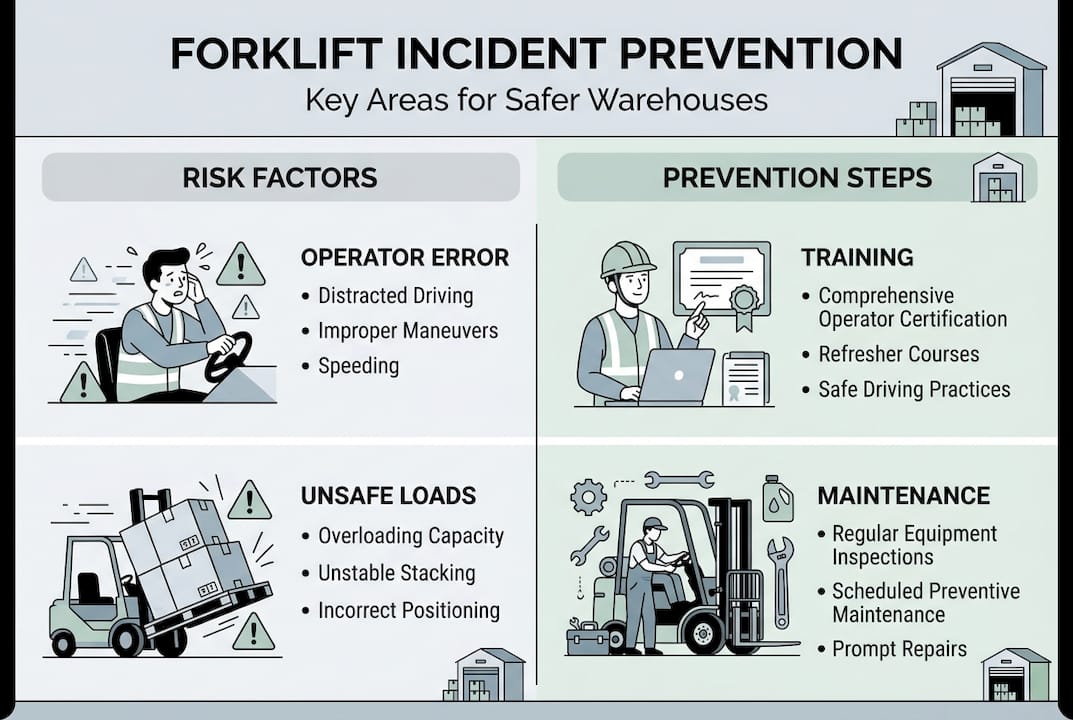
Forklift incidents rarely happen without warning signs. Understanding the root causes helps you build effective prevention strategies that address real risks rather than checking compliance boxes. Three primary factors drive most warehouse forklift incidents.
Operator mistakes account for the majority of forklift accidents. These include speeding, carrying unstable loads, poor visibility practices, and inadequate training. When operators lack proper instruction or become complacent, even routine tasks become dangerous. Equipment failures represent another significant cause, from brake malfunctions to steering problems that operators cannot control. Poor workplace design creates the third major risk category, including narrow aisles, inadequate lighting, unmarked pedestrian zones, and cluttered pathways.
OSHA standards establish baseline requirements for forklift operation that directly address these causes. The regulations mandate operator training and evaluation, daily equipment inspections, and workplace safety protocols. Compliance is not optional, and violations carry steep penalties. More importantly, these standards provide a proven framework for incident prevention when implemented thoroughly.
Warehouse managers must recognize that OSHA requirements represent minimum standards, not aspirational goals. Your facility may need additional safeguards based on specific operations, equipment types, and layout challenges. Understanding forklift hazards in your warehouse context allows you to customize prevention strategies that exceed basic compliance.
Pro Tip: Conduct a facility walk-through with your operators to identify hazards they encounter daily. Their frontline perspective reveals risks that management often misses from the office.
The connection between causes and prevention becomes clear when you analyze incident reports. Most accidents involve multiple contributing factors, not single failures. An operator error might combine with poor lighting and a mechanical issue to create a serious incident. This reality demands comprehensive prevention approaches rather than isolated fixes. Recognizing warehouse forklift risks systematically positions you to address root causes effectively.
“Effective forklift safety programs address operator competency, equipment reliability, and environmental hazards as interconnected elements rather than separate concerns.”
Regulatory compliance provides legal protection, but genuine safety requires deeper commitment. Your prevention program should eliminate hazards proactively rather than reacting to incidents after they occur. This mindset shift transforms safety from a compliance burden into a competitive advantage through reduced downtime, lower insurance costs, and improved employee morale.
Effective forklift operator training and certification strategies
Operator training represents your most powerful tool for preventing forklift incidents. Well-trained operators recognize hazards, follow safety protocols, and respond appropriately to unexpected situations. Poor training creates operators who endanger themselves, coworkers, and your facility every shift.
Comprehensive training programs must cover three essential components. Formal instruction provides theoretical knowledge about forklift operation, safety principles, and regulatory requirements. Practical training allows operators to develop hands-on skills in controlled environments before working independently. Workplace evaluation ensures operators can apply their knowledge and skills to your specific facility conditions and equipment.
Building an effective training program requires systematic planning:
- Assess your specific training needs based on equipment types, facility layout, and operational demands
- Select qualified trainers with current knowledge of OSHA standards and practical forklift experience
- Develop curriculum covering vehicle inspection, safe operation, load handling, and hazard recognition
- Create evaluation criteria that test both knowledge and practical skills objectively
- Document all training activities, evaluations, and certifications for compliance records
- Schedule refresher training at least every three years or sooner after incidents or near misses
- Monitor operator performance continuously and provide coaching when unsafe behaviors emerge
The quality of your training directly impacts incident rates. Generic programs that treat all warehouses identically miss critical facility-specific hazards. Your training must address the actual conditions operators face, including narrow aisles, dock operations, ramp navigation, and pedestrian traffic patterns unique to your facility.
Pro Tip: Record training sessions and create a video library of proper techniques for your specific warehouse layout. New operators learn faster when they see correct procedures demonstrated in their actual work environment.
Refresher training often receives inadequate attention despite its importance. Experienced operators develop bad habits over time, and complacency increases accident risk. Regular training reinforcement keeps safety practices sharp and introduces operators to new equipment or procedures. Schedule refresher sessions strategically rather than treating them as mere compliance obligations.
Operator evaluation must extend beyond initial certification. Continuous performance monitoring identifies operators who need additional coaching before incidents occur. Supervisors should observe operators regularly, provide constructive feedback, and document both positive practices and areas needing improvement. This ongoing evaluation creates accountability and reinforces the importance of safe operation.
Training effectiveness improves dramatically when operators understand why safety protocols exist rather than simply memorizing rules. Explain the physics of tip-overs, the consequences of speed in tight spaces, and the real injury risks to pedestrians. Operators who grasp the reasoning behind procedures follow them more consistently than those who view rules as arbitrary restrictions.
Certification represents the outcome of successful training, not the goal itself. Your objective is creating competent, safety-conscious operators who prevent incidents through consistent application of proper techniques. Certifications document that operators have demonstrated required knowledge and skills, but the true measure of training success appears in your incident statistics and near-miss reports.
Regular equipment maintenance and workplace safety protocols
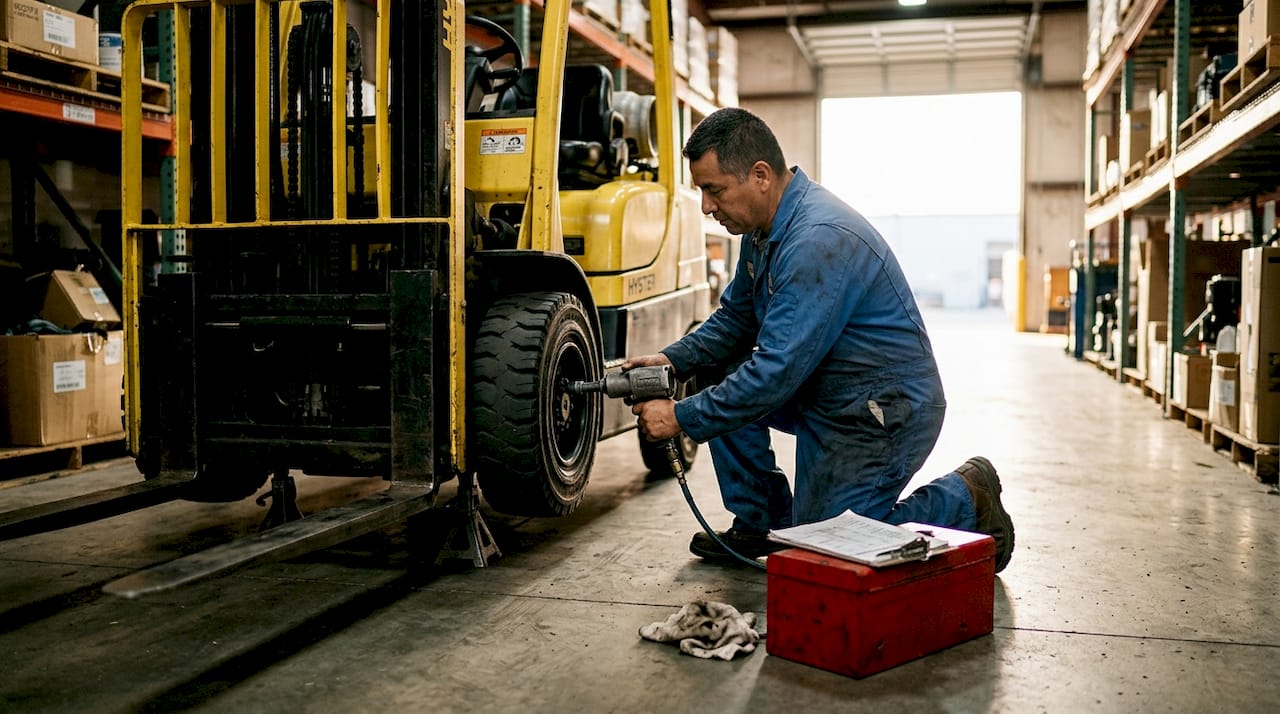
Mechanical failures cause preventable incidents when equipment maintenance receives inadequate attention. A forklift with worn brakes, damaged tires, or malfunctioning controls endangers everyone in your facility. Systematic inspection and maintenance programs eliminate these risks before they cause accidents.
Daily pre-shift inspections form the foundation of equipment reliability. Operators must check critical systems before using any forklift:
- Brakes, steering, and controls for proper function and responsiveness
- Tires for adequate tread, proper inflation, and visible damage
- Hydraulic systems for leaks, smooth operation, and load capacity
- Warning devices including horn, lights, and backup alarms
- Overhead guard, forks, and safety restraints for structural integrity
- Fluid levels including fuel, oil, and hydraulic fluid
- Battery charge and connections for electric forklifts
Documenting inspections creates accountability and provides maintenance records for compliance. Any defects discovered must remove the equipment from service immediately until repairs are completed. Operating damaged equipment to avoid downtime creates far greater costs when incidents occur.
Preventive maintenance schedules extend beyond daily inspections to include periodic servicing by qualified technicians. Manufacturer recommendations specify maintenance intervals based on operating hours or calendar time. Following these schedules prevents breakdowns and identifies developing problems before they cause failures.
| Maintenance Type | Frequency | Key Activities | Prevention Impact |
|---|---|---|---|
| Pre-shift inspection | Daily | Visual checks, functional tests | Identifies immediate hazards |
| Routine service | Monthly | Fluid changes, filter replacement | Maintains performance |
| Comprehensive inspection | Quarterly | Detailed system evaluation | Detects developing issues |
| Major overhaul | Annually | Complete teardown and rebuild | Extends equipment life |
Workplace safety protocols complement equipment maintenance by addressing environmental hazards. Traffic management separates forklift operations from pedestrian areas through marked pathways, physical barriers, and clear signage. Adequate lighting eliminates visibility problems that contribute to collisions and load handling errors. Organized storage prevents unstable stacking and reduces the need for risky maneuvering in tight spaces.
Pro Tip: Involve your operators in developing workplace safety protocols. They know which areas create problems and can suggest practical solutions that actually work during busy shifts.
Floor conditions deserve special attention because surface problems affect forklift stability and control. Cracks, uneven surfaces, and debris create tip-over risks and steering difficulties. Regular floor maintenance and immediate cleanup of spills prevent these hazards. Loading dock edges require particular care, as falls from docks cause severe injuries.
Load management protocols prevent many common incidents. Establish and enforce weight limits for your equipment, train operators in proper load positioning, and require load securing when necessary. Overloading causes tip-overs and equipment damage. Poorly positioned loads obstruct visibility and shift unexpectedly during transport.
Your maintenance and safety protocols must adapt to seasonal changes and operational variations. Winter conditions create ice hazards and visibility problems. Peak seasons increase traffic density and time pressure that elevate risk. Recognize these patterns and adjust protocols accordingly rather than maintaining static procedures year-round.
Engaging operators in inspection routines improves compliance and early problem detection. When operators take ownership of equipment condition, they notice subtle changes that indicate developing problems. This engagement transforms inspections from bureaucratic requirements into genuine safety practices that protect everyone.
Implementing comprehensive forklift incident prevention programs
Isolated safety measures produce limited results. Comprehensive prevention programs integrate training, maintenance, hazard assessment, and compliance monitoring into unified systems that address all incident causes simultaneously. This holistic approach delivers dramatically better outcomes than piecemeal efforts.
| Approach | Scope | Typical Results | Sustainability |
|---|---|---|---|
| Reactive fixes | Address incidents after occurrence | Temporary improvement | Low |
| Partial compliance | Meet minimum OSHA requirements | Reduced violations | Medium |
| Comprehensive program | Integrate all prevention elements | Sustained incident reduction | High |
Effective prevention programs require structured implementation that builds on proven frameworks rather than inventing approaches from scratch. Follow these steps to develop your program:
- Conduct comprehensive hazard assessment covering equipment, operators, workplace design, and operational procedures
- Establish clear safety policies with specific protocols for all forklift operations and measurable performance standards
- Implement robust training program addressing initial certification, refresher training, and continuous evaluation
- Create inspection and maintenance systems with documented schedules, accountability, and corrective action processes
- Develop incident reporting and investigation procedures that identify root causes and prevent recurrence
- Assign safety responsibilities throughout your organization from management to frontline operators
- Schedule regular program audits to identify gaps and opportunities for improvement
- Communicate safety expectations consistently through meetings, signage, and leadership example
Management commitment determines program success more than any other factor. When leadership prioritizes safety through resource allocation, accountability, and visible involvement, employees recognize that protocols matter. Conversely, when management treats safety as secondary to productivity, workers ignore procedures and incidents increase.
Employee engagement transforms compliance programs into safety cultures. Involve operators in hazard identification, protocol development, and continuous improvement initiatives. Their practical knowledge improves program effectiveness, and their buy-in ensures consistent implementation. Setting up training programs with operator input creates more relevant and effective instruction.
Metrics provide objective measures of program performance. Track incident rates, near misses, inspection compliance, training completion, and equipment downtime. Analyze trends to identify emerging problems before they cause serious accidents. Share results transparently to maintain accountability and celebrate improvements.
Continuous improvement separates truly effective programs from static compliance efforts. Regular audits reveal gaps between written policies and actual practices. Incident investigations uncover systemic issues requiring protocol changes. Industry developments introduce new best practices worth adopting. Your program must evolve continuously rather than remaining fixed after initial implementation.
Budget constraints challenge many safety programs, but prevention costs far less than incidents. Calculate the true cost of accidents including medical expenses, lost productivity, equipment damage, regulatory penalties, and insurance increases. These figures justify safety investments that seem expensive until compared to incident costs. Understanding why operator training matters helps build the business case for comprehensive programs.
Documentation supports both compliance and continuous improvement. Maintain detailed records of training, inspections, maintenance, incidents, and corrective actions. These records demonstrate regulatory compliance during audits and provide data for analyzing program effectiveness. Digital systems simplify record keeping and make information accessible when needed.
Your prevention program must address human factors that contribute to incidents beyond simple rule violations. Fatigue, stress, time pressure, and workplace culture all influence operator behavior. Creating an environment that supports safe practices requires addressing these underlying factors rather than simply enforcing rules more strictly.
Enhance your forklift safety with expert training and certification
Building an effective incident prevention program requires expertise that many warehouses lack internally. Forklift Academy provides the training and certification solutions you need to implement comprehensive safety programs that reduce incidents and ensure OSHA compliance.
Our online train-the-trainer programs equip your safety personnel with the knowledge and materials to deliver high-quality operator training customized to your facility. You gain the flexibility to train operators on your schedule while maintaining consistent quality and regulatory compliance. For warehouses preferring external instruction, our comprehensive training programs deliver OSHA-aligned certification through experienced instructors who understand real-world warehouse operations.
Forklift training and certification through Forklift Academy ensures your operators receive instruction that addresses both regulatory requirements and practical safety skills. With over 20 years of experience, we have helped thousands of warehouses across North America reduce incidents and create safer work environments. Explore our programs today to strengthen your incident prevention efforts.
FAQ
What are the most common causes of forklift incidents?
Operator error leads forklift incidents, including speeding, improper load handling, and inadequate visibility practices. Equipment failures such as brake malfunctions and steering problems create the second major cause. Environmental hazards like narrow aisles, poor lighting, and unmarked pedestrian zones contribute significantly to accident rates.
How often should forklift operator training be refreshed?
OSHA mandates refresher training every three years at minimum. However, you must provide additional training sooner if an operator is involved in an incident, observed operating unsafely, assigned to different equipment, or working in changed conditions. Many safety programs conduct annual refreshers to maintain consistent performance.
What should be included in daily forklift inspections?
Daily inspections must check brakes, steering, and controls for proper function. Examine tires for adequate tread and damage, test horn and lights, verify hydraulic systems operate smoothly, and inspect the overhead guard and forks for structural integrity. Check fluid levels and document any defects that require repair before operation.
What benefits does a comprehensive prevention program provide beyond compliance?
Comprehensive programs create safety cultures that reduce incidents by 60-70% compared to basic compliance approaches. You gain lower insurance premiums, reduced equipment damage, decreased downtime, and improved employee morale. Workers feel valued when companies prioritize their safety, leading to better retention and productivity alongside regulatory compliance.
Recommended
- Forklift Hazards Explained: Reducing Warehouse Risks – Top Osha Forklift Certification
- Forklift Hazard Awareness Explained: Reducing Warehouse Risks – Top Osha Forklift Certification
- Warehouse Safety – How It Transforms Accident Prevention – Top Osha Forklift Certification
- Forklift Accident Prevention: Protecting Workers and Compliance – Top Osha Forklift Certification