


TL;DR:
- A forklift career depends on meeting federal eligibility, completing OSHA-compliant training, and mastering safety skills. Mastering one machine type at a time and demonstrating soft skills are key to long-term success and advancement. Building a career involves consistent performance, ongoing certification, and effective communication within warehouse environments.
A successful forklift career is built on three non-negotiable pillars: meeting federal eligibility requirements, completing OSHA-compliant certification, and mastering the practical skills that keep you employed and safe long term. Forklift operators work across warehouses, distribution centers, manufacturing plants, and construction sites, making this one of the most stable trades in American logistics. The steps to a successful forklift career are more structured than most people expect. Follow them in order and you avoid the mistakes that end careers in the first 90 days.
The federal minimum age to operate a forklift is 18, with no exceptions. This applies across all industries and all states, regardless of employer preference or job urgency. Before you enroll in any training program, confirm you meet this federal age requirement.
Physical capability matters too. Forklift operators sit for long shifts, twist frequently, and handle heavy loads. You need adequate vision, hearing, and the physical stamina to work in environments that range from freezing cold storage to hot manufacturing floors. Employers screen for these during pre-employment physicals.
Basic English literacy is a real requirement, not a formality. You must read safety labels, understand OSHA warning signs, and follow written operating procedures. Operators who cannot read safety documentation create liability for their employers and risk for their coworkers.
Here is what you need before applying for your first forklift job:
Pro Tip: Review the full forklift operator requirements before you apply anywhere. Knowing the standards in advance lets you address gaps before an employer finds them.
OSHA requires hands-on training and employer-issued certification. Online courses alone do not satisfy OSHA standards. A qualified trainer must evaluate you on the actual equipment you will operate before your employer can certify you.
Certification training follows a consistent structure across providers. Most programs run 6–8 hours and include classroom instruction, a written knowledge exam, and a hands-on performance evaluation. Each component builds on the last. You cannot skip the practical portion and still receive a valid certification.
Training formats vary by provider and situation:
| Training Format | Cost Range | Best For |
|---|---|---|
| Employer-provided | $0 | New hires with a job offer |
| Community college | $0–$300 | Job seekers without an employer |
| Online plus hands-on | $50–$300 | Flexible schedule learners |
| Third-party onsite | Varies | Teams and business compliance |
Independent certification courses typically cost between $0 and $300. That range makes certification accessible to almost anyone willing to put in the time.
Machine-specific training is not optional. A certification on a sit-down counterbalance forklift does not qualify you to operate a reach truck or an order picker. Each equipment type requires its own evaluation. The certification workflow for each machine type follows the same structure but covers different operating controls and hazards.
Pro Tip: Ask any training provider whether their program satisfies your specific employer’s OSHA compliance requirements before you pay. Not all third-party certificates are accepted by all employers without an additional hands-on evaluation.
Mastering one forklift type before moving to another is the single most effective career decision a new operator can make. Spend 60–90 days on a sit-down counterbalance forklift before requesting cross-training on reach trucks or order pickers. Depth of skill on one machine makes you safer and more promotable than shallow experience on several.
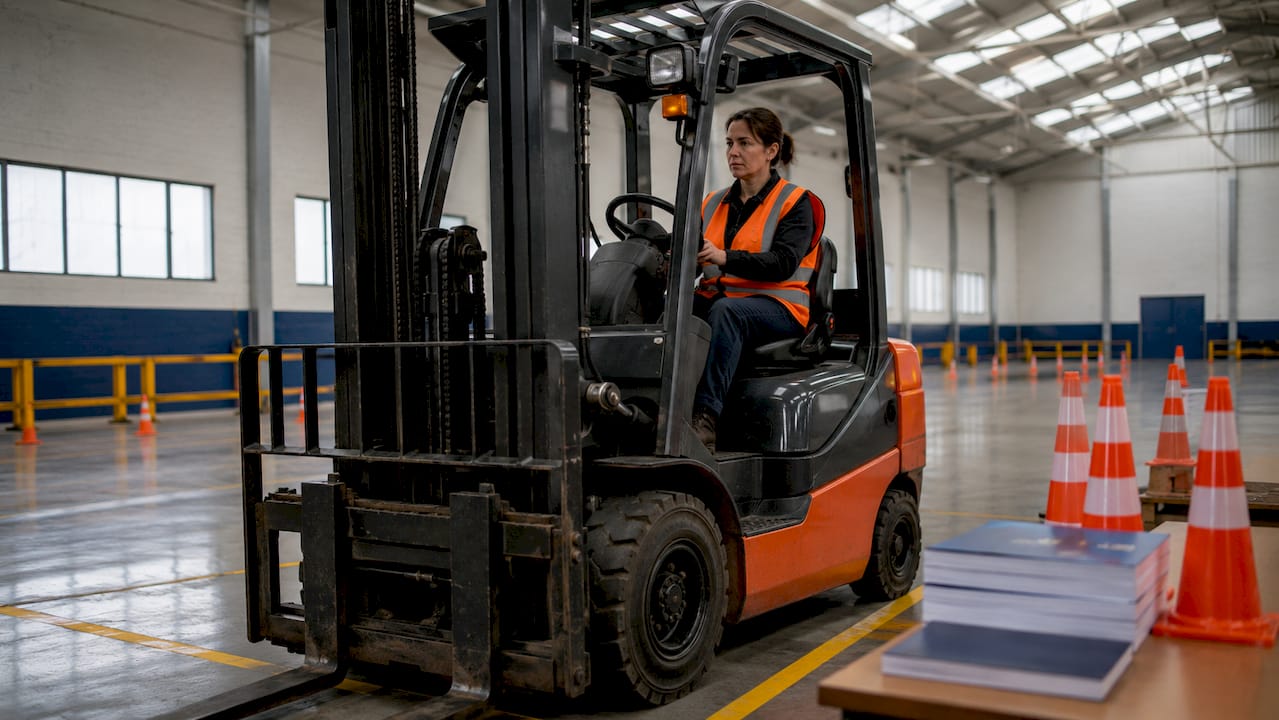
Productivity metrics are your performance scorecard. Picks per hour, load accuracy rates, and cycle times tell supervisors exactly how you are performing. Treat these numbers as personal feedback, not as surveillance. Operators who track their own metrics and ask how to improve them get noticed faster than those who ignore the data.
Safety practices protect your career as much as your body. The leading causes of forklift injuries include tip-overs, pedestrian strikes, and falling loads. Following lift truck best practices on every shift, not just when supervisors are watching, separates operators who last decades from those who wash out in months.
Ergonomics matter from your first day on the job. Stretching, proper footwear, and safe handling techniques prevent the chronic back and knee pain that ends careers prematurely. Most operators do not think about ergonomics until they are already injured. Starting these habits early is the difference between a 5-year career and a 25-year career.
Beyond technical skills, employers prioritize communication, problem-solving, and detail orientation. Showing up on time, flagging hazards before they become incidents, and communicating clearly with warehouse staff marks you as someone worth investing in.
Pro Tip: The first 90 days are when most new operators fail. Focus entirely on safety compliance and machine mastery during this window. Productivity will follow naturally once your technique is solid.
The SOAR method is the most effective framework for answering behavioral interview questions. SOAR stands for Situation, Obstacle, Action, and Result. Use it to structure real stories about safety decisions, teamwork challenges, and equipment problems you have solved. Interviewers for warehouse and logistics roles respond to specific examples, not general statements.
Prepare at least three stories before your interview. One should cover a time you identified a safety hazard. One should cover a time you worked under pressure to meet a deadline. One should cover a time you resolved a conflict or communication problem with a coworker. These three scenarios cover the majority of behavioral questions in forklift operator interviews.
Before accepting any job offer, request a warehouse tour. A tour tells you whether the facility maintains safe aisles, whether equipment is well-maintained, and whether the team culture looks professional. Accepting a job without seeing the facility is a common mistake that leads to early turnover.
Understand the drug testing policy before your interview. Most logistics employers require a pre-employment drug screen and conduct random testing throughout employment. Know the policy, prepare accordingly, and ask about it directly if it is not mentioned. Asking shows professionalism, not suspicion.
During onsite evaluations, demonstrate safety awareness before you demonstrate speed. Inspectors and supervisors watch whether you conduct a pre-operation inspection, whether you check your load before moving, and whether you observe pedestrian right-of-way. Speed comes with practice. Safety habits are what evaluators actually grade.
Most operators reach lead operator or senior operator status within 2–3 years of consistent performance. The path from operator to trainer or supervisor typically requires demonstrated safety leadership, cross-certification on multiple equipment types, and a track record of mentoring newer operators. Advancement does not happen by accident. It requires deliberate effort and visibility.
Sequential certification is the most direct path to higher pay and more responsibility. After mastering the sit-down counterbalance, add reach truck certification, then order picker, then specialized equipment like turret trucks or very narrow aisle machines. Each additional certification makes you harder to replace and more valuable to your employer.
“The operators who advance fastest are not the fastest drivers. They are the ones who never have incidents, always communicate, and make their supervisors’ jobs easier.” This pattern holds across distribution centers, manufacturing plants, and cold storage facilities alike.
Career pathways beyond the operator role include:
Networking inside your facility matters more than most operators realize. Volunteering for new projects, helping onboard new hires, and building relationships with supervisors across shifts all create opportunities that never appear on a job board.
A successful forklift career requires meeting federal eligibility standards, completing OSHA-compliant certification, mastering one machine type at a time, and consistently demonstrating safety leadership and soft skills.
| Point | Details |
|---|---|
| Meet eligibility first | You must be 18 or older and physically capable before any training begins. |
| Certification requires hands-on evaluation | OSHA mandates employer-issued certification after a qualified trainer evaluates you on actual equipment. |
| Master one machine before expanding | Spend 60–90 days on a sit-down counterbalance before cross-training on specialized equipment. |
| Soft skills drive advancement | Communication, reliability, and problem-solving matter as much as technical ability to hiring managers. |
| Career growth is sequential | Lead operator, trainer, and supervisor roles follow naturally from clean performance and additional certifications. |
The operators who struggle most are not the ones who lack technical ability. They are the ones who underestimate how much the non-technical side of the job matters. Showing up consistently, communicating clearly, and treating safety as a personal standard rather than a rule imposed from above separates the operators who build real careers from those who cycle through jobs.
Ergonomics is the most underrated topic in forklift career advice. Most operators do not think about their posture, their footwear, or their stretching routine until something hurts. By then, the damage is already accumulating. Starting ergonomic habits on day one is not overcautious. It is the single best investment you can make in a long career.
Productivity metrics intimidate new operators more than they should. A picks-per-hour number is not a threat. It is information. Operators who learn to read their own performance data and ask supervisors how to improve it advance faster than those who treat metrics as criticism.
The best career advice I can give is this: go deep before you go wide. Become genuinely excellent on one machine before you request cross-training. Depth of expertise builds the reputation that opens every door that follows.
— Juiced
Forkliftacademy has delivered OSHA-compliant forklift certification programs across the United States and Canada for over 20 years. Whether you are starting from scratch or adding a new equipment certification to your resume, Forkliftacademy offers both online and onsite formats to fit your schedule and location.
Operators can complete the classroom portion online and arrange hands-on evaluations through Forkliftacademy’s network of physical training locations in key U.S. cities. Employers can access top OSHA forklift certification programs, train-the-trainer kits, and onsite training solutions that certify entire teams efficiently. If you are ready to take the next step in your forklift career, Forkliftacademy’s programs meet the compliance standards employers actually require.
The federal minimum age to operate a forklift is 18, with no exceptions across any industry or state.
No. OSHA requires a hands-on evaluation by a qualified trainer and employer-issued certification. Online coursework alone does not meet the standard.
Most certification programs run 6–8 hours total, covering classroom instruction, a written exam, and a hands-on performance evaluation.
Employer-provided training is typically free. Independent certification courses cost between $0 and $300 depending on the provider and format.
Most operators reach lead or trainer roles within 2–3 years of consistent, incident-free performance and sequential equipment certification.