

TL;DR:
- Scheduling forklift classes involves coordinating OSHA-mandated instruction, hands-on training, and workplace evaluation to ensure certification compliance. Proper planning, choosing qualified providers, and maintaining accurate documentation help prevent costly violations and ensure operator safety. Regular refresher training every three years and building relationships with reliable trainers contribute to consistent safety standards and smooth inspections.
Scheduling forklift classes is the process of arranging three OSHA-mandated training components: formal instruction, hands-on practical training, and a workplace evaluation. Under OSHA 29 CFR 1910.178(l), all three are required for legal certification. Skipping even one component puts your certification at risk and exposes employers to fines up to $15,625 per violation. This guide walks both individuals and companies through every step, from understanding forklift operator requirements to choosing a provider, locking in dates, and keeping records clean for OSHA inspections.
Before you book a single session, you need to know what OSHA actually requires. The three-part certification process is non-negotiable: formal classroom or online instruction, practical hands-on training on the actual equipment, and a workplace evaluation conducted by a qualified trainer. All three must be completed and documented.
What operators need before enrolling:
OSHA recognizes seven forklift classes, ranging from Class I electric motor rider trucks to Class VII rough terrain forklifts. Certification on one class does not transfer to another. An operator certified on a Class IV cushion tire forklift still needs a separate evaluation before legally operating a Class V pneumatic tire truck. This matters enormously for scheduling because companies with mixed fleets must plan separate evaluations for each truck type their operators use.
Employers are responsible for providing training, verifying competency, and maintaining records for at least three years. That means the burden of scheduling falls on the company, not the individual operator. Refresher training and re-evaluation must occur every three years, or sooner if an operator is involved in an incident or assigned to a new equipment class.
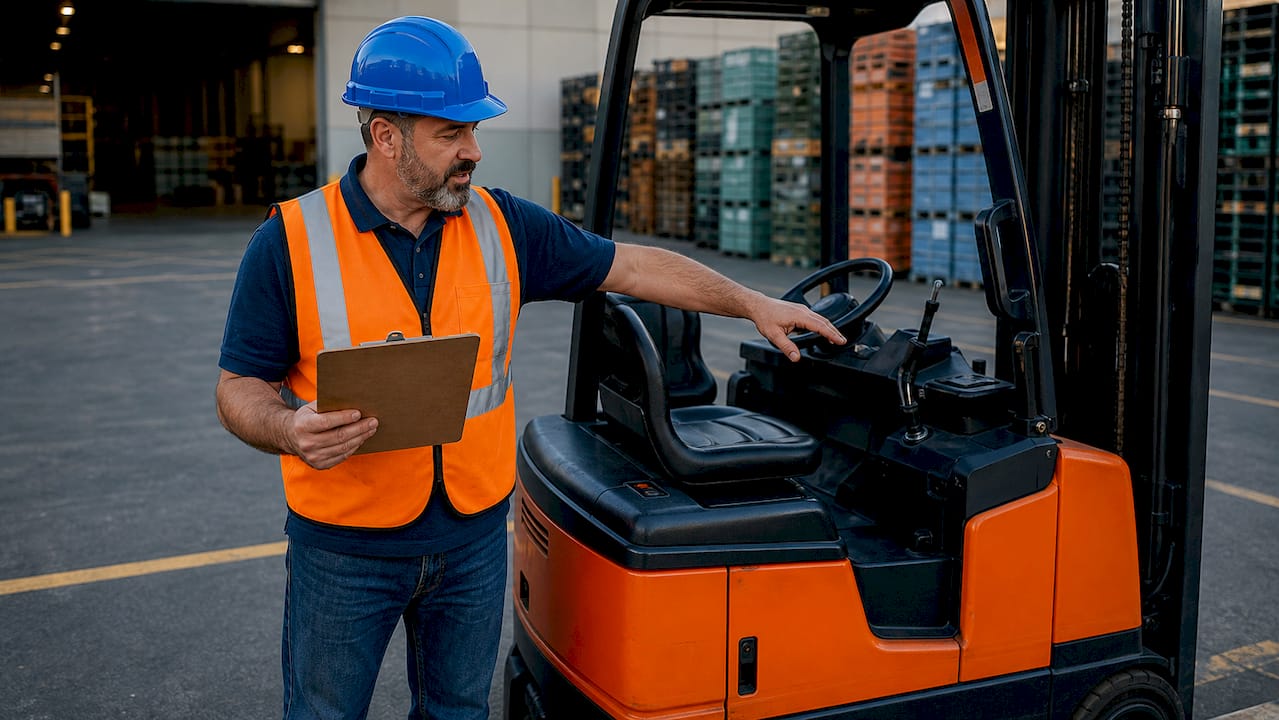
The provider you choose determines whether your certification holds up during an OSHA inspection. Four main provider types exist, and each fits different scheduling needs and budgets.
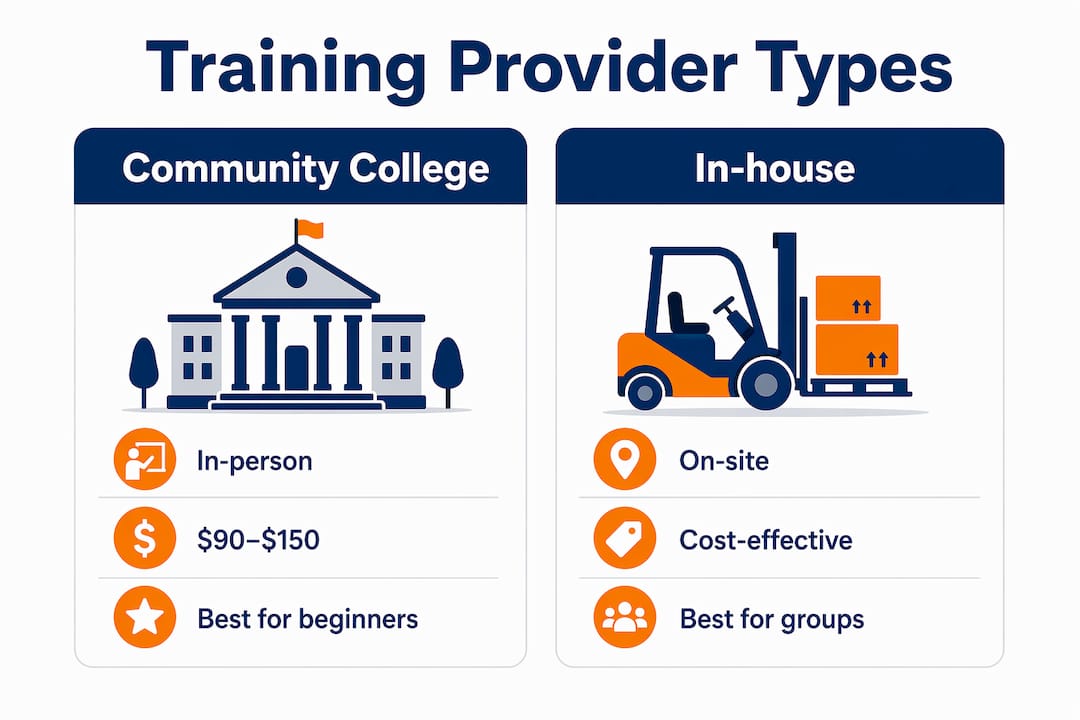
| Provider Type | Format | Typical Cost | Best For |
|---|---|---|---|
| Community College | In-person | $90–$150 per person | Individuals on a budget |
| Online Platform | Online theory + in-person eval | $50–$200 per person | Flexible scheduling |
| Commercial In-Person | Full in-person | $150–$500 per person | Speed and convenience |
| Employer-Run Program | Onsite | Variable | Companies training groups |
Online courses deliver formal instruction effectively and allow operators to complete theory at their own pace. The catch is that practical training and workplace evaluation must still happen in person. No online-only program can satisfy all three OSHA requirements by itself. That is a critical point many first-time buyers miss when comparing prices.
Key criteria for evaluating any provider:
Pro Tip: Ask every provider directly: “Will your documentation include the evaluator’s name, the truck class, and the evaluation date?” If they hesitate or say it is not necessary, walk away. That documentation is what OSHA auditors check first.
In-house employer programs offer real cost savings for companies training five or more operators at once. They require a qualified internal trainer and proper scheduling coordination, but the per-person cost drops significantly compared to commercial providers. Forkliftacademy’s train-the-trainer program is built specifically for this scenario.
Effective scheduling means coordinating all three training components so they happen in close succession. Gaps between formal instruction and practical evaluation create compliance risks and force operators to relearn material.
Follow these steps to schedule forklift training correctly:
Pro Tip: Schedule training during slower operational periods, such as the start of a new quarter or before a seasonal ramp-up. Training during peak periods creates pressure to rush evaluations, which is exactly when documentation errors happen.
For companies scheduling group training, onsite forklift training eliminates travel time and lets operators train on the exact equipment and environment they use daily. This format also makes the workplace evaluation seamless since the trainer is already on your floor.
Cost is the most common reason companies delay scheduling. Understanding the full picture prevents budget surprises and helps you plan realistically.
Online theory modules cost $50–$200 per person, while comprehensive in-person programs range from $100–$500. Community colleges and nonprofits typically charge $90–$150. Commercial programs with same-day certification can reach $500 per person.
Factors that affect your total cost:
The cost of non-compliance is far higher than any training fee. OSHA fines reach $15,625 per violation for serious violations, and willful violations carry penalties several times higher. One inspection finding an untrained operator can cost more than a year of training for your entire workforce.
Employer-funded training is the norm in most industries. Companies that treat certification as an operating expense rather than a one-time cost build more consistent safety cultures. Scheduling refresher training on a fixed three-year cycle, rather than waiting for incidents to trigger it, keeps costs predictable and operators current.
Most certification failures trace back to scheduling errors, not operator incompetence. Knowing the common mistakes in advance saves time, money, and compliance headaches.
“The most expensive forklift training mistake is the one you make after an accident. Schedule correctly the first time.”
If a scheduling conflict forces a gap between formal instruction and practical training, reschedule the practical component rather than rushing it. A rushed evaluation produces incomplete documentation and undertrained operators.
Scheduling forklift classes correctly requires coordinating all three OSHA-mandated components: formal instruction, practical training, and workplace evaluation, with proper documentation at every step.
| Point | Details |
|---|---|
| Three components are mandatory | OSHA requires formal instruction, hands-on training, and workplace evaluation for valid certification. |
| Class-specific training is required | Certification on one of the seven OSHA forklift classes does not cover any other class. |
| Schedule components back to back | Completing all three components within the same week improves retention and reduces compliance gaps. |
| Documentation must be complete | Records must include operator name, dates, evaluator identity, and truck class to satisfy OSHA audits. |
| Refresher training every three years | Set calendar reminders now to avoid missed deadlines that invalidate certification. |
I have reviewed a lot of forklift training programs over the years, and the single most consistent failure point is not the training itself. It is the workplace evaluation. Companies complete the classroom portion, operators pass the practical test at a training facility, and then the workplace evaluation gets treated as a formality. A supervisor signs off without actually observing the operator on the specific equipment in the specific environment. That signature is not worth the paper it is on if OSHA comes knocking.
The second mistake I see constantly is buying the cheapest online course available and assuming it covers everything. Online theory is legitimate and convenient. But choosing quality over cost matters when it comes to the practical and evaluation components. A $49 online module does not include a workplace evaluation. It cannot. The evaluation requires a qualified person watching your operator on your equipment in your facility.
My honest recommendation: build a relationship with one reliable training provider rather than shopping for the lowest price every renewal cycle. Consistency in your training program means consistent documentation, consistent standards, and far fewer surprises during audits. Forkliftacademy’s forklift training program guide is a solid starting point for companies that want to build that kind of structured, repeatable program.
— Juiced
Forkliftacademy makes it straightforward to find and book the right program for your situation. Whether you are an individual operator looking to get OSHA forklift certified or a company scheduling training for an entire warehouse crew, the platform covers every format: online courses, onsite training, and train-the-trainer programs for businesses that want to run certification in-house.
Forkliftacademy’s training programs include OSHA-compliant curriculum, qualified trainers, and documentation that satisfies audit requirements. For businesses training multiple operators across different truck classes, the forklift certification for business option includes customized scheduling and onsite delivery. With over 20 years of experience and locations across major U.S. cities, Forkliftacademy removes the guesswork from compliance.
OSHA requires formal instruction, hands-on practical training, and a workplace evaluation. All three must be completed and documented under 29 CFR 1910.178(l) for certification to be valid.
Online courses satisfy the formal instruction requirement, but practical training and workplace evaluation must be completed in person. No fully online program meets all three OSHA certification components.
Refresher training and re-evaluation are required every three years, or sooner if an operator is involved in an incident, observed operating unsafely, or assigned to a new equipment class.
OSHA does not issue forklift licenses or approve specific training providers. Certification validity depends entirely on the employer documenting all required training components and workplace evaluations correctly.
Online theory modules typically cost $50–$200 per person. Full in-person programs with practical training and evaluation range from $100–$500, with community colleges often charging $90–$150.