

TL;DR:
- Proper daily inspections and scheduled hydraulic maintenance are essential to prevent failures and ensure OSHA compliance. Regular structural and electrical component inspections, combined with operator training, improve safety and equipment reliability. Adhering to recommended service intervals and providing certified training helps maintain lift performance and reduces costly downtime.
Scissor lift maintenance best practices are a defined set of daily, periodic, and annual servicing tasks that prevent mechanical failure, protect operators, and keep equipment compliant with OSHA standards. These practices cover the hydraulic system, battery and electrical components, structural integrity, and safety device functionality. Neglecting any one of these areas puts operators at risk and exposes your organization to costly downtime and regulatory penalties. This guide gives you the exact steps, schedules, and insider knowledge to maintain scissor lifts at peak performance.
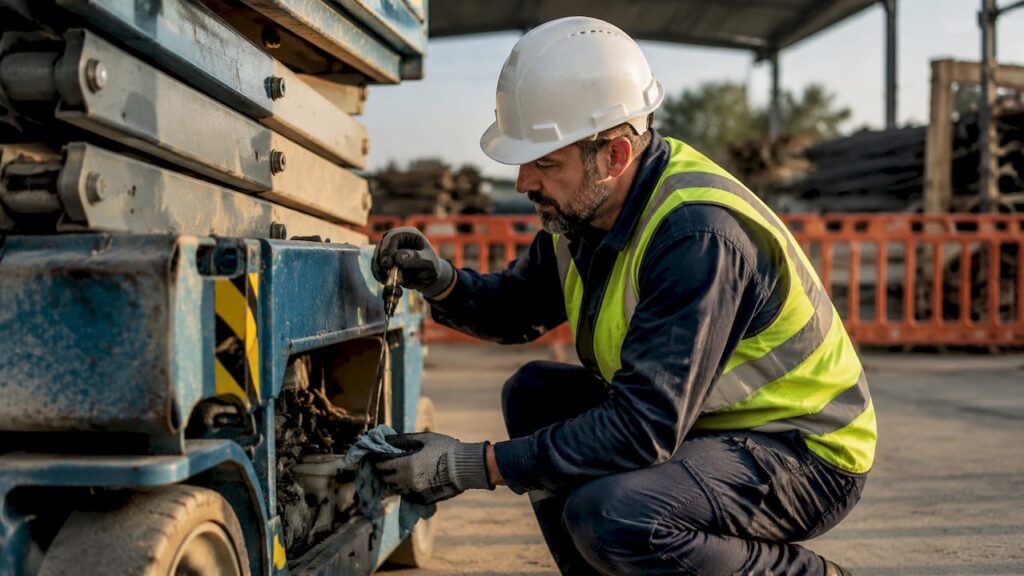
Daily pre-operation inspections are the first line of defense against scissor lift accidents. Inspections typically take 5–15 minutes and cover hydraulics, battery or fuel levels, guardrails, emergency stops, and tilt alarms. That short window is enough to catch the defects most likely to cause an incident during the shift.
A complete daily check covers these core items:
If you find a critical defect, tag the unit out of service immediately. Operators must test controls, emergency lowering systems, and tilt alarms daily before any lift is put into operation. Sending a defective machine onto a job site is not a judgment call.
Pro Tip: Keep a paper or digital inspection log at the machine. A 30-day history of pre-operation checks gives your maintenance team a pattern to work from and satisfies OSHA documentation requirements in a single step.
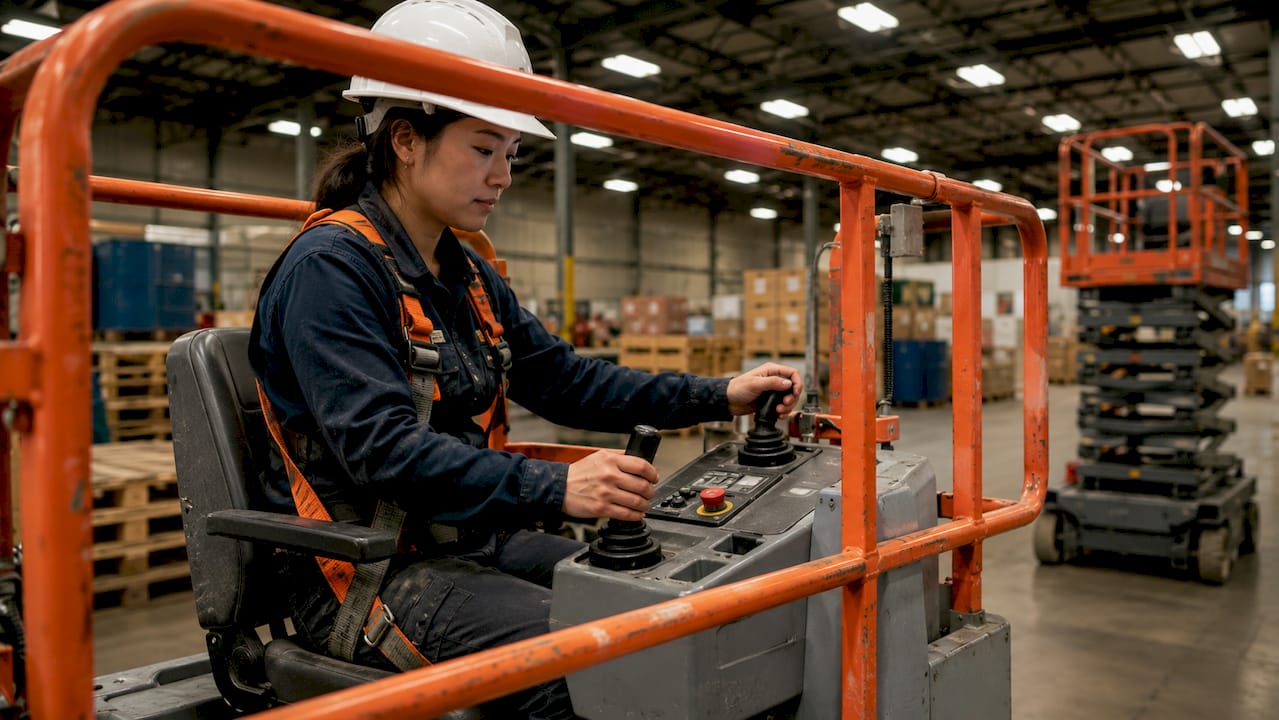
The hydraulic system is the most critical and maintenance-sensitive component in any scissor lift. Hydraulic failure can cause uncontrolled platform descent, which is one of the most dangerous failure modes in aerial work platform operation. No other system on the machine carries that level of consequence.
Scheduled hydraulic maintenance should include:
Hydraulic fluid degradation is a primary cause of valve and cylinder wear, which means fluid condition matters as much as fluid level. Most manufacturers recommend a full fluid change every 90 days or at a specified hour interval, whichever comes first.
Pro Tip: Use UV dye in the hydraulic reservoir during scheduled service. A UV flashlight during your next inspection will reveal micro-leaks invisible to the naked eye, catching problems weeks before they become failures.
Battery reliability is the difference between a productive shift and a stranded platform at height. Battery maintenance best practices include fully charging after each use, avoiding overcharging, inspecting terminals for corrosion, checking fluid levels in flooded lead-acid batteries, and keeping chargers clean. Each step is non-negotiable for electric scissor lifts.
Follow this numbered sequence for consistent battery health:
Lithium-ion scissor lifts require less fluid maintenance but still need terminal inspections and battery management system checks. Regardless of battery chemistry, electrical wear and corrosion left unaddressed will cause intermittent faults that are far harder to diagnose than a simple dead battery.
Structural failures on scissor lifts are rare, but when they occur, the consequences are severe. Structural repairs on scissor arms must be performed only by a certified structural engineer because improper welding creates heat-affected zones and residual stress that reduce fatigue life. This is not a repair your on-site maintenance team should attempt.
Inspect these structural and safety components on a scheduled basis:
Critical rule: Never grind, weld, or modify any load-bearing structural component without written approval from the original equipment manufacturer or a licensed structural engineer. Unapproved repairs void certifications and create liability that no insurance policy will cover.
Documentation and record-keeping of inspections and repairs are required for regulatory compliance and proactive maintenance management. Every structural inspection finding, even a “no defects noted” result, belongs in the machine’s service record.
Proper operator training is the foundation of consistent, reliable maintenance. A trained operator does not just run the machine. They recognize abnormal sounds, feel changes in platform response, and know exactly when to tag a unit out of service. That awareness catches problems that scheduled maintenance alone will miss.
Trained operators contribute to maintenance in these specific ways:
Integrating regular operator-led pre-use inspections with scheduled professional maintenance creates a safety culture that reduces both accidents and unplanned downtime. The two systems reinforce each other. One without the other leaves gaps.
Effective preventive maintenance for scissor lifts depends on matching the right task to the right interval. Maintenance schedules generally include daily pre-operation checks, periodic servicing every 90 days or after specified operating hours, and annual thorough inspections. High-usage fleets may need to compress those intervals.
| Interval | Key tasks | Responsible party |
|---|---|---|
| Daily | Pre-operation inspection, fluid visual check, control and safety device test | Operator |
| Monthly | Battery terminal cleaning, tire pressure check, lubrication of pivot points | Operator or technician |
| Quarterly (90 days) | Hydraulic fluid condition test, hose and seal inspection, brake adjustment | Certified technician |
| Annual | Full structural inspection, hydraulic fluid change, electrical system test, load test | Certified technician or OEM service |
High-cycle machines in warehouses or construction sites should treat the quarterly interval as a 250-hour interval instead. Machines that sit in storage for extended periods still require a full pre-operation inspection before returning to service, regardless of when the last scheduled service occurred.
Pro Tip: Attach a laminated service card to each machine showing the last service date and next due date for each interval. Technicians and operators can confirm compliance at a glance without pulling paper records.
Scissor lift maintenance requires daily operator inspections, scheduled hydraulic servicing, battery care, structural checks, and certified training to prevent failures and maintain OSHA compliance.
| Point | Details |
|---|---|
| Daily inspections are non-negotiable | Run a 5–15 minute pre-operation check every shift and tag out any critical defect immediately. |
| Hydraulic system is the highest-risk component | Follow manufacturer fluid change intervals and use UV dye to catch micro-leaks early. |
| Structural repairs need certified professionals | Never weld or modify scissor arms without OEM or structural engineer approval. |
| Battery care prevents mid-shift failures | Charge after every use, inspect terminals monthly, and test charger output regularly. |
| Training multiplies maintenance effectiveness | Certified operators catch defects faster, report accurately, and reduce equipment abuse. |
Most maintenance failures I’ve seen don’t come from ignorance of the checklist. They come from treating the checklist as a formality. Operators rush through pre-operation checks because nothing has gone wrong in months. Hydraulic fluid gets changed on the calendar date instead of when the fluid actually shows degradation. Structural cracks get noted in the log and then forgotten because no one owns the follow-up.
The programs that work share one trait. They treat the operator as the first technician, not just the person who drives the machine. When operators understand why they’re checking tilt alarms or feeling for hydraulic hesitation, they stop going through the motions. That shift in mindset is worth more than any inspection form.
Hydraulic system care deserves more attention than most teams give it. I’ve seen platforms descend unexpectedly because a hose fitting was weeping for weeks before anyone acted on it. The scissor lift safety tips that matter most are the ones tied directly to hydraulic integrity. Everything else is secondary.
Certification is not a one-time event. Operators and maintenance personnel who refresh their training regularly catch things that complacency hides. The operator workflow for safety compliance should be reviewed at least annually, even for experienced crews. The machine changes. The job site changes. The training needs to keep pace.
— Juiced
Maintenance knowledge only protects your team when it’s backed by proper certification. Forkliftacademy delivers OSHA-compliant scissor lift training for operators and maintenance personnel across the United States and Canada, available online and onsite.
Whether you need individual operator certification or a full train-the-trainer kit to certify your entire crew in-house, Forkliftacademy has a program built for your operation. The step-by-step scissor lift certification program covers pre-operation inspections, hydraulic system awareness, and OSHA compliance requirements in a format your team can complete without leaving the job site. Start your certification today and turn maintenance knowledge into verified competency.
A thorough daily pre-operation inspection takes 5–15 minutes. It covers hydraulics, controls, emergency stops, guardrails, tires, and battery or fuel levels.
Only a certified structural engineer or OEM-authorized technician can perform structural repairs. Unapproved welding on scissor arms creates residual stress that compromises the lift’s load-bearing capacity.
Most manufacturers recommend changing hydraulic fluid every 90 days or at a specified operating hour interval. High-cycle machines may require more frequent changes based on fluid condition testing.
The machine must be tagged out of service immediately and removed from operation. It cannot return to service until a qualified technician has inspected and cleared the defect.
Yes. OSHA-compliant scissor lift certification programs, including those offered by Forkliftacademy, train operators to perform pre-operation inspections, recognize defects, and follow correct tag-out procedures as part of their daily responsibilities.