
TL;DR:
- Proper forklift training significantly reduces accidents and liability risks in warehouses.
- OSHA mandates employers ensure all operators are trained, evaluated, and competent before use.
- Continuous training, cultural adaptation, and practical evaluation are key to effective safety programs.
Forklift accidents kill roughly 85 workers and seriously injure nearly 35,000 more every year in the United States. Most warehouse managers know forklifts are dangerous, yet many still assume experienced-looking operators just “know what they’re doing.” That assumption is costly. Lack of proper training is one of the leading causes of forklift incidents across U.S. facilities. OSHA-compliant forklift training is not a formality you schedule once and forget. It is a living system that protects your workers, shields your business from liability, and quietly boosts your operational output. This article breaks down the regulatory requirements, the real safety data, the efficiency gains, and the nuances most programs miss.
Table of Contents
- The regulatory imperative: OSHA requirements for forklift training
- Safety first: How forklift training reduces accidents and liabilities
- Efficiency gains: The operational and financial impact of trained operators
- Overlooked nuances: Language, culture, and the need for tailored training
- Why most forklift training fails — and how to get it right
- Get compliant and boost safety with expert forklift certification solutions
- Frequently asked questions
Key Takeaways
| Point | Details |
|---|---|
| Mandatory compliance | OSHA requires all businesses to train and evaluate forklift operators, making it a non-negotiable legal responsibility. |
| Proof reduces incidents | Proper, documented forklift training can decrease workplace accidents by up to 70%. |
| Higher efficiency and savings | Trained operators increase warehouse productivity while lowering equipment and injury costs. |
| Customization is crucial | Adapting training for language, experience, and real-world scenarios ensures better results and compliance. |
The regulatory imperative: OSHA requirements for forklift training
Many warehouse managers believe that hiring someone who has “driven a forklift before” satisfies their legal obligation. It does not. OSHA’s powered industrial truck standard places the burden squarely on the employer, not the worker’s prior experience.
Employers are responsible for ensuring every forklift operator is properly trained and evaluated before they operate any powered industrial truck. OSHA does not certify or approve specific training courses. Instead, it holds your business accountable for outcomes. If an untrained or improperly evaluated operator causes an incident, the liability lands on you.
Your training program must cover several critical topics:
- Stability triangle: Operators must understand how load weight, mast tilt, and speed affect a forklift’s center of gravity.
- Load capacity: Every truck has a rated capacity. Exceeding it is a leading cause of tip-overs.
- Pre-shift inspections: Operators must check brakes, steering, controls, and fluid levels before each shift.
- Pedestrian safety: Blind corners, speed limits, and horn use in shared spaces are non-negotiable.
- Language comprehension: Operators must genuinely understand the training, not just sit through it.
For a full breakdown of what your business must document and deliver, the business forklift training guide is a practical starting point. If you manage individual employees seeking certification, reviewing the employee forklift certification requirements will clarify what each operator needs to demonstrate.
“The standard is not about attendance. It is about demonstrated competency. An operator who sat through a video but cannot safely navigate a loaded pallet in your specific facility is not compliant.”
Fines for OSHA violations related to forklift training can reach thousands of dollars per citation, and repeat violations carry significantly higher penalties. Beyond fines, a single serious injury can trigger workers’ compensation claims, legal fees, and reputational damage that far exceeds the cost of a proper training program. Compliance is not optional, and the investment in getting it right pays for itself fast.
Safety first: How forklift training reduces accidents and liabilities
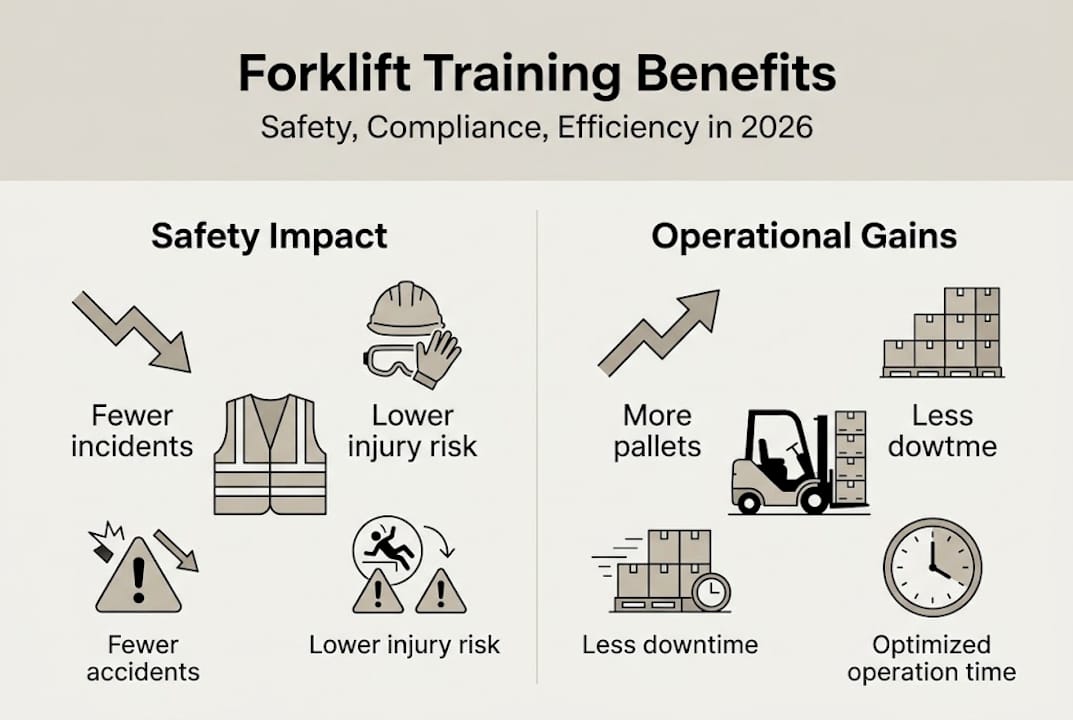
The numbers here are hard to argue with. Proper training cuts forklift incident rates by up to 70%. That is not a marginal improvement. That is a transformation in your facility’s risk profile.
Most warehouse injuries involving forklifts are preventable. Tip-overs, struck-by incidents, and falls from elevated platforms almost always trace back to operator error rooted in knowledge gaps. Trained operators understand the stability triangle intuitively. They know that turning at speed with a raised load is a recipe for a tip-over. They know to slow down at intersections even when no one is visible. Untrained operators guess.
| Metric | Trained operators | Untrained operators |
|---|---|---|
| Annual incident rate | Low (up to 70% fewer) | High baseline |
| Tip-over frequency | Rare | Common |
| Near-miss reports | Actively reported | Often ignored |
| Workers’ comp claims | Significantly lower | Significantly higher |
| OSHA citation risk | Minimal | Elevated |
The table above reflects patterns seen consistently across facilities that invest in structured, OSHA training effectiveness programs versus those that rely on informal on-the-job instruction.
One often-overlooked factor is operator alertness and fatigue management. Trained operators learn to recognize their own limits and report equipment issues before they become hazards. That kind of proactive behavior does not happen naturally. It is taught.
Pro Tip: Schedule refresher training at least once a year, even if OSHA only requires re-evaluation every three years. Habits erode. A short annual refresher tied to your forklift safety training program keeps awareness sharp and catches bad habits before they cause injuries.
The liability side is equally compelling. A single forklift fatality can cost a business millions of dollars in direct and indirect costs, including legal defense, settlements, increased insurance premiums, lost productivity, and regulatory scrutiny. Investing in proper training is not an expense. It is risk management with a measurable return.
Efficiency gains: The operational and financial impact of trained operators
Safety improvements are crucial, but how does forklift training boost productivity and profitability? The connection is more direct than most managers expect.
Trained operators move goods faster because they understand load dynamics. They pick, transport, and place pallets with fewer corrections and repositioning attempts. They also break fewer pallets, damage less racking, and cause fewer product losses. Every broken pallet and every dented rack section represents a direct cost to your operation.
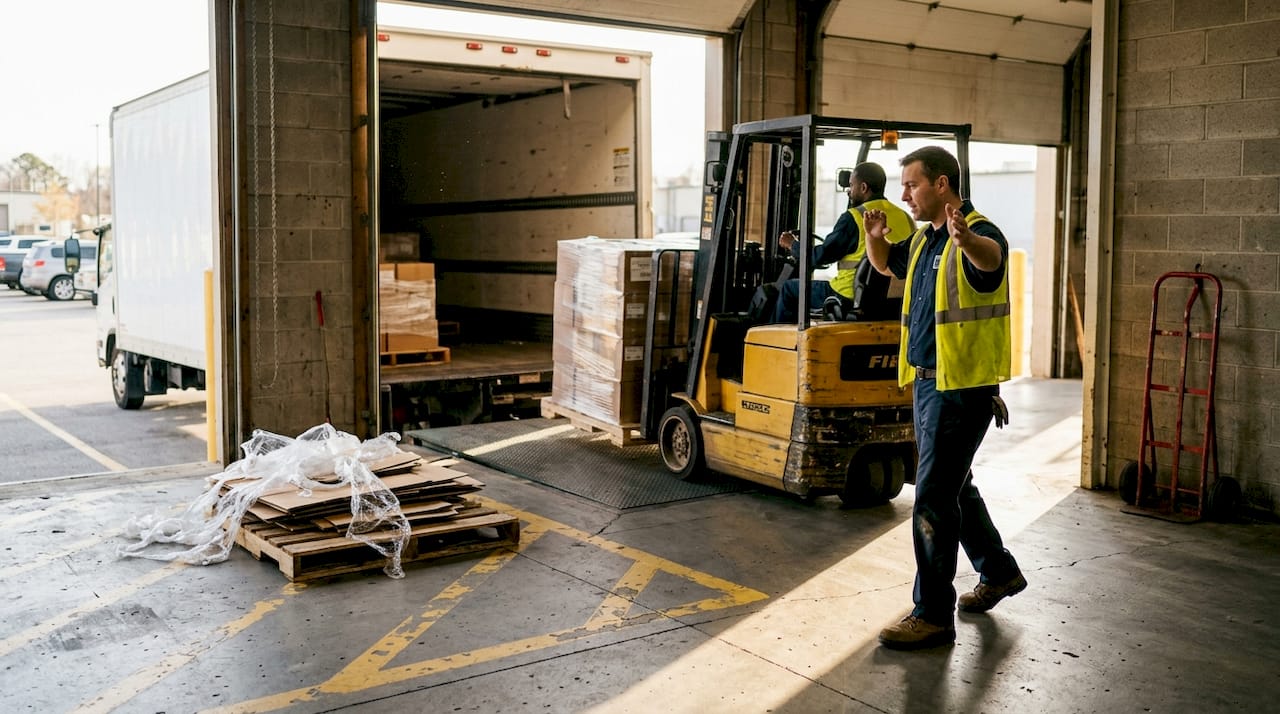
Training that includes classroom instruction, hands-on practice, and formal evaluation produces operators who understand the nuances of their specific equipment. They know how their truck behaves under different load weights. They know when to use the tilt function and when to leave the mast vertical. That knowledge translates directly into speed and precision.
| Performance metric | Trained team | Untrained team |
|---|---|---|
| Pallets moved per shift | Higher throughput | Lower throughput |
| Equipment damage incidents | Rare | Frequent |
| Maintenance costs (monthly) | Lower | Higher |
| Average equipment lifespan | Extended | Shortened |
| Downtime from incidents | Minimal | Significant |
For a deeper look at how certification connects to daily output, boosting warehouse efficiency through structured training is well-documented. And if you are wondering whether certification actually matters to operators themselves, exploring the importance of certification reveals how it affects both morale and performance.
Here is what the data shows in practice:
- Trained operators require fewer supervisor interventions per shift.
- Equipment maintenance cycles lengthen because operators use machines correctly.
- Downtime from minor collisions and load drops decreases sharply.
- Insurance premiums often drop when carriers see documented training records.
Pro Tip: Rotate operators through re-certification on a staggered schedule rather than all at once. This keeps at least one freshly evaluated operator on every shift and prevents the entire team from developing the same blind spots simultaneously.
The financial case for training is not theoretical. It shows up in your maintenance logs, your insurance invoices, and your throughput numbers. Managers who treat training as overhead miss the point entirely.
Overlooked nuances: Language, culture, and the need for tailored training
Beyond the basics, successful training means addressing workforce diversity. This is where many programs quietly fail.
OSHA does not just require that operators attend training. It requires that they comprehend it. Language comprehension is required; employers must tailor training to ensure genuine understanding, not just attendance. If a significant portion of your workforce speaks Spanish, Somali, or another language as their primary language, running an English-only training program does not satisfy your compliance obligation.
Here are steps to adapt your forklift training for a diverse team:
- Assess your workforce’s language needs before selecting a training format or vendor.
- Source bilingual training materials or use platforms that offer multiple language options.
- Use visual demonstrations and hands-on practice to reinforce concepts that may not translate cleanly.
- Test comprehension directly through practical evaluations, not just written quizzes.
- Document everything including the language accommodations you made and each operator’s demonstrated competency.
“The stability triangle is a physics concept. An operator who does not fully understand it in their own language will not internalize it during a stressful moment on the floor. Training must reach the person, not just the room.”
Cultural factors also shape how workers respond to authority, report near-misses, and follow safety protocols. A training program that ignores these dynamics will produce compliant paperwork and unsafe behavior. Understanding why forklift certification matters goes beyond legal requirements. It is about building a team that actually operates safely. Exploring the benefits of online certification can also help managers find flexible formats that accommodate diverse schedules and learning styles without sacrificing OSHA compliance.
Why most forklift training fails — and how to get it right
After more than 20 years working in forklift safety education, we have seen the same pattern repeat itself: a company schedules training, operators watch a video or sit through a lecture, paperwork gets filed, and everyone moves on. Six months later, the same bad habits are back.
The uncomfortable truth is that most forklift training is designed to satisfy a checklist, not to change behavior. Training that ignores daily habits and work culture simply does not stick. Operators revert to what feels natural, which is usually what they learned informally from a coworker who also learned informally.
What actually works is a different model entirely. Ongoing mentorship, where experienced operators coach newer ones on the floor, reinforces formal training in real conditions. Regular refresher evaluations catch drift before it becomes dangerous. Peer learning, where operators share near-miss experiences without fear of punishment, builds collective awareness that no classroom can replicate.
Managers who understand qualities of warehouse leadership know that safety culture starts at the top. When a manager treats training as a one-off mandate, operators treat it the same way. When a manager champions it as part of how the team operates, it becomes part of the team’s identity. That shift is where real safety gains live.
Get compliant and boost safety with expert forklift certification solutions
If this article has clarified one thing, it is that effective forklift training is not a single event. It is a system. Building that system does not have to be complicated, but it does require the right tools and the right partner.
At Forklift Academy, we have spent over 20 years helping warehouse operations across the U.S. build OSHA-compliant training programs that actually work. Whether you need a train the trainer online program to empower your internal safety leads, or you want to explore our full range of OSHA forklift certification options for your team, we have solutions built for real warehouse environments. Take the next step toward a safer, more efficient operation today.
Frequently asked questions
Is forklift training required by law for all U.S. businesses?
Yes, OSHA mandates that all forklift operators must be trained and evaluated by their employers before operating any powered industrial truck, regardless of prior experience.
How often is forklift training or re-certification required?
Re-evaluation every three years is the minimum, but OSHA also requires it sooner if an operator is observed operating unsafely, if there is an accident, or if workplace conditions change significantly.
Can businesses use online forklift training to meet OSHA standards?
Online training can satisfy the theory and classroom components, but OSHA requires hands-on and practical evaluation components that must be documented by the employer at the actual worksite.
What are the biggest mistakes businesses make with forklift training?
The most common errors are failing to account for language comprehension requirements, skipping refresher evaluations, and treating initial certification as a permanent credential rather than the starting point of an ongoing safety process.
Recommended
- Forklift training: boost safety and efficiency in 2026 – Top Osha Forklift Certification
- Business forklift training guide: OSHA compliance 2026 – Top Osha Forklift Certification
- Step by step forklift training for OSHA compliance 2026 – Top Osha Forklift Certification
- Forklift safety checklist 2026: ensure OSHA compliance – Top Osha Forklift Certification