

TL;DR:
- OSHA enforcement in warehouses relies on multiple standards under 29 CFR Part 1910 rather than a single dedicated warehouse regulation.
- Key compliance areas include forklift certification, aisle marking, hazard communication, and heat hazard controls, which heavily influence inspection priorities.
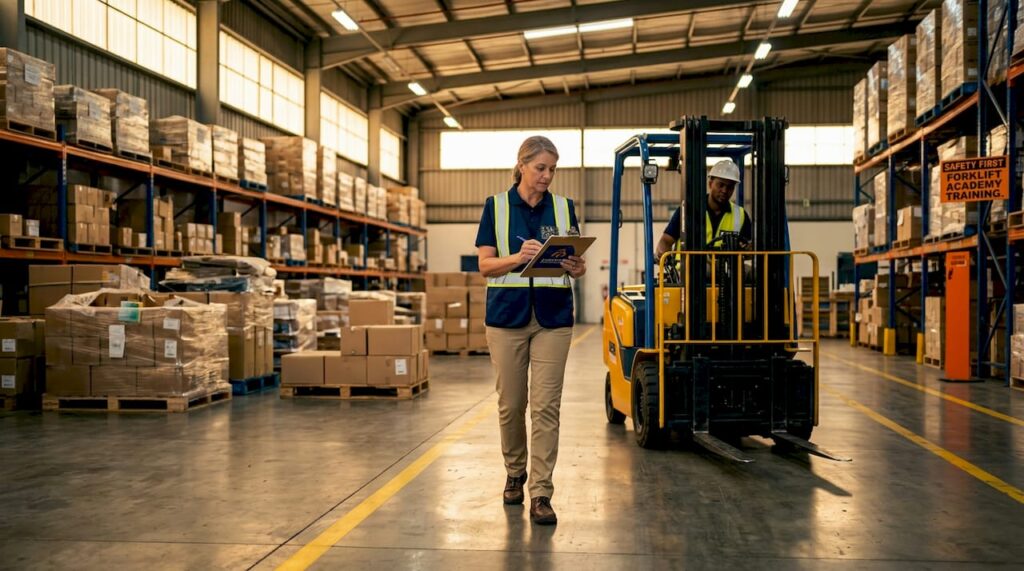
Understanding the role of OSHA in warehouses is harder than most managers expect, and not because the rules are buried in obscure federal text. The real challenge is that there is no single “warehouse standard” in OSHA’s rulebook. Warehouse operations fall under a patchwork of general industry regulations, primarily 29 CFR Part 1910, and knowing which rules apply to your specific hazards is what separates a compliant facility from one that gets hit with five-figure citations. This guide breaks down exactly which standards apply, what inspectors are targeting right now, and how to build a program that holds up year-round.
| Point | Details |
|---|---|
| No single OSHA warehouse standard | Warehouses operate under general industry rules in 29 CFR Part 1910, requiring hazard-specific compliance mapping. |
| Forklift violations top citation lists | Certified operators, documented training, and daily equipment inspections are non-negotiable under OSHA standards. |
| Aisle marking must be permanent | Temporary or low-durability markings violate 1910.176(a) and are among the most common warehouse citations. |
| NEPs reshape inspection priorities | OSHA’s National Emphasis Programs, including the 2026 heat hazard update, directly shift where inspectors focus first. |
| Written programs are required | HazCom, Lockout/Tagout, and Emergency Action Plans must be documented, maintained, and accessible to staff. |
The Occupational Safety and Health Administration (OSHA) does not publish a document titled “Warehouse Standard.” What it does publish is a set of general industry standards under 29 CFR Part 1910 that apply to virtually every warehouse in the country. Your compliance obligation is to identify which of those standards map to your specific operations, equipment, and hazards.
Here are the primary OSHA standards that every warehouse manager should know by name:
Beyond those standards, warehouses storing specific chemicals may trigger requirements under the Process Safety Management standard (1910.119). Facilities using compressed gas, respirators, or powered platforms have their own overlapping obligations.
Pro Tip: Build a “hazard map” for your facility by walking each work zone and listing every task, chemical, and piece of equipment. Then match each item to its governing OSHA standard. This one exercise will surface gaps you did not know existed.
The importance of OSHA in workplaces like warehouses is not abstract. When a worker is struck by a forklift or exposed to ammonia from a leaking refrigeration system, the question an OSHA inspector asks is not “Did you read the warehouse standard?” It is “Did you comply with 1910.178 and 1910.119?” The standard-specific framing is what matters in enforcement.
Many managers operate under a quiet assumption: if they have not been inspected in years, they must be doing something right. That logic is worth discarding.
OSHA inspections are largely complaint-driven or triggered by serious incidents like fatalities, amputations, or hospitalizations. The agency does not have enough inspectors to routinely walk through every facility. That staffing reality does not mean low compliance risk. It means the moment something goes wrong, an inspector will arrive, and they will not limit their review to the incident alone.
OSHA citations fall into four categories, and the financial stakes vary sharply:
The impact of OSHA on warehouse operations sharpens considerably when you factor in National Emphasis Programs (NEPs). OSHA’s Warehouse and Distribution Center NEP has been running since 2022, targeting facilities that use mechanical handling equipment. Separately, OSHA updated its heat hazard NEP in 2026, using data collected from 2022 through 2025 to refocus inspection resources on high-risk indoor environments, including warehouses with limited climate control.
Current inspection priority areas under these programs include forklift safety, aisle clearance, heat exposure controls, ergonomics, and fire egress. If your facility operates forklifts in a non-climate-controlled building, you are effectively at the center of OSHA’s current enforcement map.
Three compliance areas generate the most citations and the most injuries in warehouses. Getting these right is the fastest way to reduce both inspection risk and actual harm.
The regulation requires that aisles in areas where mechanical handling equipment operates be “appropriately marked.” What it does not specify is the color or exact width. That flexibility sounds like good news, but it creates a trap. Many facilities mark aisles with paint that chips, tape that peels, or floor striping that fades within a season.
Permanent, durable aisle markings are the standard OSHA actually enforces. Thermoplastic paint, epoxy coatings, and recessed floor markers all satisfy the “permanently marked” requirement far better than adhesive tape. Aisle width should allow equipment to pass with clearance on both sides, and pedestrian walkways should be visually distinct from forklift lanes.
| Marking Type | Durability | OSHA Citation Risk |
|---|---|---|
| Adhesive tape | Low (months) | High |
| Standard floor paint | Medium (1-2 years) | Medium |
| Epoxy coating | High (5+ years) | Low |
| Thermoplastic striping | High (5+ years) | Low |
Forklift violations rank among the top OSHA citations in warehouses, and the root cause is almost always one of three things: untrained operators, missing pre-shift inspection records, or equipment that should have been pulled from service.
OSHA requires that every forklift operator be evaluated and certified before operating a powered industrial truck. That certification must be specific to the truck type. An operator certified on a sit-down counterbalance forklift is not automatically authorized to operate a reach truck. Refresher training is required when an operator is observed operating unsafely, is involved in an incident, or when new equipment is introduced.
Pro Tip: Keep a binder or digital log at each forklift with the pre-shift inspection checklist and operator certification records. When an OSHA inspector walks in after an incident, having documentation immediately available is the difference between a citation and a resolved review.
You can find a complete breakdown of these requirements in Forkliftacademy’s forklift compliance checklist for 2026, which maps inspection items directly to OSHA standards.
Heat hazard compliance requires multi-year planning, not a water cooler and a memo. OSHA’s updated 2026 NEP expects employers in high-risk environments to have documented acclimatization programs for new and returning workers, reliable access to cool water near work areas, rest and shade opportunities, and training for supervisors to recognize early heat illness symptoms.
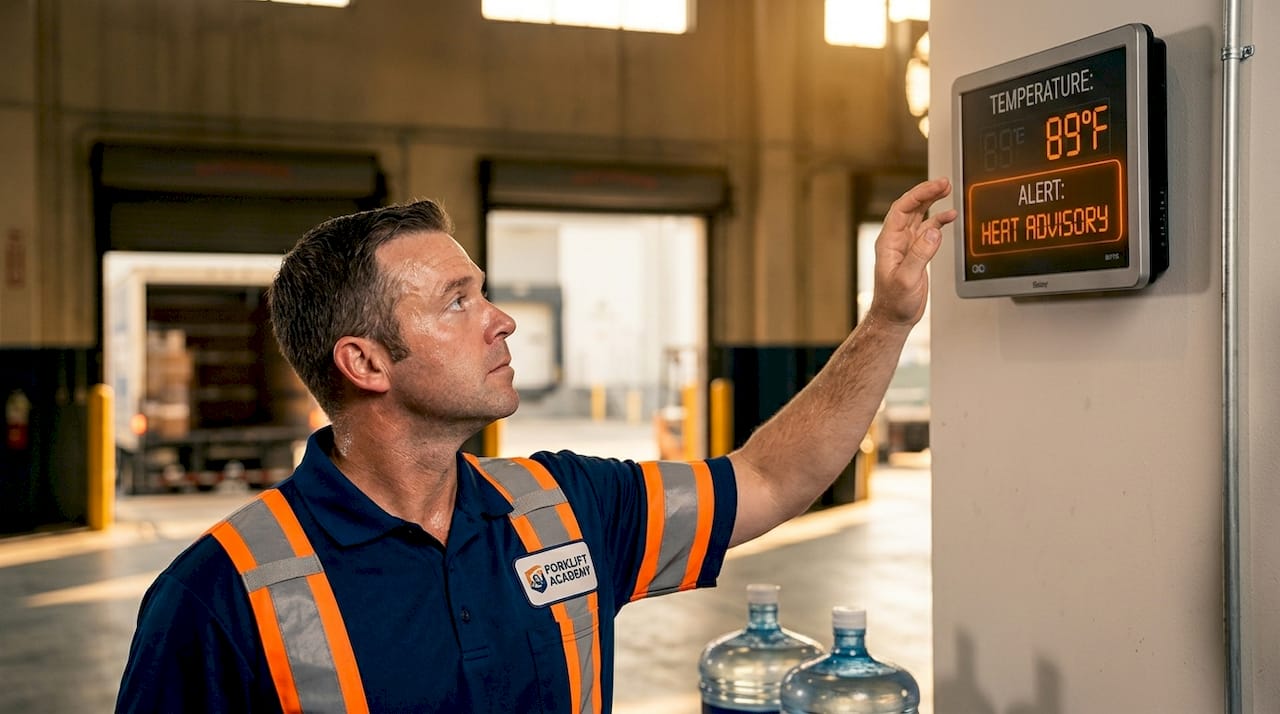
Warehouses with metal roofs, loading docks that stay open in summer, and limited mechanical ventilation are inspection targets. Document your controls, not just your intentions.
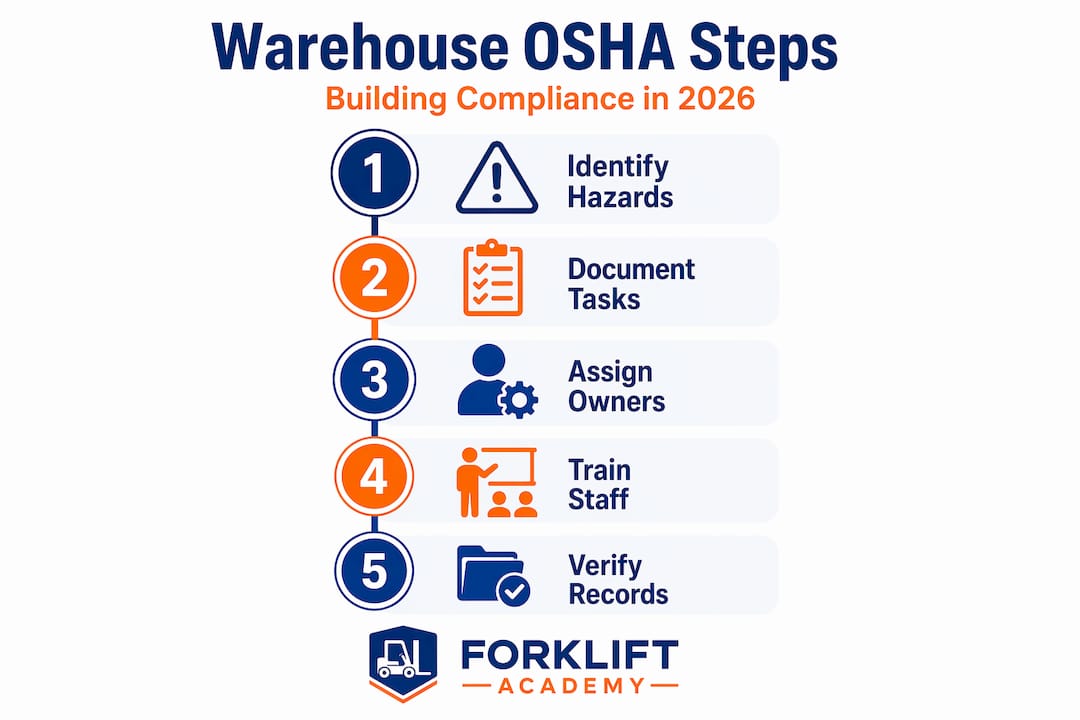
A compliance program is not a binder that sits on a shelf until an inspector asks for it. It is a living set of documents, training records, and audit habits that reflect how your facility actually operates. Here is how to build one that works:
Pro Tip: Assign a specific compliance owner for each written program, not just a safety department in general. When one person is accountable for keeping the HazCom program current, it actually stays current.
An OSHA job safety analysis (JSA) is also worth incorporating into your program. A JSA breaks each job task into steps, identifies the hazard in each step, and documents the control measure. For warehouse roles like forklift operator, dock worker, and picker, a completed JSA doubles as training documentation and demonstrates due diligence during inspections.
I have reviewed compliance programs across warehouses of every size, and the single most common failure is treating OSHA compliance as a checklist to complete rather than a culture to maintain. Managers assume they covered a topic in new-hire orientation and never revisit it. Three years later, operators are doing things they were told not to do, and nobody noticed because nobody was looking.
The “single warehouse standard” myth feeds directly into this. When managers believe there is one document that covers everything, they stop mapping new hazards to new standards. They miss the updated heat NEP. They do not realize that a new chemical in the cleaning crew’s supply closet triggered a HazCom obligation. The gap between what they think they are complying with and what OSHA actually requires grows quietly, until an incident closes it loudly.
What actually works is simpler than most people expect. Assign owners, document everything, run your own inspections before OSHA does, and stay current on NEP updates. Operators who understand why a rule exists follow it more reliably than operators who were just told what the rule is. That means connecting safety training for warehouse staff to real outcomes, not just regulatory checkboxes.
Proactive compliance is not just a legal strategy. It is the only one that actually prevents people from getting hurt.
— Juiced
Meeting OSHA compliance warehouse requirements means more than posting a policy. Your operators need documented, verifiable training that holds up when an inspector asks for records.
Forkliftacademy has delivered OSHA-compliant forklift training for over 20 years, with programs built specifically for warehouse environments. Whether you need to certify a single new hire or roll out training across multiple shifts, the Train the Trainer program lets your internal safety leaders deliver OSHA-compliant instruction and issue operator certification cards on the spot. For companies managing compliance across a large workforce, the business certification program offers a scalable solution with the documentation your compliance records require.
OSHA regulates warehouses under general industry standards in 29 CFR Part 1910, covering areas like forklift operation, hazard communication, aisle marking, lockout/tagout, and emergency egress. There is no single dedicated warehouse standard.
Warehouse inspections are primarily triggered by employee complaints, serious incidents, or targeted National Emphasis Programs. Routine scheduled inspections are not common, but NEPs like the Warehouse and Distribution Center program increase the likelihood of targeted visits.
Forklift-related violations top the list, including lack of operator certification and missing pre-shift inspection records. Aisle marking deficiencies under 1910.176(a) and incomplete hazard communication programs are also frequently cited.
Yes. OSHA’s 1910.178 standard requires that all forklift operators be trained and evaluated before operating any powered industrial truck, and that training be specific to the type of equipment they will use.
OSHA’s updated 2026 heat hazard National Emphasis Program targets high-risk indoor environments including warehouses, alongside continued focus on forklift safety, aisle marking, and ergonomics from the Warehouse and Distribution Center NEP.