

TL;DR:
- Pallet jacks are essential for floor-level pallet movement and impact safety and efficiency.
- Proper training, maintenance, and choosing the right type improves safety and operational performance.
- OSHA requires formal certification for powered jacks and emphasizes consistent safe practices.
Warehouse managers often spend thousands of dollars on forklifts and complex material handling systems while barely giving pallet jacks a second thought. That oversight is costly. Pallet jacks are the workhorses behind most day-to-day floor-level movement, and when operators don’t fully understand how they work, accidents happen, loads get damaged, and efficiency drops. This article breaks down exactly how pallet jacks function, the core differences between manual and electric models, and the safety practices and training standards that separate high-performing warehouses from ones constantly putting out fires.
| Point | Details |
|---|---|
| Pallet jacks are essential | Proper use of pallet jacks dramatically improves warehouse safety and operational speed. |
| Manual vs. electric | Both types serve different needs; selection depends on your load, frequency, and workspace. |
| Training prevents accidents | Routine training and compliance checks reduce injuries and support OSHA compliance. |
| Safety is everyone’s job | Regular inspections and following best practices minimize risk and downtime. |
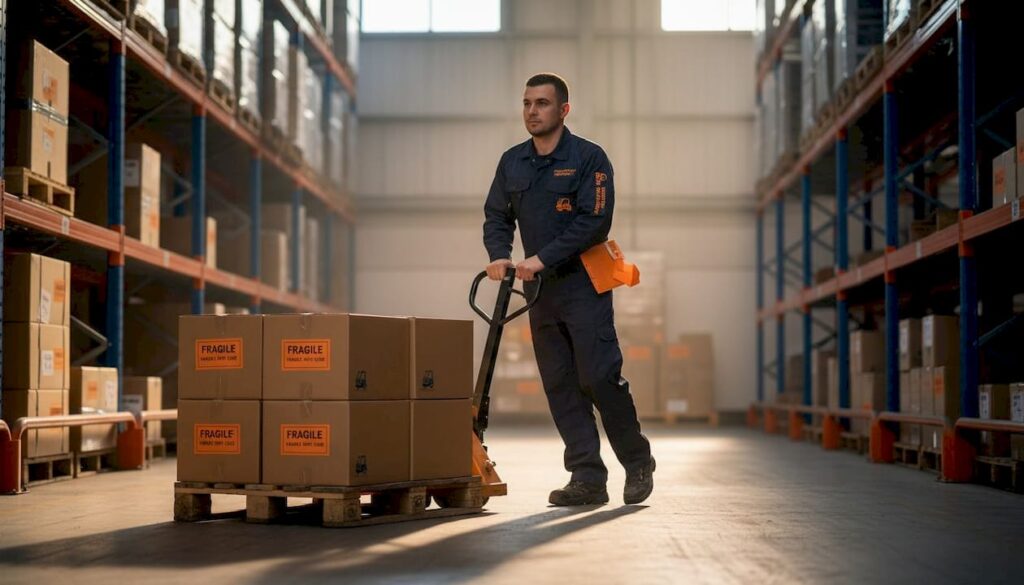
A pallet jack, sometimes called a pallet truck, is a wheeled tool used to lift and move pallets short distances within a warehouse, distribution center, or retail stockroom. Unlike a forklift, a pallet jack is designed for floor-level movement rather than vertical stacking. It slides its forks into pallet openings, raises the load just enough to clear the floor, and lets the operator wheel it to a new location.
There are two primary types every logistics manager should know:
Understanding what is a pallet jack in transportation and logistics environments, particularly in warehouses, is foundational for any team managing material flow safely and consistently.
Why does this matter operationally? Because pallet jacks handle the final stretch of nearly every inbound and outbound move in a warehouse. Improper use leads to pinched feet, tipped loads, and musculoskeletal injuries from overexertion. In fact, improper manual handling and material movement are among the top causes of workplace injuries in warehouse and distribution environments.
Here’s what effective pallet jack use directly impacts:
“The pallet jack may be the simplest powered tool on your floor, but it’s also the one your team touches most. Small technique errors, repeated dozens of times a day, create outsized risk.”
Manual jacks suit lighter loads and shorter distances, while electric pallet jack basics become critical when your team is handling heavier freight or covering longer floor distances repeatedly throughout a shift.
Pallet jacks operate on a surprisingly elegant combination of hydraulics and simple physics. Understanding the core components helps your team operate more confidently and troubleshoot problems faster.
Key components of a pallet jack:
Step-by-step manual pallet jack operation:
The operating pallet jacks process for electric models replaces hand pumping with a button or trigger control, but the fork insertion and load verification steps remain identical.
| Step | Manual pallet jack | Electric pallet jack |
|---|---|---|
| Lifting method | Hand pump (hydraulic) | Motor-driven hydraulic system |
| Propulsion | Operator pushes or pulls | Self-propelled via motor |
| Speed | Slow, operator-dependent | Faster, consistent speed |
| Operator fatigue | Higher on long shifts | Significantly reduced |
| Precision control | Moderate | High, with speed controls |
Pro Tip: Always check the load capacity label on the jack before moving an unfamiliar load. Overloading a manual jack by even 10 to 15 percent can cause hydraulic seal failure and sudden load drops. The pallet jack safety steps for beginners cover this in detail, and it’s worth reviewing with your whole team, not just new hires.
Now that you understand how each type works mechanically, the real management decision is knowing which tool belongs where in your operation. Choosing wrong doesn’t just affect productivity. It creates safety risk.
The differences between forklift vs pallet jack tools go well beyond size. Within the pallet jack category itself, manual and electric models serve distinct operational roles. Matching the right equipment to the right task is a foundational management decision.
| Feature | Manual pallet jack | Electric pallet jack |
|---|---|---|
| Weight capacity | Up to 5,500 lbs typically | Up to 8,000 lbs or more |
| Travel distance | Short runs (under 100 ft) | Medium to long runs |
| Operator fatigue | High on repeated use | Low |
| Training required | Basic site training | Formal certification often required |
| Initial cost | Low ($300 to $800) | Higher ($2,000 to $8,000+) |
| Maintenance needs | Minimal | Battery and motor servicing |
When to use a manual pallet jack:
When to choose an electric pallet jack:
When using electric pallet jacks in narrow aisles, operators need specific training on speed control and turning radius. Electric models respond differently than manual jacks, and an untrained operator can easily clip racking or cause a tip-over when cornering too fast.
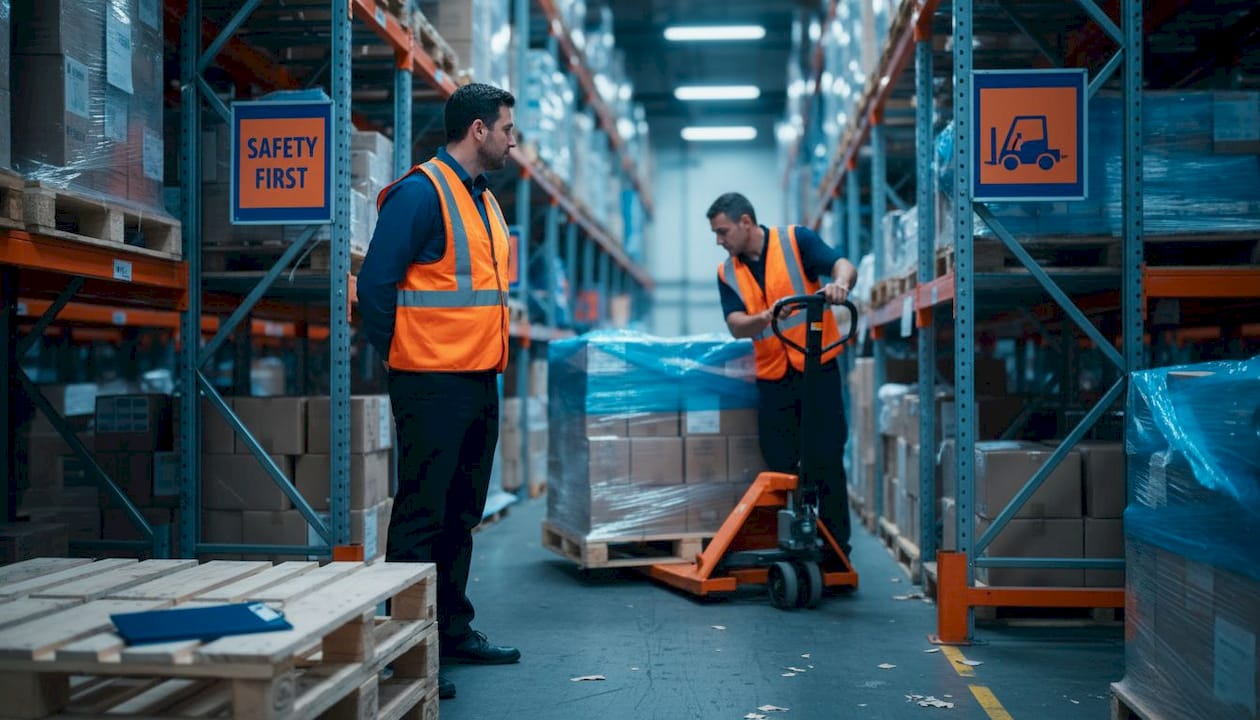
A good rule of thumb: if your operators are covering more than 50 feet per move or handling more than 10 to 15 loads per shift, an electric model will pay for itself quickly in reduced injury costs and faster throughput.
Selecting the right pallet jack only gets you halfway there. Safe, efficient use comes from consistent habits and pre-shift routines. Most warehouse accidents involving pallet jacks aren’t equipment failures. They’re human error, and they’re preventable.
The pallet jack inspection checklist covers the recommended safety protocols and best practices when operating a pallet jack in the logistics industry. Running this check before each shift is non-negotiable for well-run operations.
Essential pre-shift safety checks:
Common operational mistakes to avoid:
“The moment pallet jack operation feels routine is the moment operators stop seeing hazards. Complacency is the hidden variable behind most warehouse near-misses.”
The operator responsibilities for pallet jack use include load assessment, pathway clearance, and post-use storage. These aren’t optional habits. They’re part of an operator’s professional duty.
Pro Tip: Run a five-minute tailgate safety check at the start of each shift. Have operators verbally confirm one safety habit out loud. This keeps protocols top of mind and builds a culture where safety is active, not passive.
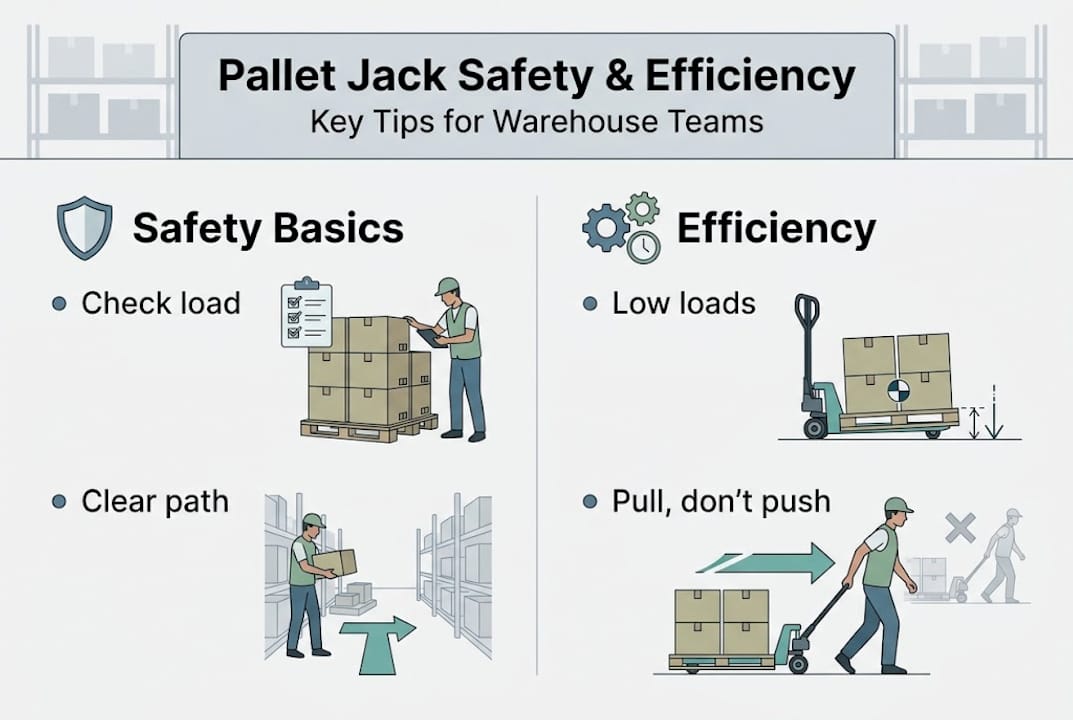
Best practices for maneuvering and stacking include always pulling a loaded jack (not pushing), keeping the load as low as possible during travel, and never attempting to turn sharply when moving at speed. When approaching doorways, ramps, or intersections, slow down and check for foot traffic before proceeding.
Here’s where many logistics managers make a critical assumption: they assume that because pallet jacks look simple, training is optional or covered by a quick verbal walkthrough. OSHA does not agree with that approach.
The Occupational Safety and Health Administration (OSHA) standard 29 CFR 1910.178 governs powered industrial trucks, which includes electric pallet jacks. Operators of powered pallet jacks are required to complete formal training and evaluation before independent operation. Manual pallet jacks, while not always classified as powered industrial trucks, still fall under OSHA’s General Duty Clause, meaning employers are responsible for providing adequate training to prevent recognized hazards.
Steps to build a compliant pallet jack training program:
The pallet jack certification process typically covers equipment inspection, safe operating procedures, load handling, and emergency response. Certification for hands-on forklift and electric pallet jack training covers the types of training and certification required for safe pallet jack operation in the transportation sector.
The cost of non-compliance:
OSHA can issue fines of up to $16,131 per serious violation and up to $161,323 for willful or repeated violations as of current penalty schedules. Beyond fines, a single pallet jack injury can result in workers’ compensation claims averaging tens of thousands of dollars, lost productivity, and potential litigation. Training is dramatically cheaper than any of those outcomes.
For warehouses running multiple shifts, a train-the-trainer approach is especially effective. You certify one or two internal trainers who can then evaluate and document operator competency on an ongoing basis, keeping your facility current without sending every new hire to an external course.
After years of working with warehouse operations across the country, the pattern is clear: most teams treat pallet jacks as a background tool. They’re handed to new hires on day one with minimal instruction, then used the same way for years without anyone questioning whether that method is safe or efficient.
The reality is that pallet jacks, when used strategically, can reshape floor-level workflow. The opportunity isn’t in the equipment itself. It’s in how you organize the work around it. Teams that redesign travel paths, assign equipment by task type, and train operators on load positioning consistently see fewer incidents and measurably faster throughput.
The managers who get the most from their pallet jacks are the ones who model proper technique themselves. When leadership demonstrates a pre-shift inspection or calls out a correct turn radius, it signals that these habits are serious, not optional. That cultural shift is more powerful than any new equipment purchase.
Start by revisiting what your team actually knows about pallet jack basics. You may find that foundational gaps are driving inefficiencies you’ve been attributing to other causes.
Knowing how pallet jacks work is the first step. Closing the gap between knowledge and consistent, certified practice across your team is where real operational gains happen.
At Forklift Academy, we’ve built OSHA-compliant certification programs designed specifically for warehouse and logistics teams. Whether you need OSHA forklift certification for a single operator or want to scale safety across your entire floor with our train the trainer programs, we have the tools to make it straightforward. With over 20 years of experience and both online and onsite options, Forklift Academy helps your team operate with confidence, stay compliant, and reduce the incident rates that cost warehouses time and money every year.
Typical manual pallet jacks are rated for loads up to 5,500 lbs, but always check the manufacturer’s specifications before handling any unfamiliar load since capacity varies by model and age of equipment.
Certification is required by OSHA for powered pallet jacks and recommended for manual jacks. Site-specific hands-on training ensures operators are evaluated before independent operation, which is a key OSHA compliance requirement.
Regular inspection, lubrication of moving parts, and wheel condition checks are essential for both safety and equipment longevity. The pallet jack inspection checklist outlines everything operators and supervisors should review before each shift.
It’s best to avoid using pallet jacks on steep ramps or uneven ground because the stability risks are significant. On slight inclines, always keep the load on the uphill side and move slowly with full control.