
TL;DR:
- Neglecting proper scissor lift inspections creates unsafe conditions for workers operating at heights. A structured inspection program, covering visual and functional checks based on OSHA and ANSI standards, minimizes safety risks. Thorough, documented daily inspections and tailored checklists enhance compliance, operator confidence, and overall safety culture.
A neglected scissor lift inspection procedure doesn’t just create paperwork problems. It creates conditions where a worker 20 feet off the ground is operating equipment nobody has actually checked that day. OSHA expects a daily pre-use inspection by the operator before every shift, yet this single requirement is one of the most inconsistently applied in workplaces across the country. For safety managers, a structured inspection program is how you close that gap between written policy and what actually happens on the floor.
Table of Contents
- Preparation: Understanding inspection requirements and checklist essentials
- Execution: Step-by-step daily scissor lift inspection procedure
- Verification: Recording inspections and handling incidents effectively
- Common challenges and expert tips to optimize inspection compliance
- The hidden value of a tailored inspection program beyond regulatory compliance
- Ensure compliance with top OSHA forklift and scissor lift certifications
- Frequently asked questions
Key Takeaways
| Point | Details |
|---|---|
| Daily pre-use inspections | Operators must perform daily visual and functional checks to catch defects before lift operation. |
| ANSI periodic inspections | More detailed frequent and annual inspections complement daily checks to maintain safety and compliance. |
| Detailed documentation | Records must detail findings and corrective actions to support OSHA compliance and audits. |
| Incident-based inspections | Any lift involved in accidents must be inspected by a competent person before use resumes. |
| Tailored programs | Customizing checklists and linking training with inspections improves safety and reduces downtime. |
Preparation: Understanding inspection requirements and checklist essentials
Before anyone climbs onto a platform, you need a clear picture of what the rules actually require and what your checklist must cover. The regulatory framework here has two main layers: OSHA and ANSI.
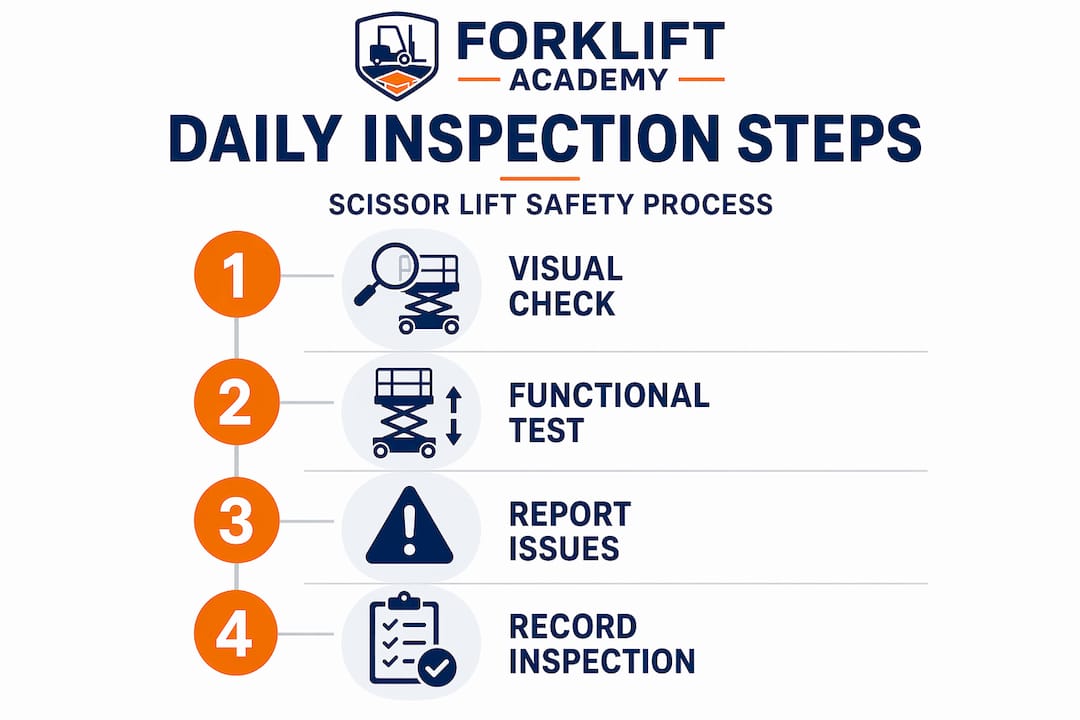
OSHA sets the baseline. Under 29 CFR 1926.502 and General Industry standards, operators must perform a pre-use inspection before every shift. This is non-negotiable. If your team is operating three shifts, that means three inspections per machine per day. Daily inspections must include visual and functional checks of controls, safety devices, hydraulic and electrical systems, and guardrails.
ANSI/SAIA A92 standards complement OSHA by defining periodic inspections (typically every three months or based on hours of use) and annual inspections performed by a competent person. Many companies treat the ANSI standards as optional, but your insurer and legal team will disagree after an incident.
The key principle for scissor lift compliance standards is separating your checklist into two distinct phases: visual and structural checks first, then functional tests. Running them together leads to missed items.
Core checklist categories
- Tires and wheels: Check for damage, correct pressure (on pneumatic models), and secure lug nuts
- Hydraulic system: Inspect hoses, fittings, and cylinders for leaks or visible wear
- Structural components: Look for cracks, bent frame members, or weld failures
- Guardrails and gates: Confirm all rails are locked, undamaged, and at the correct height
- Controls: Test both platform and ground-level controls for proper response
- Brakes and drive system: Verify parking brake holds and drive engages correctly
- Safety devices: Test the tilt sensor, emergency lowering system, and any outrigger interlocks
- Battery or fuel: Check charge level, fluid levels, or fuel supply depending on power type
| Inspection category | Visual check | Functional test required |
|---|---|---|
| Tires and wheels | Yes | No (inflation check only) |
| Hydraulic system | Yes | Yes (raise/lower test) |
| Guardrails and gates | Yes | Yes (lock test) |
| Controls and emergency stop | No | Yes |
| Brakes | No | Yes |
| Safety devices (tilt sensor) | No | Yes |
| Structural frame | Yes | No |
Pro Tip: Pull out the scissor lift user manual for every model in your fleet and verify that your checklist addresses every safety device listed. A generic checklist is a liability waiting to surface.
Execution: Step-by-step daily scissor lift inspection procedure
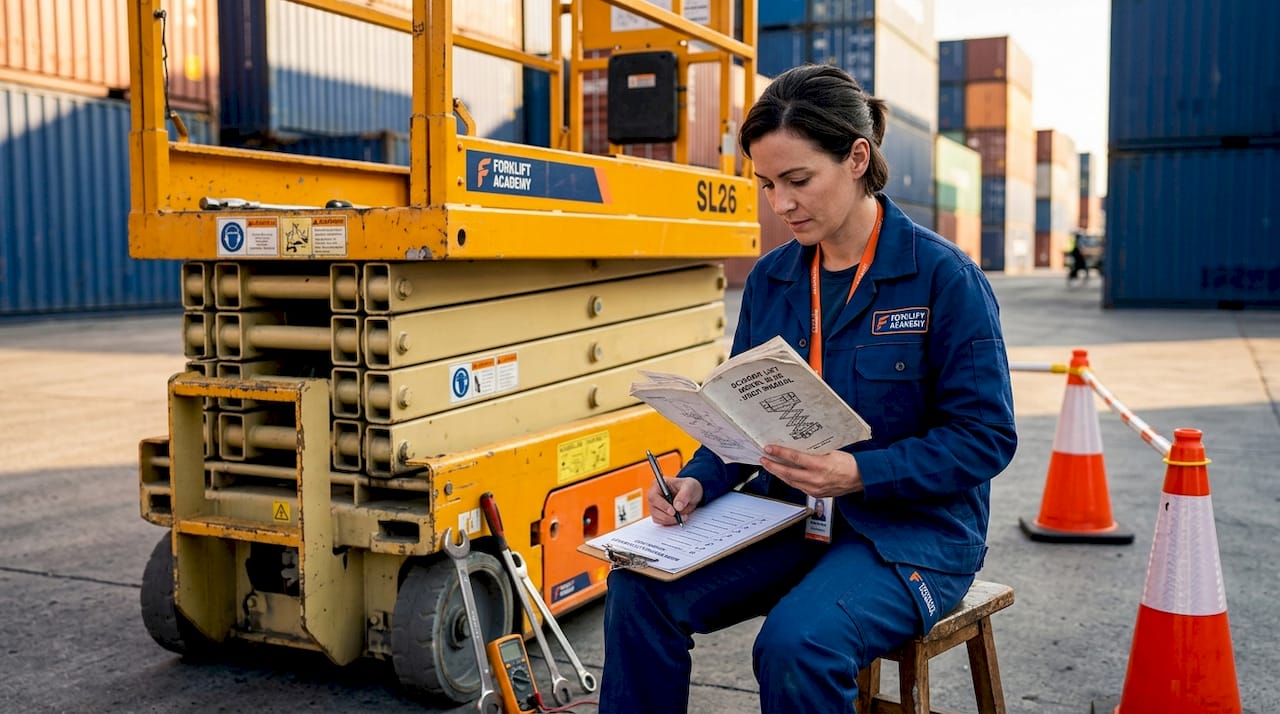
This is where documentation meets reality. Follow these steps in sequence. Skipping steps or reordering them is exactly how hazards get missed.
Step-by-step daily inspection
- Review the previous shift’s inspection record. Check for any noted defects. If a defect is unresolved, the machine stays grounded until repaired. Never assume someone else handled it.
- Conduct a full visual walk-around at ground level. Look for hydraulic fluid puddles under the machine, damaged hoses, bent or cracked frame components, missing hardware, and tire condition. Walk the entire perimeter, not just the operator side.
- Check the work platform. Inspect the floor for damage or debris. Confirm all guardrails are in place and latched. Check the gate for proper operation and self-closing function if equipped.
- Inspect the scissor arms and cylinder assembly. Look for bent arms, damaged pivot pins, and hydraulic cylinder leaks. This is a step many operators rush. Give it 60 seconds.
- Test ground-level controls. Before stepping on the platform, operate the emergency lowering function and any ground override controls to confirm they respond correctly.
- Perform functional tests at ground level. Raise the platform slightly (a few feet), hold, and lower. Test the brakes by engaging drive then applying the brake. Test the horn.
- Test all platform controls. Once safely elevated, test all directional controls, the emergency stop, and the descent function. Do this at low height first.
- Verify fall protection anchor points if your work platform includes personal fall arrest attachment points.
- Document every item inspected. Note the status of each category. Record any defect with a clear description and the action taken, whether repair, tag-out, or escalation.
- Clear the equipment or red-tag it. If the lift passes, sign the form and proceed. If any critical defect is found, tag the machine out of service and notify your maintenance team immediately.
Operators must perform a documented pre-use inspection including walk-around, control tests, hydraulic checks, and safety device verifications before each shift. That last word matters. Before each shift, not before the first shift of the week.
Critical defects that require immediate shutdown
- Hydraulic fluid leak from cylinders or hoses
- Non-functioning emergency stop or lowering system
- Missing or damaged guardrail section
- Inoperative parking brake
- Cracked or visibly deformed structural frame
- Malfunctioning tilt sensor (on rough terrain models)
| Defect severity | Action required | Who acts |
|---|---|---|
| Critical (affects safe operation) | Remove from service immediately | Operator, maintenance team |
| Moderate (non-immediate risk) | Log defect, schedule repair within 24 hrs | Supervisor, maintenance |
| Minor (cosmetic or low priority) | Log defect, schedule at next PM interval | Maintenance at next service |
Pro Tip: Build a laminated quick-reference card keyed to your scissor lift operating guidelines and attach it to the machine near the operator controls. Operators reference it during the inspection without needing to recall every step from memory.
Verification: Recording inspections and handling incidents effectively
Completing an inspection and documenting one are not the same thing. Too many programs have operators signing off on forms that say “checked” with no supporting detail. That creates zero protection in an audit or an injury investigation.
What effective inspection records look like
- Each checklist item has a clear status entry, not just a checkmark
- Any defect includes a description of what was observed and where
- The record shows the action taken: repaired, tagged out, or monitored
- The inspector’s name, date, time, and machine ID are all captured
- Records are stored and retrievable for the life of the equipment
OSHA inspection records for forklift and scissor lifts must be retained and available for review. Many companies keep paper logs on the machine, which is a start, but a centralized digital record is significantly more useful when an auditor shows up.
Handling post-incident inspections
A tip-over. A collision with a fixed structure. An overload event. Any of these requires a specific inspection protocol before the machine goes back into service. A lift involved in an incident must be inspected by a competent person before returning to service. This is not the daily pre-use inspection. It is a separate, more thorough evaluation performed by someone qualified to assess structural and mechanical integrity.
Never allow an operator to clear their own machine after an incident, even a minor one. The competent person requirement exists precisely because damage from impacts is not always visible to an untrained eye.
Pro Tip: Create a separate incident inspection form distinct from your daily checklist. It should prompt evaluation of frame integrity, hydraulic system damage, and control function. Keep copies separate from daily logs so they are easy to locate during audits or legal review.
Common challenges and expert tips to optimize inspection compliance
Even well-designed inspection programs erode over time. Here are the patterns that consistently appear in compliance audits and how to address them before they surface as problems.
Checklist-to-equipment mismatches. Audits often find mismatches between checklists and actual equipment safety features, and poor documentation weakens compliance. If your fleet includes multiple scissor lift models from different manufacturers, a single generic checklist will miss model-specific items like outrigger interlocks, secondary guarding, or battery management systems.
Operator training that stops at the controls. Many operators are trained to operate a scissor lift but not specifically to recognize hazards during inspection. These are related but different skills. Work platform safety checks require knowing what damaged hydraulic hose fittings look like, what a stressed weld crack looks like, and how a faulty tilt sensor behaves. Build recognition skills into your training, not just operational procedures.
Checkbox compliance without substance. When a form shows every item passed with no notes, that is a red flag, not reassurance. Real inspections find minor issues regularly. If your records never show defects, either your equipment is unusually perfect or your inspections are not thorough.
Recommendations to strengthen your program:
- Create model-specific checklists using the manufacturer’s scissor lift maintenance tips and safety device list
- Use electronic inspection tools so records are time-stamped and cannot be backdated
- Conduct random observed inspections where a supervisor watches an operator perform the pre-use check
- Set a clear escalation process so operators know exactly who to contact when they find a defect
- Review inspection records monthly for patterns, repeated defects on the same machine signal a maintenance issue that needs attention
Pro Tip: If your operators are completing a 25-item inspection in under two minutes, the inspection is not happening. Set a realistic minimum time standard (typically 8 to 12 minutes per machine) and use digital platforms that log the time from form open to submission.
The hidden value of a tailored inspection program beyond regulatory compliance
Here is what most articles about scissor lift inspection procedure do not say: OSHA compliance is the floor, not the ceiling. Companies that treat their inspection program as a regulatory obligation get compliance, sometimes. Companies that treat it as an operational tool get something far more valuable.
When your inspection checklist is built specifically for each machine model in your fleet, cross-referenced with the manufacturer’s documentation, it starts catching things that generic forms miss. Hydraulic hose wear patterns unique to a particular brand’s routing. A known issue with a specific model’s brake caliper that only shows up under load. These are the catches that prevent downtime, not just citations.
Effective compliance programs link training, authorization, and inspection records so operators are competent and inspections are meaningful safety barriers. That linkage is the part most programs get wrong. Inspection and training are managed separately, by different people, on different schedules. The operator who knows how a machine should feel and sound is actually your best inspection instrument. But only if their training and their checklist are connected.
The other undervalued outcome is operator confidence. Workers who understand what they are checking and why they are checking it approach the task differently than workers who are told to sign a form before they start. That shift in ownership is where real safety culture lives, and it comes directly from scissor lift training steps that tie inspection tasks to the underlying hazards they prevent.
Detailed inspection records also support smarter spending decisions. When you can show maintenance intervals, defect frequency by machine, and repair history in a single report, you have an evidence base for equipment replacement decisions that finance teams actually respect.
Ensure compliance with top OSHA forklift and scissor lift certifications
For safety managers building or strengthening a compliant inspection program, the quality of operator training directly determines the quality of your inspections. A certified operator who understands lifting equipment safety procedures is not just checking boxes, they are genuinely evaluating equipment condition before every shift.
ForkliftAcademy.com offers step-by-step scissor lift certification programs that meet OSHA training mandates and equip operators with the skills to conduct accurate, meaningful pre-use inspections. For organizations that need in-house expertise, our train-the-trainer online program builds qualified internal trainers who can deliver consistent, site-specific instruction across your entire fleet. With over 20 years of experience in OSHA compliance forklift certification, we help safety managers translate regulatory requirements into programs that actually protect workers and hold up under audit.
Frequently asked questions
How often must scissor lifts be inspected according to OSHA?
OSHA requires a daily pre-use inspection before each shift, with additional periodic inspections (typically quarterly) and a full annual inspection by a competent person to maintain full compliance.
What should a daily scissor lift inspection checklist include?
A complete checklist covers tires, hydraulic system, structural components, guardrails, functional control tests, brakes, and all safety devices, documented with specific observations rather than simple pass/fail marks.
Who is qualified to perform annual inspections on scissor lifts?
Annual inspections must be performed by a competent person, which typically means a manufacturer-certified technician or a trained qualified individual with documented knowledge of the specific equipment type.
What is the protocol if a scissor lift is involved in an incident?
Any lift involved in an incident must be tagged out of service and inspected by a competent person before returning to operation, regardless of how minor the incident appears.
Recommended
- Scissor Lift Operator Workflow for Safety Compliance – Top Osha Forklift Certification
- Essential Scissor Lift Training Steps for Safe Operations – Top Osha Forklift Certification
- Step by Step Scissor Lift Training for Safe Operation – Top Osha Forklift Certification
- Beginner Scissor Lift Training Steps for Safe Operation – Top Osha Forklift Certification