
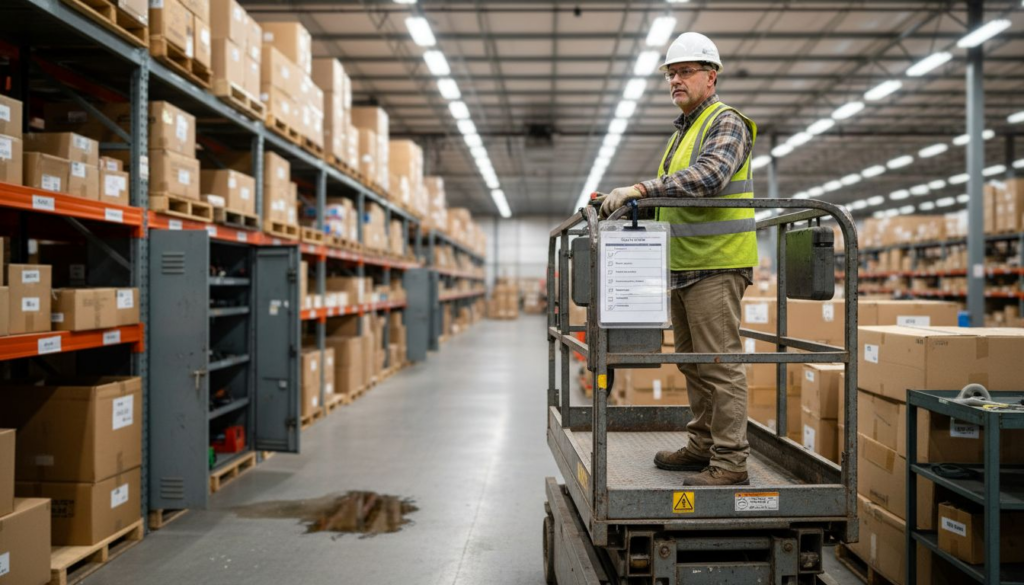

Over 60% of scissor lift accidents stem from preventable falls and tip-overs, yet many warehouse operators lack proper OSHA-compliant training. Understanding operation basics transforms these risks into manageable safety protocols. Mastering hazard recognition, pre-operation inspections, and certification requirements protects workers while ensuring regulatory compliance. This guide delivers practical strategies warehouse managers and operators need to achieve safer lift operations and meet OSHA standards effectively.
| Point | Details |
|---|---|
| OSHA training requirement | Certification must be site and equipment specific, renewed every 3 years |
| Accident prevention impact | Falls and tip-overs cause over 60% of incidents, preventable through hazard awareness |
| Inspection effectiveness | Pre-operation checks reduce injury rates by 30% when performed consistently |
| Training compliance boost | Hands-on instruction increases safety adherence by 40% compared to classroom-only approaches |
| Certification renewal cycle | Operators must recertify every 3 years or immediately following workplace incidents |
OSHA mandates scissor lift operator training under 29 CFR 1910.178 and 1926, establishing clear requirements for general industry and construction environments. These regulations protect workers by requiring site-specific certification that addresses unique workplace hazards. Training cannot be generic. Each operator must demonstrate competency on the exact equipment and environment where they’ll work.
Certification serves multiple critical functions beyond regulatory compliance. Trained operators recognize hazards before accidents occur, reducing injury risks dramatically. Employers gain legal protection against liability claims when documented training proves due diligence. The National Safety Council emphasizes comprehensive industrial lift safety protocols that align with OSHA standards.
Periodic retraining maintains operator competency as equipment and workplace conditions evolve. OSHA requires refresher courses every three years minimum. Additional training becomes mandatory after any incident, near miss, or when operators demonstrate unsafe practices. This ongoing education cycle ensures skills remain sharp and safety awareness stays current.
Key OSHA compliance elements include:
Falls and tip-overs cause over 60% of scissor lift accidents in warehouse settings, representing the most significant threats to operator safety. Understanding these hazards transforms abstract risks into concrete prevention strategies. Most accidents share common contributing factors that proper training and awareness eliminate.
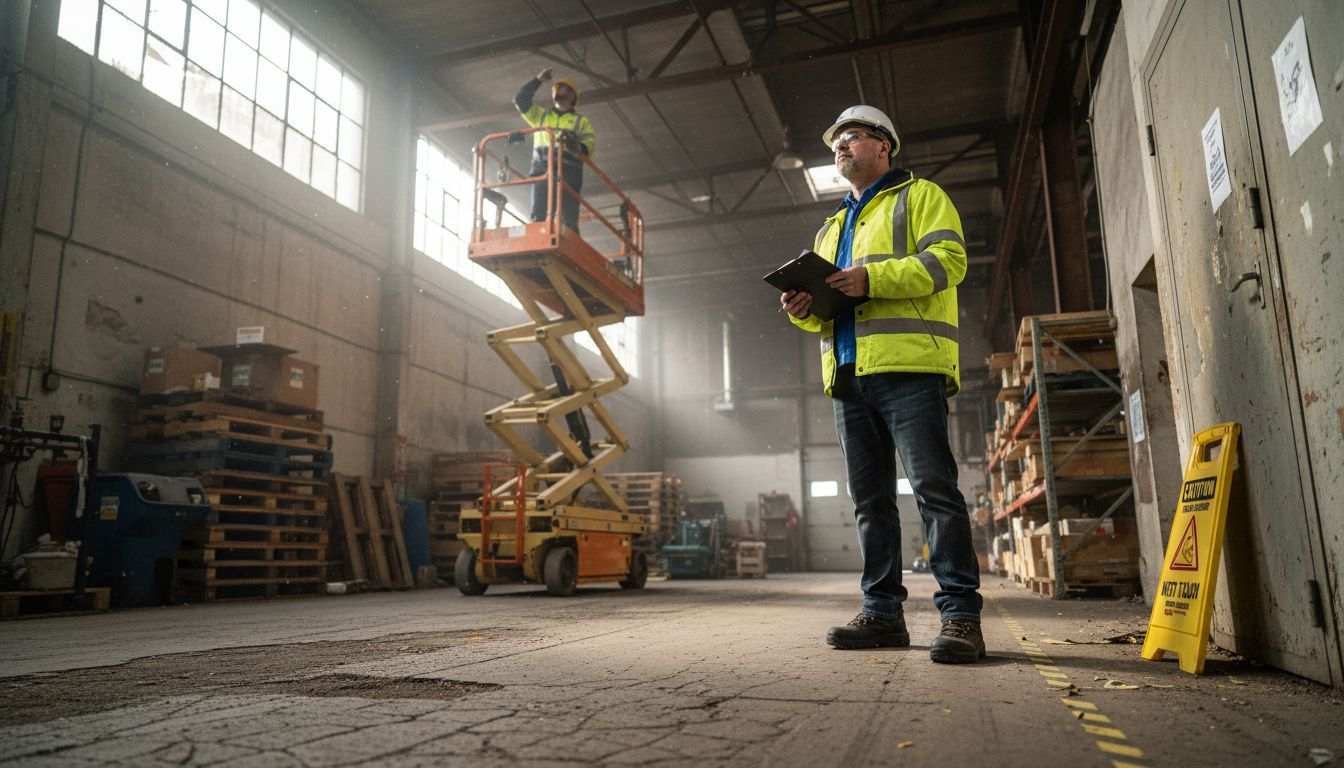
Tip-over incidents increase dramatically on unstable surfaces. Operating on uneven floors raises accident risk by 45% compared to level concrete. Operators must assess surface conditions before elevating platforms. Soft ground, slopes exceeding manufacturer specifications, and debris-covered floors create dangerous instability. Weather conditions add complexity for outdoor operations where rain, ice, or snow compromise traction.
Mechanical failures contribute to accidents when maintenance lapses or operators ignore warning signs. Hydraulic system leaks, worn platform components, and electrical malfunctions can trigger sudden equipment failures. Environmental hazards include overhead obstructions, power lines, and moving vehicles sharing workspace. Each creates collision or entanglement risks requiring constant vigilance.
Effective hazard prevention workflows combine multiple protective layers:
Pro Tip: Walk the entire work area before raising the platform. Look for surface changes, overhead hazards, and potential traffic conflicts. Spending two minutes on reconnaissance prevents hours of accident investigation.
Pre-operation inspections lower injury rates by 30% when performed consistently before every shift. These checks identify mechanical issues before they cause accidents. Skipping inspections because equipment looks fine gambles with operator safety. Hidden defects frequently lurk beneath normal appearances.
A comprehensive pre-operation inspection procedure follows a systematic approach:
Maintenance schedules prevent catastrophic failures through proactive servicing. Regular fluid changes, component replacements, and system testing catch problems early. Operators share responsibility for daily visual checks while maintenance teams handle scheduled service intervals. Never assume someone else verified equipment readiness.
Pro Tip: Keep a laminated checklist attached to each scissor lift. Operators can mark items as they inspect, creating instant documentation. This simple tool prevents missed steps during busy morning routines.
Documentation serves dual purposes. Completed inspection forms prove compliance during OSHA audits. They also create maintenance history revealing patterns suggesting component replacement needs. Digital tracking systems streamline record-keeping while ensuring accessibility.
Effective training combines classroom knowledge with practical skill development. Theory alone leaves dangerous gaps in operator preparedness. Hands-on training boosts safety compliance by 40% compared to lecture-only approaches. Students must physically operate equipment under supervision, making mistakes in controlled environments rather than during actual work.
Comprehensive programs cover three essential components. Hazard recognition teaches operators to spot dangers before accidents develop. Operation procedures establish correct techniques for every task from startup through shutdown. Emergency response training prepares operators for equipment malfunctions, medical emergencies, and evacuation scenarios.
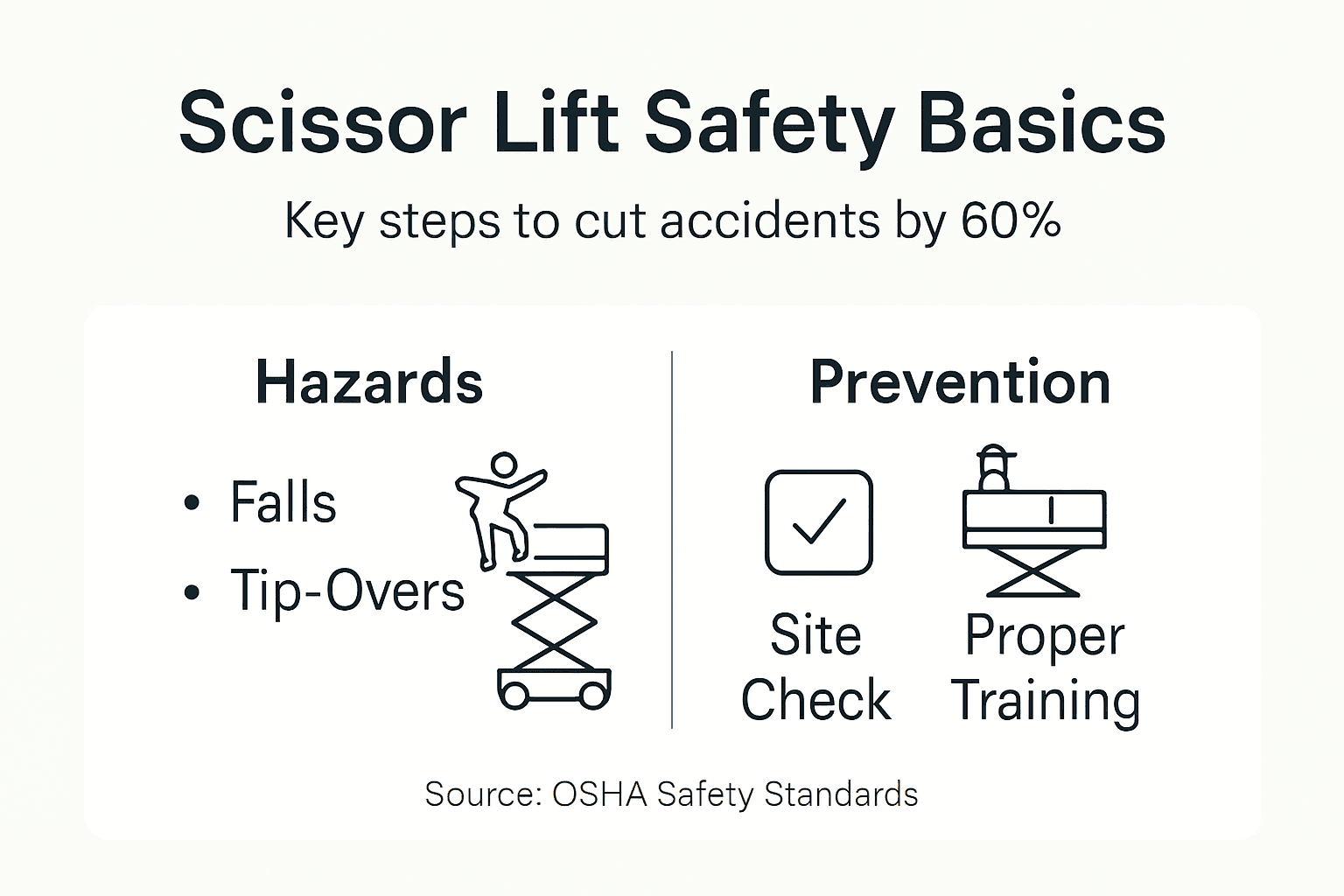
Certification validates competency through evaluation demonstrating knowledge retention and skill mastery. OSHA requires documented proof that operators can safely perform assigned tasks. Generic certificates fail compliance standards. Each certification must specify equipment types, workplace conditions, and evaluation dates. Employers bear legal responsibility for ensuring operator qualifications match job requirements.
Certification process essentials include:
Refresher training maintains skills and awareness as time diminishes sharpness. OSHA mandates recertification every three years minimum. Additional training becomes necessary after accidents, near misses, or when operators demonstrate unsafe practices. Equipment changes or workplace modifications also trigger retraining requirements.
Pro Tip: Schedule refresher training at two-year intervals rather than waiting the full three years. This proactive approach catches skill erosion early while demonstrating commitment to safety that insurance providers recognize with premium reductions.
Simulated hazard scenarios during hands-on training sessions create memorable learning experiences. Operators practice emergency lowering procedures, navigate tight spaces, and respond to equipment malfunctions. These realistic exercises build confidence while revealing knowledge gaps requiring additional instruction.
Scissor lifts and boom lifts serve different operational needs with distinct safety considerations. Understanding these differences guides proper equipment selection improving both safety and efficiency. Choosing the wrong lift type for specific tasks increases accident risks unnecessarily.
Scissor lifts excel in applications requiring stable platforms for extended work periods. Their vertical-only travel path suits indoor environments with level floors. Maximum platform heights typically reach 50 feet, adequate for most warehouse maintenance and construction tasks. The wide platform accommodates multiple workers and tools comfortably.
Boom lifts handle outdoor terrain and uneven surfaces better than scissor lifts. Their articulating or telescoping arms reach horizontally and vertically, accessing difficult positions around obstacles. Heights extend beyond 150 feet for specialized models. However, the smaller platform and greater instability at full extension require additional safety protocols.
| Feature | Scissor Lift | Boom Lift |
|---|---|---|
| Maximum reach | Up to 50 feet vertical | Beyond 150 feet horizontal and vertical |
| Platform stability | Superior on level surfaces | Reduced at full extension |
| Terrain capability | Flat, stable indoor floors only | Handles slopes and rough outdoor ground |
| Platform size | Large, accommodates multiple workers | Compact, typically single operator |
| Primary applications | Indoor maintenance, warehouses | Construction sites, outdoor work |
| Tip-over risk | Lower when operated on proper surfaces | Higher due to extended reach and smaller base |
| Training complexity | Moderate, focused on fall prevention | Advanced, includes boom positioning hazards |
Warehouse managers typically prefer scissor lifts for indoor maintenance tasks. The stable platform suits painting, electrical work, and inventory access. Construction sites requiring reach around obstacles or operation on uneven ground demand boom lift capabilities despite increased complexity.
Safety protocols differ significantly between lift types. Scissor lifts emphasize fall protection and surface assessment. Boom lifts add overhead clearance monitoring, load management during extension, and wind speed considerations. Training programs must address equipment-specific hazards rather than treating all aerial lifts identically.
Dangerous myths persist despite clear safety evidence contradicting them. These misconceptions create false confidence leading directly to preventable accidents. Correcting widespread beliefs protects operators while strengthening workplace safety cultures.
Over 50% of scissor lift accidents involve operators overconfident about equipment safety, neglecting training and inspections. Experience alone cannot substitute for formal instruction addressing current hazards and regulations. Each myth below represents real risks requiring factual correction:
“Safety depends on training, inspections, and hazard recognition, not just operator experience. Complacency kills more workers than equipment failures.”
Research published in Safety Science analyzing operator behavior patterns reveals how confidence unmatched by knowledge creates dangerous situations. Operators believing their experience exempts them from protocols skip critical safety steps. This overconfidence directly contributes to the majority of preventable accidents.
Addressing these misconceptions requires ongoing education reinforcing why procedures exist. Safety meetings should highlight near misses and incidents demonstrating consequences of shortcut mentalities. When operators understand the reasoning behind requirements, compliance improves naturally.
Transforming knowledge into safer operations requires systematic implementation of learned principles. Following these steps ensures compliance while building sustainable safety practices:
Documentation supports every step of this process. Maintain training records, inspection logs, maintenance histories, and incident reports in organized systems. These records prove compliance during audits while revealing trends suggesting improvement opportunities. Digital systems streamline record-keeping while ensuring accessibility for multiple stakeholders.
Workplace safety improves through collective commitment rather than individual effort alone. Share lessons learned from near misses and incidents. Encourage reporting of hazards without fear of blame. Recognize operators demonstrating exemplary safety practices. These cultural elements transform certification processes from bureaucratic obligations into valued competency development.
Transforming safety knowledge into workplace reality requires expert guidance and comprehensive training resources. Forklift Academy delivers OSHA-compliant scissor lift certification programs designed specifically for warehouse managers and operators committed to accident prevention.
Our flexible training options accommodate diverse learning needs and operational schedules. Choose online courses for theoretical instruction combined with onsite practical evaluation. Alternatively, comprehensive hands-on programs provide complete certification through instructor-led sessions at our nationwide training centers.
Expert instructors bring decades of combined industry experience teaching proper operation techniques, hazard recognition, and compliance requirements. Programs emphasize practical skills through realistic scenarios preparing operators for actual workplace conditions. Step-by-step certification guidance ensures smooth completion from enrollment through final evaluation.
Organizations requiring multiple operator certifications benefit from our train-the-trainer programs enabling internal safety teams to deliver ongoing training. This approach reduces long-term costs while building sustainable safety cultures. We also provide comprehensive OSHA forklift certification courses addressing broader material handling equipment needs.
Renewal programs maintain operator competency through streamlined refresher courses meeting three-year recertification requirements. Our documentation systems track certification expiration dates ensuring timely renewals preventing compliance gaps.
OSHA requires site-specific training covering equipment operation, hazard recognition, and emergency procedures under 29 CFR 1910.178 and 1926 standards. Operators must demonstrate competency through written and practical evaluations. Certification remains valid for three years maximum, requiring earlier renewal after incidents or unsafe practices.
Renewal must occur every three years minimum per OSHA regulations. Additional recertification becomes mandatory immediately following workplace accidents, near misses, or when operators demonstrate unsafe practices. Equipment changes or new workplace hazards also trigger retraining requirements regardless of previous certification dates.
Comprehensive inspections verify platform integrity, control responsiveness, hydraulic system condition, emergency lowering functionality, tire condition, safety device operation, and electrical system status. Operators must check stabilizers, examine for fluid leaks, test all controls, and confirm manufacturer-specific points. Documentation of inspection results creates compliance records while identifying maintenance needs.
No, OSHA explicitly requires documented training and certification regardless of operator experience levels. Accident statistics show experienced operators involved in over 50% of incidents due to complacency and outdated knowledge. Formal training addresses current regulations, emerging hazards, and proper procedures that experience alone cannot guarantee.
Scissor lifts provide superior platform stability on level surfaces with lower tip-over risks but limited to vertical reach up to 50 feet. Boom lifts handle uneven terrain and reach beyond 150 feet but require additional safety protocols for extended positioning and smaller platforms. Training must address equipment-specific hazards rather than treating all aerial lifts identically for effective safety compliance.