
Most American warehouse accidents involving forklifts are preventable, yet untrained operators remain a leading risk factor on job sites. For safety managers, meeting OSHA regulations is more than a checkbox—it means protecting teams, reducing liability, and maintaining productivity. Understanding forklift operator certification gives you the tools to shape a safer, more compliant workplace and avoid costly mistakes that can impact both lives and bottom lines.
Table of Contents
- Forklift Operator Certification Explained
- Types Of Forklift Training And Certification
- Osha Requirements For Forklift Operators
- Safety And Liability Risks Without Certification
- Business Benefits Of Certified Operators
Key Takeaways
| Point | Details |
|---|---|
| Certification is Essential | Forklift operator certification ensures safe equipment operation and compliance with safety regulations. Operators must undergo both theoretical and practical training to achieve certification. |
| Regular Renewal Required | OSHA mandates that forklift certifications be renewed every three years to ensure operators stay updated on safety practices and technology. |
| Risks of Uncertified Operation | Operating forklifts without proper certification increases the likelihood of accidents, legal liabilities, and potential business disruptions. |
| Benefits of Certification | Certified operators contribute to lower accident rates and operational efficiency, enhancing overall workplace safety and reducing costs for employers. |
Forklift Operator Certification Explained
Forklift operator certification represents a critical safety protocol for warehouse and industrial environments, designed to ensure workers can safely operate complex machinery. Safety training programs establish comprehensive standards that protect both operators and surrounding personnel by thoroughly evaluating an individual’s technical skills and practical understanding of equipment handling.
The certification process typically involves two primary components: classroom instruction and hands-on practical evaluation. Theoretical training covers essential topics like equipment mechanics, workplace safety regulations, load management, and operational protocols. Comprehensive safety courses help operators understand not just how to drive a forklift, but how to anticipate potential hazards and respond appropriately in dynamic work environments.
Practical certification requirements mandate that operators demonstrate proficiency through supervised equipment operation, skill assessments, and written examinations. OSHA regulations require renewed certification every three years, ensuring operators maintain current knowledge of safety practices and technological advancements. These rigorous standards help prevent workplace accidents, reduce liability risks, and create a culture of safety awareness among industrial workers.
Pro Tip: Schedule certification renewal at least 30 days before expiration to maintain continuous compliance and avoid potential operational disruptions.
Types of Forklift Training and Certification
Forklift training and certification encompasses multiple specialized programs designed to address the diverse needs of industrial and warehouse operators. Comprehensive training courses typically cover different equipment types, including counterbalance forklifts, reach trucks, and power pallet trucks, ensuring operators gain specialized skills for specific machinery configurations.
These training programs generally fall into several key categories: novice operator certification, experienced operator recertification, and specialized equipment training. One-day OSHA-compliant courses provide comprehensive instruction that combines classroom learning with practical hands-on training, catering to both new and experienced operators. The curriculum typically includes critical safety protocols, equipment mechanics, load management techniques, and workplace risk assessment strategies.
Certification levels vary based on equipment complexity and operational requirements. Industrial settings often demand different certifications for specific forklift classes, such as counterbalance, narrow aisle, rough terrain, and specialized industrial trucks. Each certification requires demonstrating technical proficiency, understanding safety regulations, and passing both written and practical examinations. Most certifications remain valid for three years, after which operators must complete renewal training to maintain their credentials.
Here’s a summary of common forklift certification types and their main focus:
| Certification Type | Primary Audience | Key Focus Areas |
|---|---|---|
| Novice Operator | New operators | Basic operation, safety, mechanics |
| Experienced Recertification | Current forklift users | Updates on regulations, advanced safety, refresher skills |
| Specialized Equipment Training | Operators of unique forklifts | Handling specialty machines, advanced techniques |
Pro Tip: Always maintain a personal certification portfolio documenting your training history, as many employers require comprehensive documentation of your forklift operation qualifications.
OSHA Requirements for Forklift Operators
Comprehensive forklift operator training requirements established by OSHA are designed to ensure workplace safety through rigorous certification standards. These regulations mandate that every forklift operator must complete both initial and recurring training programs to minimize potential accidents and equipment-related incidents in industrial settings. The primary goal is to create a standardized approach to equipment operation that prioritizes worker protection and operational efficiency.
OSHA standard 1910.178 outlines specific training and evaluation criteria that employers must follow. These requirements include formal classroom instruction, practical hands-on training, and periodic performance evaluations. Safety-focused training programs must cover critical areas such as equipment inspection, load handling techniques, workplace hazard recognition, and proper operational procedures. Operators must demonstrate competence in both written assessments and actual equipment manipulation to receive certification.
The certification process involves multiple comprehensive components. Employers are responsible for evaluating each operator’s performance and maintaining documentation of training completion. OSHA requires recertification every three years or when an operator demonstrates unsafe behavior, changes equipment types, or has been observed operating unsafely. Additional refresher training becomes mandatory after workplace accidents, near-miss incidents, or when new equipment is introduced. These strict guidelines ensure continuous skill development and maintain high safety standards across industrial workplaces.
Pro Tip: Maintain detailed training records for each forklift operator, including dates of initial certification, refresher courses, and performance evaluations to demonstrate ongoing compliance with OSHA regulations.
Safety and Liability Risks Without Certification
Workplace accidents involving uncertified forklift operators represent significant financial and legal risks for businesses. The absence of proper training dramatically increases the likelihood of equipment-related incidents that can result in serious injuries, property damage, and potentially catastrophic workplace accidents. Uncertified operators lack the fundamental skills and knowledge necessary to safely navigate complex industrial environments, making them a substantial liability for any organization.
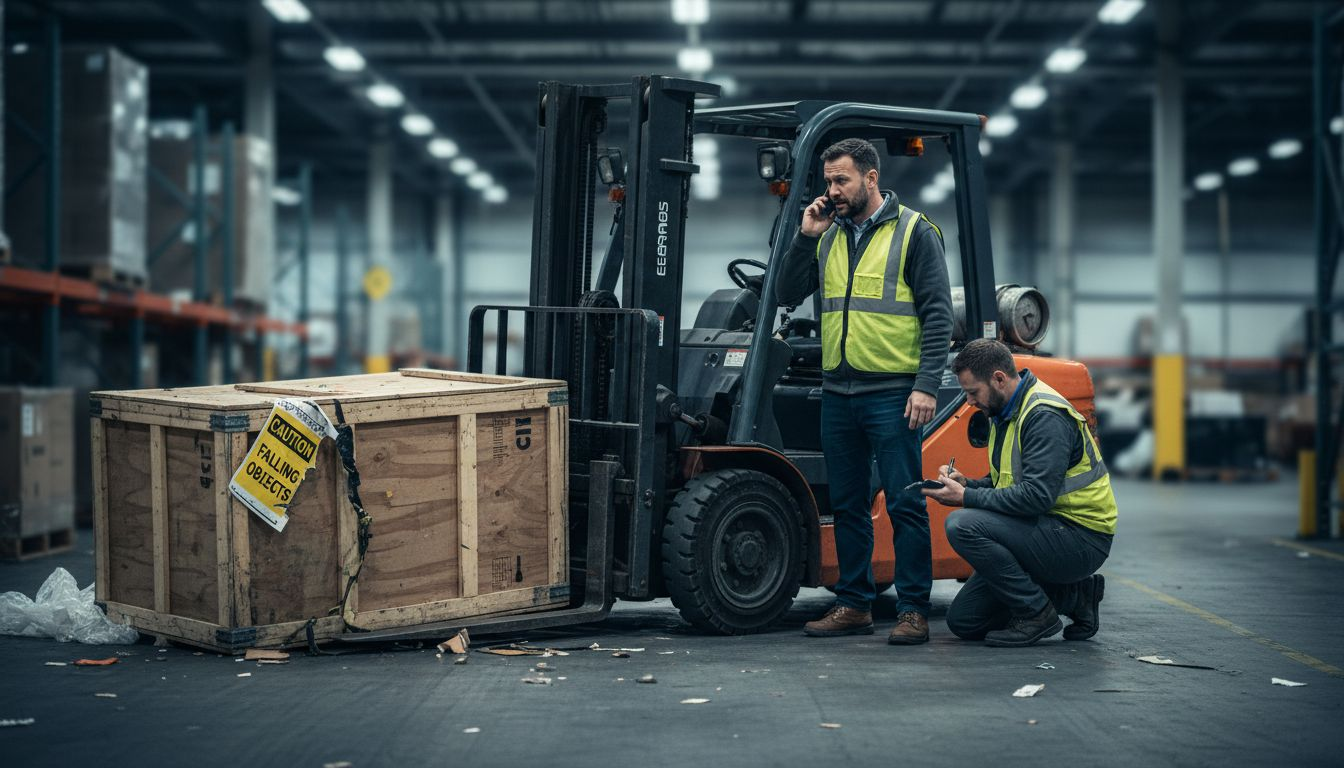
The financial consequences of operating without proper certification can be devastating. Workplace accidents involving forklifts can trigger extensive legal proceedings, substantial monetary penalties, and potential worker’s compensation claims. Safety training programs are designed to mitigate these risks by providing comprehensive instruction on equipment handling, hazard recognition, and operational best practices. Insurance providers often mandate certification as a prerequisite for coverage, meaning uncertified operations could result in denied claims and increased liability exposure.
Beyond immediate financial risks, uncertified forklift operation creates broader organizational vulnerabilities. OSHA can impose significant fines for non-compliance, ranging from thousands to hundreds of thousands of dollars depending on the severity and frequency of violations. Companies may also face reputational damage, potential shutdown of operations, and increased scrutiny from regulatory agencies. The potential legal and economic consequences far outweigh the relatively modest investment required for proper certification and ongoing training.
Compare the risks of uncertified versus certified forklift operation:
| Factor | Certified Operators | Uncertified Operators |
|---|---|---|
| Accident Likelihood | Significantly reduced | Substantially increased |
| Insurance Eligibility | Qualifies for coverage | Higher risk of denied claims |
| Regulatory Compliance | Meets OSHA standards | Faces OSHA fines or penalties |
| Equipment Maintenance | Less damage, longer lifespan | More frequent failures, costly repairs |
Pro Tip: Conduct monthly internal safety audits to verify all forklift operators maintain current certification and demonstrate consistent adherence to safety protocols.
Business Benefits of Certified Operators
Workplace safety strategies demonstrate that certified forklift operators provide substantial economic advantages beyond basic regulatory compliance. Businesses investing in comprehensive operator certification can significantly reduce operational risks, minimize potential workplace accidents, and create a more efficient and productive industrial environment. Certified operators bring a level of professionalism and technical expertise that directly translates into improved organizational performance.
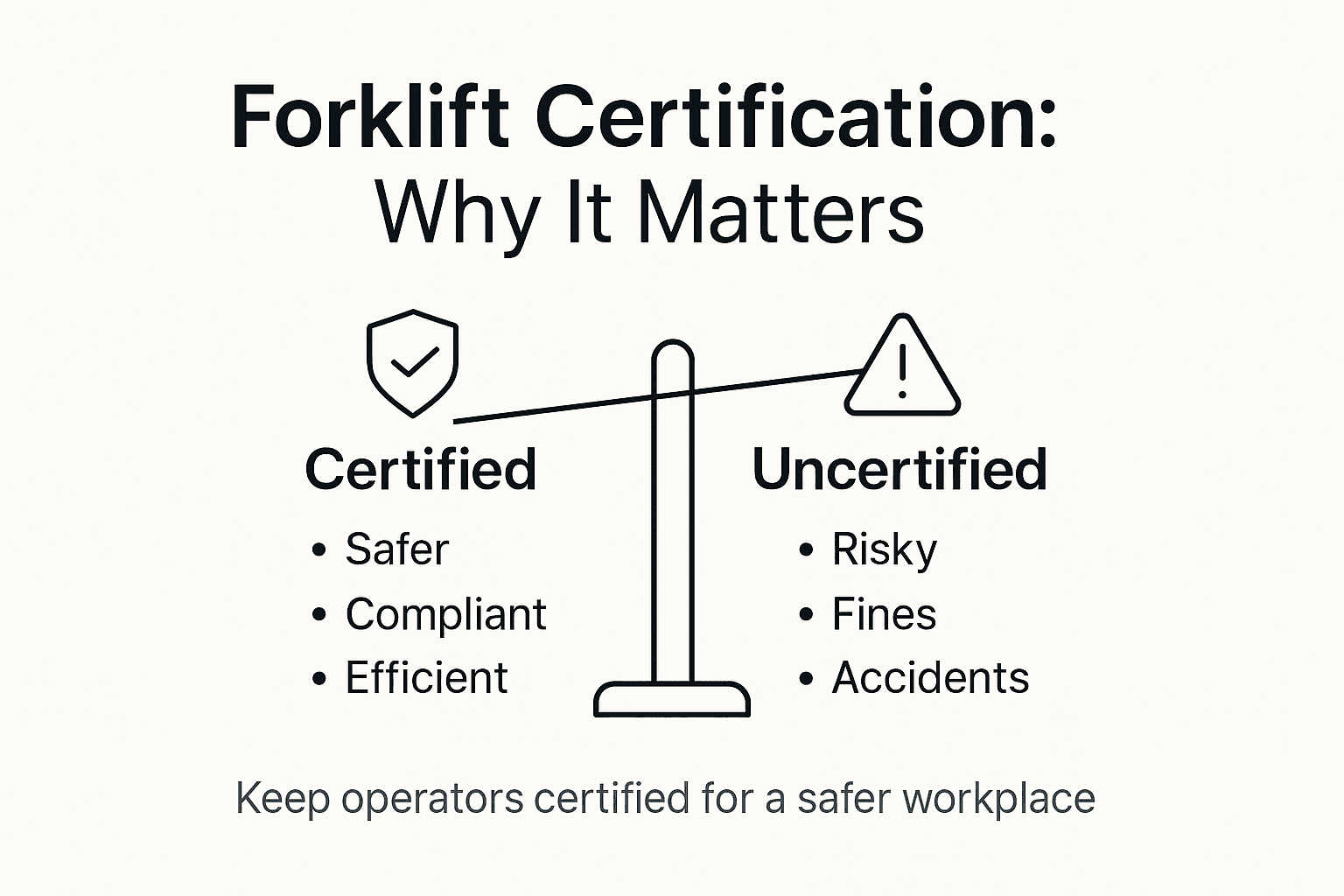
The financial implications of certification are profound and multifaceted. Operational efficiency gains from certified operators include reduced equipment damage, lower insurance premiums, and decreased likelihood of costly workplace incidents. Companies with well-trained operators typically experience 30-40% fewer equipment-related accidents, which translates into substantial cost savings. Certified operators understand equipment limitations, maintenance requirements, and proper handling techniques, which directly contributes to extending machinery lifespan and reducing unexpected repair expenses.
Beyond immediate financial benefits, certified forklift operators contribute to a broader organizational culture of safety and professionalism. Their training encompasses not just technical skills, but also risk assessment, situational awareness, and proactive problem solving. This holistic approach to operator development creates a workforce that is more engaged, responsible, and committed to maintaining high safety standards. Additionally, companies with robust certification programs often experience improved employee morale, reduced turnover, and enhanced reputation within their industry.
Pro Tip: Implement a continuous learning program that provides periodic refresher training and advanced certification opportunities to maintain operator skills and keep pace with evolving safety technologies.
Ensure Safety and Compliance with Expert Forklift Certification Solutions
The article highlights the critical challenge of maintaining OSHA compliance while minimizing safety and liability risks through proper forklift operator certification. If you are looking to avoid workplace accidents, reduce costly fines, and protect your workforce by developing skilled, certified forklift operators, then investing in professional training is essential. Key pain points like meeting regulatory standards, accomplishing timely certification renewals, and ensuring operator proficiency are complex but manageable with the right partner.
At Forkliftacademy.com, we specialize in delivering OSHA-compliant forklift certification programs tailored to address these exact challenges. Whether you need individual courses, onsite team training, or train-the-trainer resources, our solutions equip your operators with the knowledge and practical skills to safely handle a variety of forklifts. Our extensive experience ensures you stay ahead on safety protocols while enhancing operational efficiency. Discover how our offerings align perfectly with the goals discussed by exploring our Forklift Certification Archives – Top Osha Forklift Certification and broaden your career opportunities through the Career Archives – Top Osha Forklift Certification.
Take control of workplace safety and compliance today by choosing trusted certification programs designed for real-world results. Visit Forkliftacademy.com now to enroll and keep your workforce protected and empowered.
Frequently Asked Questions
What is forklift operator certification?
Forklift operator certification is a safety protocol that ensures individuals are trained to operate forklifts safely, following OSHA regulations. It involves theoretical classroom instruction and practical evaluations to assess skills and knowledge.
Why is forklift certification important for workplace safety?
Certification minimizes the risk of accidents and injuries by ensuring that operators understand equipment mechanics, workplace safety regulations, and proper load management techniques, thereby creating a safer industrial environment.
How often do certified forklift operators need to renew their certification?
Certification must be renewed every three years according to OSHA regulations, or when an operator demonstrates unsafe behavior, changes equipment types, or experiences a workplace incident.
What are the consequences of allowing uncertified forklift operators?
Allowing uncertified operators increases the likelihood of workplace accidents, leading to serious injuries, potential legal liabilities, and substantial financial risks, such as fines from OSHA and denied insurance claims.
Recommended
- Complete Guide to OSHA Compliance for Forklift Safety – Top Osha Forklift Certification
- Forklift Safety Standards Explained: OSHA Rules and Compliance – Top Osha Forklift Certification
- Forklift Operator Requirements: Complete Guide for 2025 – Top Osha Forklift Certification
- Why Get Forklift Certified: Complete Compliance Guide – Top Osha Forklift Certification