
Forklift operation may look simple and routine in a busy warehouse, but getting behind the wheel is a lot more involved than most people think. OSHA actually requires all forklift operators to complete a comprehensive certification program and get re-evaluated every three years. Surprised? Most new operators discover that the biggest challenge is not driving the forklift but mastering the strict safety routines and detailed checks that are non-negotiable every single day.
Table of Contents
- Step 1: Obtain Forklift Certification And Training
- Step 2: Inspect The Forklift Before Operation
- Step 3: Adjust Forklift Controls And Settings
- Step 4: Practice Safe Operating Techniques
- Step 5: Execute Loading And Unloading Procedures
- Step 6: Perform Post-Operation Checks And Documentation
Quick Summary
| Key Point | Explanation |
|---|---|
| 1. Obtain Forklift Certification and Training | Proper certification is essential under OSHA regulations for safe forklift operation in workplaces. Enroll in training programs for comprehensive skills. |
| 2. Perform a Thorough Pre-Operation Inspection | Conduct daily visual and functional checks to ensure safety and reliability before using the forklift. Immediate reporting of issues is required. |
| 3. Adjust Controls for Safe Operation | Proper adjustment of controls, including seat position and load capacity indicators, enhances safety, precision, and operational efficiency during operation. |
| 4. Practice Safe Loading and Unloading Techniques | Approach loads carefully, ensuring forks are level. Maintain precision during lifting and lowering to prevent hazards and ensure stability. |
| 5. Document Post-Operation Findings | After use, perform detailed checks and document any issues, contributing to equipment integrity and clear communication with maintenance teams. |
Step 1: Obtain Forklift Certification and Training
Becoming a professional forklift operator starts with obtaining proper certification and training. This crucial first step ensures you have the legal authorization and fundamental skills to safely operate industrial trucks in workplace environments. OSHA regulations mandate comprehensive training for all forklift operators, making certification not just a recommendation but an absolute requirement for employment.
To begin your certification journey, you will need to enroll in a structured training program that combines classroom instruction with practical hands on experience. These programs typically cover critical areas such as equipment mechanics, safety protocols, workplace hazards, and operational techniques. Learn more about the differences between forklift licenses and certifications to understand the specific requirements for your career path.
The training process involves multiple components designed to transform you from a novice to a competent operator. You will first undergo theoretical training where expert instructors will teach you about equipment types, load handling techniques, stability principles, and workplace safety regulations. Following classroom instruction, you will transition to practical training where you will actually operate forklifts under supervised conditions. This hands on component is critical because it allows you to apply theoretical knowledge in real world scenarios, developing muscle memory and situational awareness.
The final stage of certification involves a comprehensive evaluation where your skills are formally assessed. During this assessment, you will demonstrate your ability to safely maneuver the forklift, handle various load configurations, navigate tight spaces, and respond to potential workplace challenges. Successful completion results in an official certification document that validates your competence and allows you to legally operate industrial trucks across most professional environments.
Remember that forklift certification is not a one time event. OSHA requires operators to be re evaluated every three years to ensure ongoing competence and awareness of current safety standards. Staying current with your certification is crucial for maintaining your professional credentials and ensuring workplace safety.
Step 2: Inspect the Forklift Before Operation
Prior to operating a forklift, conducting a thorough pre operation inspection is critical for ensuring workplace safety and equipment reliability. This comprehensive check prevents potential accidents, equipment failures, and potential injury risks. Check out our detailed guide on daily forklift preparation to understand the full scope of this essential process.
Begin your inspection by performing a systematic visual examination of the entire forklift. Start with the exterior components, carefully checking the tires for any signs of damage, excessive wear, or improper inflation. Inspect the forks for visible cracks, bends, or structural weaknesses that could compromise load stability. Pay close attention to the mast, ensuring all chains, rollers, and lifting mechanisms appear properly aligned and free from visible damage.
The next phase involves a comprehensive functional assessment of critical operational systems. Test all safety mechanisms, including horn, lights, backup alarms, and emergency shut off controls. Verify that brake systems respond smoothly and predictably, with no unusual resistance or grinding sounds. Check fluid levels for hydraulic systems, engine oil, and coolant, ensuring each reservoir meets manufacturer recommended levels. Any sign of leakage or abnormal fluid condition requires immediate reporting to maintenance personnel.
Electronic and mechanical warning systems demand particular scrutiny during your inspection. Examine the dashboard for any illuminated warning lights or error codes that might indicate underlying mechanical issues. Test the steering mechanism by gently moving the wheel, confirming smooth movement without excessive play or resistance. Verify that seat belts are intact, functional, and show no signs of fraying or damage. A complete inspection also includes checking the overhead guard for structural integrity and ensuring all protective components remain securely fastened.
Your final verification step involves documenting your findings. Most workplaces require operators to complete a standard inspection checklist, recording any observed issues or potential equipment concerns. If any problems are discovered during your examination, the forklift must be immediately tagged as non operational and reported to supervisory staff.
Here is a checklist table summarizing the key points covered in the pre-operation forklift inspection process to help operators ensure nothing is missed before each shift.
| Inspection Area | What to Check | Action if Issue Found |
|---|---|---|
| Tires | Damage, excessive wear, proper inflation | Report and tag as non-operational |
| Forks | Cracks, bends, structural weakness | Report and tag as non-operational |
| Mast & Chains | Alignment, visible damage, proper function | Report and tag as non-operational |
| Safety Mechanisms | Horn, lights, alarms, emergency controls | Report and tag as non-operational |
| Brakes & Steering | Smooth operation, no resistance or excessive play | Report and tag as non-operational |
| Fluid Levels & Leaks | Hydraulic, oil, coolant levels and any signs of leakage | Report and tag as non-operational |
| Seat Belt & Overhead Guard | Intact, functional, securely fastened, structural integrity | Report and tag as non-operational |
| Warning Lights/Indicators | No illuminated warnings or error codes | Report and tag as non-operational |
| Documentation | Complete inspection checklist and report findings | Submit report and notify supervisor |
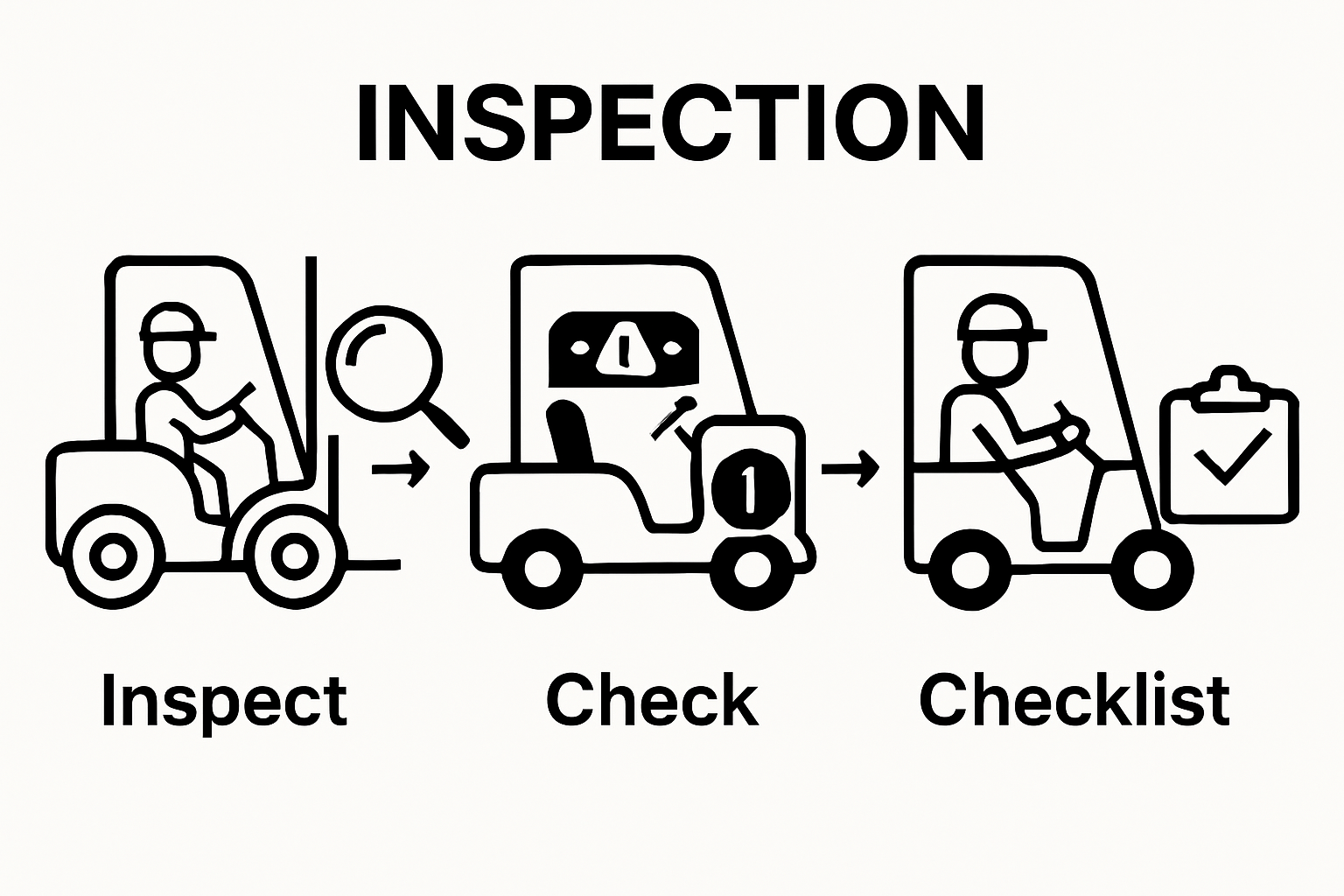 Remember, a meticulous pre operation inspection is not just a procedural requirement but a critical responsibility that directly impacts workplace safety and operational efficiency.
Step 3: Adjust Forklift Controls and Settings
Adjusting forklift controls and settings is a critical skill that separates professional operators from novices. Proper control configuration ensures precision, safety, and operational efficiency during your work shift. Explore advanced techniques for forklift operation to enhance your understanding of equipment management.
Begin by positioning yourself in the operator seat and familiarizing yourself with the control panel. Adjust the seat to maximize visibility and ergonomic comfort, ensuring you can reach all controls without straining. Your seat position should allow a clear view of the surroundings, with minimal blind spots and maximum peripheral awareness. Verify the seat is securely locked and provides adequate support during movement and lifting operations.
Next, focus on calibrating critical operational settings. Check the load capacity indicator and confirm it matches the specific materials you will be handling. Adjust the steering sensitivity to match your workplace environment, considering factors like aisle width, floor surface, and typical load configurations. Precise steering control can significantly reduce the risk of accidents and improve maneuverability. Pay special attention to the acceleration and braking responsiveness, making subtle adjustments that provide smooth, controlled movement.
The hydraulic control settings demand particular attention during your configuration process. Test the lifting and tilting mechanisms, ensuring they respond smoothly and predictably. Verify the lift height and angle controls provide the range of motion required for your specific workplace tasks. Some modern forklifts offer programmable settings that allow you to create custom profiles for different operational scenarios. Take advantage of these features to optimize your performance and reduce physical strain during repetitive tasks.
Finalize your control setup by performing a comprehensive systems check. Test all safety mechanisms, including horn, lights, and emergency shutdown controls. Confirm that warning indicators function correctly and provide clear visual feedback. Your final verification should involve a gentle test run in a clear area, allowing you to feel how the forklift responds to your adjusted settings.
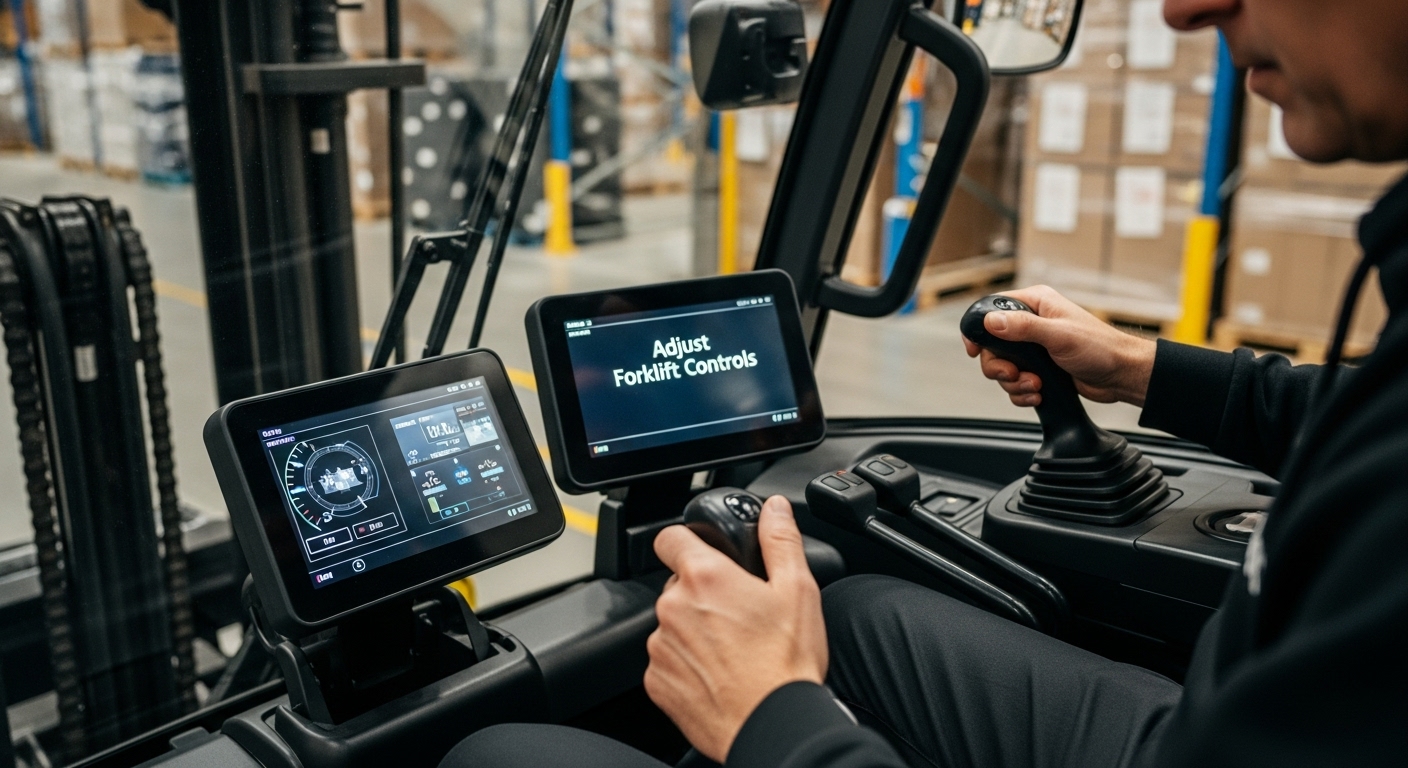 Remember that control configuration is not a one time task but an ongoing process of fine tuning that adapts to changing workplace conditions and individual operational preferences.
Step 4: Practice Safe Operating Techniques
Safe forklift operation is not just about technical skill but a comprehensive approach to workplace safety that demands constant vigilance and professional discipline. Your primary responsibility is to protect yourself, your coworkers, and the surrounding environment. Learn about common forklift safety mistakes to avoid and develop a proactive safety mindset.
Navigation requires exceptional spatial awareness and deliberate movement. When driving, maintain a clear line of sight and move at a controlled speed that allows immediate stopping if an unexpected obstacle appears. Always look in the direction of travel, keeping your head and body positioned to maximize visibility. When traveling with a load, position the forks low to the ground approximately 4 to 6 inches above the surface to maintain stability and prevent potential tipping. Never exceed the recommended load capacity or attempt to lift unevenly distributed materials.
Special attention must be given to turning and maneuvering techniques. Approach turns slowly and deliberately, reducing speed before entering the turn to maintain control. Use proper turning radius techniques by swinging wider than you might expect, accounting for the forklift’s pivot point and potential load swing. When navigating tight spaces, take extra care to understand your vehicle’s dimensions and potential blind spots. Communication with ground workers becomes critical in these scenarios, so use your horn and maintain eye contact to signal your intentions.
Load handling demands precision and careful technique. Center your load carefully on the forks, ensuring balance and preventing potential shifting during movement. When lifting, raise the load only as high as necessary for clearance, keeping it tilted slightly backward to enhance stability. Approach ramps and uneven surfaces with extreme caution, maintaining a slow and steady speed. Sideslipping, sudden stops, and sharp turns can compromise load stability and create dangerous situations. Your goal is smooth, predictable movement that minimizes risk and maximizes operational efficiency.
Conclude each operational session with a comprehensive safety review. Reflect on your performance, noting any moments where you could improve technique or spatial awareness. Remember that professional forklift operation is a continuous learning process that requires constant attention, respect for equipment, and commitment to workplace safety standards.
Step 5: Execute Loading and Unloading Procedures
Mastering loading and unloading procedures is a critical skill that distinguishes professional forklift operators from amateurs. Precision and calculated movements are the hallmarks of safe material handling. Your approach to each loading scenario will determine the safety and efficiency of your entire operation.
When approaching a load, position your forklift squarely and directly in front of the pallet or stack. Maintain a slow, controlled speed that allows for immediate stopping if needed. Approach to within 12 inches of the load, ensuring your forks are level and positioned to fully engage the pallet. Before lifting, verify the load’s weight and confirm it falls within your forklift’s rated capacity. Carefully insert the forks completely underneath the load, ensuring they are centered and extending to approximately two thirds of the pallet’s depth for maximum stability.
Lifting requires a deliberate, smooth technique. Raise the load incrementally, tilting the mast slightly backward to counterbalance the weight and prevent forward tipping. Keep the load low during transportation, typically 4 to 6 inches above the ground to maintain maximum stability and minimize potential workplace hazards. When navigating with a load, move at a reduced speed and plan your route to avoid sudden turns or uneven surfaces that could compromise load security.
Unloading demands equal precision and attention to detail. Approach the destination area slowly, ensuring clear visibility and adequate space for maneuvering. Select a flat, stable surface for placement, and align yourself perfectly perpendicular to the storage location. Lower the load gradually, keeping the forks level and maintaining control throughout the descent. Once the load is set, withdraw the forks smoothly and completely, ensuring no contact with the newly placed materials. Complete each loading and unloading cycle with a visual inspection to confirm the load’s stability and proper placement.
Your final verification involves a comprehensive assessment of the entire process. Check the surrounding area for any potential hazards, confirm that the load remains secure, and ensure your workplace remains clean and organized. Remember that professional loading and unloading is more than a mechanical process it is an art that combines technical skill, spatial awareness, and unwavering commitment to safety.
Step 6: Perform Post-Operation Checks and Documentation
Completely wrapping up your forklift operation involves thorough post operation checks and meticulous documentation. This final step is crucial for maintaining equipment integrity, ensuring workplace safety, and establishing a professional record of your work. Your documentation serves as both a safety protocol and a communication tool for maintenance teams.
Begin by parking the forklift in its designated area, preferably on a level surface away from high traffic zones. Lower the forks completely to the ground, engage the parking brake, and turn off the engine. Conduct a comprehensive visual inspection of the entire vehicle, looking for any signs of wear, damage, or potential mechanical issues that might have developed during your shift. Pay special attention to tires, forks, hydraulic systems, and any areas that experienced significant stress during operation. Note even minor irregularities, as these could indicate developing mechanical problems.
Your documentation process should be systematic and detailed. Most workplaces require a standard inspection form that captures critical information about the forklift’s condition. Record the current hour meter reading, note any fluid levels, and document any observable mechanical concerns. If you discovered any operational challenges or noticed unusual equipment behavior during your shift, articulate these observations clearly and objectively. Your goal is to provide maintenance personnel with precise information that helps them proactively address potential issues before they escalate into significant problems.
Complete your post operation routine by cleaning the forklift and preparing it for the next operator. Wipe down controls, remove any debris from the cabin, and ensure the vehicle is presentable and ready for immediate use. Charge electric forklifts or refuel gas powered models, following your workplace’s specific guidelines. Before leaving, verify that all safety systems are intact, warning lights are reset, and the vehicle is securely parked. Submit your completed inspection report to the appropriate supervisor or maintenance coordinator, ensuring a clear chain of communication about the equipment’s status.
Remember that professional forklift operation extends beyond the actual driving.
This table gives a step overview of the entire forklift operation process, with each main step, its purpose, and the key outcome operators should achieve at every stage.
| Step | Purpose | Key Outcome |
|---|---|---|
| Obtain Certification & Training | Gain legal authority and foundational skills | Official certification for operation |
| Pre-Operation Inspection | Ensure equipment safety and reliability | Safe, issue-free forklift for use |
| Adjust Controls & Settings | Maximize comfort, precision, and safety | Equipment tailored to operator/worksite |
| Practice Safe Operating Techniques | Prevent accidents and protect workplace | Accident-free, efficient operation |
| Execute Loading & Unloading Procedures | Secure material handling and cargo stability | Materials moved without incident |
| Post-Operation Checks & Documentation | Maintain equipment, record any issues | Equipment ready and record submitted |
Ready to Master Forklift Operation in 2025?
Do you feel uncertain about forklift certification requirements or struggle to keep up with evolving OSHA standards? Maybe you want your skills to truly stand out with flawless inspections and safe operating techniques. Many operators face challenges with real-world application, compliance, and staying ahead of safety regulations. That is why our expert resources are designed to address each step covered in this article, from certification to advanced handling and post-operation checks.
Explore Forklift License Best Practices and gain access to reliable industry guidance trusted by professionals for over 20 years.
Take control of your career now. Visit Forkliftacademy.com for OSHA-compliant forklift training and certification solutions. Secure your place in a safer, more efficient workplace – and get ready to operate like a true pro before the next hiring season begins.
Frequently Asked Questions
What are the steps to obtain forklift certification?
To obtain forklift certification, you must enroll in a training program that includes classroom instruction and practical hands-on experience. After completing the training, you’ll need to pass a comprehensive evaluation to demonstrate your skills.
How often do I need to renew my forklift certification?
Forklift certification must be renewed every three years per OSHA regulations to ensure that operators remain competent and updated on current safety standards.
Why is a pre-operation inspection important for forklifts?
A pre-operation inspection is crucial for preventing accidents and equipment failures. It helps identify potential issues that could pose risks to operator safety and operational efficiency before using the forklift.
What are the key safety practices when operating a forklift?
Key safety practices include maintaining a clear line of sight, moving at controlled speeds, handling loads carefully, and performing thorough checks during loading and unloading to ensure stability and prevent accidents.