

Many warehouse managers mistakenly treat all forklifts as identical, but powered industrial trucks (PITs) encompass several vehicle types with distinct OSHA definitions and training requirements. Understanding PIT classifications improves safety and compliance while reducing operational risks. This guide clarifies what powered industrial trucks really are, explores the seven OSHA classes, and shows you how proper classification enhances warehouse efficiency and worker safety.
| Point | Details |
|---|---|
| OSHA definition clarity | Powered industrial trucks are defined under 29 CFR 1910.178 and include forklifts, platform lifts, and motorized material handling vehicles. |
| Seven distinct classes | OSHA recognizes seven PIT classes based on power source and design, each requiring specific training protocols. |
| Mandatory training cuts injuries | OSHA-compliant operator training and three-year refresher courses significantly reduce workplace incidents. |
| Misconceptions create risks | Treating all PITs identically leads to compliance gaps and increased safety hazards. |
| Classification drives efficiency | Understanding PIT types enables better vehicle deployment and tailored safety procedures. |
OSHA provides a precise regulatory framework for powered industrial trucks in 29 CFR 1910.178. This definition covers mobile, power-driven vehicles used to carry, push, pull, lift, stack, or tier materials.
The scope extends beyond traditional forklifts. PITs include platform lift trucks, motorized hand trucks, and other vehicles powered by electric motors or internal combustion engines. OSHA requires trained operators for all these vehicle types, not just conventional forklifts.
Key regulatory elements include:
This official definition establishes clear boundaries for compliance. When you understand what qualifies as a PIT under OSHA forklift standards, you avoid regulatory gaps that lead to citations and workplace injuries. The definition applies uniformly across industries, ensuring consistent safety protocols whether you operate a small distribution center or a large logistics hub.
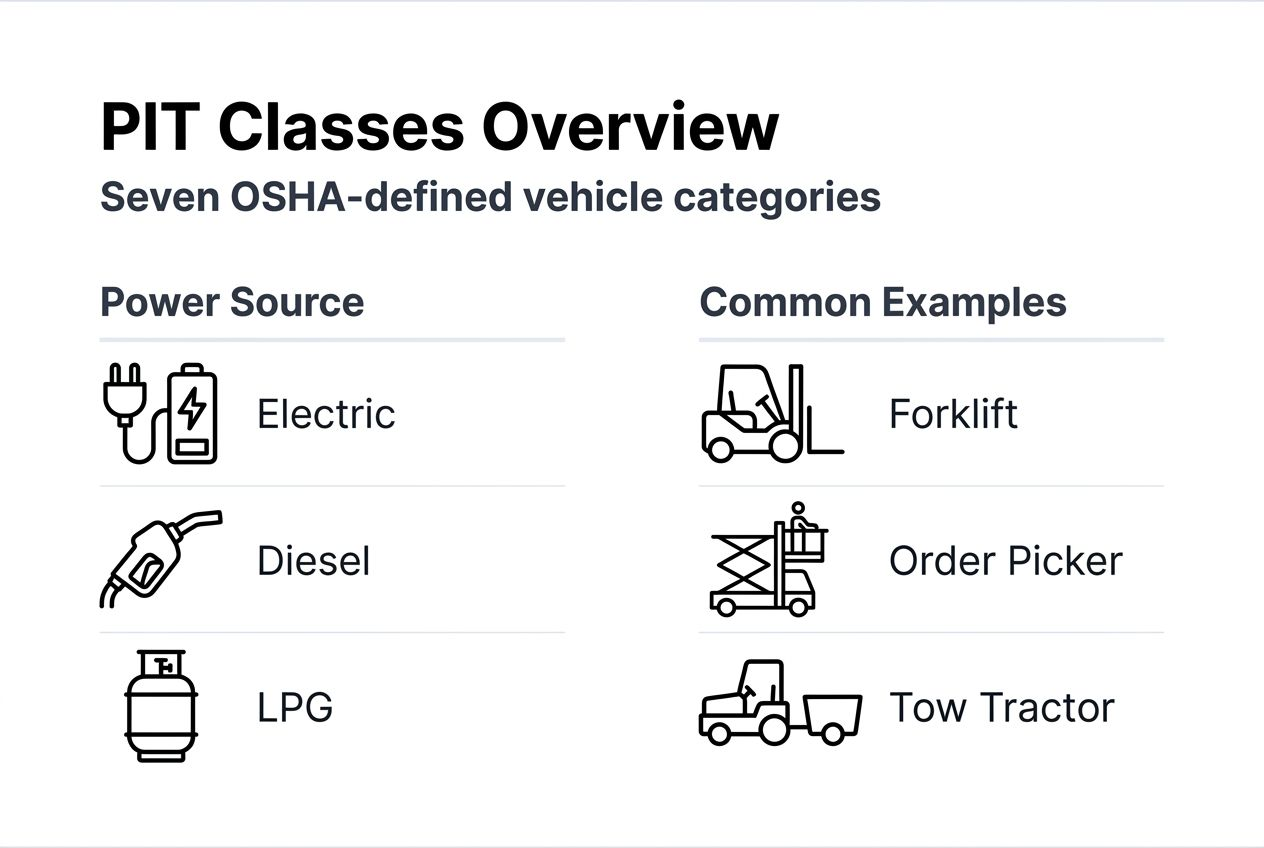
OSHA divides powered industrial trucks into seven distinct classes based on power source, tire type, and operational environment. Each class has unique characteristics that dictate training requirements and safety protocols.
| Class | Power Source | Tire Type | Common Examples |
|---|---|---|---|
| I | Electric motor | Cushion/pneumatic | Rider trucks, stand-up reach trucks |
| II | Electric motor | Solid/cushion | Narrow aisle trucks, order pickers |
| III | Electric motor | Solid/cushion | Hand/rider pallet jacks, walkies |
| IV | Internal combustion | Cushion | Propane/gas forklifts for smooth surfaces |
| V | Internal combustion | Pneumatic | Diesel/gas forklifts for rough terrain |
| VI | Electric/internal combustion | Pneumatic | Tow tractors without lifting capability |
| VII | Rough terrain | Pneumatic | All-terrain forklifts, telehandlers |
Class I and Class IV trucks dominate warehouse environments. Class I electric rider trucks offer quiet operation and zero emissions, perfect for indoor facilities with smooth concrete floors. Class IV internal combustion cushion tire trucks provide more power for heavier loads but require adequate ventilation.
Class II and III vehicles serve specialized roles:
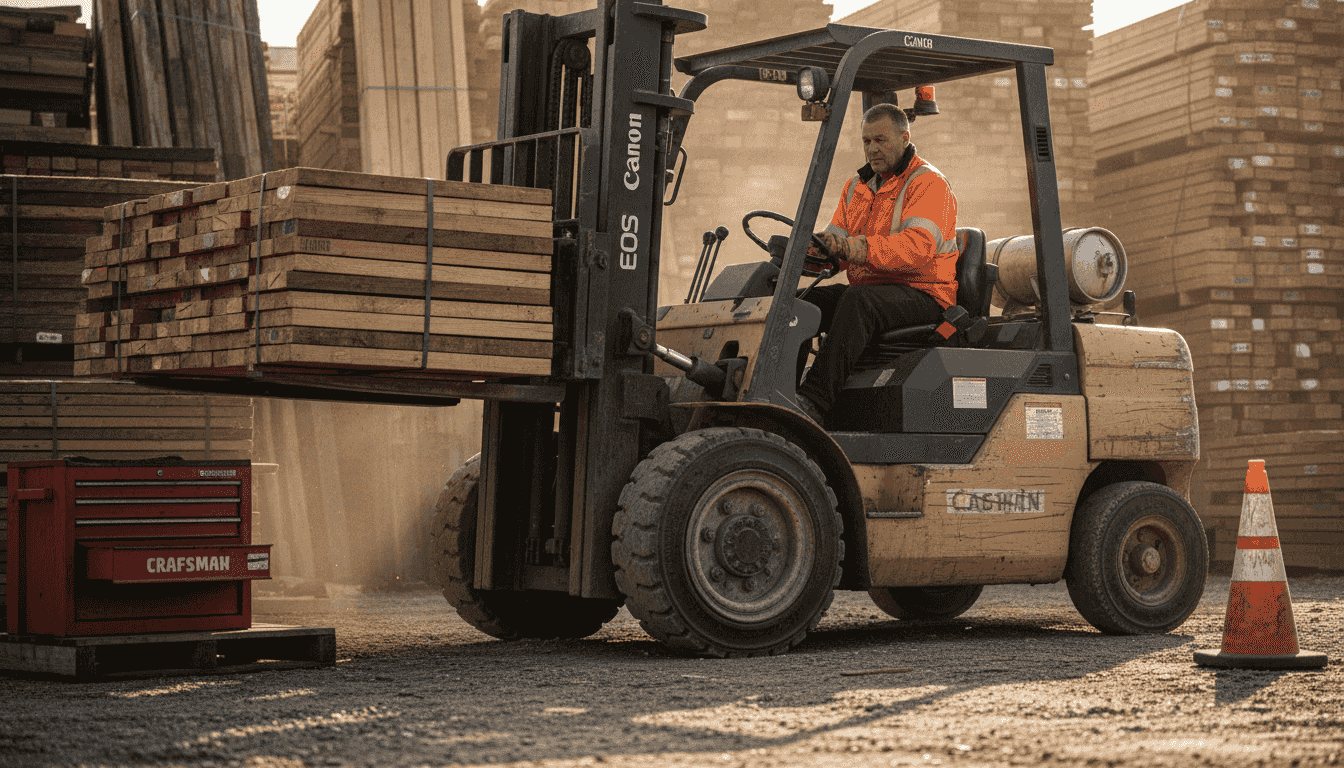
Classes V, VI, and VII address outdoor and rough terrain needs. Class V pneumatic tire trucks work in lumber yards and construction sites. Class VII rough terrain forklifts handle uneven ground and outdoor loading docks.
Pro Tip: Conduct a facility audit to document every PIT class you operate. Many warehouses unknowingly run multiple classes without class-specific training, creating compliance vulnerabilities.
Each class requires operators to understand vehicle-specific controls, stability characteristics, and load capacities. Training programs must address the actual PIT classes in use, not generic forklift operation.
OSHA mandates comprehensive training before any employee operates a powered industrial truck. This requirement protects workers and reduces injury rates significantly.
Training and evaluation requirements include multiple components:
Training content must be specific to the PIT class and work environment. Operators moving from Class I electric trucks to Class IV propane forklifts need additional instruction on the new vehicle type. Generic training fails to meet OSHA standards.
Refresher cycles matter critically. Three-year refresher training keeps operators current with safety practices and reinforces proper techniques. Immediate retraining addresses unsafe behaviors before they cause injuries.
Your documentation proves compliance during inspections. Maintain records showing:
Pro Tip: Create a digital tracking system for certification expiration dates. Automated reminders prevent lapses that expose you to citations and liability.
Proper certification significantly reduces PIT-related workplace injuries while protecting your organization from regulatory penalties and legal claims.
Ongoing evaluation extends beyond initial certification. Supervisors should observe operators regularly, providing feedback and correction. This sustained attention builds a culture of safety where compliance becomes routine rather than bureaucratic.
Several persistent myths compromise safety and compliance in warehouses nationwide. Clearing these misconceptions strengthens your operational foundation.
Myth one claims all forklifts are essentially the same. This ignores OSHA’s seven distinct classes, each with unique operational characteristics and training needs. A Class I electric reach truck operates completely differently from a Class V rough terrain forklift.
Myth two suggests experienced operators don’t need formal certification. OSHA requires training and evaluation regardless of prior experience. Operating skills gained on one job don’t automatically transfer to new equipment or environments. Undocumented experience provides zero protection during inspections or after accidents.
Myth three limits PITs to traditional forklifts only. OSHA’s definition encompasses:
This broader scope means more employees need certification than many managers realize. Warehouse safety requires identifying every PIT type in use and ensuring appropriate training coverage.
Myth four assumes basic orientation satisfies training requirements. OSHA demands formal instruction, practical demonstration, and documented evaluation. A quick walkthrough or job shadowing falls short of regulatory standards.
Myth five treats certification as permanent once obtained. The three-year refresher requirement ensures operators maintain current knowledge and skills. Letting certifications expire creates immediate compliance violations.
Understanding forklift hazard awareness starts with accurate terminology. Using precise safety terminology when discussing PITs, classes, and training requirements prevents miscommunication that leads to unsafe practices.
Accurate PIT classification transforms warehouse safety outcomes measurably. Facilities implementing proper classification protocols report up to 30% fewer operational incidents compared to those treating all equipment identically.
Non-compliance with OSHA PIT regulations creates severe consequences. Injury rates triple in warehouses operating without proper operator certification and equipment-specific training. Financial impacts extend beyond direct injury costs to include:
Understanding PIT classes guides strategic vehicle deployment. Class II narrow aisle trucks maximize storage density in constrained spaces. Class I electric trucks reduce operational noise in temperature-controlled environments. Matching vehicle capabilities to operational demands improves both safety and efficiency.
Managers informed on PIT distinctions make better decisions about fleet composition, maintenance scheduling, and operator assignments. This knowledge reduces equipment abuse, extends vehicle lifespan, and minimizes unexpected downtime.
Investing in compliance creates competitive advantages. Facilities with strong safety records attract quality employees and retain experienced operators. Customers increasingly audit supplier safety programs, making warehouse safety performance a factor in contract awards.
Statistic spotlight: Warehouses with comprehensive PIT classification and training programs average 42% lower insurance premiums than industry baseline rates, directly impacting profitability.
Safety culture begins with leadership commitment to proper classification and training. When management prioritizes understanding PIT types and ensuring appropriate certification, workers recognize safety as a genuine value rather than regulatory theater. This cultural shift reduces incidents more effectively than any single policy or procedure.
Implementing effective PIT management requires systematic action across training, equipment, and operational procedures.
Conduct a comprehensive facility audit identifying every PIT by OSHA class. Document make, model, power source, and typical applications for each vehicle.
Review current operator certifications against the PIT inventory. Flag expired certifications, missing class-specific training, and operators working outside their certified equipment types.
Develop training schedules addressing gaps identified in step two. Prioritize operators with expired certifications and those operating uncertified equipment classes.
Establish evaluation protocols for initial certification and ongoing performance monitoring. Assign qualified trainers and document all assessments formally.
Create incident response procedures triggering immediate retraining. Define what constitutes a near miss, property damage incident, or safety violation requiring operator recertification.
Implement preventive maintenance programs specific to each PIT class. Electric trucks need different service intervals than internal combustion vehicles.
Deploy visual management systems identifying PIT classes and authorized operators. Color coding or labeling prevents unauthorized equipment use.
Pro Tip: Build a certification matrix showing which operators hold credentials for each PIT class. This visual tool simplifies scheduling and reveals training gaps instantly.
Leverage technology to streamline compliance management. Digital platforms track certification expiration dates, schedule refresher training automatically, and maintain audit-ready documentation. These systems reduce administrative burden while improving compliance reliability.
Partner with qualified training providers offering OSHA-compliant programs tailored to your specific PIT classes and operational environment. Generic training misses facility-specific hazards and equipment characteristics that impact safety outcomes.
Regular safety meetings reinforce proper PIT practices. Use actual facility incidents and near misses as teaching opportunities. Discuss seasonal factors affecting PIT operation like winter floor conditions or summer heat impacting battery performance.
Monitor leading indicators predicting safety problems before injuries occur. Track near misses, equipment damage incidents, and operator-reported hazards. These metrics reveal training needs and operational issues requiring attention.
Optimize fleet composition based on actual operational demands. Right-sizing your PIT inventory reduces unnecessary equipment variety, simplifies training requirements, and lowers maintenance complexity. Standardizing on fewer vehicle types where operationally feasible concentrates operator expertise and improves overall compliance efficiency.
Understanding powered industrial trucks is just the foundation. Translating knowledge into compliant, safe operations requires expert training support aligned with current OSHA regulations.
Professional training programs deliver class-specific instruction covering the exact PIT types in your facility. Certification ensures operators demonstrate genuine competency, not just attendance. This competency-based approach reduces injury risk while protecting you from regulatory liability.
Comprehensive solutions include onsite training bringing qualified instructors to your facility, online programs offering flexible scheduling, and train the trainer options building internal capability. Developing in-house trainers creates sustained safety competency as your workforce evolves.
Business-focused certification programs scale across multiple locations and hundreds of operators while maintaining consistent quality and documentation. These enterprise solutions integrate with your existing safety management systems, streamlining administration and audit preparation. With over 20 years specializing in OSHA-compliant forklift training, Forklift Academy provides the expertise and resources transforming your warehouse PIT safety culture.
Powered industrial trucks include forklifts, pallet jacks, order pickers, reach trucks, tow tractors, and platform lift trucks. Any mobile, power-driven vehicle used for material handling falls under OSHA’s PIT definition and requires operator certification.
OSHA mandates refresher training every three years minimum. You must provide immediate retraining after accidents, near-miss incidents, observed unsafe operation, or when operators switch to different PIT classes.
No. OSHA defines seven distinct PIT classes with different operational characteristics and training requirements. Operators certified on Class I electric trucks need additional training before operating Class IV internal combustion or Class V rough terrain vehicles.
Uncertified operation violates OSHA regulations, exposing you to citations averaging $15,000 per violation. Injury rates triple in facilities without proper training, increasing workers’ compensation costs and legal liability. Operators lack critical safety knowledge, creating danger for themselves and coworkers.
Maintain a certification tracking system with automated expiration alerts. Conduct regular operator observations and document evaluations. Schedule three-year refresher training proactively. Audit your PIT inventory annually against operator certifications. Partner with qualified training providers for consistent, OSHA-compliant programs.