
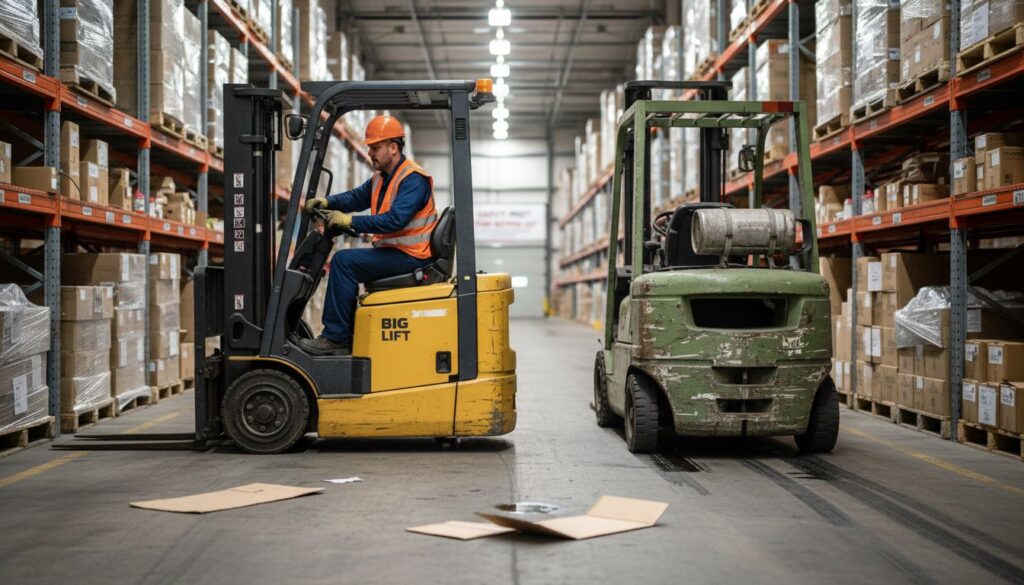

Every American warehouse faces unique demands when it comes to material handling, and the right forklift license can make all the difference. With over eight million powered industrial trucks operating across the United States, understanding each class of equipment and certification is vital for safety and compliance. This guide breaks down the major forklift license types, revealing how the right training equips you for everything from indoor logistics to rough outdoor terrain.
| Key Message | Explanation |
|---|---|
| 1. Class I Trucks Provide Zero Emissions | Electric Motor Rider Trucks are ideal for indoor use, offering environmental benefits with zero emissions compared to gas powered forklifts. |
| 2. Class II Trucks Maximize Storage Efficiency | Narrow Aisle Trucks enhance warehouse storage density by navigating tight spaces, potentially increasing storage capacity by up to 50%. |
| 3. Mastering Advanced Controls is Essential | Operating Class III Hand Trucks and other specialized equipment requires training in advanced control systems for safe and effective operation. |
| 4. Class IV and V Trucks Handle Heavy Loads | Internal Combustion Cushion Tire Trucks and Pneumatic Tire Trucks are built for heavy-duty transport, managing loads between 3,000 to 25,000 pounds. |
| 5. Conduct Regular Safety Inspections | Always perform thorough pre-shift inspections on all types of trucks to ensure safe operation and identify potential issues before they arise. |
Class I Electric Motor Rider Trucks represent the pinnacle of indoor material handling equipment, designed specifically for warehouse and industrial environments that demand precision and clean operation. These specialized vehicles are powered by electric motors, offering significant advantages over traditional internal combustion alternatives.
Unlike gas powered forklifts, these electric machines provide zero emissions and substantially quieter performance, making them ideal for indoor settings such as manufacturing facilities, distribution centers, and storage warehouses. Electric motor rider trucks come in multiple configurations including counterbalanced rider types, stand-up models, and three-wheel electric trucks, each engineered to meet specific operational requirements.
Operators seeking a Class I license must demonstrate proficiency with these sophisticated machines, understanding their unique characteristics like precise maneuverability, electric power management, and specialized control systems. Training typically involves comprehensive instruction on vehicle dynamics, safety protocols, battery maintenance, and operational techniques specific to electric rider trucks.
The versatility of these trucks allows them to handle various load capacities and navigate tight indoor spaces with remarkable efficiency. Whether equipped with cushion or pneumatic tires, Class I trucks can seamlessly transport materials across smooth warehouse floors, providing businesses with a reliable and environmentally friendly material handling solution.
Pro Tip: Always conduct a thorough pre-shift inspection of your electric rider truck, paying special attention to battery charge levels, tire condition, and control system responsiveness to ensure optimal performance and workplace safety.
Class II Electric Motor Narrow Aisle Trucks represent a specialized category of material handling equipment engineered to maximize storage efficiency and operational precision in compact warehouse environments. These highly maneuverable vehicles are designed to navigate extremely tight spaces where traditional forklifts cannot operate.
Narrow aisle trucks come in multiple configurations including reach trucks, order pickers, high lift straddle trucks, and turret trucks. Each variant is optimized for specific storage and retrieval tasks, enabling warehouses to significantly increase their storage density while maintaining exceptional maneuverability.
Operating these sophisticated machines requires advanced technical skills and precise spatial awareness. Operators must master complex control systems that allow them to navigate extremely narrow corridors often less than ten feet wide, lifting loads to significant heights while maintaining exceptional stability and control.
The strategic advantage of Class II trucks lies in their ability to transform warehouse storage configurations. By utilizing vertical space and minimizing aisle width, businesses can potentially increase storage capacity by up to 50% compared to traditional forklift operations. This efficiency translates directly into reduced operational costs and improved inventory management.
Pro Tip: Always conduct a comprehensive pre-shift inspection of narrow aisle equipment, paying special attention to side shifters, lift chains, and mast alignment to prevent potential operational failures in confined spaces.
Class III Electric Motor Hand Trucks represent a critical component of material handling equipment designed for precise and efficient short distance transportation in warehouses, distribution centers, and retail environments. These specialized vehicles offer operators exceptional maneuverability and control in tight spaces where larger equipment cannot operate.
Electric hand trucks come in multiple configurations including low lift platform trucks, walkie pallet trucks, and high lift straddle models. Each design serves a unique operational purpose, enabling workers to unload deliveries, transport inventory, and manage materials with remarkable precision and minimal physical strain.
Operating a Class III hand truck requires specialized training that goes beyond basic equipment operation. Professionals must master techniques for load balancing, spatial awareness, and understanding the nuanced control systems that distinguish these trucks from other material handling equipment. Proper technique can significantly reduce workplace injuries and improve overall operational efficiency.
The key advantages of Class III hand trucks include their compact size, electric power source, and ability to minimize physical labor. By reducing manual lifting and carrying, these trucks not only enhance worker safety but also increase productivity across various industrial settings. Modern electric hand trucks can typically handle loads ranging from 2,000 to 6,000 pounds, making them versatile tools for numerous material handling applications.
Pro Tip: Always maintain a clear line of sight and keep hands away from pinch points when operating electric hand trucks, and perform a comprehensive equipment inspection before each shift to ensure safe and efficient performance.
Class IV Internal Combustion Cushion Tire Trucks represent a robust category of material handling equipment specifically engineered for industrial environments with smooth indoor surfaces. These powerful machines are the workhorses of many manufacturing and warehouse operations, delivering exceptional performance and load handling capabilities.
Internal combustion cushion tire trucks are designed to operate efficiently on flat, well maintained concrete floors, offering superior stability and strength for handling substantial material loads. Unlike their electric counterparts, these trucks utilize propane, gasoline, or diesel engines, providing extended operational runtime and quick refueling options.
Operating a Class IV truck requires specialized training that goes beyond basic equipment handling. Professionals must understand complex engine dynamics, load distribution principles, and precise maneuvering techniques specific to internal combustion powered equipment. The cushion tire design allows for exceptional maneuverability in tight warehouse spaces, with a smaller turning radius compared to pneumatic tire models.
The strategic advantages of Class IV trucks include their ability to handle heavier loads typically ranging from 3,000 to 15,000 pounds, making them ideal for industries requiring significant material transportation. Their robust engine design enables continuous operation across extended shifts, providing businesses with reliable and efficient material handling solutions.
Pro Tip: Always conduct a comprehensive pre shift inspection focusing on tire condition, fluid levels, and engine performance to ensure safe and efficient truck operation.
Class V Internal Combustion Pneumatic Tire Trucks represent the ultimate versatile material handling solution designed for challenging operational environments that demand exceptional durability and performance across diverse terrain types. These robust machines bridge the gap between indoor warehouse operations and rugged outdoor industrial applications.
Pneumatic tire trucks are engineered to handle complex material transportation challenges in construction sites, lumber yards, recycling facilities, and other demanding work environments. Their specialized tire design provides superior traction and shock absorption, enabling operators to navigate uneven surfaces with remarkable stability and control.
Operating a Class V truck requires advanced skills that go beyond standard forklift training. Professionals must master techniques for managing load balance, understanding terrain variations, and implementing precise maneuvering strategies across different surface conditions. The internal combustion engine provides substantial power ranging from 5,000 to 25,000 pound load capacities, making these trucks essential for heavy duty material handling tasks.
The strategic advantages of Class V trucks include their remarkable adaptability. Unlike cushion tire models restricted to smooth surfaces, these trucks can seamlessly transition between warehouse floors, gravel lots, construction sites, and other challenging work environments. Their robust pneumatic tires absorb surface irregularities, reducing equipment stress and enhancing overall operational efficiency.
Pro Tip: Always inspect tire pressure and tread depth before each shift, as proper tire maintenance is crucial for maintaining vehicle stability and preventing potential workplace accidents.
Class VI Tow Tractors represent a specialized category of material handling equipment designed for horizontal transportation of goods across complex industrial environments. These versatile vehicles excel at moving multiple trailers or carts simultaneously, offering unprecedented efficiency in warehouses, distribution centers, and manufacturing facilities.
Tow tractors are unique in their ability to transport loads without lifting, making them fundamentally different from traditional forklifts. Available in both electric and internal combustion models, these machines provide flexible solutions for businesses seeking optimized material movement strategies.
Operating a Class VI tow tractor requires advanced training that goes beyond standard forklift certification. Professionals must master complex maneuvering techniques, understand weight distribution principles, and develop exceptional spatial awareness to safely navigate tight warehouse corridors while towing multiple loaded trailers.
The strategic advantages of Class VI tow tractors include their remarkable load flexibility, with typical models capable of towing multiple trailers weighing between 3,000 and 25,000 pounds. Their design allows for significant operational efficiency, reducing manual labor and minimizing the number of individual trips required to move materials across large industrial spaces.
Pro Tip: Always perform a comprehensive trailer connection inspection before each shift, checking coupling mechanisms, trailer brake systems, and load balance to prevent potential transportation accidents.
Class VII Rough Terrain Forklift Trucks represent the ultimate solution for material handling in challenging outdoor environments where traditional warehouse equipment would fail. These robust machines are engineered to conquer unpredictable landscapes, from rugged construction sites to agricultural fields and remote industrial locations.
Rough terrain forklift trucks are distinguished by their specialized large pneumatic tires, high ground clearance, and powerful engines designed to navigate uneven, muddy, and challenging surfaces. Unlike standard forklifts, these vehicles can seamlessly transition between gravel, dirt, grass, and other challenging terrains without compromising load stability or operational efficiency.
Operating a Class VII rough terrain forklift requires advanced skills that go beyond standard equipment training. Professionals must master techniques for managing load balance on uneven ground, understanding terrain variations, and implementing precise maneuvering strategies in dynamic outdoor work environments. These trucks typically handle load capacities ranging from 5,000 to 25,000 pounds, making them essential for industries like construction, agriculture, lumber, and infrastructure development.
The strategic advantages of Class VII trucks include their remarkable versatility and durability. Equipped with four-wheel drive capabilities and robust suspension systems, these machines can operate effectively in conditions that would render standard forklifts completely useless. Their design allows businesses to maintain productivity in challenging environments where equipment reliability is paramount.
Pro Tip: Always conduct a comprehensive terrain assessment before operating a rough terrain forklift, checking ground stability, identifying potential hazards, and planning your route to ensure safe and efficient material transportation.
Below is a comprehensive table summarizing the key features, operational requirements, and strategic advantages of various classes of material handling equipment discussed in the article.
| Class | Description | Key Features | Pro Tip |
|---|---|---|---|
| Class I | Electric Motor Rider Trucks | Zero emissions, quiet performance, maneuverability, various configurations | Conduct a thorough pre-shift inspection focusing on battery charge and tire condition. |
| Class II | Electric Motor Narrow Aisle Trucks | Maximizes storage efficiency, operates in narrow spaces, multiple configurations | Inspect side shifters and lift chains to prevent failures. |
| Class III | Electric Motor Hand Trucks | Compact, precise for short distances, reduces physical labor | Maintain clear sight and inspect equipment before shifts. |
| Class IV | Internal Combustion Cushion Tire Trucks | Suitable for smooth surfaces, handles heavy loads, quick refueling | Focus on tire condition and engine performance during inspections. |
| Class V | Internal Combustion Pneumatic Tire Trucks | Versatile, handles diverse terrains, high load capacity | Inspect tire pressure and tread depth for stability. |
| Class VI | Tow Tractors | Horizontally moves goods, flexible models, handles multiple trailers | Inspect trailer connections and brake systems. |
| Class VII | Rough Terrain Forklift Trucks | Navigates challenging terrains, high versatility and durability | Conduct terrain assessments to ensure ground stability and safety. |
Understanding the 7 types of forklift licenses is essential for anyone aiming to boost workplace safety and operational efficiency. This article highlights the importance of mastering specific equipment like Class I Electric Motor Rider Trucks or Class V Internal Combustion Pneumatic Tire Trucks. Many challenges arise from inadequate training on these specialized vehicles, such as poor maneuverability, load management issues, and safety risks in confined or rough environments. Gaining the proper certification empowers operators to confidently handle different forklift classes and reduces workplace accidents.
If you want to overcome these challenges and secure your workforce with expert training, explore our Forklift License Archives for tailored certification programs. We offer OSHA-compliant courses designed to cover everything from narrow aisle trucks to rough terrain forklifts.
Don’t risk safety or compliance — visit Forkliftacademy.com today for comprehensive forklift certification options. Unlock access to online and onsite training, benefit from over 20 years of industry experience, and take the next step toward creating safer workplaces. Ready to get certified now? Browse our Forklift Certification Archives and start your journey today.
A Class I Electric Motor Rider Truck License is required to operate electric motor rider trucks, which are designed for indoor material handling. To obtain this license, complete a training program that covers vehicle dynamics, safety protocols, and electric power management.
Having a Class II Electric Motor Narrow Aisle Truck License allows you to operate vehicles that maximize storage efficiency in tight spaces. This training prepares you to navigate narrow aisles safely and effectively, which can increase warehouse storage capacity by up to 50%.
To receive training for a Class III Electric Motor Hand Truck License, enroll in a program that teaches load balancing, spatial awareness, and the unique control systems of electric hand trucks. Complete the training to enhance safety and minimize the risk of workplace injuries during operation.
Before operating a Class IV Internal Combustion Cushion Tire Truck, conduct a pre-shift inspection focusing on tire condition, fluid levels, and engine performance. This process ensures safe operation and can significantly reduce the risk of accidents during your shift.
Specialized training is crucial for a Class V Internal Combustion Pneumatic Tire Truck License because these trucks operate in diverse terrains requiring advanced skills in load management and maneuvering. Completing this training enhances operational efficiency and safety in challenging environments.
Operating a Class VII Rough Terrain Forklift requires advanced skills including understanding terrain variations and managing load balance on uneven ground. Complete a specialized training program to learn precise handling techniques and ensure safe operation in dynamic outdoor settings.