 Skip to content
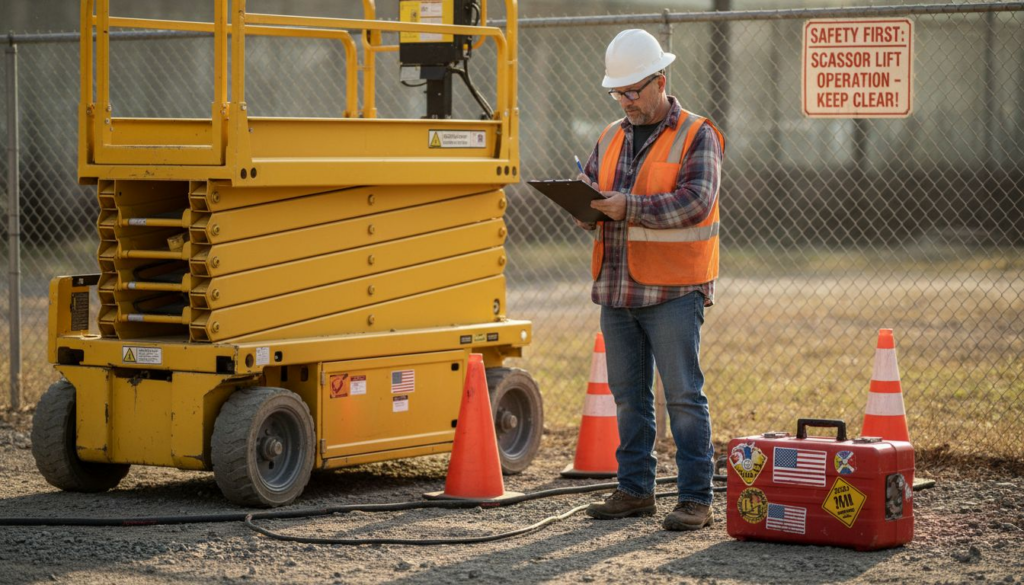

Every safety manager knows that overlooking even one detail in equipment certification can lead to significant risks on the job site. Meeting OSHA standards for scissor lift operations means more than just ticking off a checklist—it demands a thorough grasp of workplace hazards, operator preparation, and proper documentation. This practical guide walks you through step-by-step OSHA-compliant scissor lift certification, making it easier to protect workers and reinforce a culture of proactive safety across every American construction project.
| Key Point | Explanation |
|---|---|
| 1. Conduct Thorough Workplace Assessments | Assess surface stability, hazards, and equipment conditions to ensure compliance with safety standards and minimize risks. |
| 2. Choose Comprehensive Certification Programs | Select training that combines theoretical and practical skills, tailored to specific workplace needs and OSHA standards. |
| 3. Prepare Candidates Effectively | Implement structured onboarding that includes necessary documentation, personal protective equipment checks, and health screenings. |
| 4. Deliver Engaging Training | Use a mix of classroom instruction and hands-on skill assessments to facilitate practical application of safety principles. |
| 5. Maintain Rigorous Documentation Practices | Keep accurate records of certifications, training completion, and operator qualifications to ensure compliance and simplify audits. |
Successfully assessing workplace requirements for scissor lift operators involves a comprehensive evaluation of safety standards, equipment conditions, and operator capabilities. This critical process ensures compliance with OSHA workplace safety guidelines.
Begin by conducting a thorough workplace assessment that covers multiple essential elements:
Operators must systematically document their workplace assessment, paying special attention to potential risks such as electrical line proximity, uneven terrain, and surrounding environmental factors. This documentation serves as a critical record demonstrating proactive safety management.
A comprehensive workplace assessment is your first line of defense against potential workplace accidents.
Pro tip: Create a standardized workplace assessment checklist that can be quickly replicated across different job sites to ensure consistent safety protocols.
Selecting the right OSHA-compliant certification program requires careful consideration of your specific workplace needs and industry requirements. Your goal is to find a training program that not only meets OSHA training standards but also provides comprehensive skill development for scissor lift operators.
When evaluating certification programs, focus on these critical selection criteria:
Employers play a crucial role in verifying that the selected certification program thoroughly prepares operators to recognize workplace hazards, understand equipment limitations, and implement safety protocols. The right program will blend technical instruction with real-world application, ensuring operators are fully prepared for safe scissor lift operation.
A robust certification program is more than a document – it’s your workforce’s safety blueprint.
Pro tip: Request sample training materials and verify the program’s alignment with current OSHA regulations before committing to any certification course.
Preparing scissor lift operator candidates for training involves a comprehensive approach to ensuring workplace safety and regulatory compliance. Understanding OSHA training documentation requirements is crucial for developing a robust preparation strategy.
Candidates must complete several critical preparation steps:
Employers play a pivotal role in candidate preparation by creating a structured onboarding process that familiarizes operators with safety expectations, equipment specifications, and documentation protocols. This preparation ensures candidates enter training with a clear understanding of their responsibilities and the critical nature of workplace safety.
Effective preparation transforms training from a compliance requirement into a genuine safety investment.
Pro tip: Create a comprehensive candidate preparation checklist that covers all administrative and physical requirements before the first training session begins.

Delivering comprehensive scissor lift operator training requires a strategic approach that combines theoretical knowledge and practical skills through OSHA-approved training methodologies. The goal is to create a robust learning experience that transforms safety guidelines into actionable workplace practices.
The training program should include these essential components:
Instructors must balance theoretical content with interactive learning experiences, ensuring participants not only understand safety principles but can actively apply them in real-world scenarios. This approach transforms training from a compliance requirement into a genuine skill-building opportunity that empowers operators to make critical safety decisions.
Effective training bridges the gap between knowledge and practical application.
Pro tip: Design training modules with scenario-based learning that challenges participants to solve complex safety challenges in simulated workplace environments.
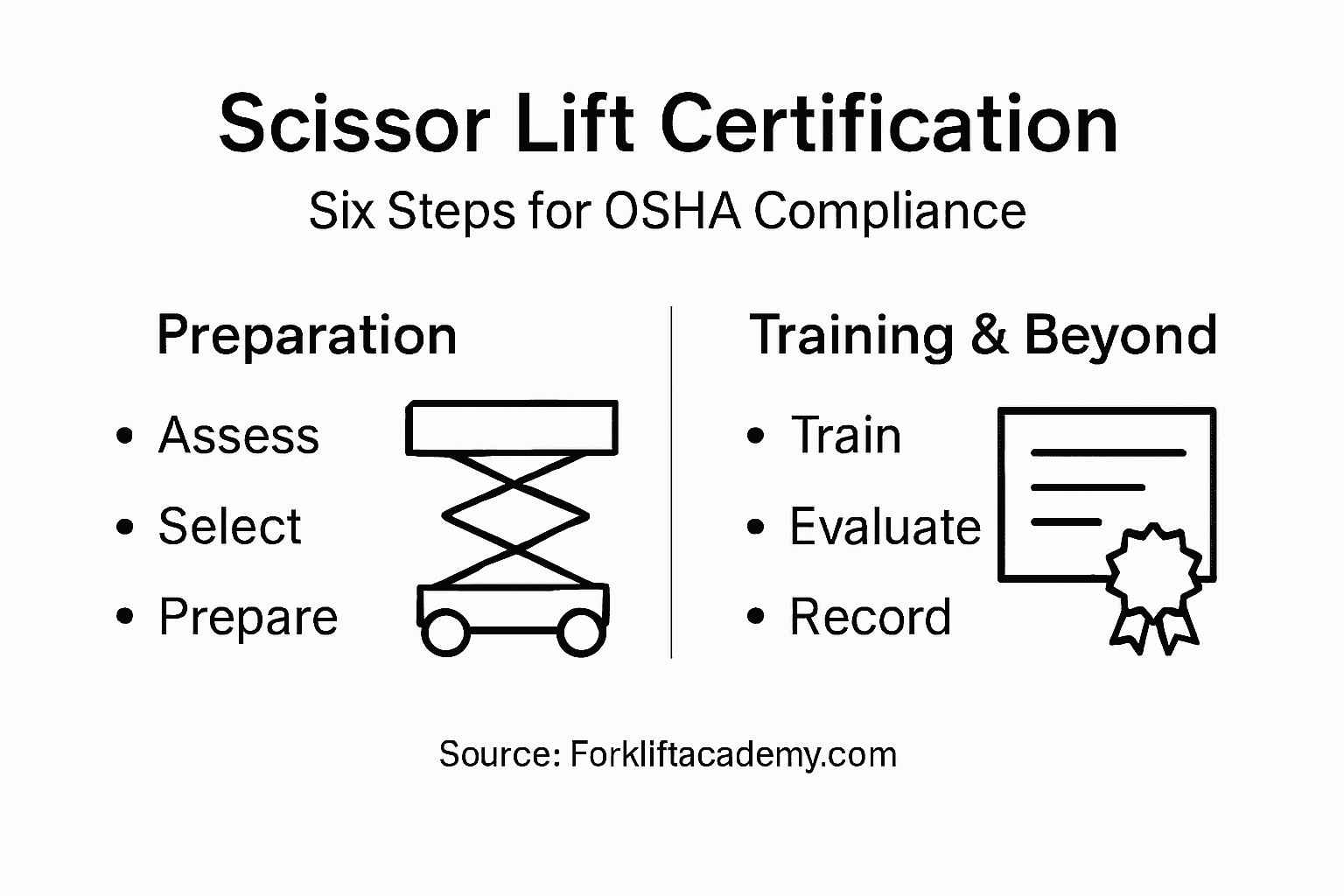
Conducting a comprehensive scissor lift operator evaluation requires a structured approach that thoroughly assesses technical skills and safety awareness. Understanding the detailed practical assessment requirements is crucial for ensuring workplace safety and regulatory compliance.
The operator evaluation process should encompass these critical assessment components:
Evaluators must adopt a systematic approach that goes beyond simple pass/fail metrics. The assessment should provide constructive feedback, identifying specific areas where operators can improve their skills and understanding of safety protocols. This approach transforms the evaluation from a mere compliance check into a genuine learning opportunity.
A comprehensive evaluation is not just about testing skills, but about building competent, safety-conscious operators.
Pro tip: Create a standardized evaluation rubric with clear, measurable criteria to ensure consistent and objective assessment across all operator candidates.
Issuing certificates and maintaining precise compliance records are critical final steps in the scissor lift operator certification process. Understanding the certification documentation requirements ensures your organization meets OSHA regulatory standards and maintains comprehensive training documentation.
The certificate and record management process should include these essential elements:
Employers must create a systematic approach to documentation that not only satisfies regulatory requirements but also provides a clear, auditable trail of operator qualifications. This meticulous record-keeping protects both the organization and the individual operators by maintaining transparent training and competency documentation.
Here’s a quick overview of how each certification step supports workplace safety and compliance:
| Certification Step | Main Goal | Key Compliance Benefit |
|---|---|---|
| Workplace Assessment | Identify and minimize risks | Prevents accidents, ensures OSHA alignment |
| Program Selection | Choose suitable training | Meets legal standards, fits job needs |
| Candidate Preparation | Ready operators for learning | Reduces training delays, ensures proper documentation |
| Training Delivery | Teach theory and practical skills | Improves operator competence, builds safety culture |
| Evaluation Process | Test operator skills and awareness | Promotes ongoing skill improvement |
| Certification & Records | Maintain proof of qualification | Supports audits, tracks renewals |
Comprehensive documentation transforms certification from a mere requirement into a strategic safety management tool.
Pro tip: Implement a digital record management system that automatically tracks certification expiration dates and generates renewal notifications.
The table below summarizes typical errors in the certification process and the risks they create:
| Common Error | Negative Outcome | Prevention Tip |
|---|---|---|
| Incomplete hazard assessment | Missed site risks | Use standardized checklists |
| Outdated training materials | Non-compliance with OSHA | Regularly update content |
| Poor health screening | Unfit operators at work | Require medical clearance |
| Inadequate performance evaluation | Undertrained operators | Use objective rubrics |
| Lax certificate tracking | Lapsed certifications | Automate renewal alerts |
Navigating the complexities of scissor lift certification can feel overwhelming when faced with stringent OSHA requirements and the need for thorough operator preparation. This article highlights critical challenges such as comprehensive workplace assessments, hands-on training, and meticulous record keeping to build truly competent operators. If you seek to transform these essential steps into straightforward solutions Forkliftacademy.com offers OSHA-compliant certification programs designed to cover every stage — from candidate readiness to final evaluation.
Take control of safety in your workplace today by choosing training backed by over 20 years of industry experience. Access a variety of courses that include online, onsite, and evaluation-only formats adapted to your unique needs. Explore more resources in our Forklift Certification Archives – Top Osha Forklift Certification to deepen your understanding and implement best practices seamlessly. For ongoing safety insights visit Forklift Safety Archives – Top Osha Forklift Certification. Visit Forkliftacademy.com now and secure reliable certification that protects your team and meets OSHA standards without delay.
The scissor lift certification process involves assessing workplace requirements, selecting an appropriate certification program, preparing candidates for training, delivering formal instruction, conducting evaluations, and issuing certificates. Follow these steps methodically to ensure you meet all OSHA requirements successfully.
To assess workplace requirements, verify surface stability, identify hazards, check equipment condition, calculate weight limits, and evaluate weather conditions. Document each assessment to demonstrate proactive safety management and compliance with OSHA standards.
When selecting a certification program, evaluate its comprehensiveness, industry-specific curriculum, instructor qualifications, and hands-on training components. Choose a program that not only meets OSHA standards but also prepares operators for real-world safety challenges.
Candidates should ensure their personal protective equipment is ready, complete a medical fitness assessment, review workplace safety protocols, gather necessary documentation, and undergo pre-training health screenings. Completing these steps will enhance training effectiveness and ensure compliance with safety requirements.
A scissor lift operator evaluation should include pre-operational equipment inspections, control functionality demonstrations, maneuverability skills assessments, safety protocol adherence evaluations, and emergency response capability verifications. This comprehensive approach identifies areas for improvement and ensures that operators are safety-conscious and competent.
After issuing certificates, maintain compliance records that include the official certification document, training completion dates, equipment categories authorized for operation, and both trainer and trainee signatures. Implement an organized record management system to facilitate easy tracking of renewals and compliance status.




 Optimized by Seraphinite Accelerator