
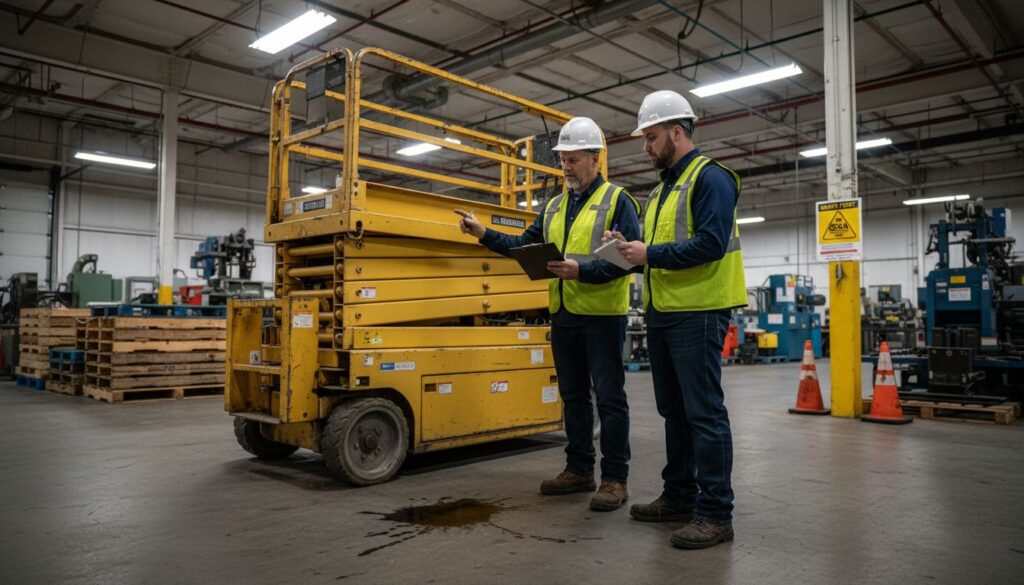

Over 20 percent of workplace fatalities in the American construction industry are linked to falls and equipment misuse. Scissor lifts, though common, present real hazards when operators are not properly trained or regulated. Every American employer is responsible for ensuring safety on the job, and mastering the right scissor lift practices protects lives and livelihoods. This guide reveals proven safety steps to meet legal standards, stay compliant, and help every team avoid preventable accidents.
| Takeaway | Explanation |
|---|---|
| 1. Understand OSHA Regulations | Knowledge of OSHA requirements is essential for safe scissor lift operations and preventing accidents. |
| 2. Conduct Daily Safety Assessments | Perform thorough inspections and evaluations before operations to identify risks and ensure safety compliance. |
| 3. Provide Comprehensive Training | Hands-on training is vital for operators to develop practical skills and effectively respond to workplace challenges. |
| 4. Implement Regular Performance Evaluations | Continuous assessments help identify skill gaps and reinforce safety practices among scissor lift operators. |
| 5. Maintain Detailed Certification Records | Proper documentation of training and certifications ensures compliance and accountability within the organization. |
Safety starts with knowing the rules. When it comes to scissor lift operations, understanding OSHA requirements is not just a recommendation it is a critical necessity for preventing workplace accidents.
OSHA classifies scissor lifts as mobile scaffolds, which means they fall under specific regulatory standards designed to protect workers. These standards primarily cover two key regulations: 29 CFR 1910.27 and 1926.451. Employers must ensure that scissor lift operations meet rigorous safety criteria including proper fall protection, stable positioning, and comprehensive operator training.
Key Regulatory Compliance Points:
By understanding these requirements, operators and employers can create a safer work environment and avoid potentially significant OSHA violations. Proactive compliance not only prevents accidents but also protects workers and reduces potential legal and financial risks associated with workplace incidents.
Remember that OSHA regulations are designed to be comprehensive. They cover everything from equipment maintenance to operator behavior, ensuring that every aspect of scissor lift operation prioritizes worker safety.
Before any scissor lift operation begins, a thorough pre-training safety assessment is your first line of defense against potential workplace accidents. Safety inspections are not just a bureaucratic checkbox they are a critical process that can prevent serious injuries and equipment failures.
Key Components of a Pre-Training Safety Assessment:
Professional safety protocols recommend conducting daily visual inspections and functional tests before each shift. This means checking guardrail systems, testing controls, examining tires and hydraulic systems, and ensuring all safety mechanisms are fully operational.
The assessment should include a comprehensive review of the work area. Identify potential risks such as uneven surfaces, overhead obstacles, electrical hazards, and proximity to other equipment or workers. By systematically evaluating these factors, you create a proactive safety environment that protects both operators and surrounding personnel.
Pro Tip: Document your pre-training safety assessment. A written record not only helps track potential issues but also demonstrates your commitment to workplace safety and OSHA compliance.
Before any scissor lift operation, a meticulous equipment inspection is your most critical safety measure. Comprehensive equipment checks can prevent potentially catastrophic accidents and ensure optimal workplace safety.
Critical Inspection Checklist:
Daily inspections are not optional they are mandatory. Operators must systematically evaluate each component before initiating work. This means physically touching, visually examining, and functionally testing every critical system of the scissor lift.
Special attention should be given to brake systems, stabilization mechanisms, and load capacity indicators. Even minor wear or slight misalignments can compromise the entire equipment’s safety. Remember that a thorough inspection takes minutes but can prevent serious workplace injuries.
Pro Tip: Document your inspection findings. A written record demonstrates due diligence and helps track potential equipment degradation over time.
The most effective way to ensure scissor lift safety is through comprehensive hands-on operational training that goes far beyond theoretical instruction. Practical training transforms knowledge into muscle memory and situational awareness.
Key Hands-On Training Components:
Training must be tailored to specific scissor lift models and workplace environments. This means understanding manufacturer guidelines and ANSI standards A92.3 and A92.6. Operators should practice critical skills like proper positioning, load management, and navigating challenging terrain.
Effective hands-on training incorporates both instructor demonstration and individual practice. Trainees should perform multiple supervised operational scenarios that test their ability to respond to various workplace challenges. This approach ensures operators are not just technically competent but also psychologically prepared for real world work conditions.
Pro Tip: Video record training sessions. This allows for detailed performance review and helps identify areas where individual operators might need additional support.
Maneuvering a scissor lift requires precision, awareness, and a comprehensive understanding of potential workplace hazards. Safe movement techniques are not just recommendations they are critical survival skills for operators.
Essential Maneuvering Guidelines:
Successful scissor lift operation demands constant situational awareness. This means understanding not just how to move the equipment but where and when movement is appropriate. Operators must develop a sixth sense for potential risks including overhead obstructions, ground instability, and nearby equipment or personnel.
Careful positioning is as important as movement itself. Select work locations with firm surfaces and minimal interference. Implement traffic control measures that create safe zones around the lift and communicate potential danger areas to surrounding workers.
Pro Tip: Develop a mental checklist before every movement. Ask yourself three key questions: Is the path clear? Is the ground stable? Are all safety systems engaged?
Continuous assessment is the backbone of safe scissor lift operations. Operator performance evaluations are not just bureaucratic checkboxes they are critical safety interventions that prevent potential workplace accidents.
Comprehensive Evaluation Framework:
Effective evaluations go beyond written tests. They require a multifaceted approach that combines theoretical knowledge assessment with practical skill demonstration. Operators must prove they can not only understand safety protocols but also implement them seamlessly in real world environments.
A competent evaluator should observe operators in simulated and actual working conditions. This means watching how they interact with equipment, handle materials, navigate workspace challenges, and respond to unexpected situations. The goal is to identify potential knowledge gaps or risky behavior patterns before they can lead to accidents.
Pro Tip: Create a standardized evaluation checklist that covers both technical skills and safety mindset. Document each assessment to track individual operator development and identify training needs.
Certification is the final seal of approval that transforms training into recognized professional competence. Compliance documentation serves as a critical safeguard for both employers and operators.
Certification Documentation Requirements:
Proper documentation does more than satisfy regulatory requirements. It creates a clear accountability trail that protects your organization from potential legal challenges and demonstrates a commitment to workplace safety.
Certification should include specific details such as the operator name, date of training, skills demonstrated, equipment types authorized, and the validity period of the certification. These documents become essential references for future training, performance reviews, and potential workplace incident investigations.
Pro Tip: Implement a digital tracking system that provides automated alerts for upcoming certification renewals and helps maintain a seamless compliance workflow.
Below is a comprehensive table summarizing the key OSHA requirements, safety inspections, training, and performance evaluations related to scissor lift operations.
| Topic | Description | Key Considerations |
|---|---|---|
| OSHA Requirements | Scissor lifts are classified as mobile scaffolds. | Conform to ANSI standards, ensure fall protection, and provide operator training. |
| Pre-Training Safety Assessment | Essential for preventing workplace accidents. | Assess equipment condition, test functionality, review workplace environment. |
| Equipment Inspection | Thorough checks prevent accidents. | Inspect structural integrity, hydraulic systems, and safety mechanisms. |
| Hands-On Training | Practical training ensures safe equipment use. | Focus on equipment familiarization, emergency response, and technique refinement. |
| Maneuvering Techniques | Safe movement is critical for operator safety. | Assess surface, control speed, remain aware of obstacles, and never move while elevated. |
| Performance Evaluation | Continual assessment ensures safety and competence. | Evaluate technical competence, safety knowledge, and compliance. |
| Certification | Formal verification of training ensures compliance. | Maintain records of training, certifications, and renewal tracking. |
Understanding and following OSHA regulations for scissor lifts is essential for preventing workplace accidents and ensuring employee safety. This article highlights critical steps like pre-training assessments, equipment inspections, hands-on training, and operator evaluations. If you are grappling with maintaining thorough safety checklists or seeking to improve operational competence, tackling these challenges head-on leads to safer worksites and confident operators.
Forkliftacademy.com offers specialized OSHA-compliant training programs designed to help you meet these safety goals with ease. Whether you need individual certification or comprehensive business solutions including onsite training and digital resources, our expert courses empower your team to master safe scissor lift operation and maintain regulatory compliance.
Take the next step to secure safety and certification:
Explore our Forklift Certification offerings to find the perfect match for your needs.
Start building safer workplaces today with trusted training from Forkliftacademy.com. Don’t wait until small oversights cause big problems. Your team deserves the best in hands-on safety education and certification. Visit now to learn how easy it is to get started and stay compliant.
The key steps include understanding OSHA requirements, conducting a pre-training safety assessment, thoroughly inspecting equipment, providing hands-on operational training, reviewing safe maneuvering techniques, evaluating operator performance and knowledge, and issuing certification with compliance documentation. Follow these steps to ensure a comprehensive approach to scissor lift safety.
To ensure proper training, implement hands-on operational training that allows operators to familiarize themselves with controls and safety mechanisms. Conduct evaluations to assess their understanding and performance, and provide structured documentation for their training records.
A pre-training safety assessment should include examining the equipment condition, functional testing safety systems, assessing the workplace environment for potential hazards, and evaluating the operator’s readiness. By performing these checks, you can mitigate risks and create a safer work environment before operation.
Scissor lift inspections should be conducted daily before each shift to ensure optimal safety. Carry out a detailed review of key components such as structural integrity, safety mechanisms, and operational controls to prevent workplace accidents.
Best practices include verifying surface stability, controlling speed, being aware of obstacles, managing height while stationary, and establishing clear communication protocols. Develop a mental checklist to assess potential risks and maintain safety during operations.
Operator certification documentation should include an official certificate of training completion, detailed training records, individual performance files, and a tracking system for renewal dates. Implement a robust documentation process to ensure compliance and demonstrate commitment to safety.