
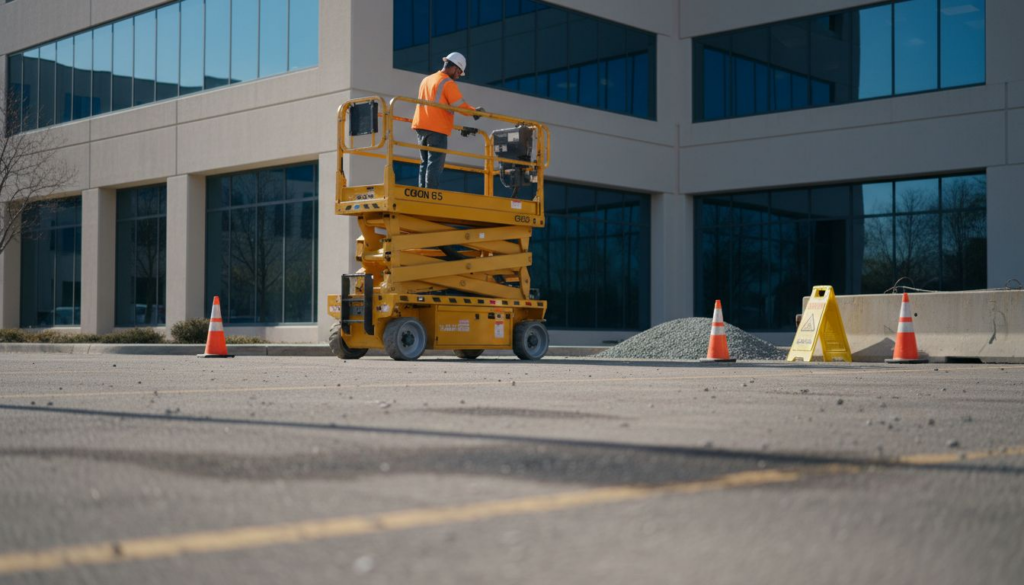

Managing busy American warehouses means trusting equipment to keep staff productive and safe every day. When it comes to reaching higher shelves or handling overhead tasks, many rely on scissor lifts without fully grasping the risks at play or the real requirements for OSHA compliance. Understanding the difference between safe operation and common misconceptions is more than technical know-how—it protects your team and keeps your facility running smoothly. This guide highlights critical concepts of scissor lift safety, common pitfalls, and the proactive steps that set top warehouse leaders apart.
| Point | Details |
|---|---|
| Understanding Scissor Lifts | Scissor lifts provide safe vertical movement using interlinked arms for stability, requiring operators to be aware of environmental and operational factors. |
| Safety Misconceptions | Operators often underestimate critical aspects such as terrain stability, wind impact, and load distribution, which can lead to safety hazards. |
| Compliance with OSHA Standards | Employers are responsible for thorough training, equipment maintenance, and workplace safety compliance to mitigate risks associated with scissor lifts. |
| Routine Inspections and Training | Regular pre-operation inspections and ongoing training are essential for ensuring safe operation and minimizing potential hazards. |
A scissor lift is a specialized piece of mobile elevated work equipment designed to provide safe vertical movement for workers in industrial, construction, and maintenance environments. Unlike traditional ladders or scaffolding, these mechanical platforms use interconnected, crossed supports that extend and retract vertically, allowing operators to reach significant heights with enhanced stability and control.
The core mechanism of a scissor lift involves crisscrossing mechanical arms that function like a pair of scissors – hence the name. When hydraulic pressure is applied, these crossed supports extend upward, creating a stable platform that can lift workers to elevated work areas. This design provides several critical advantages:
However, many warehouse managers and safety professionals misunderstand key operational aspects of scissor lifts. Common misconceptions can lead to dangerous workplace situations. For instance, operators often underestimate critical safety factors such as:
Safety isn’t just about having equipment – it’s about understanding how to use that equipment correctly.
Operators must recognize that scissor lifts are not simple machines. They require careful environmental assessment and meticulous attention to operational parameters. Factors like ground condition, wind speed, payload weight, and operator training directly impact safe functioning.
Pro tip: Always conduct a comprehensive pre-operation inspection and never assume previous setup conditions remain unchanged between work sessions.
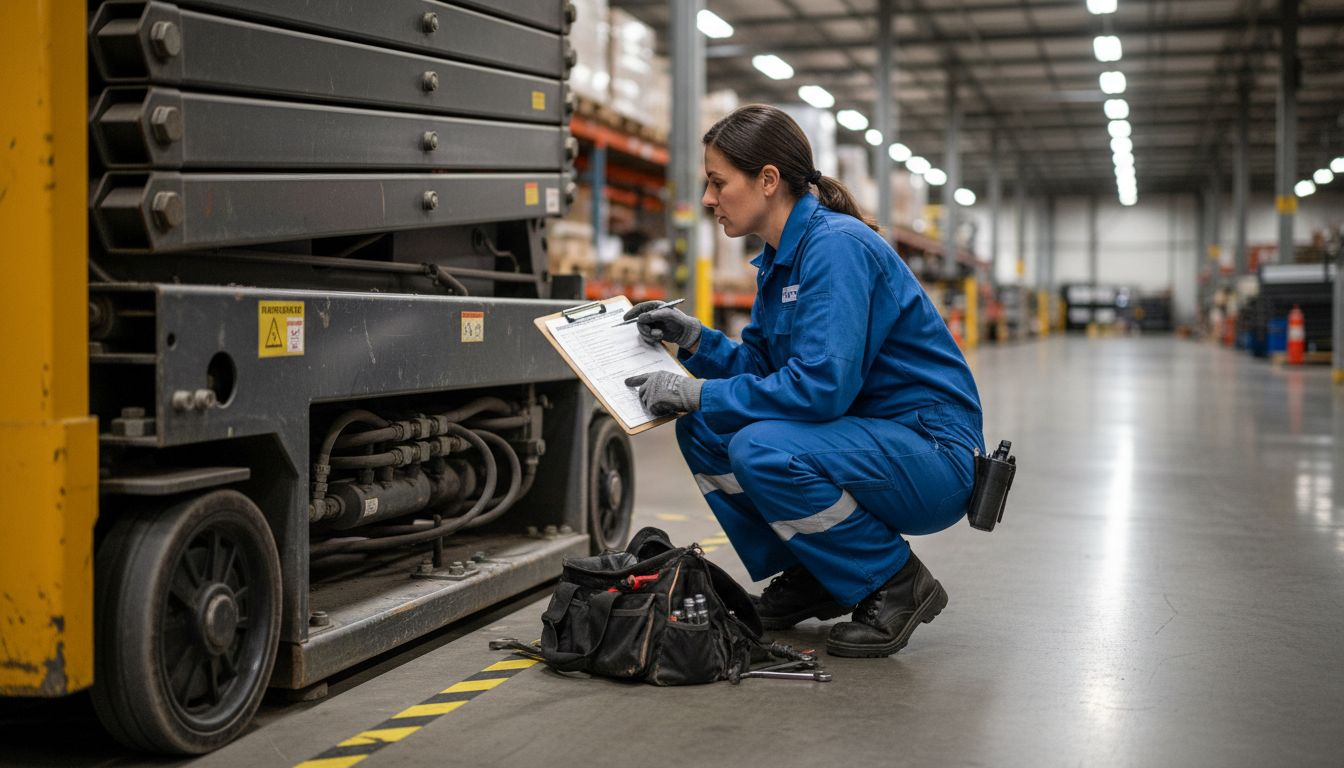
Scissor lifts are complex machinery with diverse design configurations tailored to specific workplace environments. Two primary categories dominate the scissor lift landscape: indoor slab lifts and outdoor rough terrain lifts, each engineered with unique characteristics to address distinct operational challenges.
Indoor Slab Lifts are specifically designed for smooth, level surfaces found in warehouses, manufacturing facilities, and retail environments. Key features of these lifts include:
Outdoor Rough Terrain Lifts represent a more robust category of scissor lifts engineered to handle challenging external work environments. These specialized units incorporate additional safety features:
Environmental conditions significantly impact scissor lift performance and safety.
Hydraulic power systems remain the primary mechanism for vertical movement across both lift types. Multi-tiered models can extend to greater heights, but require meticulous structural integrity checks and precise load distribution calculations.
Operational features vary widely, with control mechanisms positioned both on the platform and at ground level. Modern scissor lifts increasingly incorporate digital monitoring systems that track load weight, platform angle, and potential operational risks in real-time.
Pro tip: Always match your scissor lift selection to your specific workplace environment and anticipated operational requirements.
Here’s a quick comparison of indoor slab lifts and outdoor rough terrain scissor lifts to clarify their workplace suitability:
| Attribute | Indoor Slab Lift | Outdoor Rough Terrain Lift |
|---|---|---|
| Typical Environment | Warehouses, factories | Construction sites, outdoors |
| Maximum Platform Height | Moderate | High |
| Wheel Configuration | Smooth, non-marking | Rugged, pneumatic |
| Stability Features | Basic safety rails | Outriggers, reinforced base |
| Ground Compatibility | Level, hard surfaces | Uneven, rough terrain |
| Load Capacity | Lower | Higher |
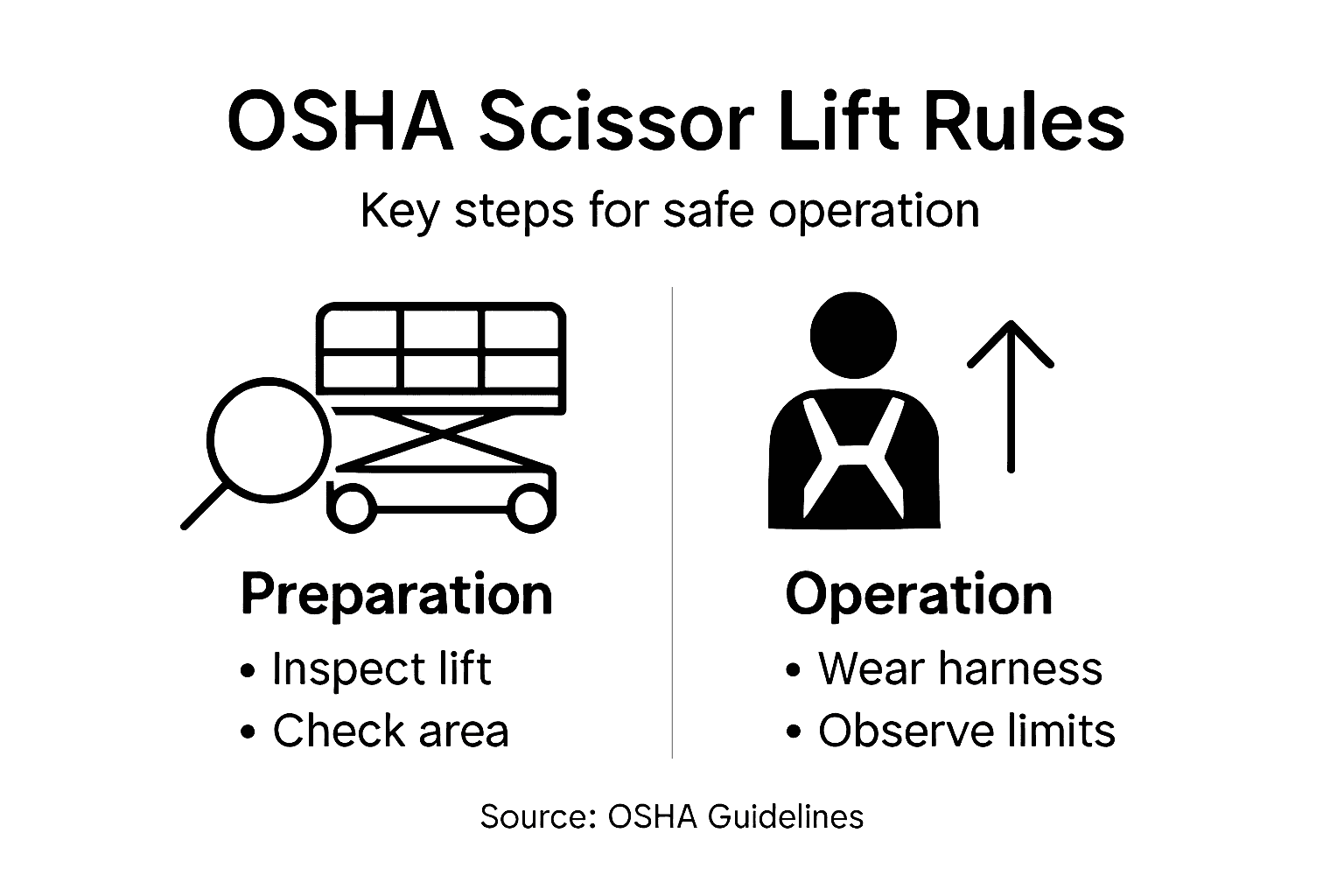
OSHA regulations establish comprehensive guidelines for scissor lift operations, placing significant legal responsibilities on employers to ensure workplace safety. Employer obligations encompass multiple critical dimensions of equipment management, operator training, and workplace risk mitigation.
Employers must fulfill several key responsibilities to maintain compliance:
Training Requirements represent the most crucial aspect of OSHA compliance. This involves:
Compliance is not a one-time event, but a continuous commitment to workplace safety.
The legal framework mandates specific operational standards that extend beyond basic training. Employers must ensure scissor lifts are used only under appropriate conditions, with careful attention to load capacities, environmental factors, and potential workplace risks.
Additional compliance requirements include systematic equipment maintenance, thorough pre-operation inspections, and implementing robust safety protocols that anticipate and mitigate potential operational hazards.
Pro tip: Develop a comprehensive safety management system that treats OSHA compliance as an ongoing process, not a static checklist.
To quickly reference employer and operator responsibilities for OSHA compliance, see this summary:
| Responsibility | Employer Role | Operator Role |
|---|---|---|
| Training | Provide and document training | Participate in training |
| Equipment Inspection | Schedule and record checks | Conduct daily pre-use checks |
| Safety Devices | Maintain and verify function | Check before each operation |
| Hazard Control | Minimize site risks | Stay alert to site conditions |
| Records | Keep compliance documentation | Retain certification proof |
Scissor lift operator training is a comprehensive process that goes far beyond simple equipment familiarization. Operator certification requires both theoretical knowledge and practical skills demonstrating competence in safe equipment operation and workplace risk management.
The certification process involves multiple critical components:
Operator core responsibilities encompass several key areas:
Competence is demonstrated through consistent, methodical adherence to established safety standards.
Training certification demands periodic skill reassessment to ensure operators maintain proficiency. Annual refresher courses help reinforce critical safety knowledge and update personnel on evolving workplace requirements.
Beyond initial certification, operators must continuously demonstrate their ability to recognize potential risks, operate equipment precisely, and prioritize workplace safety across dynamic work environments.
Pro tip: Treat operator training as an ongoing learning process, not a one-time certification event.
Scissor lift operations involve numerous potential hazards that demand rigorous safety protocols and comprehensive understanding. Routine inspections are critical for identifying potential operational risks before each deployment of equipment.
Major operational hazards include:
Pre-operation inspection protocols require systematic evaluation of multiple critical components:
Safety is not about perfection, but consistent, meticulous prevention.
Comprehensive hazard mitigation demands continuous operator awareness and adherence to manufacturer guidelines. This includes understanding environmental limitations, maintaining clear work zones, and utilizing appropriate personal protective equipment.
Successful scissor lift safety transcends mechanical inspection – it requires a holistic approach integrating equipment maintenance, operator training, and proactive risk management strategies that anticipate potential workplace challenges.
Pro tip: Implement a daily pre-use inspection routine that becomes as automatic as starting your work vehicle.
Understanding and following scissor lift operating guidelines is critical for workplace safety and OSHA compliance. Many workplaces face challenges such as insufficient operator training, improper equipment inspections, and misunderstanding safety protocols. These common risks can lead to accidents and costly regulatory penalties. The detailed article highlights key concepts like operator certification, equipment inspection, and hazard recognition that are essential for preventing dangerous situations.
If you want to protect your team and meet OSHA standards confidently, start with professional scissor lift training. At Forkliftacademy.com, we specialize in OSHA-compliant certification programs tailored for forklift and scissor lift operators. Our comprehensive courses cover essential safety practices, practical skills, and employer responsibilities that directly address the pain points discussed in the article. Whether online or onsite, our proven training solutions help reduce risks, improve operator competence, and enhance overall safety culture.
Take decisive action now to elevate safety in your workplace. Explore our Forklift Certification Archives for specialized scissor lift training options. Discover expert guidance in our Forklift Safety Archives to support effective hazard prevention. Visit Forkliftacademy.com to get started today and ensure your operators are fully prepared to meet OSHA requirements with confidence.
A scissor lift is a mobile elevated work platform that utilizes a mechanism similar to scissors to provide vertical movement. It consists of crisscrossing mechanical arms that extend and retract as hydraulic pressure is applied, allowing operators to reach significant heights safely.
There are two primary types of scissor lifts: indoor slab lifts, designed for smooth surfaces, and outdoor rough terrain lifts, designed to handle uneven ground. Each type has specific features tailored to their respective environments, such as wheel configurations and stability measures.
Operators must undergo comprehensive training that includes classroom instruction on safety principles, hands-on equipment training, and a skills assessment. Training should also cover specific operational requirements and hazard identification.
Common hazards include unexpected platform tipping, electrical contact risks, mechanical failures, worker falls, and uneven terrain stability challenges. Routine inspections and adherence to safety protocols are crucial in mitigating these risks.