
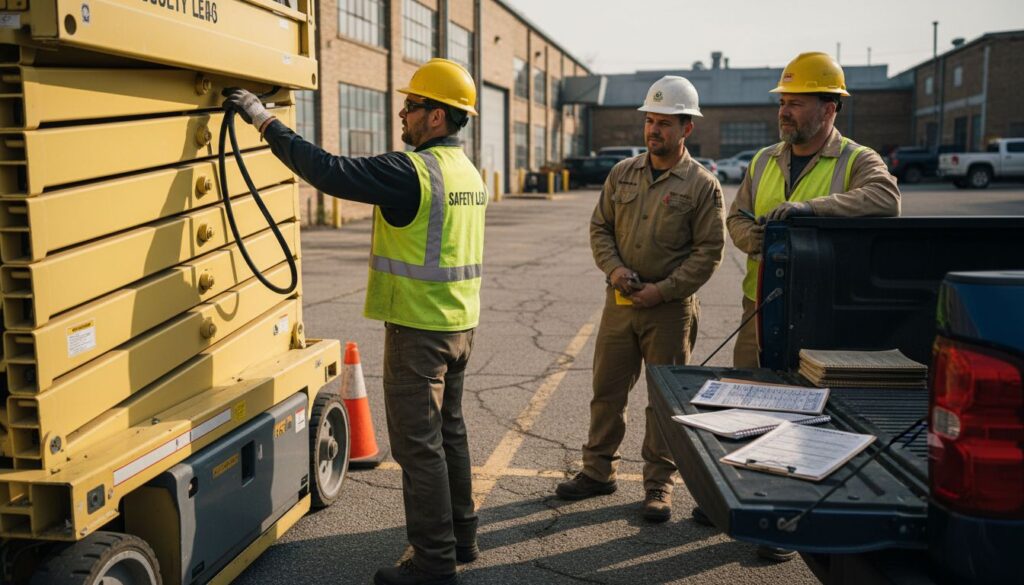

More than 120 fatalities each year involve aerial lifts in the American construction industry, making scissor lift certification crucial for safety. Whether you work on a busy job site or need to meet strict workplace standards, following the right steps protects everyone involved. This guide breaks down every stage to help American workers navigate OSHA regulations, choose accredited training, and achieve legal certification without confusion or risk.
| Key Insight | Explanation |
|---|---|
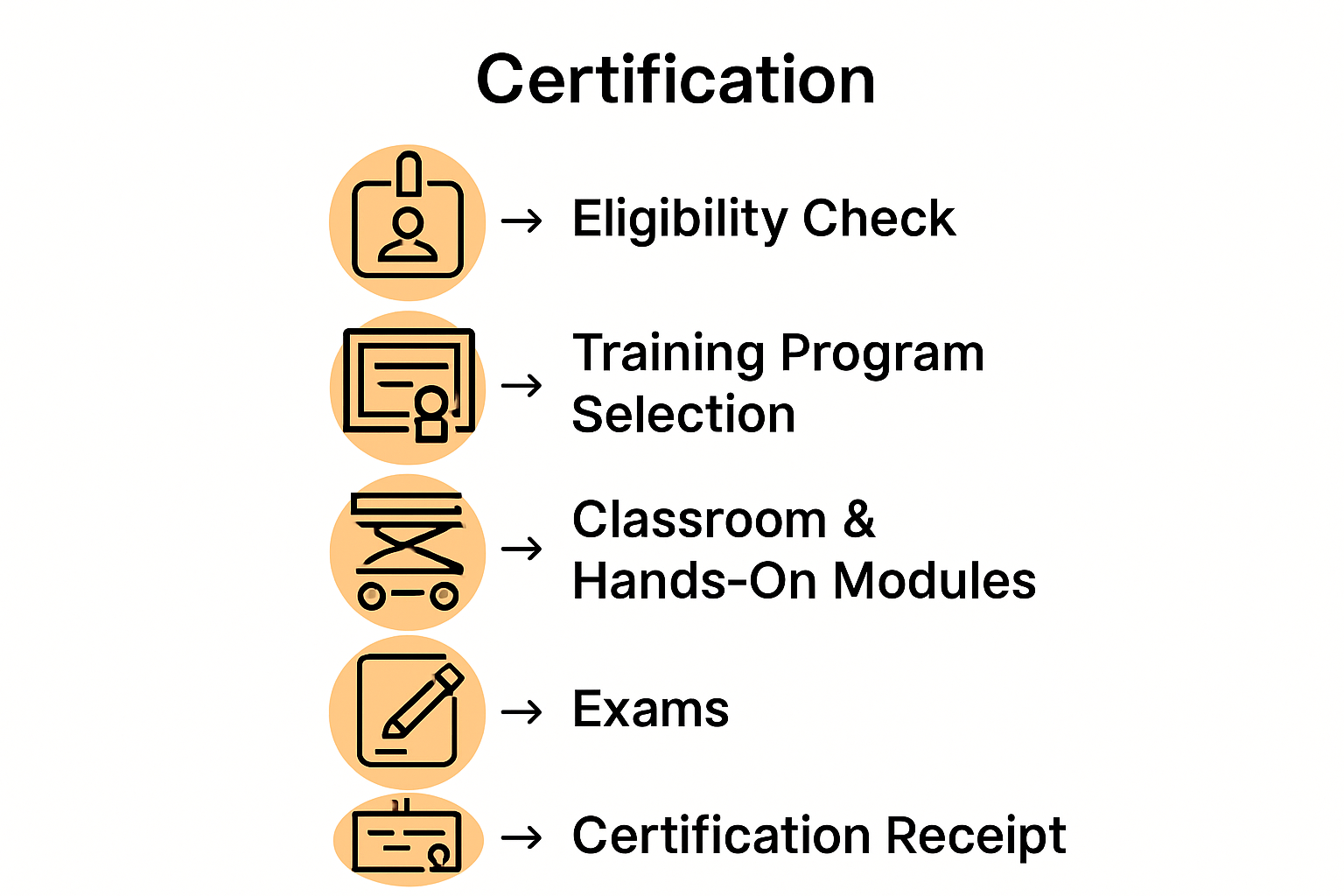
| 1. Understand OSHA Requirements | Familiarize yourself with OSHA standards for age, physical capability, and training to operate scissor lifts legally and safely. |
| 2. Choose an Accredited Training Program | Select a training course that aligns with OSHA standards and offers both theoretical and hands-on instruction for scissor lift operations. |
| 3. Complete Safety Training Modules | Engage in training modules that cover critical safety practices, equipment inspection, and maneuvering techniques essential for scissor lift operation. |
| 4. Pass Written and Practical Exams | Successfully complete both written and practical assessments to demonstrate your knowledge and skills for safe scissor lift operation. |
| 5. Validate and Maintain Your Certification | Upon receiving your certification, ensure it is valid and keep it updated to reflect your commitment to workplace safety. |
Before operating a scissor lift, understanding your eligibility and OSHA safety requirements is crucial for workplace safety. You must meet specific criteria to legally and safely perform scissor lift operations, including age restrictions, physical capabilities, and comprehensive training qualifications.
Eligibility for scissor lift operation involves multiple critical components. First, you must be at least 18 years old and physically capable of performing job duties safely. Your employer will need to conduct a thorough evaluation of your physical fitness and ability to manage equipment controls effectively. This assessment includes checking your visual acuity, hand eye coordination, and overall physical strength. OSHA mandates that operators must complete formal training aligned with workplace safety guidelines, which covers equipment operation, hazard recognition, and proper usage techniques.
Preparing for certification requires understanding key OSHA standards that govern aerial work platform operation. Operators must demonstrate competence through written and practical examinations that test knowledge of equipment functionality, workplace safety protocols, and potential hazard mitigation. Your training will cover critical areas such as equipment inspection, fall protection requirements, and proper positioning techniques to prevent workplace accidents. Successful completion of these requirements ensures you are legally authorized to operate scissor lifts in industrial and construction environments.
Choosing the right accredited training program is a critical step in becoming a certified scissor lift operator. Your goal is to find a comprehensive program that meets OSHA requirements and provides thorough practical and theoretical instruction for safe equipment operation.
When selecting a training program, look for providers with internationally recognized certification credentials that cover comprehensive safety standards. Quality programs should include both classroom instruction and hands on practical training, ensuring you understand not just equipment operation but also workplace safety protocols. Reputable training providers will offer courses that cover critical areas such as equipment inspection, fall protection techniques, hazard recognition, and proper maneuvering skills. The program should prepare you to pass both written and practical examinations that demonstrate your competence in scissor lift operation.
Additionally, verify that the training program aligns with current OSHA regulations and provides certification that is valid across different work environments. Some training centers offer specialized modules that go beyond basic operation, including advanced safety techniques and industry specific requirements. Choosing a comprehensive program will not only help you obtain certification but also equip you with the knowledge to prevent workplace accidents and ensure safe operations in various industrial and construction settings.
Successfully completing scissor lift training modules is your gateway to becoming a certified and competent equipment operator. This critical phase transforms theoretical knowledge into practical skills that ensure workplace safety and professional competence.
Your training will typically involve comprehensive one-day certification courses that blend classroom instruction with hands on practical training. These modules will systematically cover essential learning areas including equipment preparation, safety protocols, operational techniques, hazard recognition, and proper maneuvering skills. You will learn to conduct thorough pre operation equipment inspections, understand load capacities, navigate challenging work environments, and implement critical safety measures that protect both yourself and your coworkers.
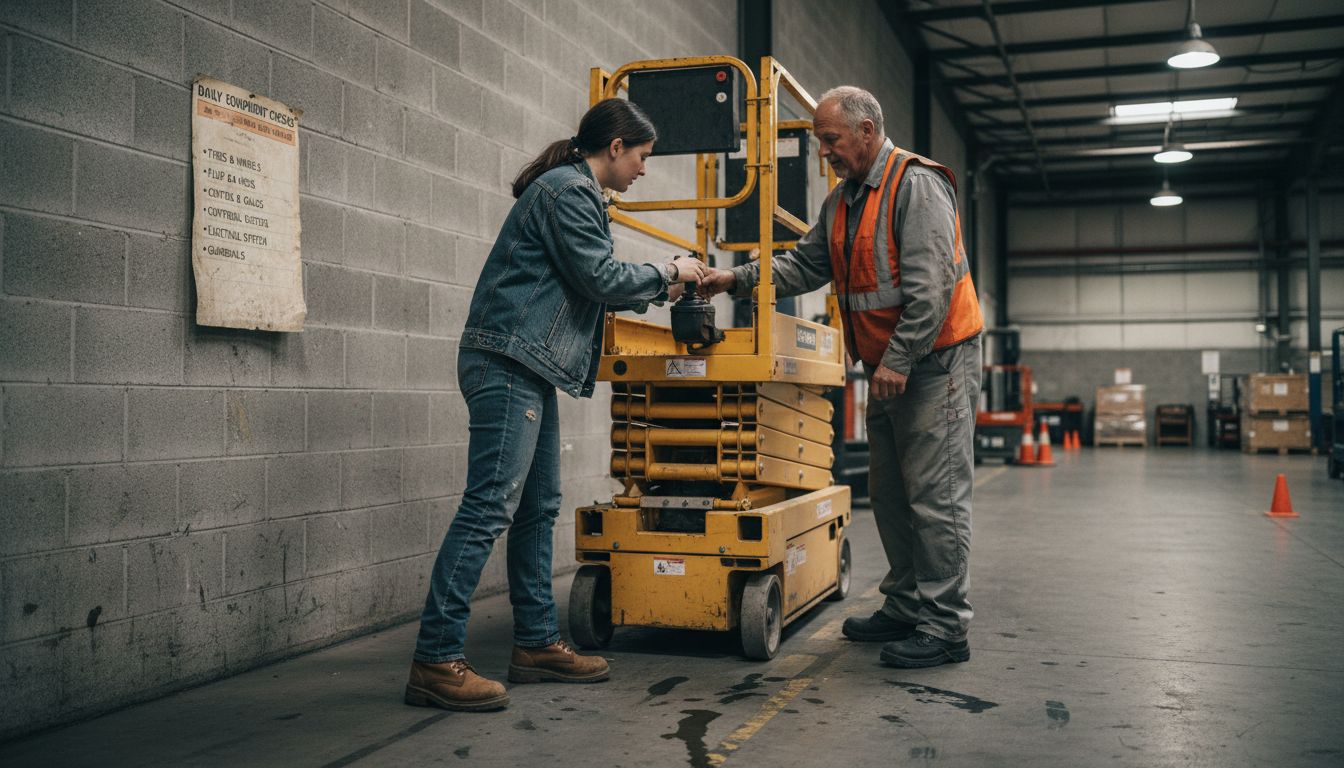
During the training, expect to engage in both written examinations and practical skill assessments that comprehensively evaluate your operational competence. The practical component is particularly crucial as it allows you to demonstrate real world application of the safety principles and operational techniques you have learned. Upon successful completion of all modules, you will receive an internationally recognized certification that validates your expertise and enables you to operate scissor lifts across various industrial and construction settings. Remember that continuous learning and staying updated with the latest safety standards are key to maintaining your professional credentials and ensuring workplace safety.
Passing your scissor lift certification examinations represents the final crucial milestone in becoming a professional equipment operator. These comprehensive assessments will test both your theoretical knowledge and practical skills to ensure you can safely operate scissor lifts in real world work environments.
The examination process typically involves rigorous written and practical assessments designed to validate your operational competence. The written exam will cover critical areas including equipment safety protocols, hazard recognition, operational guidelines, and workplace regulations. You must demonstrate a thorough understanding of scissor lift mechanics, load capacities, pre operation inspection procedures, and emergency response techniques. Expect multiple choice questions that challenge your comprehension of safety standards and operational best practices.
The practical examination is equally important and will require you to demonstrate hands on skills in a controlled environment. Instructors will observe your ability to perform equipment inspections, maneuver the scissor lift safely, understand load limits, and implement proper safety techniques. You must showcase precise control, situational awareness, and adherence to established safety protocols. Successful candidates typically need to score a minimum of 70% on both written and practical components to receive their certification. Upon passing, you will receive an internationally recognized operator card valid for three years that validates your professional capabilities and commitment to workplace safety.
After successfully completing your scissor lift training and examinations, the final step involves receiving and validating your professional certification. This document represents your official qualification to operate scissor lift equipment safely and professionally across various work environments.
Your certification will typically be a globally recognized professional credential that verifies your comprehensive training and operational competence. The certification document usually includes your full name, photograph, certification number, date of issuance, and validity period. Most certifications remain valid for three to five years, after which you will need to complete a recertification process to maintain your professional status. Carefully review all details on your certification card to ensure accuracy and keep a digital and physical copy for your professional records.
Validating your certification involves more than just receiving the document. Employers will typically want to verify your credentials, so maintain clear documentation and be prepared to demonstrate your skills. Some organizations offer digital verification systems where potential employers can quickly confirm your training status. Keep your certification current by tracking its expiration date and completing required renewal training before it lapses. Remember that your certification is not just a piece of paper but a testament to your commitment to workplace safety and professional excellence in scissor lift operation.
Navigating the steps to achieve your scissor lift certification can be complex and challenging. Key hurdles like meeting OSHA safety requirements, completing hands-on training modules, and passing thorough examinations demand focused preparation and reliable guidance. If you want to ensure your eligibility and confidently gain the practical skills needed for safe aerial equipment operation, turning to a trusted partner makes all the difference.
At Forkliftacademy.com, we specialize in OSHA-compliant forklift and scissor lift certification programs crafted to address all essential safety standards. Whether you need individual certification courses or comprehensive business solutions, our platform offers flexible online and onsite options supported by over 20 years of industry expertise. Boost your career and workplace safety by exploring our extensive range of resources in the Forklift Certification Archives – Top Osha Forklift Certification and discover tailored training pathways that align with your professional goals.
Do not wait to elevate your skills and validate your certification with programs trusted across North America. Visit Forkliftacademy.com today and take the next confident step toward mastering scissor lift safety and proper operation.
To be eligible for scissor lift certification, you must be at least 18 years old and physically capable of operating the equipment safely. Ensure that you meet your employer’s evaluation of your physical fitness and ability to manage equipment controls before starting the training process.
Select an accredited training program that complies with OSHA requirements and offers both classroom instruction and hands-on training. Look for courses that cover essential areas like equipment inspection, safety protocols, and hazard recognition to ensure comprehensive preparation for certification.
Training modules typically cover critical topics such as equipment preparation, safety protocols, hazard recognition, and maneuvering skills. Expect to learn how to perform pre-operation equipment inspections and implement safety measures that prevent accidents on the job.
To pass the examinations, focus on understanding equipment safety protocols, operational guidelines, and emergency response techniques. Achieve a minimum score of 70% on both the written and practical assessments to earn your certification.
After receiving your certification, keep a digital and physical copy for your records and ensure you know its expiration date. Track when your certification needs renewal and complete any required training before it lapses to maintain your professional standing.