

Each year, forklift accidents cause approximately 100 fatalities and over 35,000 serious injuries in the U.S. alone. Qualified trainers serve as the frontline defense against these preventable tragedies. This article explores how trainer qualifications, proven training methods, and rigorous competency evaluations transform workplace safety and ensure compliance with OSHA standards.
| Point | Details |
|---|---|
| Qualified trainers are essential | Certified trainers with formal instruction training and practical experience dramatically reduce workplace accidents. |
| Training combines theory and practice | OSHA-compliant programs blend classroom instruction with hands-on exercises adapted to workplace hazards. |
| Competency evaluations are mandatory | Certified trainers must conduct workplace-specific operator assessments to verify safe equipment handling. |
| Refresher training is required | Operators need retraining every 3 years or when performance declines to maintain competency. |
| Documentation protects compliance | Detailed training records demonstrate OSHA compliance and defend against liability claims. |
Forklift operations present significant hazards including tip-overs, struck-by incidents, and falls from elevated platforms. These risks contribute to thousands of severe injuries annually, making proper training absolutely critical. OSHA mandates specific trainer qualifications under 29 CFR 1910.178 (l) to ensure operators receive instruction from competent professionals.
Trainers must possess both practical forklift experience and formal instructional training. This dual requirement ensures they can demonstrate safe operating techniques while effectively teaching adult learners. Without properly qualified trainers, companies face increased accident rates, OSHA violations, and potential legal liability.
The trainer’s role extends far beyond simply showing someone how to drive a forklift. Effective trainers assess workplace-specific hazards, adapt instruction to different equipment types, provide hands-on coaching, and conduct thorough competency evaluations. Understanding forklift trainer responsibilities helps organizations select the right instructors.
OSHA requires refresher training at least every three years or sooner if operator performance deteriorates or workplace conditions change. Trainers must stay current with evolving safety standards and equipment technologies. This ongoing commitment to education separates qualified trainers from those who simply have operating experience.
Pro Tip: When selecting a forklift trainer, verify they hold current instructor certification from a recognized program, not just operator certification. The ability to operate safely differs significantly from the ability to teach others effectively.
“The quality of forklift training directly correlates with workplace safety outcomes. Organizations that invest in certified trainers with strong instructional skills see measurably fewer accidents and near-miss incidents.”
Key trainer responsibilities include:
OSHA standard 29 CFR 1910.178 (l) requires trainers to have formal instructor training and practical forklift experience. This dual mandate ensures trainers can both demonstrate proper techniques and communicate safety principles effectively. Many organizations mistakenly assume experienced operators automatically qualify as trainers, but OSHA explicitly requires instructional certification.
Formal instructor training covers adult learning principles, effective demonstration techniques, hazard recognition, and evaluation methods. These skills enable trainers to adapt their teaching style to different learning preferences and workplace environments. Following proven OSHA forklift training steps ensures comprehensive coverage of required topics.
Qualified trainers must understand the various types of powered industrial trucks covered by OSHA regulations. Classes I through VII each present unique operating characteristics and safety considerations. A trainer certified only on counterbalance forklifts cannot adequately instruct operators on reach trucks or order pickers without additional training.
Ongoing education keeps trainers current with evolving equipment technology and safety practices. Battery technology, automation features, and enhanced stability systems require updated knowledge. Consulting a detailed trainer responsibilities guide helps organizations maintain compliance.
Pro Tip: Schedule annual refresher training for your trainers, not just operators. Trainer skills and knowledge need regular updates to reflect current OSHA interpretations and equipment innovations.
Essential trainer qualifications include:
Effective forklift trainers must incorporate both theoretical classroom instruction and practical hands-on training to ensure operators can safely handle workplace-specific hazards. Classroom sessions cover load capacity, stability principles, and regulatory requirements. Practical sessions allow operators to apply this knowledge under trainer supervision.
Customizing training content to address workplace-specific hazards dramatically improves retention and safety outcomes. Generic training programs miss critical site-specific risks like narrow aisles, pedestrian traffic patterns, or unique loading dock configurations. Trainers should conduct thorough facility assessments before developing training curricula.
Adult learning techniques enhance operator engagement and knowledge retention. Adults learn best through hands-on practice, real-world examples, and immediate feedback. Effective trainers demonstrate techniques, allow practice time, provide constructive coaching, and reinforce key safety points throughout the session.
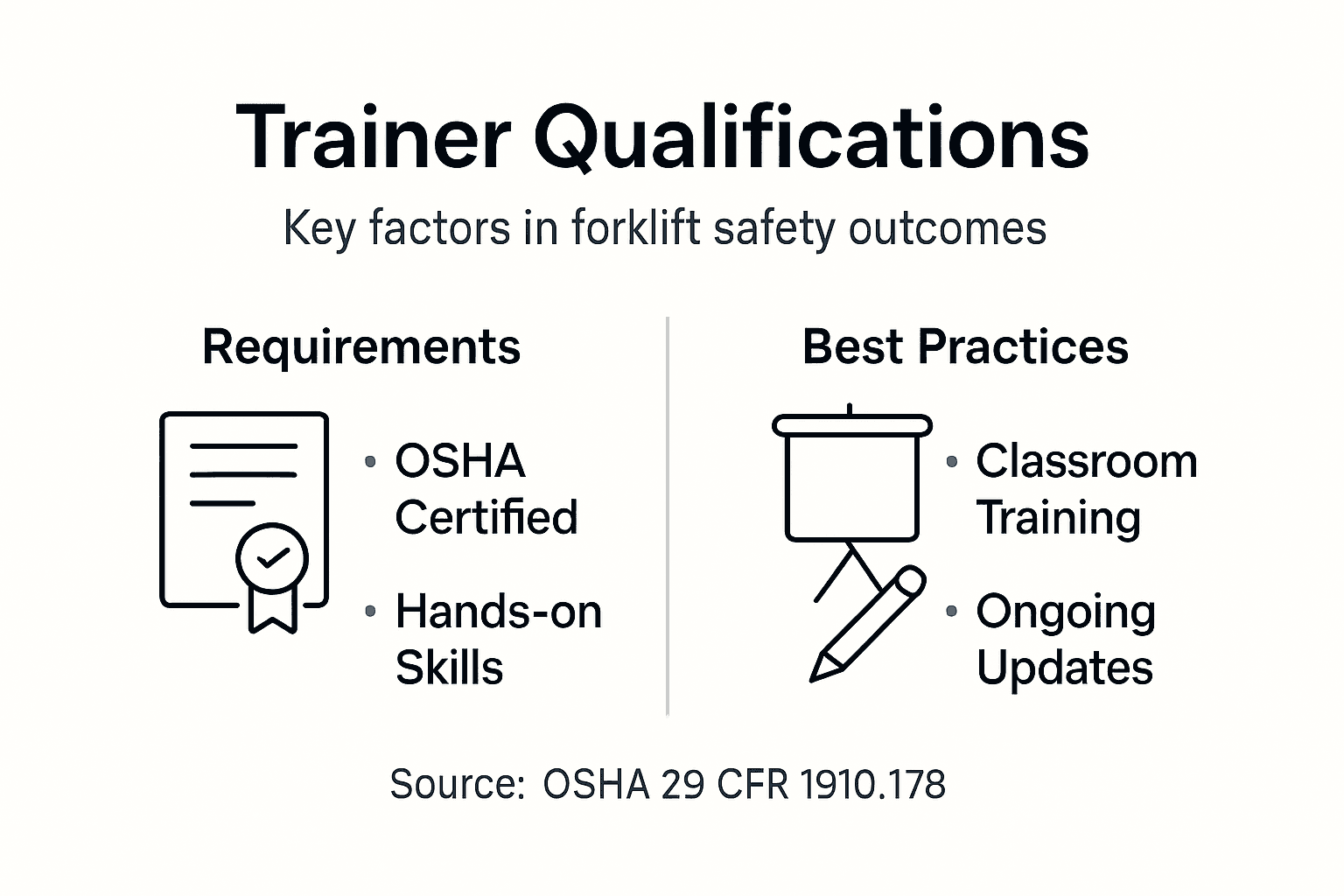
Regular refresher training maintains operator competency and addresses new hazards. OSHA mandates retraining every 3 years minimum, but best practices suggest annual reviews for high-risk environments. Implementing forklift training best practices reduces incidents and maintains compliance.
Pro Tip: Record training sessions (with operator permission) to review technique and provide personalized feedback. Video review helps operators see their blind spots and understand correction points more clearly.
Effective training follows this structured approach:
| Training Component | Duration | Key Focus Areas |
|---|---|---|
| Classroom Theory | 2-3 hours | OSHA regulations, stability principles, load capacity |
| Equipment Familiarization | 1 hour | Controls, safety features, pre-operation inspection |
| Supervised Practice | 3-4 hours | Basic maneuvers, load handling, hazard navigation |
| Workplace Training | 2-3 hours | Site-specific hazards, traffic patterns, loading procedures |
| Competency Evaluation | 1 hour | Performance testing, hazard identification, documentation |
Successful implementation requires:
Guidance on how to implement forklift safety training helps organizations establish effective programs. Detailed OSHA recommended training methods provide additional compliance support.
Evaluations of operator competence should be workplace-specific and performed by certified trainers to ensure safe equipment handling in real conditions. Generic evaluations conducted in controlled environments fail to assess an operator’s ability to navigate actual workplace hazards. Trainers must observe operators performing typical job tasks in their normal work environment.
Trainer observations and performance checklists document competency objectively. Checklists should cover pre-operation inspections, basic maneuvers, load handling, hazard recognition, and emergency procedures. Detailed documentation protects both operators and employers during OSHA inspections or incident investigations.
Refresher training triggers include the three-year mandatory interval, observed unsafe acts, near-miss incidents, or workplace changes affecting safety. Trainers must recognize performance deterioration early and intervene with targeted retraining. Waiting for an accident before addressing skill gaps violates OSHA requirements and endangers workers.
Employers must maintain records of all forklift training and evaluations to demonstrate OSHA compliance. Records should include operator name, training dates, trainer identity, training content covered, and evaluation results. Digital recordkeeping systems simplify compliance management and provide quick access during inspections.
Evaluation best practices:
| Evaluation Category | Assessment Criteria | Pass/Fail Threshold |
|---|---|---|
| Pre-Operation Inspection | Complete checklist, identify defects | 100% completion required |
| Basic Operation | Smooth starts/stops, proper speed, horn use | No unsafe acts observed |
| Load Handling | Capacity verification, stable transport, proper stacking | Zero capacity violations |
| Hazard Recognition | Identify pedestrians, obstacles, surface conditions | Demonstrates awareness of all major hazards |
| Emergency Procedures | Explain tip-over response, fire procedures, reporting | Accurate recall of all procedures |
Guidance on forklift refresher courses helps organizations schedule timely retraining. Detailed information about forklift training recordkeeping ensures proper documentation practices. Understanding operator competency evaluation standards supports regulatory compliance.
Many organizations mistakenly assume experienced operators automatically qualify as trainers without additional certification. OSHA explicitly requires formal instructor training beyond operating experience. An operator with 20 years of accident-free driving lacks the instructional skills needed to teach adult learners effectively without proper training.
Inadequate refresher training and poor documentation increase both accident risk and OSHA violation penalties. Some companies view the three-year requirement as a maximum interval rather than recognizing situations demanding earlier retraining. Workplace changes, equipment upgrades, or near-miss incidents all trigger immediate retraining obligations.
Training programs led by qualified trainers reduce forklift-related accidents, which cause approximately 100 deaths and over 35,000 serious injuries annually in the U.S. Organizations investing in certified trainers with strong instructional backgrounds see measurably lower incident rates. The correlation between trainer quality and safety outcomes appears consistently across industries.
Common misconceptions include:
“The difference between a certified trainer and an experienced operator is like the difference between a skilled driver and a driving instructor. Both can operate safely, but only one possesses the teaching methodology to transfer that skill effectively.”
| Factor | Certified Trainer | Experience-Only Trainer |
|---|---|---|
| Instructional Skills | Formal training in adult learning, demonstration techniques, evaluation | Learned through trial and error, inconsistent methods |
| Compliance Knowledge | Current understanding of OSHA requirements, documentation standards | May rely on outdated information or incomplete understanding |
| Hazard Recognition | Systematic approach to identifying and communicating risks | Focus primarily on personal experience, may miss emerging hazards |
| Evaluation Consistency | Standardized checklists, objective criteria, documented results | Subjective assessments, inconsistent standards, poor documentation |
| Training Effectiveness | Higher operator retention, fewer post-training incidents | Variable results, potential knowledge gaps |
Following proven forklift training best practices and understanding the impact of qualified forklift trainers helps organizations prioritize trainer quality.
Selecting qualified forklift trainers represents one of the most impactful decisions safety managers make. Prioritize candidates with verified forklift experience plus formal instructional certification. Interview potential trainers about their teaching philosophy, evaluation methods, and approach to workplace-specific hazard training.
Implement regular refresher training every 3 years minimum, with additional sessions triggered by performance issues or workplace changes. Schedule annual reviews even when not required to reinforce safe practices and address emerging risks. Consistent training intervals maintain high competency levels across your operator workforce.
Maintain thorough records of all training activities for OSHA inspections and liability protection. Digital systems streamline recordkeeping and provide quick access during audits. Document trainer qualifications, training content, attendance records, evaluation results, and any corrective actions taken.
Pro Tip: Create a trainer development pathway within your organization. Identify high-performing operators interested in instruction, sponsor their train-the-trainer certification, and provide mentoring from experienced trainers. Building internal training capacity improves program sustainability.
Actionable steps for immediate implementation:
Resources like train the trainer online certification programs provide convenient access to formal instructor training. Understanding forklift certification renewal requirements ensures trainers maintain current credentials.
Building a world-class forklift safety program starts with qualified trainers. Forklift Academy offers OSHA-compliant train-the-trainer online certification programs that equip your team with essential instructional skills and regulatory knowledge. Our comprehensive curriculum covers adult learning principles, effective demonstration techniques, competency evaluation methods, and documentation requirements.
With over 20 years of industry experience, we understand the challenges safety managers face maintaining compliance across diverse operations. Our structured programs ensure your trainers meet legal qualifications while developing the teaching abilities that improve training outcomes. Stay current with evolving OSHA forklift certification requirements through our expert-designed courses. Access convenient forklift certification renewal services that keep your entire training program compliant and effective.
Operators need refresher training at least every three years under OSHA regulations. Earlier retraining is required if operators demonstrate unsafe practices, experience near-miss incidents, or when workplace conditions change significantly. Employers must document all refresher sessions and maintain records demonstrating ongoing competency.
Trainers need both formal instructor certification and practical forklift operating experience per OSHA 29 CFR 1910.178(l). Recognized train-the-trainer programs provide essential instructional skills beyond basic operating ability. Trainers must also demonstrate knowledge of workplace-specific hazards and equipment types they will be teaching.
Proper training recordkeeping provides evidence of OSHA compliance during inspections and defends against liability claims following incidents. Records should include operator names, training dates, content covered, trainer identity, and evaluation results. Digital systems simplify compliance management and ensure quick access when needed.
No, OSHA requires both classroom instruction and hands-on practical training evaluated by a qualified trainer. Online courses effectively deliver theoretical knowledge but must be supplemented with workplace-specific practical training and competency evaluation. The hands-on component cannot be waived or completed virtually.
Immediate retraining is required when operators demonstrate unsafe behavior, are involved in accidents or near-misses, receive different equipment types, or face changed workplace conditions. Performance deterioration observed by supervisors or trainers also mandates prompt intervention. Document all triggering events and subsequent retraining actions.