
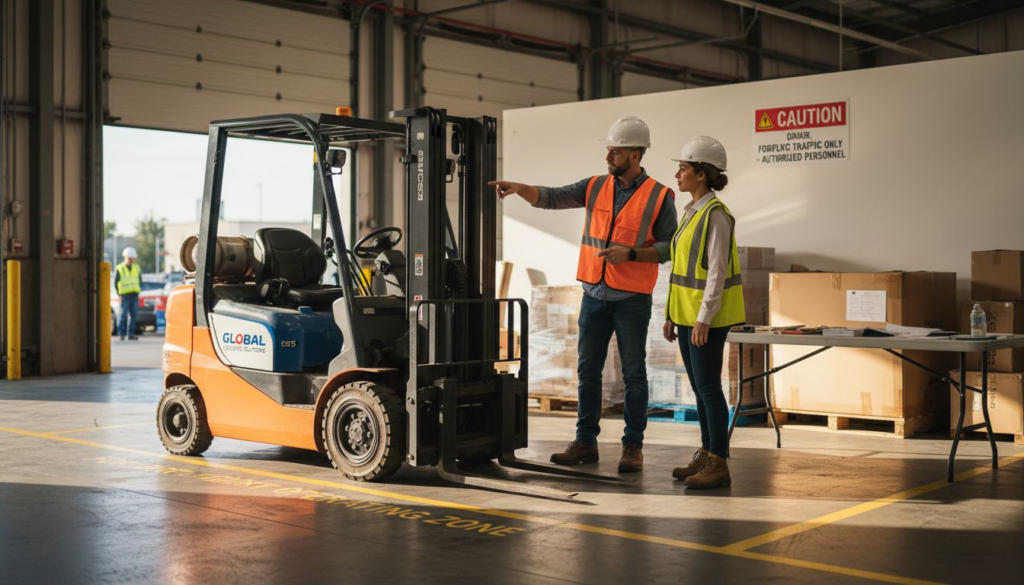

Unprepared forklift training creates serious safety risks and costly OSHA violations that can shut down operations. Companies rushing into onsite training without proper preparation face fines averaging $15,259 per violation and increased accident rates that harm workers and damage reputations. OSHA mandates comprehensive training including classroom instruction, practical evaluation, and hands-on operation assessments tailored to your specific workplace hazards and equipment. This guide walks you through every preparation step to ensure your onsite forklift training meets compliance standards while building genuine operator competence and workplace safety.
| Point | Details |
|---|---|
| OSHA compliance requires multiple training components | Employers must provide classroom instruction, practical evaluation, and hands-on assessments for every operator. |
| Training must match workplace conditions | Forklift models and specific hazards in your facility determine the exact training content required. |
| Pre-training preparation prevents violations | Gathering documents, equipment, and completing hazard assessments before training ensures smooth execution. |
| Hands-on evaluation is mandatory | OSHA requires direct observation of operator skills in actual workplace conditions, not just written tests. |
| Employer verification is non-negotiable | Companies must document and verify each operator’s competence before allowing independent equipment operation. |
OSHA mandates comprehensive forklift operator training including classroom instruction, practical evaluation, and hands-on operation. These three components work together to build complete operator competence. Classroom training covers safety principles, load handling, and hazard recognition. Practical evaluation tests knowledge through scenarios and assessments. Hands-on operation puts trainees behind the controls under direct supervision.
The 29 CFR 1910.178 standard establishes clear requirements for powered industrial truck operation. This regulation doesn’t allow shortcuts or partial compliance. Every operator must complete all three training phases before working independently.
Hands-on evaluations are a critical component of OSHA compliance for forklift operators.
Training content must match your exact workplace conditions. A warehouse using sit-down counterbalance forklifts needs different training than a facility operating reach trucks or order pickers. Your specific hazards matter too. Narrow aisles, ramps, dock plates, pedestrian traffic, and loading patterns all require customized instruction. Generic training programs that ignore these details create compliance gaps and safety risks.
Employers carry full responsibility for verifying operator skills and knowledge. You cannot delegate this duty to training providers alone. Your supervisors must observe operators in real work conditions and confirm they handle equipment safely. This verification process protects your workers and shields your company from liability.
Preparing for top OSHA forklift certification starts with understanding these regulatory foundations. Companies that grasp OSHA’s intent, not just its letter, build stronger safety cultures. The goal extends beyond avoiding fines to preventing injuries and equipment damage.
Leading onsite forklift training requires thorough preparation across multiple dimensions. Successful programs align regulatory requirements with operational realities. Your preparation phase determines whether training delivers genuine competence or just paperwork compliance.
Collecting all necessary materials before training day prevents delays and ensures smooth execution. Start with regulatory documents. You need current OSHA forklift training requirements accessible for reference during instruction. Print operator manuals for every forklift model in your facility. These manuals contain manufacturer-specific safety information and operating procedures that complement OSHA standards.
Your training plan must outline exactly what topics you will cover, how long each segment runs, and which trainers handle specific components. This document becomes your roadmap and compliance evidence. Include evaluation forms, attendance sheets, and certification templates in your preparation packet.
OSHA requires employers to match forklift training exactly to the forklift models and hazards in their specific workplace. This means the actual equipment operators will use daily must be available for hands-on training. You cannot substitute different models or conduct training in empty parking lots unrelated to real work environments.
Complete a comprehensive workplace hazard assessment before scheduling training. Walk through your facility and document every condition that affects forklift operation. Note aisle widths, floor conditions, lighting levels, pedestrian crossings, loading dock configurations, and storage rack heights. This assessment feeds directly into customized training content.
| Category | Essential Items |
|---|---|
| Documentation | OSHA regulations, training plans, operator manuals, hazard assessments, evaluation forms |
| Equipment | Actual forklift models used in facility, safety cones, personal protective equipment |
| Personnel | Qualified trainer, supervisors for evaluation, trainees with proper identification |
| Facilities | Training area meeting OSHA safety standards, classroom space, restroom access |
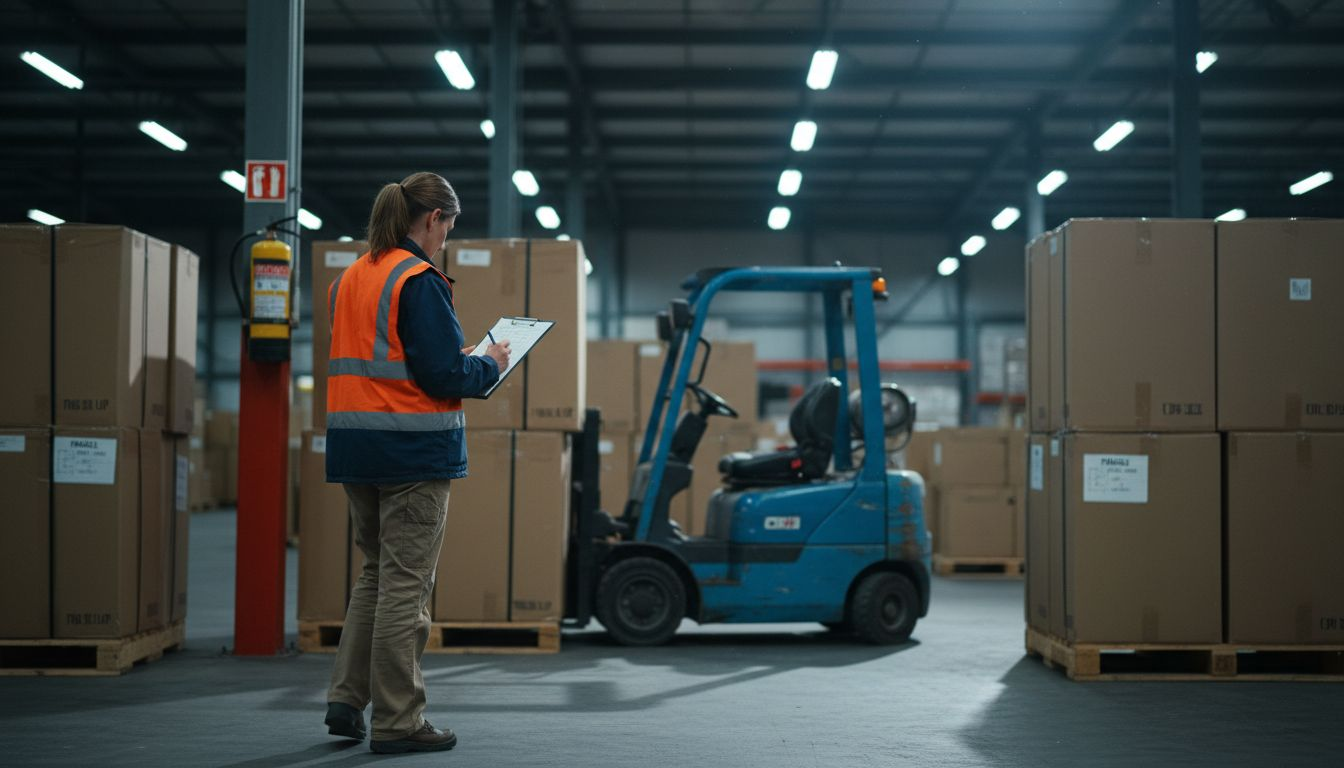
Verify your training site complies with OSHA safety standards before bringing trainees onsite. Check that fire extinguishers are accessible, emergency exits are clear, and lighting provides adequate visibility. These details matter because training in unsafe conditions contradicts the safety message you are teaching.
Pro Tip: Schedule a walkthrough with your trainer one week before training to identify any missing prerequisites or facility issues that need correction.
Gather personal protective equipment for all trainees. Hard hats, safety vests, steel-toed boots, and safety glasses should be available even if some trainees bring their own. Having backup equipment prevents training delays when someone arrives unprepared.
Review the forklift safety checklist to ensure training equipment passes pre-use inspection. Forklifts with maintenance issues or safety defects cannot be used for training. Operators learning on faulty equipment develop bad habits and face unnecessary risks.
Confirm trainee eligibility before training day. Verify that participants meet minimum age requirements, possess valid driver licenses if required by company policy, and have completed any prerequisite safety orientations. The employee forklift training guide outlines these baseline requirements clearly.
Follow this sequence to ensure thorough preparation and smooth training execution:
Schedule qualified trainer and confirm availability of all operators needing certification. Block sufficient time for complete training, typically 6 to 8 hours depending on class size and complexity.
Verify each trainee’s prior forklift experience through interviews or documentation review. This information helps trainers adjust instruction pace and focus on knowledge gaps.
Distribute pre-training materials to trainees at least three days before the session. Include safety policies, equipment manuals, and basic OSHA requirements for review.
Conduct final equipment inspection on all forklifts designated for training. Document inspection results and address any maintenance needs immediately.
Set up classroom space with seating, visual aids, and presentation equipment. Test all technology to avoid technical delays during instruction.
Brief supervisors on their evaluation responsibilities. Employers carry the critical responsibility of verifying each operator’s skills and knowledge through direct observation.
Prepare evaluation course that replicates actual workplace tasks. Include narrow aisle navigation, load pickup and placement, ramp operation, and any other routine activities operators will perform.
Organize all documentation for immediate completion after training. Have certificates, training records, and evaluation forms ready for signatures and filing.
Confirm emergency procedures are in place. Identify first aid resources, emergency contacts, and incident reporting protocols before training begins.
Conduct final walkthrough of training area to remove hazards, mark boundaries, and ensure adequate space for safe operation during hands-on practice.
Pro Tip: Allow trainees to review OSHA safety standards the night before training to build familiarity with terminology and concepts, making classroom instruction more effective.
The hands-on evaluation represents the most critical preparation step. OSHA mandates direct observation of operator performance in real workplace conditions. Your evaluation must test actual job tasks, not generic driving patterns. Design the course to include challenging maneuvers operators encounter daily.
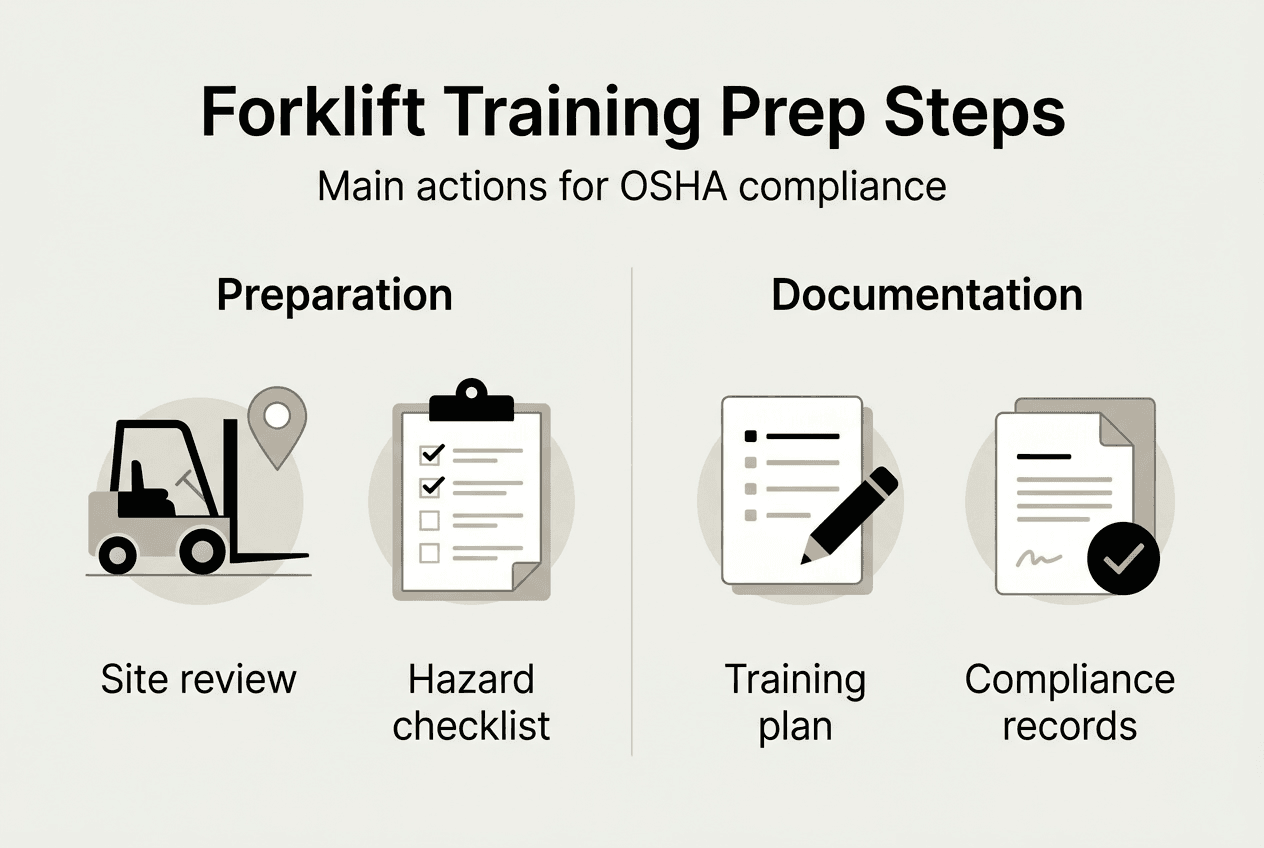
Document every phase of preparation with dated checklists and sign-off sheets. This paper trail demonstrates due diligence if OSHA audits your training program. Compliance is not just about conducting training but proving you prepared thoroughly.
The step-by-step forklift training guide provides detailed workflows for each preparation phase. Following structured processes reduces oversights and builds consistency across multiple training sessions.
Track completion of each preparation step in a master checklist. Assign responsibility for specific tasks to team members and set deadlines. This project management approach prevents last-minute scrambling and ensures nothing falls through cracks.
Understanding OSHA forklift training steps helps you sequence preparation activities logically. Some tasks must happen in specific order while others can run parallel. Efficient scheduling maximizes productivity without compromising thoroughness.
Incorrect forklift model training creates the most frequent compliance problem. Companies sometimes use available equipment rather than the specific models operators will actually drive. This shortcut violates OSHA requirements and leaves operators unprepared for their real duties. Solution: Inventory all forklift types in your facility before scheduling training and ensure each model gets dedicated instruction time.
Insufficient hands-on practice time undermines skill development and compliance. Rushing through practical evaluation to save time produces operators who lack genuine competence. Trainees need adequate repetition to build muscle memory and confidence. Solution: Allocate at least two hours of supervised hands-on operation per trainee, adjusting based on prior experience and learning pace.
Inadequate documentation creates audit vulnerabilities even when training quality is excellent. Missing signatures, incomplete evaluation forms, or vague training records cannot prove OSHA compliance. Solution: Use standardized templates for all documentation and complete paperwork immediately after each training component while details are fresh.
| Common Mistake | Best Practice |
|---|---|
| Using any available forklift for training | Train on exact models operators will use daily |
| Rushing hands-on evaluation to save time | Allocate sufficient practice time for skill mastery |
| Conducting training in empty warehouse | Replicate actual workplace conditions and hazards |
| Accepting generic training certificates | Customize training to specific facility requirements |
| Skipping pre-training hazard assessment | Document all workplace hazards before instruction |
Failure to comply with OSHA hands-on evaluation requirements can result in fines and increased accident rates. The financial penalties hurt, but injuries cause far greater damage to workers and company reputation. Prevention through proper preparation costs far less than dealing with violations or accidents.
Trainer qualification issues surface when companies assume any experienced operator can teach. OSHA requires trainers to have knowledge, training, and experience to instruct and evaluate operators. Solution: Verify trainer credentials thoroughly and consider formal train-the-trainer programs to build internal expertise.
Scheduling conflicts disrupt training when key personnel or equipment become unavailable at the last minute. Production pressures often push training aside despite its importance. Solution: Treat training as a non-negotiable commitment and build buffer time into schedules to accommodate unexpected delays.
Language barriers complicate training when workforce diversity exceeds training materials. Safety instruction must be understood completely, not just heard. Solution: Provide training in languages trainees understand fluently and use visual aids to reinforce verbal instruction.
The importance of onsite forklift training becomes clear when comparing prepared versus unprepared programs. Companies that invest time in thorough preparation see higher pass rates, fewer post-training incidents, and stronger safety cultures.
Understanding the forklift operator job description helps frame training preparation around actual job requirements. Training should prepare operators for real responsibilities, not abstract scenarios disconnected from daily work.
Preparing for onsite forklift training becomes simpler with professional support designed for OSHA compliance. Forkliftacademy.com offers comprehensive solutions that remove guesswork from the preparation process.
Onsite forklift training services bring qualified instructors directly to your facility with all necessary materials and equipment expertise. This eliminates preparation burdens while ensuring training matches your exact workplace conditions and forklift models.
Forklift training programs provide structured curriculum covering every OSHA requirement with proven effectiveness across diverse industries. These programs include ready-to-use documentation, evaluation tools, and certification templates that streamline your preparation workflow.
Building internal training capability through train the trainer online courses creates long-term value and flexibility. Your supervisors gain credentials to conduct compliant training whenever needed, reducing dependence on external providers.
OSHA requires evaluation regardless of prior experience because skills and knowledge must be verified for your specific workplace. Training must match your facility’s conditions to ensure safety, even for experienced operators. Previous certification from other employers does not transfer automatically. Employers must provide refresher training covering site-specific hazards and procedures.
OSHA mandates retraining every three years minimum, but also after any incident, near miss, or observed unsafe practice. Additional retraining is required when operators switch to different forklift types or when workplace conditions change significantly. Regular skill reviews between formal retraining cycles help maintain safety and catch developing bad habits early.
Yes, companies can conduct training with qualified trainers who have the knowledge, training, and experience to instruct and evaluate operators effectively. Train the trainer programs help certify in-house instructors for OSHA compliance. This approach provides scheduling flexibility and ensures trainers understand your specific operations. Internal trainers must still follow all OSHA requirements for comprehensive training and hands-on evaluation.
You must have OSHA regulations, equipment manuals for all forklift models, completed hazard assessments, and detailed training plans ready before instruction begins. Proper documentation supports compliance and audit readiness. Include evaluation forms, attendance sheets, and certification templates in your preparation packet. The forklift safety checklist guide outlines complete documentation requirements for training programs.