 Skip to content
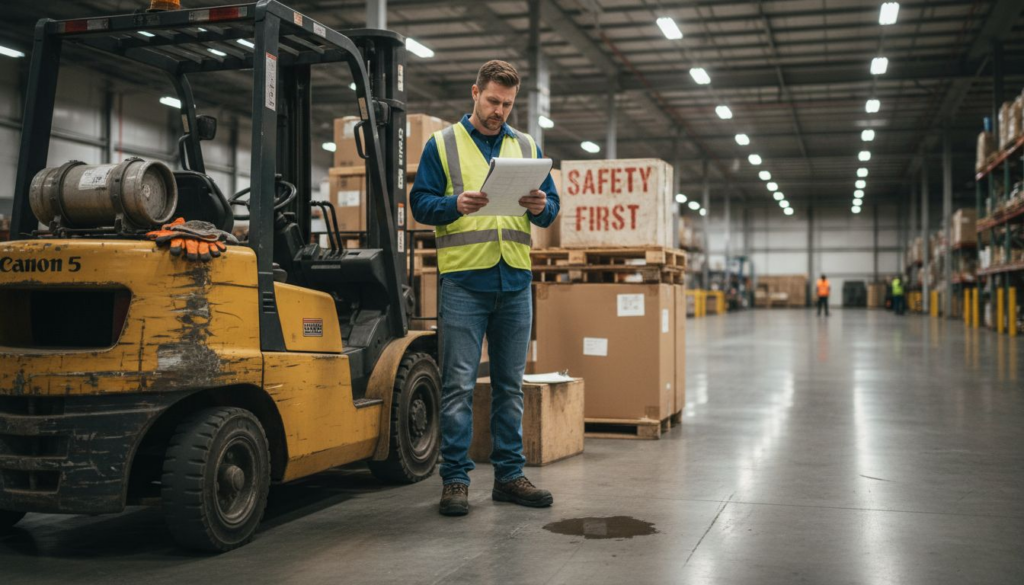

Forklift accidents can put your entire team at risk and leave your company exposed to serious safety violations. If you are responsible for workplace safety, understanding the right way to train your operators is more than a box to check—it could save lives and protect your business. The Occupational Safety and Health Administration (OSHA) sets strict standards for forklift operator training with clear requirements that every employer must follow.
By mastering the most important OSHA forklift training requirements, you can reduce workplace hazards and make sure every operator meets the highest safety standards. These step-by-step insights will show you exactly what to include in your training program, how to keep records, and when to schedule refresher courses. Get ready to discover the must-know rules and expert tips that can set your safety program apart.
| Takeaway | Explanation |
|---|---|
| 1. Comprehensive training is mandatory | Employers must create thorough training programs covering safety, operation techniques, and hazard awareness for forklift operators. |
| 2. Regular performance evaluations are essential | OSHA mandates re-evaluation of forklift operators every three years to ensure continued competency and compliance with safety standards. |
| 3. Accurate documentation is crucial | Maintaining detailed training records and performance evaluations establishes compliance and demonstrates commitment to workplace safety. |
| 4. Site-specific training enhances safety | Tailoring training to unique workplace conditions and hazards maximizes safety and prepares operators for real-world challenges. |
| 5. Continuous learning is key to safety | Implementing regular refresher courses keeps operators updated on safety protocols and operational changes, enhancing overall safety culture. |
Forklift operator training is more than just a bureaucratic requirement – it is a critical component of workplace safety and accident prevention. The Occupational Safety and Health Administration (OSHA) mandates comprehensive training programs to ensure operators understand how to safely navigate industrial environments.
OSHA’s training standards are designed to protect workers and prevent potentially fatal workplace accidents. These standards require employers to develop a robust training program that covers multiple critical aspects of forklift operation:
Under OSHA guidelines, employers must implement comprehensive training programs that go beyond basic operational skills. The training must address specific workplace hazards, different vehicle types, and safety protocols unique to each work environment.
The certification process is not a one-time event. OSHA requires operators to be re-evaluated every three years to maintain their certification. This ensures that operators remain current with safety protocols and can adapt to evolving workplace technologies and potential hazards.
Key training components include:
Effective forklift training is not just about compliance – it’s about creating a culture of safety that protects every worker.
Pro tip: Maintain detailed training records and schedule regular refresher courses to stay ahead of OSHA compliance requirements and minimize workplace accidents.
Effective forklift operator training requires a comprehensive approach that blends theoretical knowledge with hands-on experience. OSHA mandates a multi-dimensional training strategy that goes far beyond simple operational instructions.
The training program must include two critical components: classroom instruction and practical demonstrations. These components work together to create a holistic learning experience that prepares operators for real-world challenges.
Classroom Instruction Essentials:
Comprehensive training programs must address several key areas of instruction. The classroom portion typically covers:
Practical Instruction Components:
Effective training transforms theoretical knowledge into practical skills that save lives and prevent workplace accidents.
The ultimate goal of this dual-approach training is to ensure that forklift operators are not just technically competent but also safety-conscious and situationally aware.
Pro tip: Document every stage of training meticulously and conduct periodic performance assessments to maintain ongoing operator competence and safety standards.
Certification is not a simple checkbox but a rigorous process that ensures forklift operators possess the skills and knowledge to operate equipment safely. OSHA mandates a comprehensive performance evaluation that goes beyond theoretical understanding.
The performance evaluation process is designed to validate an operator’s competence through direct observation and practical assessment. This critical step ensures that operators can translate classroom learning into real-world safety practices.
Key Performance Evaluation Components:
Employers must conduct thorough assessments that cover multiple dimensions of forklift operation:
Certification Frequency and Requirements:
Performance evaluation is not about criticism – it’s about ensuring every operator can return home safely at the end of their shift.
Understanding that certification is an ongoing process helps organizations maintain the highest safety standards and protect their most valuable asset: their employees.
Pro tip: Develop a standardized evaluation checklist and conduct periodic unannounced assessments to maintain consistent operator performance and safety compliance.
Documenting forklift operator training is not just a bureaucratic requirement – it is a critical component of workplace safety and legal compliance. Comprehensive record-keeping protects both employers and employees by creating a verifiable trail of training and competency.
Key Documentation Requirements:
Effective record management involves maintaining precise and organized documentation that covers multiple aspects of forklift operator training:
While no specific OSHA link was provided, workplace training documentation remains crucial for demonstrating regulatory compliance and maintaining a safe work environment.
Best Practices for Record Management:
Accurate documentation is your first line of defense in proving safety commitment and regulatory adherence.
Proper record maintenance not only satisfies legal requirements but also creates a transparent system for tracking operator development and organizational safety standards.
Pro tip: Develop a standardized digital record-keeping system that automatically tracks training expiration dates and generates renewal notifications.
Forklift operator training is not a one-time event but an ongoing process of skill maintenance and safety enhancement. Technological advancements equipment modifications and evolving workplace dynamics demand continuous learning and adaptation.
Importance of Regular Training Updates:
Companies must implement a systematic approach to refresher training that goes beyond minimum requirements. Workplace safety training demands proactive and consistent skill development strategies.
Recommended Refresher Course Frequency:
Key Training Update Components:
Continuous learning is the foundation of workplace safety and operational excellence.
Successful organizations view refresher training not as an expense but as a critical investment in employee safety and organizational performance.
Pro tip: Create a centralized training calendar with automated reminders to track and schedule mandatory refresher courses for all forklift operators.
Employer accountability is the cornerstone of workplace safety when it comes to forklift operations. OSHA places direct responsibility on organizations to create comprehensive training environments that protect workers and prevent potential accidents.
Core Employer Compliance Responsibilities:
OSHA forklift training requirements mandate that employers take proactive steps to guarantee workplace safety through systematic training approaches.
Detailed Employer Obligations:
Key Documentation Requirements:
Compliance is not just about following rules – it is about creating a culture of safety that protects every worker.
Successful organizations understand that OSHA compliance is an ongoing commitment to employee safety and organizational excellence.
Pro tip: Develop a centralized compliance management system that automatically tracks training requirements renewal dates and maintains comprehensive documentation for easy OSHA audit readiness.
Site-specific safety training transforms generic forklift operation guidelines into a tailored safety strategy that directly addresses unique workplace challenges. Every warehouse storage facility and industrial environment presents distinct operational risks that require specialized training approaches.
Critical Site-Specific Training Elements:
Site-specific training requirements demand a comprehensive approach that goes beyond standard operational instructions.
Workplace Hazard Assessment Steps:
Key Training Customization Factors:
Effective site-specific training transforms theoretical knowledge into practical workplace safety strategies.
Successful organizations recognize that safety training is not a universal template but a dynamic process tailored to specific operational environments.
Pro tip: Create a comprehensive site-specific hazard map that visually documents potential risks and integrates directly into operator training materials.
Below is a comprehensive table summarizing the main topics and highlights regarding OSHA forklift operator training standards as discussed in the article.
| Section | Description | Key Points |
|---|---|---|
| Understand OSHA Standards | OSHA’s forklift operator training standards aim to enhance workplace safety. | Training includes classroom instruction, practical demonstrations, and performance evaluations. Certification is required every three years. |
| Classroom and Practical Instruction | Combining theoretical and hands-on training prepares operators effectively. | Addresses safety guidelines, operational principles, and equipment handling practices. |
| Operator Performance Evaluation | Certification validates the operator’s skill and knowledge. | Employers assess operational techniques, safe equipment handling, and emergency response readiness. |
| Training Documentation | Proper record-keeping ensures compliance and safety verification. | Documents include training details, instructor credentials, and performance evaluations. |
| Refresher Courses | Operators require periodic updates to maintain safety and proficiency. | Reevaluate every three years, and provide updates after incidents or when using new equipment. |
| Employer Responsibilities | Employers must prioritize OSHA compliance to ensure workplace safety. | Develop training programs, assess operators, and maintain detailed documentation. |
| Site-Specific Training | Adapts safety guidelines to unique workplace challenges. | Includes hazard assessments, load evaluations, and route planning specific to each site. |
Ensuring your forklift operators meet the stringent OSHA training requirements is essential to protecting your workforce and maintaining compliance. This article highlights the vital need for comprehensive training, including formal instruction, practical demonstrations, and ongoing evaluation. With challenges like maintaining detailed training records and delivering site-specific hazard education, companies must rely on trusted solutions that simplify compliance and enhance operational safety.
Discover how Forkliftacademy.com can help you conquer these challenges with over 20 years of industry expertise. Our OSHA-compliant forklift certification programs are available online and onsite, allowing you to tailor training to your team’s needs. Whether you need individual courses, business solutions like train-the-trainer kits, or hands-on sessions across key U.S. cities, we offer clear pathways to safer, more efficient workplaces. Don’t wait for safety risks to arise—visit Forklift Certification Archives – Top Osha Forklift Certification and explore our full range of resources today. Start your journey toward OSHA compliance and a safer workplace now at forkliftacademy.com. Expand your knowledge further through our practical insights at Uncategorized Archives – Top Osha Forklift Certification.
OSHA requires forklift operators to undergo formal instruction, practical demonstrations, and performance evaluations. Employers must develop a training program that addresses specific hazards and vehicle types to ensure operators are safe and competent.
Forklift operators must be re-evaluated every three years to maintain their certification. Schedule these assessments to ensure compliance and safety standards are consistently met.
Documentation should include individual training records, performance evaluations, certification dates, and specific training program content. Maintain accurate records to clearly demonstrate compliance and safety commitment.
Site-specific safety training tailors safety protocols to the unique hazards of each workplace. Conduct a thorough hazard assessment to customize training materials that address the specific risks present in your operational environment.
Employers can ensure ongoing compliance by implementing regular refresher courses and updates on new equipment or safety protocols. Plan these sessions annually or whenever there are significant workplace changes to keep operators informed.




 Optimized by Seraphinite Accelerator