

Every warehouse manager recognizes that even minor lapses in forklift safety can lead to major incidents on the floor. With powerful equipment moving through tight aisles, understanding and following OSHA forklift standards is not just about compliance but about protecting your workforce and your bottom line. This guide highlights the core requirements, training protocols, and type-specific safeguards shaping a truly safe and legally sound warehouse—so you can turn OSHA forklift standards into lasting peace of mind rather than a source of stress.
| Point | Details |
|---|---|
| OSHA Compliance Is Essential | Adhering to OSHA forklift standards is crucial for worker safety and legal compliance in warehouses. |
| Operator Training Is Mandatory | All forklift operators must undergo formal training to ensure safe equipment operation and reduce accident risks. |
| Regular Equipment Inspections Necessary | Daily inspections and maintenance logs are vital for identifying equipment issues and preventing accidents. |
| Type-Specific Training Required | Operators must be trained for the specific types of forklifts they will operate to ensure safety and compliance. |
OSHA forklift standards exist to protect your workers and create a safer warehouse environment. These regulations cover everything from how operators must be trained to how equipment should be maintained. Understanding what these standards require isn’t optional—it’s the foundation of warehouse safety compliance.
OSHA regulations for forklifts fall under 29 CFR 1910.178, which establishes specific operational, training, and maintenance requirements. This standard applies to all powered industrial trucks in your facility, regardless of size or industry. The rules focus on preventing the accidents that happen most often: tip-overs, struck-by incidents, and load drops.
OSHA divides forklift requirements into several critical categories:
Your warehouse must address material handling and storage as part of broader facility safety. OSHA requires that materials are stacked and stored safely to prevent sliding or collapse, and that aisles remain clear for safe forklift movement. This organization prevents hazards that could otherwise compromise operational safety.
Forklifts are powerful machines operating in tight spaces around your employees. A single incident can result in serious injury, death, or equipment damage costing thousands of dollars. The standards exist because these accidents are preventable when proper procedures are followed.
Workers in busy warehouses face real risks. Forklift accidents kill approximately 100 workers annually and injure thousands more. Many of these deaths happen because operators lack proper training or equipment isn’t properly maintained.
OSHA standards transform forklift operation from a risky task into a controlled, predictable process when properly implemented.
Compliance also protects your company from costly citations, fines, and potential litigation. OSHA penalties for forklift violations can reach $16,000 or more per violation, plus legal expenses if injuries occur.
Meeting OSHA standards requires concrete actions, not just good intentions:
Your facility should have training records readily available for OSHA inspectors. These documents prove you’re taking compliance seriously and protecting your workers.
Pro tip: Implement a digital training tracking system that captures completion dates and assessment scores—this makes audits faster and identifies which operators need refresher training before accidents happen.
Not all forklifts are created equal, and OSHA knows it. Different powered industrial trucks operate in different environments and handle loads differently. Each type requires specific training, inspection procedures, and safety protocols to comply with regulations.
OSHA covers various types of powered industrial trucks under its standards, including counterbalanced forklifts, high lift trucks, order pickers, and low lift trucks. Each equipment type has distinct controls, operating environments, and load handling capabilities. Operators must be trained specifically for the types of vehicles they will operate, reflecting variations in equipment design and safety requirements.
Your warehouse likely uses one or more of these equipment categories:
Each type presents unique hazards. A counterbalanced truck can tip if overloaded or turned too quickly. An order picker exposes the operator to falls from height. Understanding these distinctions in equipment type ensures proper inspection, operation, and training protocols are followed for each vehicle in your facility.
Here’s how different forklift types compare in warehouse environments:
| Forklift Type | Common Use Case | Key Hazard | Unique Compliance Focus |
|---|---|---|---|
| Counterbalanced Truck | General material moving | Tip-over risk | Load limits & turning speed |
| Narrow Aisle Rider | Tight space navigation | Collision risk | Aisle management protocols |
| High Lift Platform | Elevated storage access | Falling loads | Safe elevation procedures |
| Order Picker | High-shelf picking | Operator falls | Fall protection training |
| Low Lift Truck | Ground-level transport | Foot injuries | Pedestrian awareness |
Your warehouse manager might assume all forklift training covers everything. That’s incorrect. OSHA requires operators to be trained on the specific equipment they’ll use. A person trained only on counterbalanced trucks shouldn’t operate an order picker without additional instruction.
Different equipment requires tailored inspection routines and maintenance schedules. Controls vary. Visibility differs. Load capacities change. What works for one type creates safety gaps for another.
Type-specific training and inspection protocols transform equipment diversity from a compliance headache into a manageable safety system.
When implementing OSHA standards, address each forklift type separately:
This organized approach prevents operators from using equipment they’re not trained on and ensures inspections catch equipment-specific defects.
Pro tip: Color-code your equipment or training documentation by forklift type—this visual system helps supervisors quickly verify that operators are using equipment they’re certified for, reducing training errors and compliance violations.
Training isn’t optional—it’s the legal foundation of forklift safety. OSHA mandates that every operator receive formal instruction before touching a forklift. Without documented, compliant training, your facility faces citations, fines, and liability exposure.
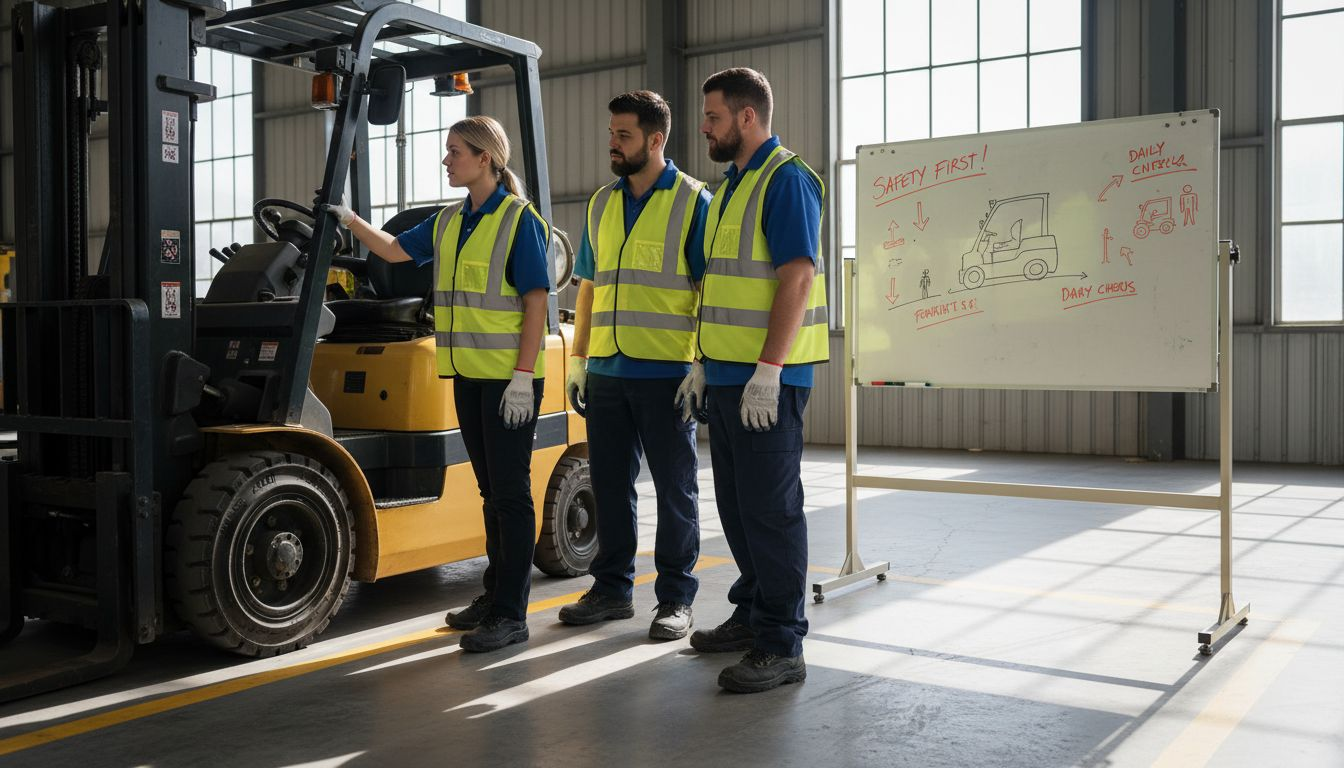
OSHA requires initial training to include three critical components: formal instruction, practical hands-on training, and performance evaluation. Training must be conducted by qualified personnel and cover operator controls, load handling, workplace hazards, vehicle maintenance, and refueling procedures. This comprehensive approach ensures operators understand both the “how” and the “why” behind safe operation.
Your training program cannot cut corners on content. OSHA specifically requires coverage of these topics:
Skipping any of these areas creates compliance gaps. An operator trained only on controls but not on load capacity represents a liability risk and a regulatory violation.
Effective training combines classroom, hands-on, and evaluation components:
All three components must be documented with dates, trainer names, and evaluation scores. This documentation proves compliance during OSHA inspections and protects your company legally.
Certification doesn’t last forever. Refresher training is required every three years or sooner if conditions warrant. Additionally, retraining is mandatory when an operator is involved in an accident, observed operating unsafely, or uses equipment they haven’t previously been trained on.
This ongoing requirement keeps your team current on safety practices and demonstrates your commitment to maintaining a safe warehouse.
Documented training records transform your facility from a compliance risk into a protected, safer operation.
Your records should capture essential information for each operator:
Maintain these records for at least three years. Digital systems make tracking refresher dates easier and prevent operators from using expired certifications.
Pro tip: Set automated reminders 60 days before refresher training is due—this buffer prevents operators from losing certification mid-shift and ensures your training calendar stays organized.
OSHA violations aren’t abstract risks—they carry real financial and legal penalties. Warehouse managers who cut corners on forklift safety discover the cost quickly. Understanding what violations look like helps you prevent them before an inspector shows up or worse, before someone gets hurt.
Common OSHA forklift violations cluster around a few predictable areas: lack of proper operator training and certification, unsafe load handling, driving too fast, failure to inspect equipment daily, and ignoring pedestrian safety. These aren’t complicated issues. They’re basics that many facilities overlook or deprioritize until problems emerge.
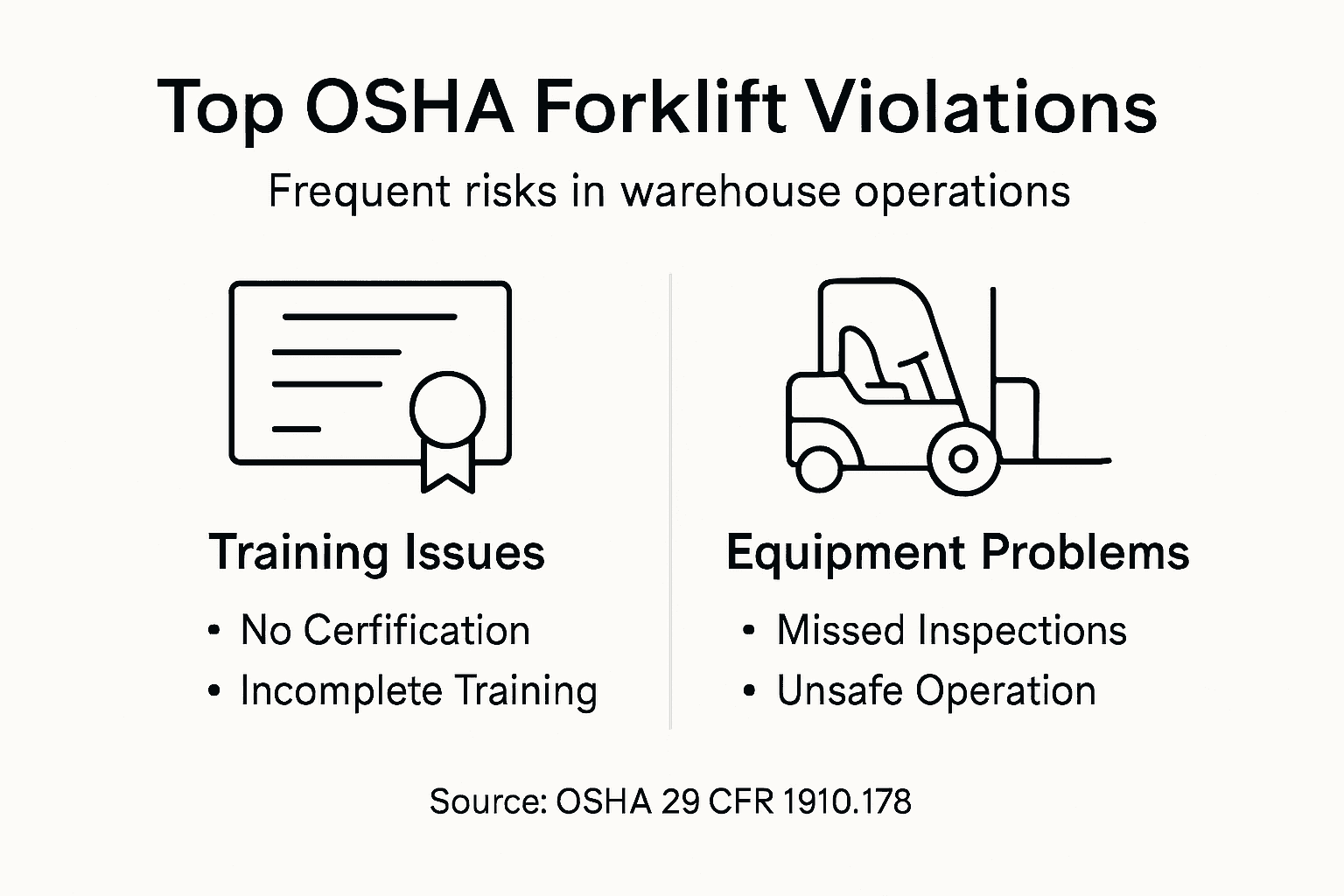
OSHA enforcement focuses on violations that actually cause injuries. These patterns appear repeatedly in warehouse audits:
Each violation represents both a compliance failure and a direct safety risk. A missing inspection might miss brake failure. An untrained operator might mishandle a load.
OSHA penalties for forklift violations often exceed $100,000 per violation. These aren’t small fines you can absorb. A facility with multiple violations faces cumulative penalties that reach hundreds of thousands of dollars.
Beyond financial penalties, violations trigger increased OSHA scrutiny. After citations, expect more frequent inspections and heightened attention to your entire safety program.
Here’s a summary of OSHA violations, their consequences, and preventative measures:
| Violation Type | Typical Penalty | Legal Risk Level | Prevention Best Practice |
|---|---|---|---|
| Untrained Operators | Up to $16,000/violation | High | Comprehensive, documented training |
| Missing Inspection Records | Up to $16,000/violation | Moderate | Daily checklists and logs |
| Overloading/Unsafe Loads | Significant fines | High | Strict load monitoring |
| Poor Pedestrian Controls | Significant fines | Moderate to High | Marked safety zones, signals |
| Expired Certifications | Up to $16,000/violation | High | Automated retraining reminders |
A single serious violation can cost $150,000 or more—the equivalent of years of forklift safety program investments.
Fines are only the beginning of consequences. If an accident occurs and OSHA discovers safety violations, your company faces significant liability exposure. Injured workers or their families can pursue civil lawsuits claiming negligent training or maintenance. Insurance claims may be denied if violations contributed to the injury.
Criminal liability is also possible in extreme cases. Willful violations resulting in worker deaths can lead to criminal charges against facility managers.
Prevention is straightforward when you prioritize these actions:
These steps cost far less than violations, injuries, or legal defense.
Pro tip: Conduct a mock OSHA audit annually using a qualified safety consultant—this identifies violations before regulators do and demonstrates good faith compliance efforts that can reduce penalties if issues are discovered.
Compliance isn’t just about avoiding fines—it’s about building a warehouse where people go home safely. When you implement OSHA forklift standards properly, the safety benefits compound. Fewer accidents mean fewer injuries, lower insurance costs, and better employee morale.
The numbers speak for themselves. Facilities with comprehensive forklift safety programs experience dramatic reductions in workplace injuries. These aren’t marginal improvements—they’re transformative changes that affect your bottom line and your team’s wellbeing.
Proper OSHA compliance generates concrete, trackable results:
These benefits extend beyond safety metrics. They affect your facility’s operational efficiency and financial health.
Forklift safety doesn’t exist in isolation. When you prioritize safety training and risk reduction, it creates a ripple effect throughout your warehouse. Operators become more aware of hazards generally. Supervisors develop stronger safety cultures. The entire team understands that safety matters.
This cultural shift reduces accidents across all warehouse operations, not just forklift activities. A safety-focused facility experiences fewer slips, falls, and other incidents unrelated to forklifts.
OSHA compliance transforms forklift safety from a regulatory burden into a competitive advantage that reduces costs and saves lives.
Investing in forklift safety generates financial returns that exceed the program costs. Consider these factors:
The ROI on forklift safety training and equipment maintenance typically appears within 12-24 months through reduced claims and improved operations.
Facilities maintaining OSHA standards consistently achieve these outcomes:
These aren’t theoretical benefits—they’re documented outcomes from warehouses that prioritized compliance.
Pro tip: Track your accident rates, insurance premiums, and equipment maintenance costs monthly before and after implementing OSHA standards—this data demonstrates the financial value of safety to executive leadership and justifies ongoing investment in the program.
Forklift safety is not just a regulatory requirement but a critical step to protect your workers from severe risks such as tip-overs and load drops described in the article. If you are facing challenges with operator training, daily equipment inspections, or maintaining proper certification records, you are not alone. Understanding and implementing OSHA forklift standards can seem overwhelming but taking action is essential to preventing costly accidents and legal penalties.
At Forkliftacademy.com we specialize in helping warehouses like yours achieve full OSHA compliance through tailored training programs. Whether you need online certification, onsite training, or convenient refresher courses, our expertise spans all forklift types and operational environments. Enhance operational safety, reduce liability, and empower your operators with comprehensive instruction and practical evaluation.
Explore our extensive resources on Forklift Safety Archives and see how real business solutions translate regulations into everyday practice. Visit Forkliftacademy.com today to schedule your certification or request a custom training plan. Do not wait until an avoidable accident or OSHA inspection forces change. Achieve compliance now and create a safer workplace for everyone.
OSHA forklift standards focus on operator training and certification, equipment inspection, maintenance procedures, safe operating practices, and adherence to load capacity limits to ensure a safe working environment.
Refresher training is mandated every three years, or sooner if conditions warrant, such as involvement in an accident or unsafe operation. It ensures operators are up-to-date on safety practices.
Common violations include lack of proper operator training, missing daily inspection records, unsafe load handling, excessive speed in warehouses, and inadequate pedestrian protections.
To improve compliance, warehouses should document all training, conduct inspections regularly, maintain equipment properly, create written safety policies, and assign qualified supervisors to oversee forklift activities.