
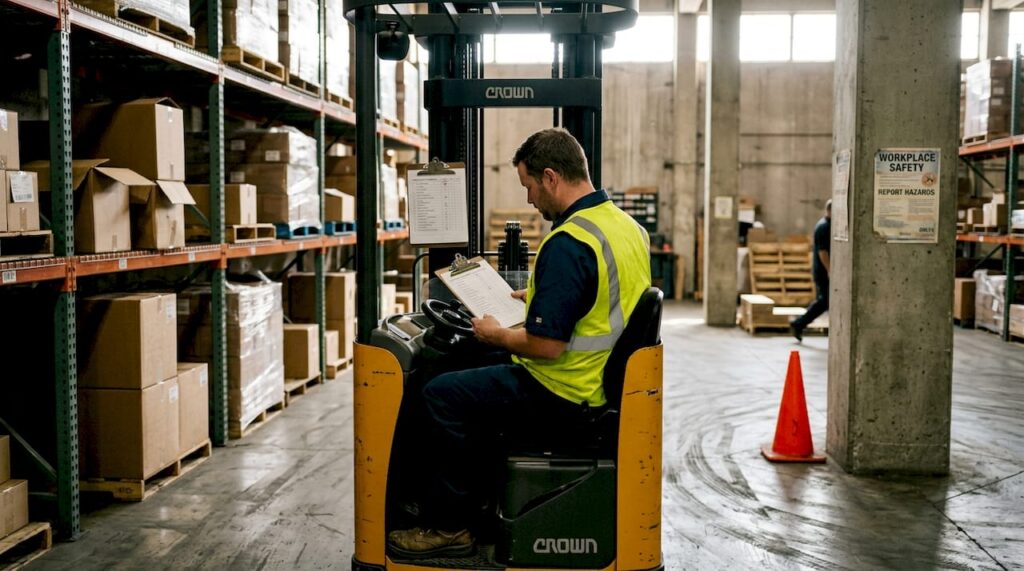

Managing warehouse operations means navigating a complex web of OSHA regulations designed to protect workers operating powered industrial trucks and scissor lifts. Every year, forklift accidents injure 85 workers daily in the U.S., many preventable through proper compliance. This comprehensive OSHA compliance requirements list equips you with essential training protocols, inspection checklists, and operational rules to safeguard your team and avoid costly violations. Understanding these standards transforms regulatory burden into strategic advantage.
| Point | Details |
|---|---|
| Operator training and certification | OSHA requires formal forklift operator training with certification and refresher training at least every three years or after safety incidents. |
| Daily forklift inspections | Daily pre use inspections must cover brakes, hydraulic systems, tires, forks, overhead guards, data plates, steering, warning devices, and lights. |
| Scissor lifts as scaffolds | Scissor lift operators require training from a qualified person who understands scaffold safety and fall protection systems. |
| Retraining and records | Retraining is required at least every three years and immediately after incidents or changes, with thorough documentation of sessions and findings. |
OSHA establishes distinct regulatory frameworks for powered industrial trucks and scissor lifts. 29 CFR 1910.178 governs forklifts, while scissor lifts fall under scaffold standards 29 CFR 1926.451 and fall protection rules 1910.28. This classification difference shapes every compliance requirement from training content to inspection protocols.
Operator training forms the foundation of both frameworks. Forklift operators need formal instruction covering vehicle limitations, load capacity, stability principles, and workplace hazards. Evaluation must confirm competency before certification. Scissor lift operators require training from a qualified person who understands scaffold safety and fall protection systems. Both equipment types demand documented certification that proves operators understand specific hazards and safe operating procedures.
Inspection mandates differ significantly between equipment types. Forklifts require daily pre-use inspections covering mechanical systems, safety devices, and structural integrity. Operators must check brake function, hydraulic systems, tire condition, and fork integrity before each shift. Scissor lifts follow scaffold inspection rules focusing on guardrail condition, platform stability, and capacity verification. Any defect discovered during inspection must remove equipment from service immediately until repairs restore safe operation.
Retraining requirements apply universally across both equipment types. OSHA mandates refresher training every three years minimum. Additional retraining becomes necessary when operators demonstrate unsafe practices, workplace conditions change, or new equipment enters service. Incidents involving near misses or actual accidents trigger immediate retraining to address performance gaps and prevent recurrence.
Pro Tip: Document every training session, inspection finding, and retraining trigger with timestamps and operator signatures. Digital recordkeeping systems streamline OSHA audit responses and demonstrate your commitment to continuous safety improvement.
The stakes for compliance extend beyond regulatory adherence. OSHA violations carry penalties ranging from $15,625 per serious violation to $156,259 for willful or repeated violations. More critically, proper compliance reduces workplace injuries by 70% according to industry safety data. Your compliance program protects both workers and business operations.
Forklift operator training must address 13 truck-related topics and 10 workplace-specific hazards under 29 CFR 1910.178. Training encompasses vehicle operating instructions, manufacturer limitations, load handling procedures, and hazard recognition. Each operator receives formal classroom instruction, practical demonstrations, and hands-on evaluation before certification.
The daily inspection checklist ensures mechanical reliability and operator safety:
Operational rules establish safe practices during forklift use. Operators must sound the horn when approaching blind corners, intersections, or doorways. Turning on slopes or ramps is strictly prohibited due to tipover risk. The truck capacity specified on the data plate represents maximum safe load; exceeding this limit compromises stability. Riders are never permitted on forks, pallets, or anywhere except the operator compartment. Seatbelt use is mandatory whenever the operator sits in the driver position.
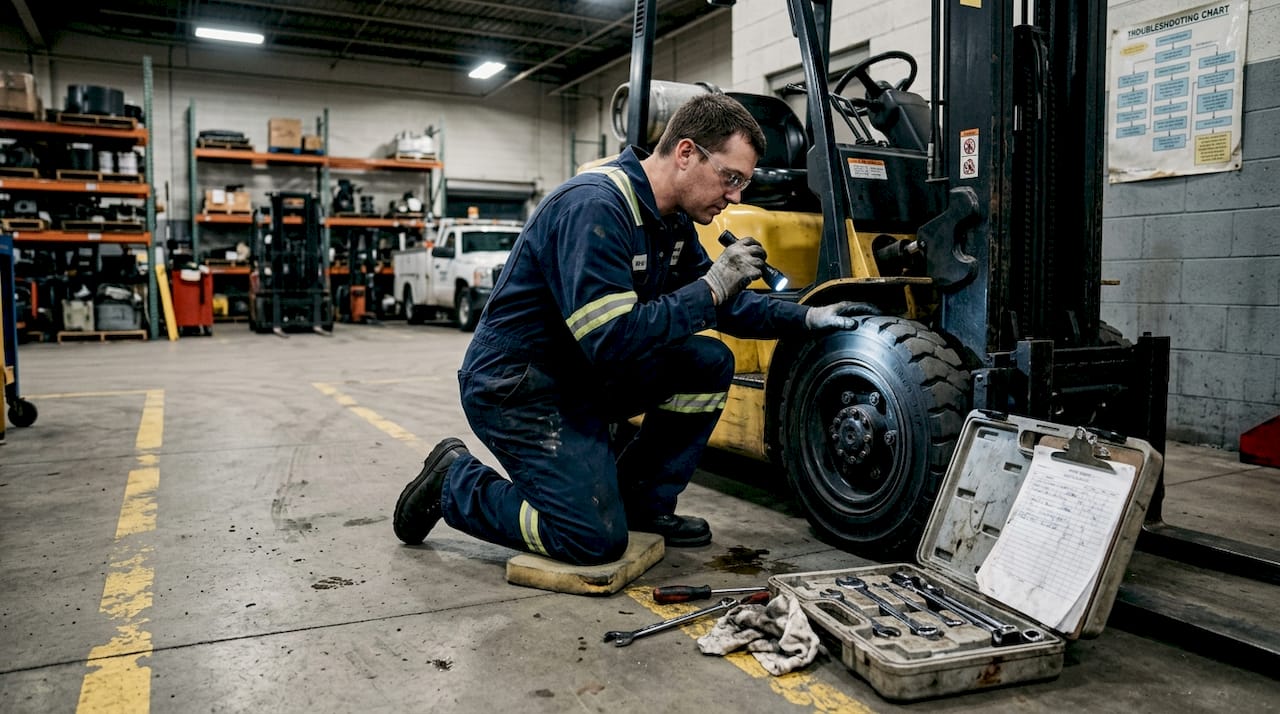
Defective equipment protocols require immediate action. Any forklift exhibiting mechanical problems, safety device failures, or structural damage must be removed from service until qualified maintenance personnel complete repairs. Operators tag defective units and notify supervisors to prevent unauthorized use. Only certified repair technicians may return equipment to active service after verifying all systems meet manufacturer specifications.
Retraining triggers include equipment type changes, unsafe operation observations, workplace accidents or near misses, and facility layout modifications affecting traffic patterns. Supervisors must evaluate operator performance regularly and initiate retraining when competency questions arise. The three-year maximum interval between refresher courses ensures operators maintain current knowledge of safety practices and regulatory updates.
OSHA classifies scissor lifts as mobile scaffolds rather than aerial lifts, creating unique compliance requirements. Guardrails must measure 38-45 inches high at the toprail with midrails positioned midway between toprail and platform. These guardrails must withstand 200 pounds of force applied in any direction. When guardrails meet OSHA specifications, fall protection harnesses are not required. Deficient or missing guardrails mandate alternative fall protection before lift operation.
Training requirements emphasize scaffold-specific hazards. A qualified person with demonstrated knowledge of scaffold safety standards must conduct operator training. Content covers platform capacity limits, environmental restrictions, guardrail importance, and hazard recognition. Operators learn proper entry and exit procedures, load distribution principles, and emergency descent protocols. Training documentation must specify the qualified trainer’s credentials and the topics covered during instruction.
Operational rules prevent common scissor lift accidents:
Capacity and load safety require careful attention. Scissor lifts must maintain a safety factor of at least four times the intended load. This means a 1,000-pound rated platform safely supports 250 pounds of workers and materials during normal use. Exceeding rated capacity compromises structural integrity and increases collapse risk. The manufacturer data plate specifies exact capacity limits for each model and configuration.
Inspection protocols focus on structural and safety components. Check guardrail security and condition before each use. Verify platform integrity with no cracks, corrosion, or damaged decking. Test controls for proper function including emergency stop and descent systems. Examine scissor mechanism for hydraulic leaks, worn pins, or structural damage. Confirm tire condition and inflation on mobile units. Document inspection findings and address deficiencies before operation.
Pro Tip: Create model-specific inspection checklists that reference manufacturer maintenance schedules. This approach catches equipment-specific issues that generic checklists might miss and demonstrates thorough compliance during OSHA inspections.
Both equipment types share foundational compliance elements while differing in specific applications. Training requirements mandate operator competency verification, but forklift certification emphasizes powered truck operation while scissor lift training focuses on scaffold safety principles. Forklift operators complete formal three-part training with classroom, demonstration, and evaluation components. Scissor lift operators receive instruction from qualified persons emphasizing fall protection and platform stability.
| Compliance element | Forklift approach | Scissor lift approach |
|---|---|---|
| Primary regulation | 29 CFR 1910.178 powered industrial trucks | 29 CFR 1926.451 scaffolds and 1910.28 fall protection |
| Training focus | Vehicle controls, load handling, stability | Guardrail systems, capacity limits, environmental hazards |
| Inspection frequency | Daily pre-use by operator | Before each use by operator |
| Fall protection | Seatbelt mandatory; overhead guard required | Guardrails 38-45 inches; harness if guardrails deficient |
| Capacity verification | Data plate rating never exceeded | 4x safety factor with platform load limits |
| Retraining interval | 3 years or sooner if triggers occur | Same triggers apply |
Inspection protocols reveal operational differences. Forklift checklists emphasize mechanical systems including brakes, hydraulics, and steering components critical for load transport. Scissor lift inspections prioritize structural integrity, guardrail condition, and platform stability reflecting scaffold classification. Both require immediate service removal when defects appear, but repair authorization differs. Forklift repairs need qualified maintenance technicians familiar with powered truck systems. Scissor lift repairs require scaffold-competent persons understanding structural load requirements.
Operational protocols address equipment-specific hazards. Forklifts prohibit slope turning, require horn use at blind spots, and mandate seatbelts during operation. These rules prevent tipping, collision, and ejection injuries common with powered trucks. Scissor lifts forbid guardrail climbing, restrict high-wind use, and require level positioning before elevation. These restrictions address fall risks and stability concerns inherent to elevated work platforms.
Record-keeping obligations apply universally. Both equipment types require documented training with operator names, dates, training content, and evaluator signatures. Inspection records must capture findings, corrective actions, and completion dates. Retraining documentation proves compliance with interval requirements and trigger responses. Digital systems streamline record management and facilitate OSHA audit preparation.
Retraining schedules demand strict adherence to regulatory timelines. The three-year maximum interval between refresher courses represents the absolute limit, not a recommended target. Progressive safety programs schedule retraining at 30-month intervals, building in buffer time for scheduling conflicts and ensuring no operator exceeds the deadline. Immediate retraining follows any incident involving equipment damage, personal injury, or near-miss events regardless of time since last certification.
Digital recordkeeping transforms compliance management from administrative burden to strategic asset. Cloud-based training management systems track certification expiration dates and trigger renewal notifications automatically. These platforms store inspection checklists, incident reports, and equipment modification records in searchable databases. OSHA audits become straightforward when you produce complete compliance documentation within minutes rather than hours of manual file searching.
Daily inspection checklists prevent equipment failures and demonstrate due diligence:
AI monitoring systems represent emerging compliance tools gaining warehouse adoption. Vision systems detect unsafe operator behaviors including excessive speed, improper load handling, and pedestrian proximity violations. Sensors track impact events, harsh braking, and equipment misuse patterns invisible to supervisory observation. These technologies generate objective performance data supporting targeted retraining and reducing the 70% of forklift accidents caused by operator error.
Proactive hazard identification strengthens compliance beyond minimum requirements. Monthly safety walks involving operators, supervisors, and maintenance staff uncover emerging risks before incidents occur. Encourage workers to report near-misses without fear of discipline, treating each report as valuable safety intelligence. Regular safety meetings reviewing recent incidents, industry trends, and regulatory updates maintain awareness and reinforce proper practices.
“Compliance isn’t a checkbox exercise. It’s a continuous commitment to protecting your team through rigorous training, thorough inspections, and immediate corrective action when standards slip. The best safety programs treat OSHA requirements as minimum baselines, not aspirational goals.”
Pro Tip: Schedule certification renewals to coincide with quarterly safety meetings. This timing creates natural opportunities for refresher content delivery and reinforces safety culture through regular touchpoints rather than isolated training events every three years.
Navigating OSHA compliance requirements becomes straightforward with expert guidance and proven training programs designed specifically for warehouse and logistics operations. Forklift Academy delivers comprehensive certification courses covering all regulatory requirements through flexible online and onsite formats. Our programs address both forklift and scissor lift compliance, ensuring your operators master equipment-specific safety protocols.
Our train the trainer online program empowers your supervisors to deliver ongoing compliance training internally, reducing costs while maintaining regulatory standards. Expert instructors guide you through documentation requirements, inspection protocols, and retraining triggers that satisfy OSHA auditors. Forklift refresher courses keep your team current on evolving safety practices and regulatory updates, preventing compliance gaps that lead to violations. Streamline your compliance management and protect your workforce with training solutions backed by over 20 years of industry experience.
OSHA requires formal instruction, practical demonstration, and performance evaluation before certification. Training must cover 13 truck-related topics and 10 workplace-specific hazards per 29 CFR 1910.178. Certification remains valid for three years unless unsafe operation, workplace changes, or incidents trigger earlier retraining. Employers must document training content, dates, and evaluator credentials for OSHA compliance verification.
Operators need retraining at least every three years or sooner when unsafe practices occur, equipment types change, or workplace conditions shift. Incidents including accidents, near misses, or equipment damage require immediate refresher training. This retraining schedule addresses the 70% of forklift accidents caused by operator error and maintains competency throughout employment.
Harnesses are not mandatory when guardrails meet OSHA specifications with toprails measuring 38-45 inches high and capable of withstanding 200 pounds of force. OSHA classifies scissor lifts as scaffolds where guardrails provide primary fall protection. Harnesses become required only when guardrails are deficient, damaged, or removed. This differs from aerial lifts under different regulations where harness requirements apply universally.
Operators must inspect tires, brakes, hydraulics, steering, forks, overhead guard, horn, lights, and seatbelts before each shift. The data plate must remain legible showing capacity ratings. Any defects discovered require immediate equipment removal from service until qualified technicians complete repairs. Documentation of daily inspections proves compliance during OSHA audits and prevents mechanical failures causing accidents.