


More than one in four American warehouses experience major operational delays due to gaps in forklift training compliance. For managers across North America, ensuring OSHA standards around forklift certification is not just a regulatory obligation but a direct path to safer workplaces. This guide highlights practical online certification strategies that help improve team readiness, reduce costly errors, and boost overall safety measures.
| Point | Details |
|---|---|
| Online Certification Benefits | Online forklift certification offers flexible, comprehensive training that aligns with OSHA standards, enhancing operational skills and safety knowledge. |
| Types of Forklift Certifications | Different classes of certifications are available, ensuring operators are trained specifically for the type of forklift they will operate. |
| Cost-Effectiveness of Online Training | Online training reduces costs and minimizes workforce disruption compared to traditional onsite training methods. |
| Importance of Compliance | Maintaining strict compliance with OSHA requirements is vital to prevent legal penalties and ensure worker safety. |
Online forklift certification represents a comprehensive digital training approach designed to meet stringent safety regulations set by the Occupational Safety and Health Administration (OSHA). These digital certification programs provide warehouse managers and operators a flexible pathway to acquire critical operational skills and safety knowledge without traditional in-person training constraints.
The core of online forklift certification involves structured digital learning modules that cover essential operational guidelines, safety protocols, and practical equipment handling techniques. These programs typically include interactive video tutorials, comprehensive knowledge assessments, and standardized testing mechanisms that align with national forklift certification requirements. By integrating multimedia learning techniques, these online platforms ensure consistent and thorough training across diverse warehouse environments.
Standard online certification programs generally encompass several critical components:
Pro Tip: Smart Certification Approach: Always verify that your chosen online certification program is fully OSHA compliant and provides a comprehensive training experience that goes beyond mere technical requirements, focusing on practical safety skills and operational excellence.
Forklift certifications are specialized training programs designed to equip warehouse professionals with essential skills and safety knowledge for operating different types of material handling equipment. These comprehensive forklift certification types ensure that operators are well-prepared to handle various workplace scenarios and equipment configurations with precision and safety.
The primary categories of forklift certifications typically include:
Each certification type corresponds to specific equipment characteristics, operational environments, and safety requirements. Warehouse managers must ensure that their operators are certified for the exact type of forklift they will be using, as different classes demand unique operational skills and safety protocols.
Pro Tip: Strategic Certification Planning: Always conduct a thorough workplace equipment assessment before enrollment to ensure you select the most appropriate forklift certification that precisely matches your operational needs and equipment specifications.
Online forklift certification platforms utilize sophisticated digital learning technologies to deliver comprehensive training experiences that mirror traditional in-person instruction. OSHA-compliant training modules typically integrate interactive multimedia content, including video tutorials, animated demonstrations, and knowledge assessment tools designed to simulate real-world forklift operational scenarios.
The standard online training platform follows a structured learning pathway that encompasses several key components:
These digital platforms are engineered to provide flexible learning experiences that accommodate diverse learning styles and operational requirements. Participants can progress through course materials at their own pace, with most platforms offering 24/7 access and the ability to pause, review, and revisit complex topics as needed. Each module is carefully designed to ensure operators understand critical safety protocols, operational techniques, and regulatory compliance requirements before obtaining their final certification.
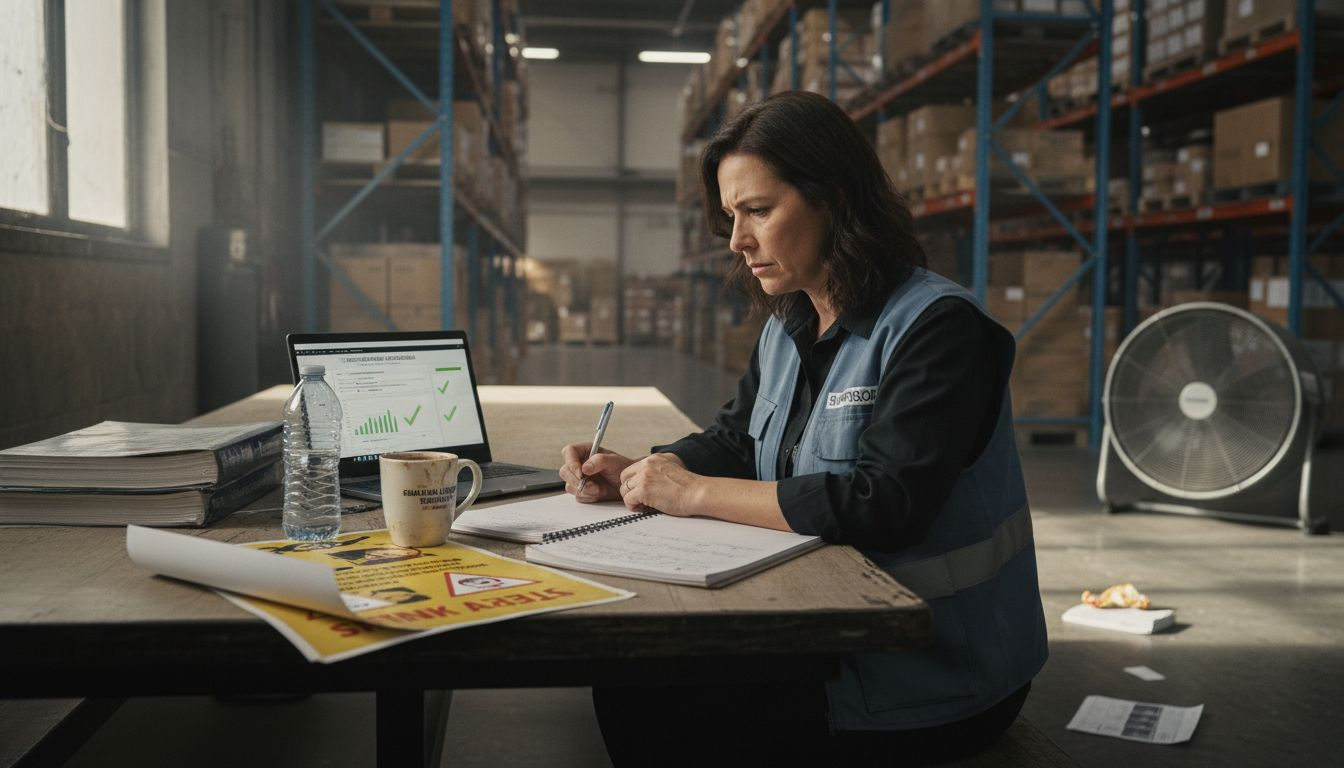
Pro Tip: Digital Learning Strategy: Always maintain a dedicated study environment with minimal distractions and ensure your computer meets the platform’s technical requirements to maximize your online training effectiveness.
The Occupational Safety and Health Administration (OSHA) establishes rigorous legal standards that govern forklift operation and certification across warehouse environments. Comprehensive OSHA safety standards outline precise requirements for operator training, equipment maintenance, and workplace safety protocols that directly impact organizational liability and worker protection.
Key OSHA legal requirements for forklift operations include:
These regulatory standards are designed to dramatically reduce workplace accidents and create a structured approach to operator safety. Warehouses that meticulously implement OSHA guidelines can expect significant reductions in workplace injuries, potential legal liabilities, and operational disruptions. The comprehensive nature of these requirements ensures that forklift operators are not just technically proficient, but also deeply aware of potential safety risks and mitigation strategies.
Pro Tip: Compliance Strategy: Develop a proactive internal audit system that continuously tracks operator certifications, training records, and safety performance to stay ahead of OSHA regulatory requirements and minimize potential compliance risks.
Navigating the financial landscape of forklift certification requires a strategic understanding of training delivery methods and their associated costs. Comprehensive training delivery comparisons reveal significant economic advantages for warehouses considering online certification platforms over traditional onsite training approaches.
Key cost considerations between online and onsite training include:
Online training typically demonstrates substantial cost savings across multiple dimensions. While traditional onsite training often requires dedicated physical spaces, multiple instructor schedules, and direct equipment usage, digital platforms eliminate most overhead expenses. Warehouses can simultaneously train multiple employees without disrupting operational workflows, reducing productivity losses and minimizing indirect training expenditures. The flexibility of online modules allows employees to complete certification requirements during non-peak operational hours, further optimizing workforce efficiency and reducing overall training investments.
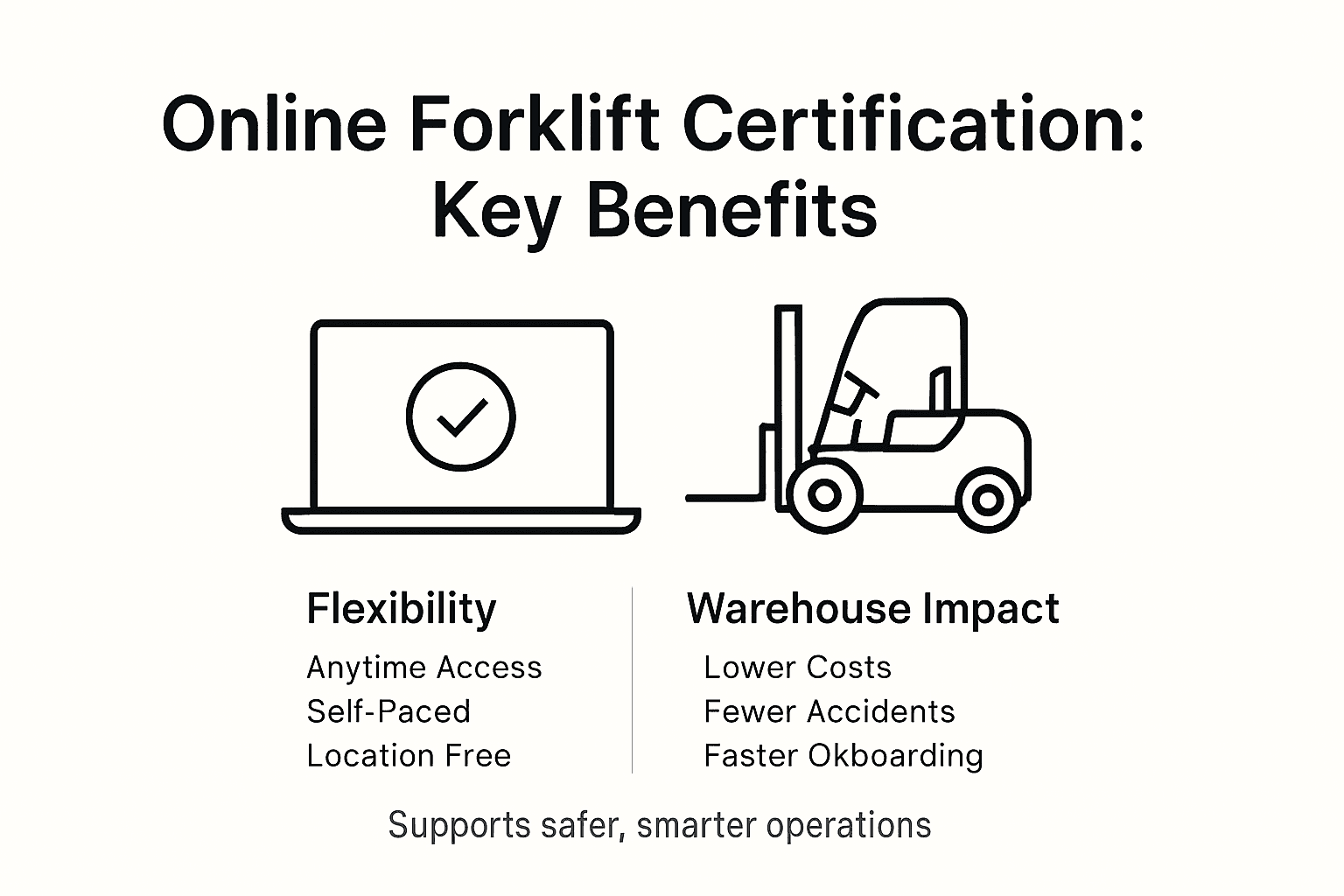
Here’s a comparison of online versus onsite forklift training methods to clarify key differences:
| Aspect | Online Training Platform | Traditional Onsite Training |
|---|---|---|
| Scheduling Flexibility | Self-paced, anytime access | Fixed class times, less flexible |
| Cost Efficiency | Lower costs, no travel needed | Higher costs, travel required |
| Workforce Disruption | Minimal, training during downtimes | Requires staff absence |
| Scalability | Easily trains many employees | Limited by class size and space |
| Compliance Tracking | Automated digital records | Manual documentation required |
Pro Tip: Cost Optimization Strategy: Conduct a comprehensive internal audit of your current training expenses, comparing direct and indirect costs between online and traditional training methods to identify potential savings opportunities and operational efficiency improvements.
Forklift certification processes are fraught with potential compliance pitfalls that can expose warehouses to significant legal and operational risks. Understanding critical compliance requirements is essential for preventing costly mistakes that could result in substantial financial penalties and workplace safety compromises.
Common compliance mistakes and associated risks include:
The most critical compliance risks emerge from superficial training approaches that prioritize checkbox completion over genuine skill development and safety comprehension. Warehouses frequently underestimate the complexity of forklift operator certification, mistakenly viewing it as a mere administrative requirement rather than a comprehensive safety strategy. This approach can lead to significant vulnerabilities, including potential workplace accidents, insurance complications, and regulatory violations that could result in substantial financial and legal consequences.
The following table summarizes common forklift certification errors and their potential impacts on warehouse operations:
| Compliance Error | Potential Impact |
|---|---|
| Incomplete training documentation | Increased liability, OSHA penalties |
| Skipping equipment-specific training | Higher risk of equipment misuse |
| Irregular operator reassessments | Skill decay, reduced safety |
| Poor record-keeping | Gaps in compliance, audit failures |
| Neglecting hazard evaluations | Missed dangers, more accidents |
Pro Tip: Compliance Vigilance: Develop a proactive internal audit system that continuously monitors certification status, tracks individual operator performance, and ensures ongoing training alignment with the most current safety standards and regulatory requirements.
The article highlights the challenges warehouses face in maintaining OSHA compliance while managing training costs and scheduling flexibility. Many warehouse managers struggle with balancing safe forklift operation, legal requirements, and minimizing workforce disruption. Online forklift certification offers a practical solution by delivering OSHA-compliant training that is flexible, cost-effective, and scalable without sacrificing safety standards or thorough operator skill development.
At Forkliftacademy.com, we understand these pain points and provide expertly designed programs that meet all the critical components discussed in the article, including hazard recognition, equipment operation fundamentals, and certification tracking. Our specialized Forklift Certification Archives detail comprehensive course options tailored for various operational needs. Whether you need individual certifications or enterprise-wide solutions, our platform combines the convenience of online training with access to expert instructors and hands-on sessions at key U.S. locations.
Take the next step toward safer, more efficient warehouse operations. Explore our proven training solutions and see how you can reduce costs, improve compliance, and empower your operators with the best forklift training available. Visit Forkliftacademy.com now to start your certification journey and ensure your team meets every OSHA standard with confidence.
Online forklift certification offers flexibility, cost savings, and convenience. It allows warehouse operators to complete training at their own pace and avoids disruptions in daily operations.
Most online certification programs are designed to be OSHA compliant, incorporating comprehensive training modules that include safety protocols, hazard assessments, and operational guidelines aligned with national forklift certification requirements.
Yes, online forklift certification platforms utilize interactive multimedia content, including video tutorials and simulations, to prepare operators for practical environments and challenges they may face while operating forklifts.
Forklift operators are typically required to be recertified every three years. This ensures that they stay updated on safety protocols, operational techniques, and compliance requirements that may evolve over time.