

Every American warehouse and logistics facility relies on skilled operators to keep goods moving safely and efficiently. With over 100,000 forklift-related injuries reported each year nationwide, learning the right procedures has never been more crucial. If you want to boost your job prospects and stand out to employers, understanding the process for proper OSHA forklift certification is the first key step. Here, you will discover what you need to know before stepping into the driver’s seat.
| Key Message | Explanation |
|---|---|
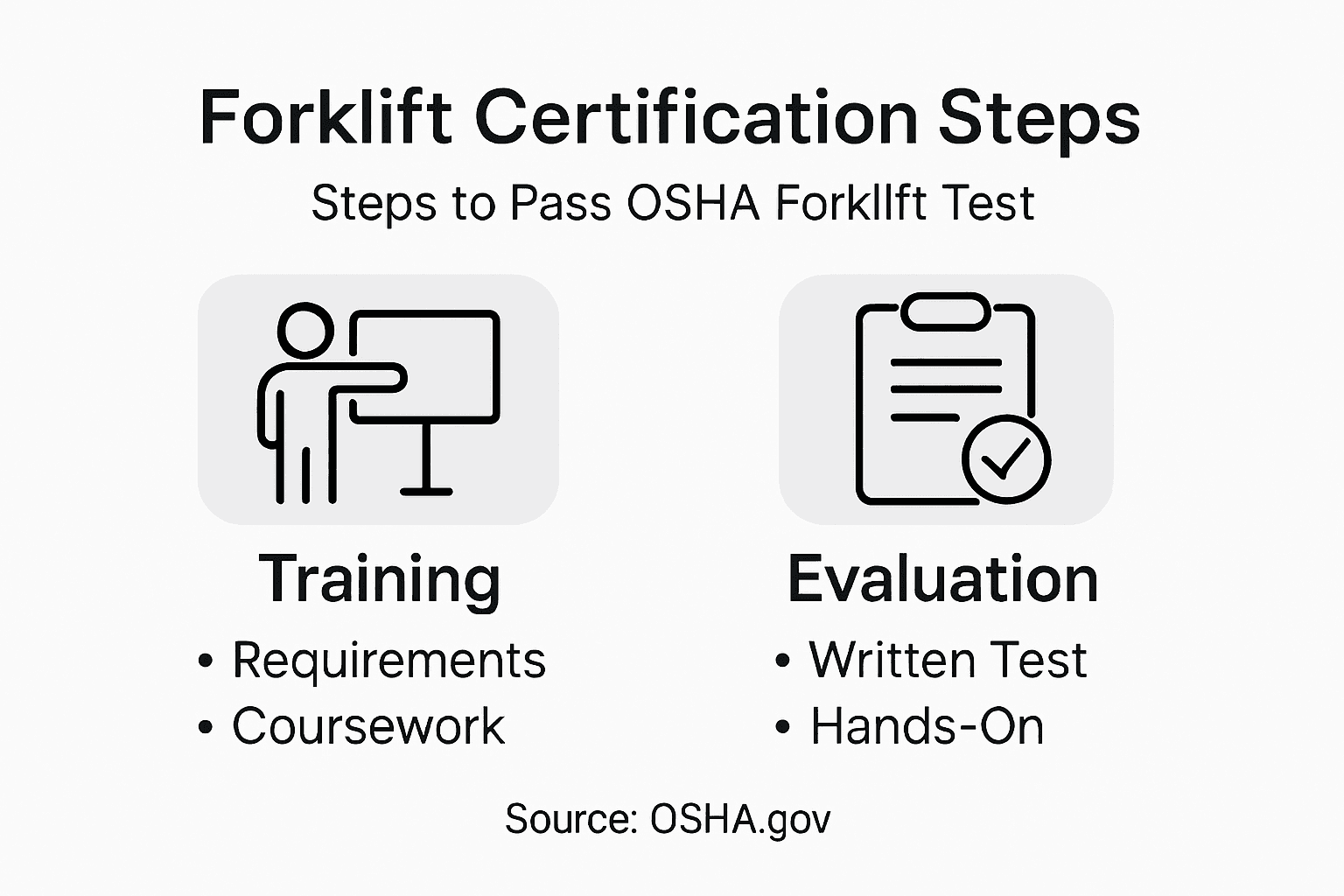
| 1. Understand OSHA training requirements | Familiarize yourself with OSHA’s essential training components for forklift operation, including classroom instruction and hands-on exercises. |
| 2. Complete core safety coursework | Engage in safety courses focusing on hazard recognition, safe operating procedures, and equipment inspection to build knowledge and skills. |
| 3. Show hands-on proficiency | Demonstrate practical forklift operation skills in controlled environments to validate your training and ensure workplace safety. |
| 4. Prepare for written and practical tests | Study OSHA guidelines thoroughly to excel in both the written examination and practical skills evaluation. |
| 5. Maintain training records | Keep detailed documentation of training dates and evaluation results to prove compliance with OSHA standards. |
Preparing to get your forklift certification starts with understanding the comprehensive training requirements set by the Occupational Safety and Health Administration (OSHA). Knowing these requirements is critical for ensuring workplace safety and successfully completing your certification process.
OSHA mandates that employers develop a robust training program that covers multiple critical components. Training requirements include formal classroom instruction, practical hands-on exercises, and a comprehensive operator evaluation. This means you cannot simply read a manual or watch a video you must demonstrate actual proficiency in forklift operation. The training must comprehensively address safe truck operation principles, specific vehicle types, potential workplace hazards, and detailed safety standards. Operators will need to show competence in both theoretical knowledge and practical skills.
Your training must also include a formal evaluation process that occurs at minimum every three years. This ensures that operators maintain their skills and stay current with safety protocols. Refresher training becomes mandatory if an operator demonstrates unsafe practices, experiences an accident, or transitions to a different type of forklift equipment.
Here’s a summary of each OSHA forklift training component and its purpose:
| Training Component | Description | Workplace Impact |
|---|---|---|
| Classroom Instruction | Safety theories and OSHA regulations | Prepares operators for safe work |
| Hands-on Exercises | Supervised practice of forklift operation | Builds practical skills |
| Operator Evaluation | Formal assessment of competence | Ensures compliance and proficiency |
| Refresher Course | Required after incidents or unsafe behavior | Maintains ongoing workplace safety |
Pro tip: Always maintain a detailed record of your training documentation, including dates, evaluation results, and trainer information to prove your compliance with OSHA standards.
Successfully obtaining your forklift certification requires completing comprehensive safety training that covers both theoretical knowledge and practical skills. Your goal is to master the essential elements of safe forklift operation through structured learning.
OSHA mandates specific training components that combine classroom instruction with hands-on practice. The core coursework will dive deep into critical areas such as OSHA regulations, hazard recognition, safe operating procedures, equipment inspection, load handling principles, and workplace safety protocols. You will learn how to conduct thorough pre operational checks, understand load capacities, and implement best practices for preventing workplace accidents. These courses typically involve both written examinations and practical skills evaluations to ensure you can demonstrate competence in real world scenarios.
Most forklift safety certification programs are designed to be completed within one to two days, providing an intensive learning experience that prepares you for professional forklift operation. The training will cover everything from basic vehicle controls to advanced maneuvering techniques, ensuring you have a comprehensive understanding of workplace safety standards.
Pro tip: Pay close attention during hands-on training and ask questions about specific workplace scenarios to maximize your learning and demonstrate your commitment to safety.
Mastering forklift operation requires dedicated hands-on practice that goes beyond classroom learning. Your goal is to develop practical skills that demonstrate safe and competent equipment handling in real world workplace environments.
Practical training involves supervised skill development that focuses on critical operational competencies. You will need to master truck controls, load management techniques, precise maneuvering in restricted spaces, comprehensive safety checks, and situational awareness. Key skills include understanding weight distribution, executing smooth acceleration and braking, navigating tight corridors, performing accurate stack and unstack procedures, and maintaining constant awareness of pedestrian traffic. Operators must demonstrate consistent proficiency in both controlled training environments and simulated workplace scenarios.
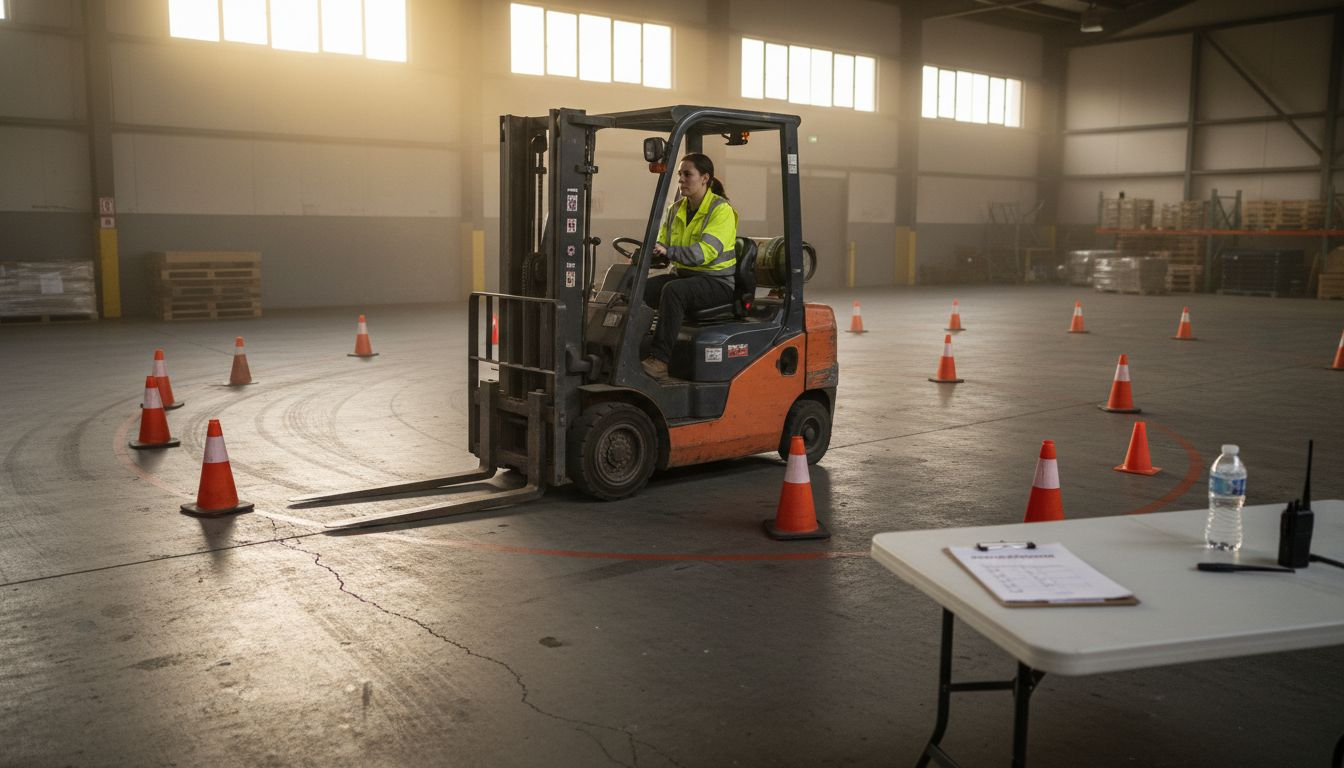
Successful forklift operators develop muscle memory through repeated practice, learning to anticipate potential hazards and respond quickly to changing workplace conditions. Your training will emphasize not just technical skills, but also developing the judgment and situational awareness necessary to prevent accidents and ensure workplace safety.
Pro tip: Practice visual scanning techniques and develop a systematic approach to checking your environment before and during forklift operation to enhance your safety awareness.
The OSHA forklift written test represents a critical milestone in your certification journey, designed to validate your comprehensive understanding of forklift safety and operational protocols. Your objective is to demonstrate thorough knowledge of essential safety standards and operational procedures.
OSHA regulations require a comprehensive written examination that covers multiple critical areas of forklift operation. The test will assess your understanding of forklift inspection procedures, safe loading techniques, travel practices, operational precautions, and detailed OSHA safety standards. Expect questions that evaluate your ability to identify potential workplace hazards, understand weight distribution principles, recognize equipment limitations, and apply proper safety protocols in various scenarios. You will need to demonstrate knowledge about different forklift types, maintenance requirements, and specific operational guidelines that ensure workplace safety.
Successful completion of the written test requires careful preparation and a systematic approach to studying OSHA guidelines. Review your training materials thoroughly, focus on understanding underlying safety principles rather than memorizing facts, and practice applying theoretical knowledge to practical workplace situations.
Pro tip: Read each test question carefully, pay attention to details, and always choose the most safety conscious response when multiple options seem plausible.
Your forklift certification journey culminates in a critical practical evaluation that tests your ability to safely operate equipment in real world conditions. This hands-on assessment will determine whether you can translate your theoretical knowledge into actual workplace performance.
Employers must evaluate operator performance through a comprehensive skills demonstration that covers multiple critical aspects of forklift operation. Your evaluation will include precise tasks such as equipment inspection, load handling, smooth maneuvering through narrow aisles, maintaining proper weight distribution, executing controlled starts and stops, and consistently adhering to safety protocols. Examiners will assess your ability to operate the forklift confidently while demonstrating situational awareness, understanding equipment limitations, and implementing safe practices in dynamic workplace environments.
Successful proficiency demonstration requires more than technical skill it demands a holistic approach to workplace safety. You will need to show not just mechanical competence but also critical decision making abilities that protect yourself, your colleagues, and workplace assets. This means anticipating potential hazards, responding appropriately to unexpected situations, and maintaining constant awareness of your surroundings.
Compare the forklift written test and hands-on evaluation processes:
| Certification Step | Evaluation Focus | How Skills Are Tested | Key Benefits |
|---|---|---|---|
| Written Test | Theoretical safety knowledge | Multiple-choice or written responses | Validates safety awareness |
| Hands-on Evaluation | Practical forklift operation | Real-world skill demonstration | Confirms operational skill |
Pro tip: Focus on smooth, controlled movements during your practical test and communicate your thought process clearly to demonstrate your understanding of safety principles.
Passing the OSHA forklift test and gaining certification is a challenging yet rewarding goal. This article highlights the importance of mastering OSHA safety standards, completing hands-on practice, and demonstrating both theoretical and practical skills. If you want to transform these challenges into confidence and competence, it is crucial to train with proven resources focused on OSHA compliance and real-world skills.
Unlock your full potential with comprehensive training solutions from Forkliftacademy.com. Explore expertly designed courses tailored to help you ace your OSHA forklift evaluation and written test. Whether you seek individual certification programs or business-oriented onsite training, our offerings ensure you meet critical OSHA requirements efficiently. Start your journey now by visiting our Forklift License Archives page to discover the right course for you. For ongoing safety best practices, check our Forklift Safety Archives. Don’t wait until safety risks and certification delays impact your career or workforce. Take action today and experience training built on over 20 years of industry expertise at Forkliftacademy.com.
To prepare for the OSHA forklift written test, review all your training materials and focus on understanding safety regulations and operational procedures. Consider taking practice quizzes and discussing scenarios with experienced operators to solidify your knowledge.
During the hands-on forklift evaluation, you need to demonstrate skills such as equipment inspection, load handling, and navigating narrow spaces safely. Practice these skills repeatedly until you feel confident, ensuring you can perform them under real-world conditions.
Refresher training becomes mandatory every three years or when you demonstrate unsafe practices or have an accident. Schedule your refresher courses promptly to maintain your certification status and ensure workplace safety.
Focus on mastering truck controls, proper load management, and conducting thorough safety checks during your hands-on practice sessions. Create a systematic approach to your training routine, including visual scanning and situational awareness, to enhance your operational safety.
To identify potential hazards while operating a forklift, develop a habit of regular visual scanning and be aware of your surroundings. Make a checklist of common hazards in your workplace, such as pedestrian traffic and obstacles, to review before operating the equipment.
The OSHA forklift safety coursework includes training on hazard recognition, safe operating procedures, equipment inspection, and load handling principles. Ensure you master these topics through both classroom instruction and practical exercises to prepare for certification.