 Skip to content
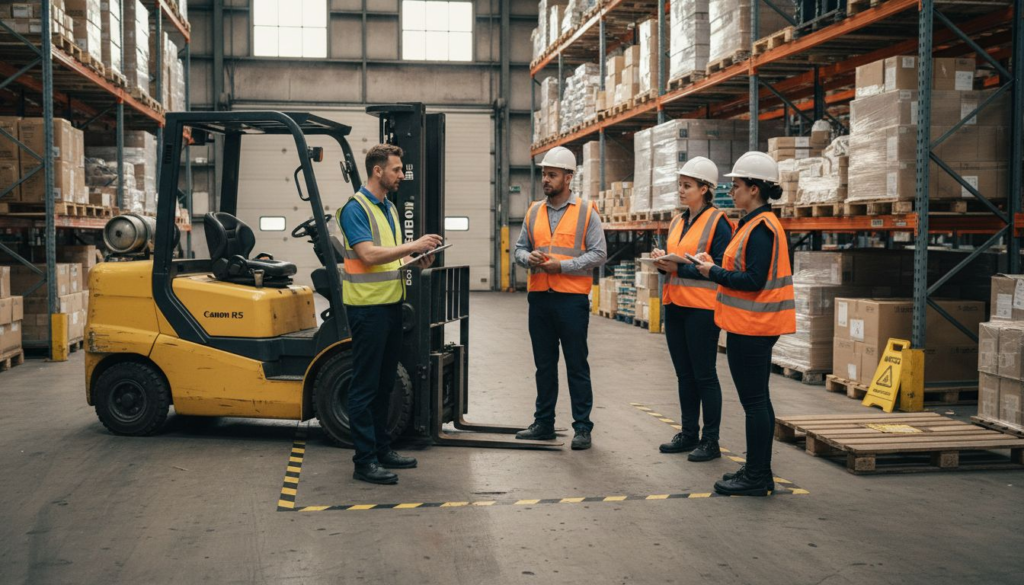

Forklift incidents can disrupt warehouse productivity and put your team at risk, especially when operations rely on proper training and safe equipment handling. For American warehouse and logistics managers, meeting OSHA forklift training standards is more than just a legal obligation—it protects your workforce and keeps day-to-day operations running smoothly. This guide breaks down how to build a comprehensive, OSHA-compliant onsite forklift training program tailored to your facility’s unique needs, so you can strengthen safety and compliance from the ground up.
| Key Takeaway | Explanation |
|---|---|
| 1. Assess Workplace-Specific Needs | Conduct a thorough evaluation of your environment, hazards, and operator skill levels to tailor forklift training effectively. |
| 2. Develop Comprehensive Training Materials | Assemble detailed manuals, safety protocols, and practical guides to enhance the training experience and ensure safety compliance. |
| 3. Utilize Hands-On Demonstrations | Perform practical demonstrations showcasing equipment operation and safety procedures, preparing trainees for real-job scenarios. |
| 4. Monitor and Provide Feedback | Supervise trainees during practice sessions, offering immediate feedback to foster skill development and operational confidence. |
| 5. Verify Competence and Compliance | Administer evaluations to confirm trainees meet OSHA standards, ensuring they are capable of safe independent operation. |
Successfully leading onsite forklift training starts with a comprehensive assessment of your workplace’s specific safety requirements and training needs. Your goal is to develop a robust training program that meets OSHA safety standards.
Conducting an effective training needs assessment requires a systematic approach. Begin by thoroughly examining your workplace environment and identifying potential hazards specific to your forklift operations. Key areas to evaluate include:
Your assessment should generate detailed documentation that covers the critical elements OSHA mandates for training programs. This means creating a comprehensive plan that addresses:
OSHA requires employers to develop training programs based on safe truck operation principles and workplace-specific hazards.
Each training program must be tailored to your specific workplace, accounting for equipment types, operational complexities, and potential safety risks. This personalized approach ensures that your training goes beyond generic instructions and directly addresses your team’s unique challenges.
Here’s a summary of critical factors to consider when tailoring forklift training to your workplace:
| Factor | Why It Matters | Impact on Training Program |
|---|---|---|
| Equipment Specifics | Ensures accurate instruction | Reduces operational errors |
| Workplace Hazards | Addresses unique safety risks | Improves accident prevention |
| Operator Skill Level | Matches training to experience | Boosts learning effectiveness |
| Operational Complexity | Prepares for real scenarios | Enhances practical readiness |
Pro tip: Conduct a preliminary skills assessment of current operators to identify specific training gaps and customize your program for maximum effectiveness.
Preparing your site and training materials is a critical step in developing an effective forklift training program that meets OSHA standards. Your objective is to create a comprehensive and tailored training environment that addresses the unique safety requirements of your workplace.
Start by gathering the necessary training resources and documentation that will serve as the foundation of your program. This includes:
Your training materials should be comprehensive and cover multiple critical aspects of forklift operation:
Effective training materials must incorporate site- and truck-specific information to address unique operational challenges and safety requirements.
Ensure your training area is properly set up with appropriate safety equipment, clearly marked demonstration zones, and all necessary protective gear. Consider creating a dedicated training space that mimics real workplace conditions while providing a controlled environment for learning.
Pro tip: Develop modular training materials that can be easily updated to reflect changes in equipment, workplace layout, or safety regulations.
Demonstrating forklift operation and safety procedures is a critical component of comprehensive training that transforms theoretical knowledge into practical skills. Your goal is to create a hands-on learning experience that prepares operators to navigate real-world workplace challenges safely and efficiently.
Begin by illustrating detailed operational controls and safety techniques. This comprehensive demonstration should cover:
Your demonstration must include step-by-step visual and practical instruction on critical safety aspects:
Effective forklift operation training requires showing precise techniques that go beyond basic instruction.
Ensure your demonstration addresses potential workplace-specific scenarios, highlighting the nuanced skills needed to manage complex operational challenges. This approach transforms generic training into a targeted, practical learning experience that directly relates to your workplace’s unique requirements.
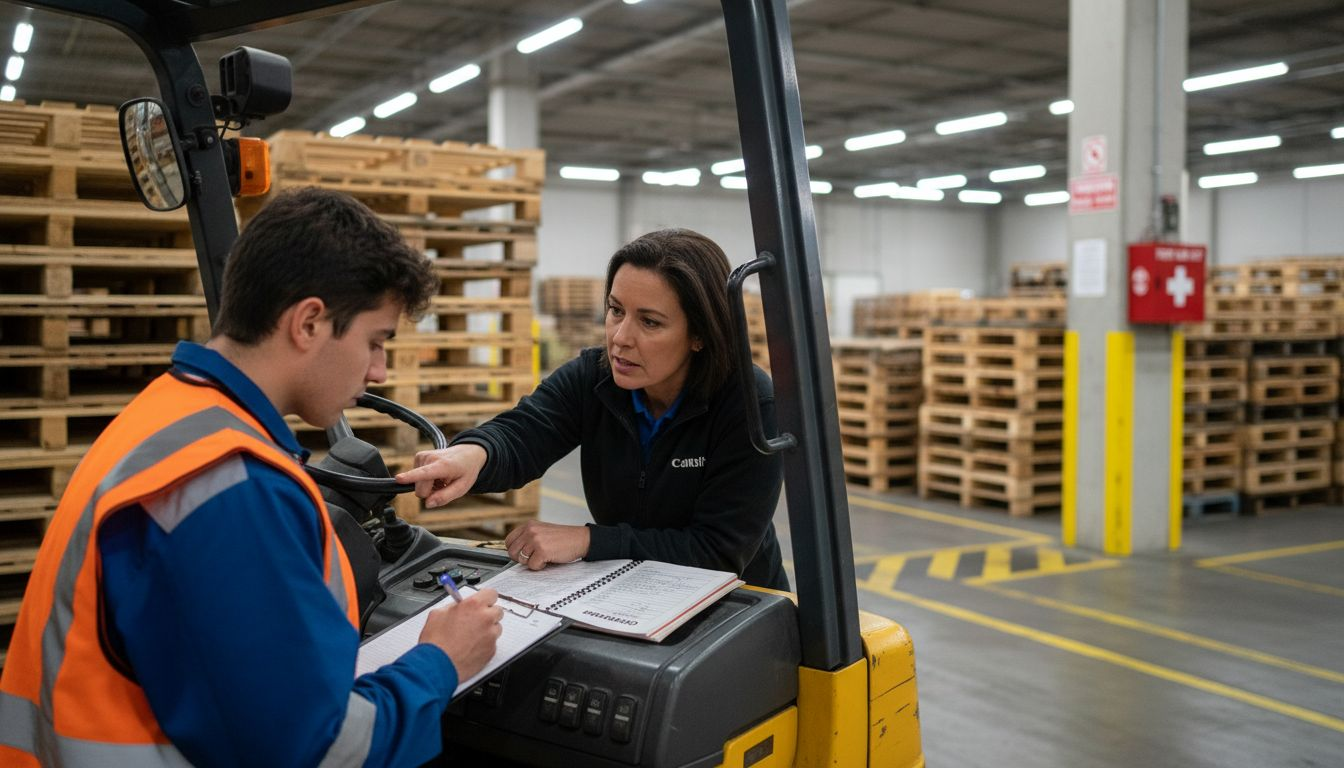
Pro tip: Create scenario-based demonstrations that simulate actual workplace challenges to help trainees develop intuitive decision-making skills.
Supervising hands-on practice is the critical moment where theoretical knowledge transforms into real-world operational skills. Your role is to provide continuous monitoring and immediate feedback during practical training exercises to ensure safe and competent forklift operation.
During hands-on practice, you must closely evaluate trainee performance using these key observation techniques:
Your supervision should focus on comprehensive performance assessment through structured practice sessions:
Effective supervision transforms theoretical training into genuine workplace readiness.
Each trainee requires personalized attention, recognizing that learning curves differ and individual skill development takes time. Your patient, methodical approach will help operators build confidence and develop muscle memory for safe forklift operation.
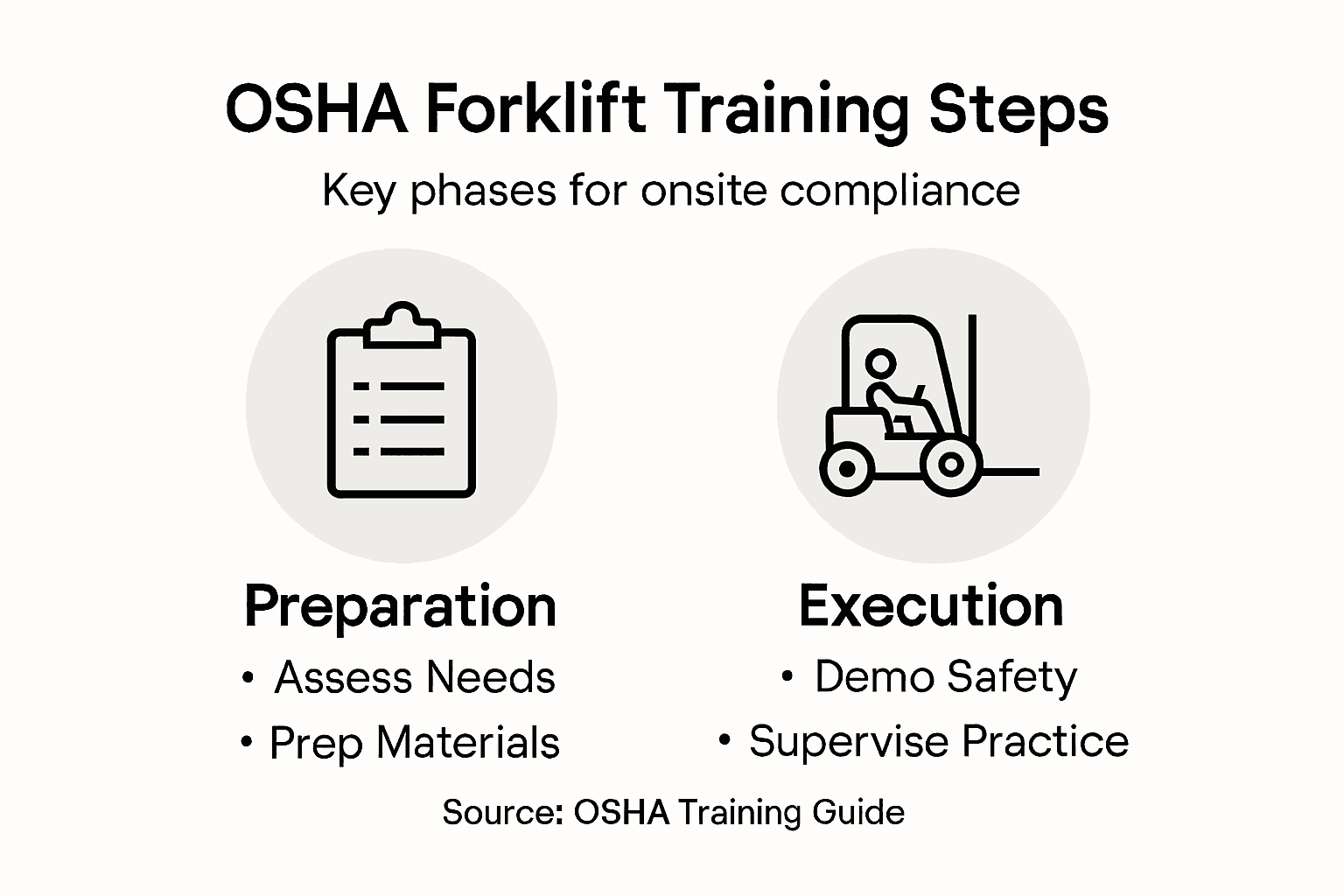
Pro tip: Use video recording during practice sessions to provide objective feedback and help trainees recognize their own performance patterns.
Evaluating operator competence and verifying OSHA compliance is the critical final stage of your forklift training program. Your primary objective is to systematically assess each trainee’s skills and ensure they meet the rigorous safety standards required for independent forklift operation.
Begin by conducting comprehensive skills assessments that thoroughly document operator performance across multiple dimensions:
Your evaluation process should include these key verification steps:
OSHA requires thorough documentation of operator training and competency verification.
Certification requires more than just passing a test. You must develop a detailed evaluation framework that objectively measures an operator’s ability to safely navigate complex workplace scenarios. This means going beyond surface-level assessments to truly understand each trainee’s operational readiness.
Below is a comparison of two approaches to evaluating forklift operator competence:
| Approach | Objectivity | Adaptability | Typical Use |
|---|---|---|---|
| Written Exam | High | Low | Measuring safety knowledge |
| Practical Assessment | Medium | High | Evaluating real skills |
Pro tip: Create a standardized evaluation scorecard with clear, measurable performance criteria to ensure consistent and objective competency assessments.
Leading onsite forklift training for OSHA compliance involves overcoming challenges like tailored safety protocols, effective hands-on supervision, and thorough competence evaluation. Many trainers struggle with creating site-specific programs that truly address operational hazards and meet OSHA’s strict documentation standards. This article highlights the need to translate theoretical knowledge into practical skills while ensuring every operator is confidently certified.
At Forkliftacademy.com, we understand these critical pain points. Our comprehensive Forklift Certification Archives – Top OSHA Forklift Certification offer OSHA-compliant training courses designed to fit your unique workplace needs. Whether you need onsite instruction, evaluation-only options, or advanced train-the-trainer kits, our solutions empower you to develop confident operators who excel in real-world environments.
Take control of your forklift safety program now by partnering with a proven leader that combines over 20 years of industry experience with innovative training technology. Visit Forkliftacademy.com today and access tailored tools and expert guidance to ensure your team meets every OSHA standard with ease.
To assess training needs for onsite forklift training, evaluate your workplace environment, identifying hazards and operational complexities specific to your forklift operations. Document these findings to develop a tailored training program that complies with OSHA standards.
Key materials for preparing an OSHA-compliant forklift training program include operator manuals for specific forklift models, OSHA references, site-specific hazard assessments, and visual training aids. Gather all necessary documentation to ensure comprehensive training that addresses your workplace’s unique challenges.
Demonstrate forklift operation by covering startup procedures, control panel navigation, and safety techniques. Use step-by-step visual instructions to ensure trainees understand equipment handling, load management, and emergency response protocols.
Supervise hands-on practice by closely evaluating each trainee’s equipment handling, spatial awareness, and adherence to safety protocols. Provide immediate feedback and check for independent operational competence, gradually allowing trainees to operate the forklift with less direct intervention.
To ensure trainees are competent and compliant, conduct comprehensive skills assessments that include written exams and practical demonstrations. Document each trainee’s performance and provide a certification once they successfully meet all competency requirements.
Develop an evaluation framework by creating a standardized scorecard with clear performance criteria. This structure will help ensure consistency and objectivity in assessing each trainee’s skills in real-world situations.




 Optimized by Seraphinite Accelerator