
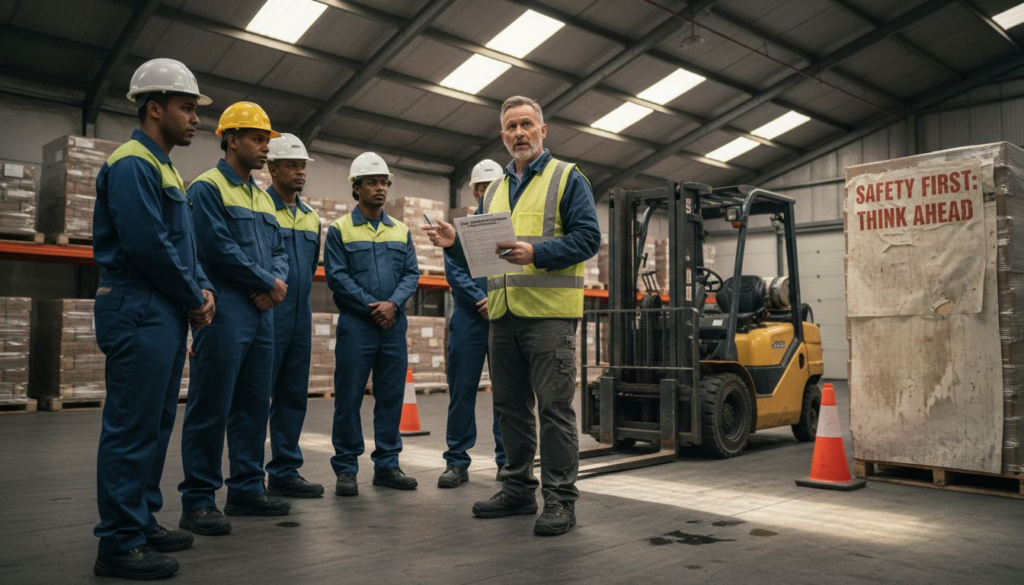

Nearly one in four workplace accidents in American warehouses involve forklifts. For safety managers, this staggering figure highlights the urgent need for OSHA-compliant training that goes far beyond basic instruction. Protecting your team and reducing incidents starts with a focused, step-by-step strategy for assessing hazards, selecting the right resources, and tailoring programs to fit your exact environment. Discover how to build a safer workplace through proven training methods and real-world assessment tips.
| Key Point | Explanation |
|---|---|
| 1. Assess Workplace Hazards | Conduct a thorough risk assessment to identify specific forklift hazards in your operational environment to tailor safety training. |
| 2. Choose OSHA-Compliant Resources | Select training materials aligned with OSHA standards, covering essential operational skills and safety protocols for comprehensive operator education. |
| 3. Organize Tailored Training Sessions | Create customized training sessions combining classroom instruction and practical assessments that reflect actual workplace conditions and risks. |
| 4. Evaluate and Certify Operators | Implement systematic evaluations to assess operator skills, ensuring rigorous documentation and tracking of certification for compliance. |
| 5. Monitor and Update Training | Continuously monitor training effectiveness and operator performance, making necessary updates to improve safety protocols and reduce risks. |
Assessing workplace forklift hazards is a critical first step in developing an effective safety training program that meets OSHA compliance standards. This comprehensive evaluation will help identify potential risks, understand your specific operational environment, and create targeted training strategies to protect workers.
Begin by conducting a thorough workplace risk assessment that examines your entire material handling operation. Walk through your warehouse or facility and systematically document potential hazards such as narrow aisles, uneven surfaces, pedestrian traffic zones, storage rack configurations, and equipment interaction points. Forklift safety requires identifying specific workplace risks before developing training protocols. Pay special attention to areas with high traffic, tight turning radiuses, blind corners, and spaces where multiple equipment types might operate simultaneously.
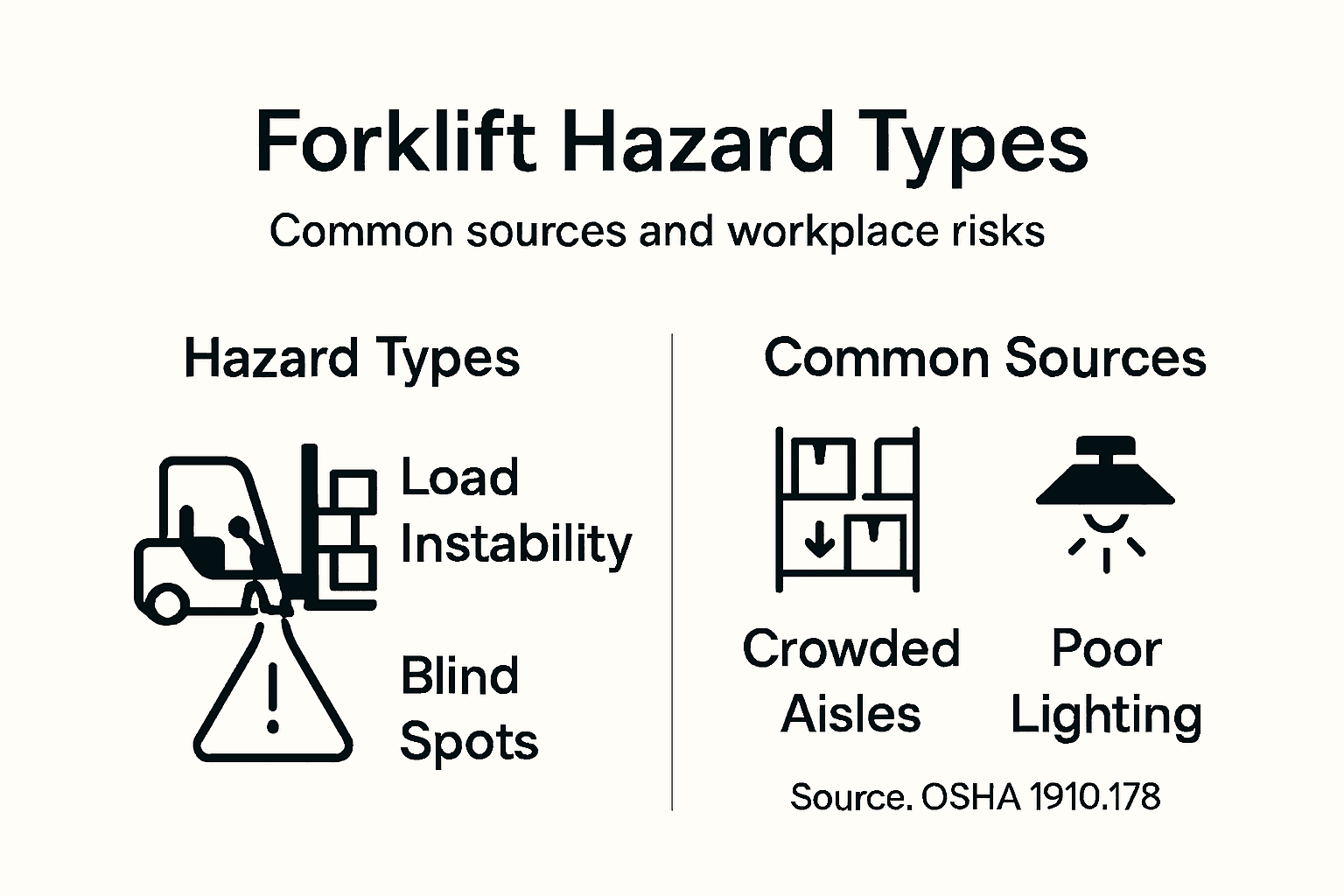
Create a detailed hazard inventory that categorizes risks by type and severity. Document potential scenarios like load instability, operator visibility challenges, surface gradient issues, and environmental conditions that could impact safe forklift operation. This inventory will become the foundation for your customized training curriculum, ensuring that each module directly addresses the unique challenges present in your specific workplace.
Here’s a summary of major forklift hazard types and their typical impact on operations:
| Hazard Type | Common Source | Potential Impact |
|---|---|---|
| Narrow Aisles | Warehouse layout | Restricted maneuvering |
| Uneven Surfaces | Floor damage or construction | Equipment instability |
| Pedestrian Traffic | Shared operator zones | Collision risk |
| Blind Corners | Building design | Visibility challenges |
| Mixed Equipment Use | Multiple vehicle operations | Increased accident rate |
Pro tip: Involve experienced forklift operators and warehouse managers in your hazard assessment to gain practical insights that might not be immediately visible during a standard walkthrough.
Selecting the right OSHA-compliant forklift training resources is crucial for ensuring workplace safety and meeting regulatory requirements. Your goal is to find comprehensive training materials that thoroughly cover operational skills, safety protocols, and legal compliance.
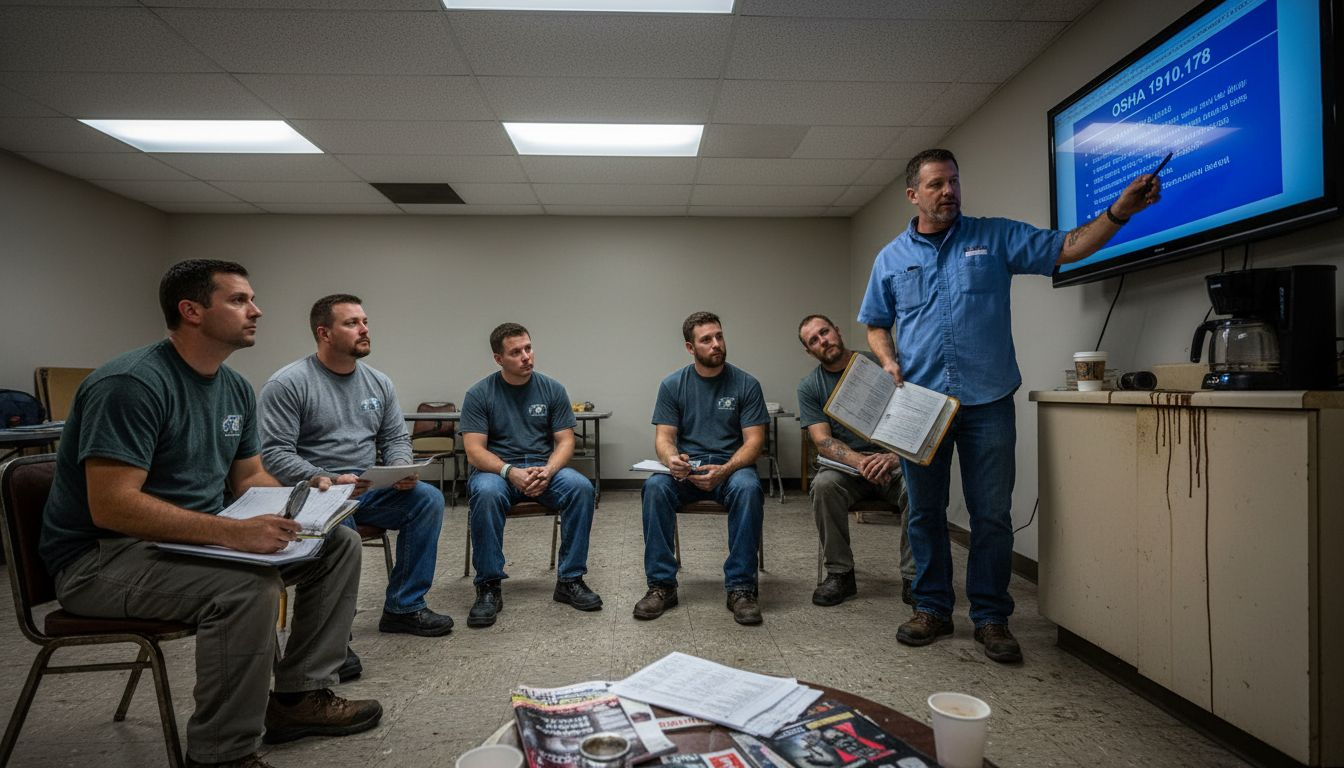
Start by identifying authorized OSHA training resources that meet official safety standards. These resources should comprehensively address critical areas including equipment operation techniques, workplace hazard identification, inspection procedures, and legal compliance requirements. Look for training programs that provide both theoretical knowledge and practical skills assessment, ensuring your operators understand not just how to operate a forklift, but how to do so safely in various workplace environments.
Carefully evaluate training programs against specific OSHA requirements outlined in regulation 1910.178. The selected resources should include detailed modules covering operating instructions, vehicle maintenance protocols, safety regulations, environmental considerations, and hands-on practical training. Prioritize programs that offer comprehensive documentation, structured curricula, and opportunities for both written and practical skills evaluation.
Pro tip: Request sample training materials and verify their alignment with current OSHA standards before making a final selection to ensure maximum effectiveness and compliance.
Designing effective forklift safety training requires a strategic approach that goes beyond generic instruction. Your goal is to create a comprehensive learning experience that addresses the specific risks and challenges unique to your workplace environment.
Begin by developing customized safety training methodologies that directly connect with your workplace risk assessment. This means structuring your training sessions to include both classroom instruction and hands-on practical components that mirror actual workplace conditions. Break down your training into distinct modules covering equipment operation, hazard recognition, workplace navigation, load handling techniques, and emergency response protocols. Incorporate real world scenarios and site specific challenges that operators are likely to encounter during their daily tasks.
Ensure your training program includes comprehensive evaluation methods that assess both theoretical knowledge and practical skills. Design practical assessment scenarios that test operators ability to recognize potential hazards, demonstrate proper equipment handling, and respond appropriately to unexpected situations. Utilize a mix of written examinations, practical skills demonstrations, and performance evaluations to thoroughly validate each operator competency and understanding of safety protocols.
Pro tip: Rotate training facilitators and periodically update training content to prevent monotony and ensure your safety sessions remain engaging and current.
Certifying forklift operators requires a systematic and comprehensive approach to skills assessment that goes beyond basic operational knowledge. Your ultimate goal is to validate each operator’s competence through rigorous practical and theoretical evaluations that meet stringent safety standards.
Begin with comprehensive operator skill evaluations that thoroughly test each participant ability to perform critical operational tasks. These evaluations should include multiple assessment components such as pre operational equipment inspections, safe maneuvering demonstrations, load handling techniques, workplace navigation skills, and emergency response protocols. Create structured checklists that document specific performance criteria for each skill category, ensuring a consistent and objective assessment process.
Document the certification process meticulously to meet OSHA requirements. Your certification records must include the operators full name, specific training and evaluation dates, detailed performance assessment results, and the identity of the qualified evaluator conducting the assessment. Implement a tracking system that flags when recertification or refresher training becomes necessary, typically every three years or when workplace conditions significantly change. Maintain comprehensive documentation that demonstrates each operators ongoing competence and commitment to workplace safety.
Pro tip: Create a digital tracking system that automatically alerts managers about upcoming recertification dates and tracks individual operator performance trends.
Effective safety management requires continuous evaluation and improvement of your forklift training program. Your objective is to create a dynamic system that consistently monitors operator performance, identifies potential risks, and proactively updates safety protocols.
Ongoing performance monitoring systems are critical for maintaining workplace safety and regulatory compliance. Develop a comprehensive tracking mechanism that documents individual operator performance, incident reports, near misses, and skills assessments. Implement quarterly review sessions where training managers analyze performance data to identify trends, potential skill gaps, and areas requiring additional training or protocol modifications.
Regularly schedule safety audits that go beyond standard documentation. These audits should include direct observations of operators in their working environment, analysis of equipment maintenance records, and evaluation of how effectively current training protocols translate into real world safety practices. Create a feedback loop that allows operators to contribute insights about potential safety improvements, ensuring your training program remains adaptive and responsive to changing workplace conditions.
This table compares key methods for monitoring forklift training effectiveness:
| Monitoring Method | Benefits | Recommended Frequency |
|---|---|---|
| Incident Tracking | Identifies recurring safety issues | Continuous |
| Skills Reassessment | Highlights operator skill gaps | Quarterly |
| Safety Audits | Ensures regulatory compliance | Annually or bi-annually |
| Operator Feedback | Uncovers site-specific concerns | Ongoing |
Pro tip: Implement a digital dashboard that provides real time tracking of operator performance metrics and automatically flags areas requiring immediate attention or additional training.
Implementing effective forklift safety training requires addressing specific workplace hazards and ensuring every operator is fully certified. If your goal is to meet OSHA standards while protecting your team, you need a trusted partner that understands these exact challenges. At Forkliftacademy.com, we specialize in delivering comprehensive training solutions that cover hazard assessment, tailored safety sessions, and operator certification all designed for real-world effectiveness.
Explore our extensive Forklift Safety Archives for valuable resources and start guiding your team toward safer operations today. Ready to certify your operators with confidence? Visit Forklift Certification Archives for tailored programs and evaluation options. Don’t wait to build a safer workplace—get started now at https://forkliftacademy.com and take the vital next step on your compliance journey.
Begin by conducting a thorough risk assessment of your material handling operations. Walk through your facility and document potential hazards such as narrow aisles, uneven surfaces, and pedestrian traffic zones. This will help you understand specific risks and tailor your safety training accordingly.
Focus on training materials that cover essential topics such as operational skills, safety protocols, and legal compliance. Ensure the program includes both theoretical knowledge and practical skills assessments to prepare your operators for real-world challenges in your specific environment.
Design your training sessions to integrate classroom instruction with hands-on practice that reflects your workplace conditions. Create distinct modules covering areas such as load handling and emergency response, and include real-world scenarios that operators might face during their work.
Conduct comprehensive skill evaluations that assess operators in areas such as equipment inspection, safe maneuvering, and load handling techniques. Use structured checklists for consistent assessments and maintain detailed records of the evaluation process to ensure compliance with OSHA requirements.
Develop a tracking system to document individual operator performance, incidents, and skills assessments. Schedule regular safety audits and review sessions to identify trends in operator performance, and implement feedback from operators to continuously enhance your training program and safety protocols.
Involving seasoned forklift operators can provide valuable insights that may not be evident during a standard walkthrough. Their practical experience can help identify hidden risks and contribute to a more comprehensive training program tailored to your workplace’s specific challenges.