
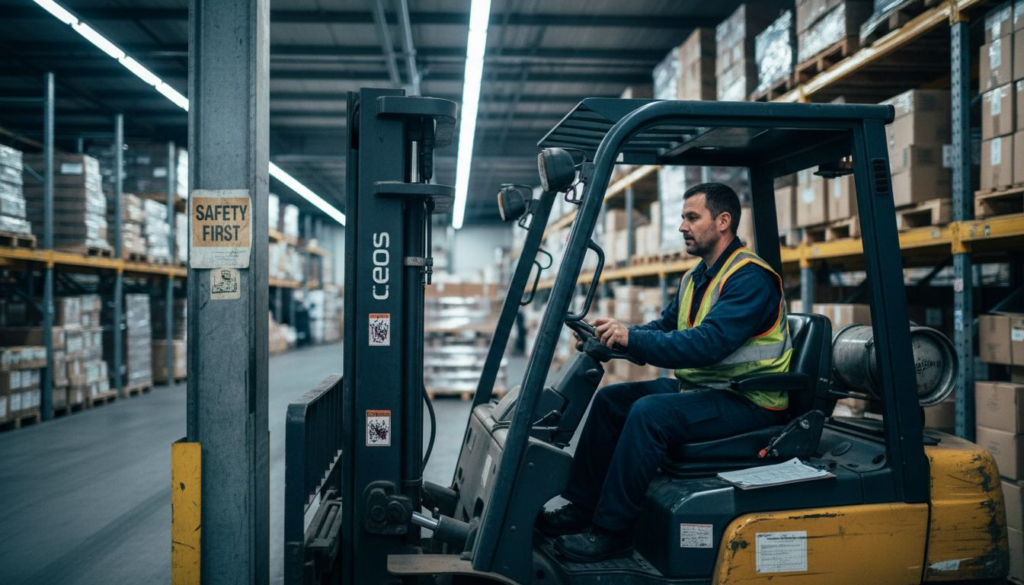

Every warehouse manager knows that theory alone cannot prepare operators for the split-second decisions needed on the floor. Practical, OSHA-compliant forklift training matters because only real, hands-on experience builds muscle memory, quick reactions, and true confidence when something unexpected happens. This article highlights the value of direct equipment interaction and explains how hands-on methods not only meet American OSHA standards but also create safer, more capable teams for your United States facility.
| Point | Details |
|---|---|
| Hands-On Training Is Essential | Operators need practical experience to develop skills and confidence beyond classroom instruction. |
| OSHA Compliance Requires Both Components | Complete training includes formal instruction and hands-on practice for regulatory compliance. |
| Investing in Training Reduces Risks | Comprehensive hands-on training can significantly decrease accident rates and associated costs. |
| Regular Refresher Training Is Necessary | Operators must undergo refresher training every three years to maintain safety standards and skills. |
Hands-on forklift training is the practical, real-world component where operators actually interact with equipment in a controlled environment. This differs from classroom instruction because trainees gain direct experience operating forklifts rather than simply learning theory.
The core purpose of hands-on training is building the skills that classroom learning cannot teach alone. Direct interaction with equipment allows trainees to develop muscle memory, reaction timing, and the ability to respond to real-world obstacles and challenges.
During hands-on training, your operators practice essential tasks in a safe, supervised setting:
These aren’t simulated scenarios. Your team members are in the operator’s seat, with actual controls under their hands.
Theory alone doesn’t prepare an operator for the moment their load shifts slightly during a turn, or when they need to navigate around a pallet stack in limited visibility. Hands-on training builds confidence because operators experience real feedback from equipment and learn problem-solving in the moment.
This practical experience also reduces costly accidents. When operators practice proper stacking techniques, load balancing, and spatial awareness under supervision, they internalize safe habits rather than just memorizing OSHA regulations.
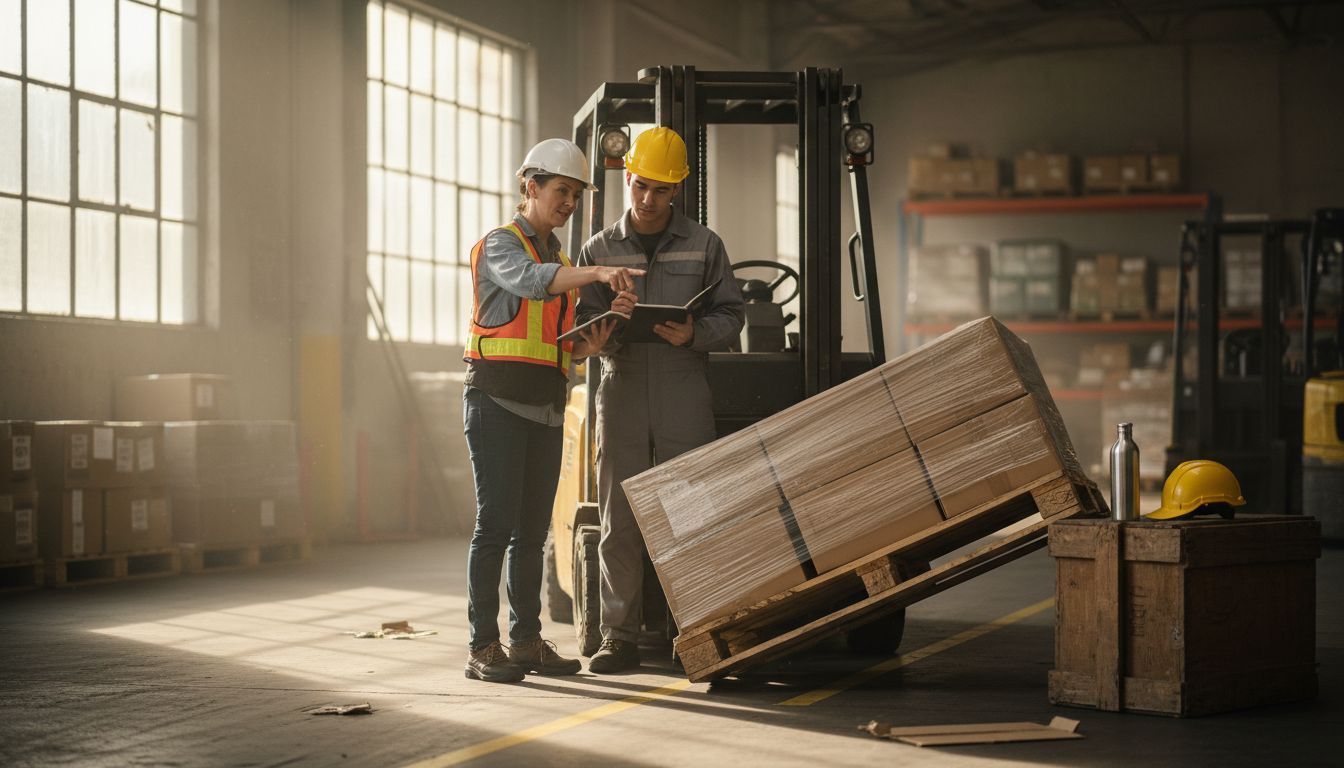
OSHA doesn’t leave this to chance. The regulation requires that every forklift operator receive formal instruction plus hands-on training and evaluation before operating equipment independently. This dual requirement exists because both components address different learning needs.
Your facility’s compliance depends on demonstrating that operators completed both classroom instruction and practical operation in a structured program.
Hands-on training transforms operators from certificate holders into competent, confident workers who can respond safely to warehouse conditions, not just theoretical scenarios.
When selecting a training provider, verify they structure sessions around your specific equipment types and warehouse layout challenges. Generic training might meet compliance minimums, but customized hands-on sessions prepare your team for your actual environment.
Pro tip: Record which operators trained on specific equipment types, as OSHA expects operators to demonstrate competency on each model your facility uses—not just one generic forklift type.
Your facility faces a real choice: online certification programs or hands-on training, or a combination of both. Each approach has distinct advantages and limitations that directly impact operator competency and workplace safety.
Online certification focuses on theory, regulations, and knowledge assessment. Operators complete modules covering OSHA requirements, safety protocols, and equipment specifications from a computer. This method works well for scheduling flexibility and covering compliance basics quickly.
Hands-on training puts operators in actual forklifts under instructor supervision. They navigate real obstacles, feel equipment responses, and develop the reflexes that matter when something unexpected happens on the warehouse floor.
| Aspect | Online Certification | Hands-On Training |
|---|---|---|
| Knowledge Gain | Strong on theory and regulations | Strong on practical skill development |
| Time Commitment | 1-3 hours; flexible scheduling | 4-8 hours; scheduled in-person |
| Equipment Interaction | None; videos and simulations only | Real equipment operation |
| Operator Readiness | Passes test but lacks experience | Confident, experienced operator |
| OSHA Compliance | Theory portion only | Theory plus practical requirement |
OSHA regulations require both formal instruction and practical training for every operator. Online-only programs satisfy the classroom portion but leave a critical gap. Your operators need hands-on evaluation to meet the full regulatory requirement.
Many facilities use a blended approach: online modules for knowledge foundation, then hands-on sessions for practical skill validation. This combination saves time while ensuring compliance and operator competency.
An operator might score 95% on an online test but freeze when their load shifts during a turn. Hands-on training builds situational confidence because operators practice responses to real-world variables: uneven loads, tight warehouse aisles, communication with spotters, and equipment quirks.
Online training doesn’t replicate the physical feedback loop. Your operators need to feel how a forklift responds when turning with a loaded pallet at height, or navigating around fixed obstacles.
The safest operators combine theoretical knowledge from classroom instruction with practical competency developed through hands-on training under professional supervision.
Online certification gets operators certified quickly. Hands-on training gets them ready to work safely without creating liability exposure for your facility.
Pro tip: Schedule hands-on sessions shortly after operators complete online modules while knowledge is fresh, then conduct quarterly refresher hands-on evaluations to maintain competency as equipment or warehouse layouts change.
OSHA doesn’t give facilities much wiggle room when it comes to forklift operator training. The regulation is clear: every operator must complete formal instruction, practical hands-on training, and evaluation before operating equipment independently.
Ignoring this requirement creates serious liability. If an operator causes an accident and your facility skipped proper training documentation, OSHA fines escalate quickly, and your legal exposure multiplies.
OSHA requires three components for complete forklift training: formal classroom instruction, practical hands-on training at your worksite, and documented evaluation of operator performance.
Each component serves a specific purpose:
Here is a summary of OSHA forklift training requirements at a glance:
| Training Component | Main Focus | Who Delivers | Documentation Required |
|---|---|---|---|
| Formal Classroom Instruction | Regulations and theory | Certified instructor | Attendance and test results |
| Hands-On Practical Training | Real equipment skill development | On-site instructor | Skill checklist by equipment |
| Evaluation | Safe operation confirmation | Qualified evaluator | Signed evaluation records |
Your facility must maintain training records showing what each operator completed and when. This documentation proves compliance during OSHA inspections and protects your business if an incident occurs.
Hands-on training must be site-specific. Training on a counterbalance forklift doesn’t automatically qualify an operator for your reach trucks or pallet jacks. Each equipment type requires separate practical evaluation.
Training doesn’t happen once. OSHA mandates that operators receive refresher training every three years, plus additional training after incidents or significant changes to equipment or warehouse procedures.
Many facilities wait until the three-year mark, then scramble to schedule refresher sessions. Plan ahead and schedule refresher training before certifications expire to avoid operational disruptions.
OSHA requires employers to ensure operators can safely operate forklifts independently, which means documentation of completed training, hands-on evaluation, and site-specific competency verification.
Your facility’s training approach should include:
A compliance oversight now costs far less than OSHA fines, retraining mandates, or liability from an incident caused by an undertrained operator.
Pro tip: Schedule refresher training 60 days before operator certifications expire, and use training refresher sessions as opportunities to address any unsafe habits observed since the initial certification.
Practical training directly prevents the accidents that keep warehouse managers awake at night. When operators practice real-world scenarios under supervision, they develop instincts that theory alone cannot build.
The difference is measurable. Facilities that invest in comprehensive hands-on training see fewer tip-overs, collisions, and load-related incidents. This isn’t coincidence—it’s the result of operators practicing dangerous situations in a controlled environment before they happen on your warehouse floor.
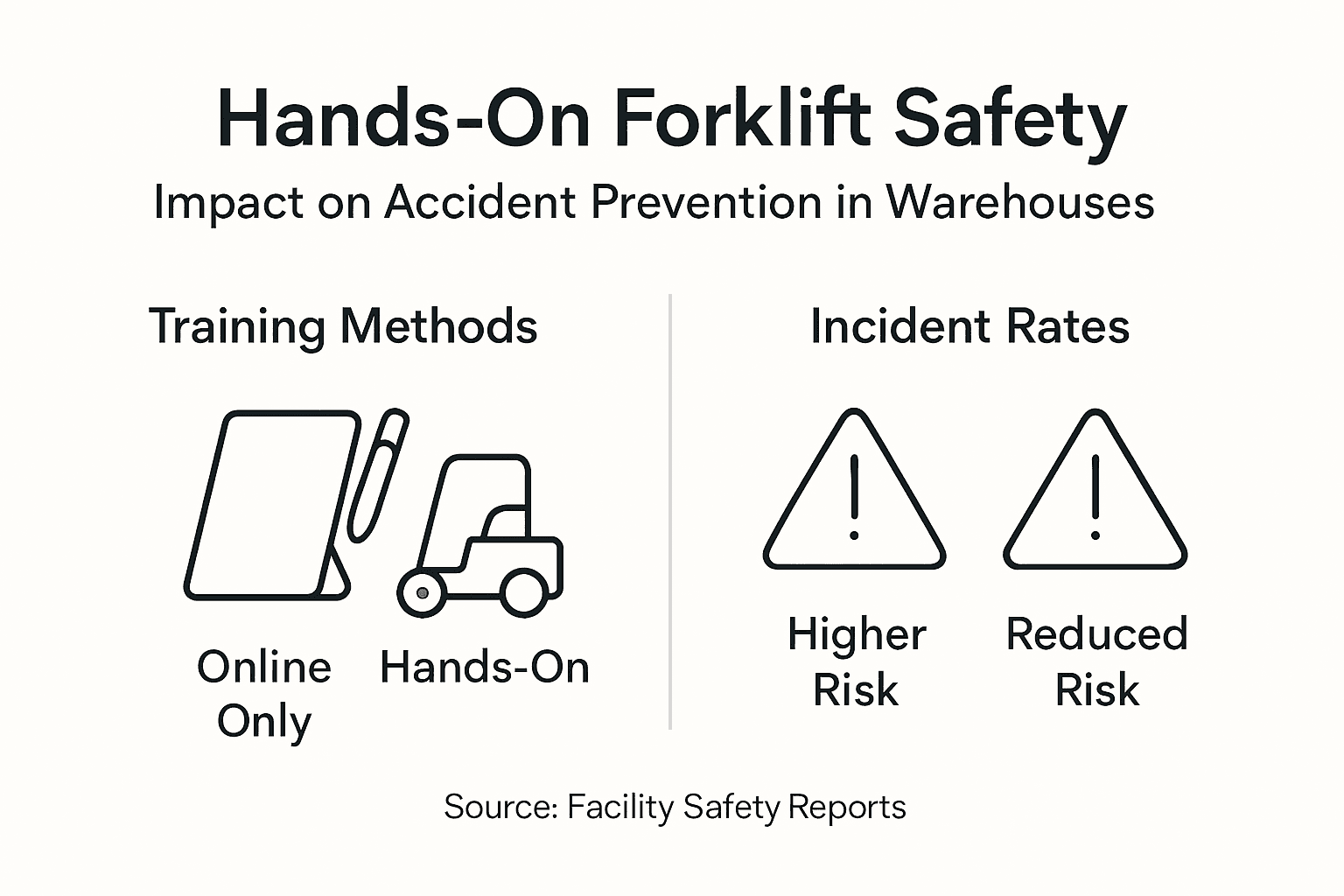
Hands-on training reduces accidents by allowing operators to practice maneuvering in challenging conditions, including slopes, uneven surfaces, and confined spaces. When operators repeat proper techniques under supervision, their bodies remember the correct movements when pressure is high.
This is why a certification test alone doesn’t prevent accidents. An operator might pass a written exam but freeze when they encounter a load shift during a turn. Practical experience teaches the responses that keep people safe when things go wrong.
Practical training addresses the most common forklift accidents:
Operators trained only through online modules or brief instruction often lack confidence navigating complex warehouse situations. This hesitation or uncertainty creates dangerous moments. Practical training builds genuine confidence because operators have actually performed required tasks successfully.
An operator who has practiced backing in tight spaces 50 times under supervision approaches real backing situations with calm competence, not anxiety.
Practical training works because it teaches operators to recognize hazards, practice safe responses, and develop the muscle memory and confidence to handle real-world warehouse conditions safely.
Emergencies happen fast. Practical training teaches operators to respond to load shifts, brake failures, and other emergencies before they face them for real. This emergency preparedness transforms panicked reactions into controlled, safe responses.
Operators who practice emergency procedures in training know exactly what to do when their load starts to shift—they don’t hesitate or make decisions that cause accidents.
Track these safety metrics before and after implementing comprehensive hands-on training:
Most facilities report 40-60% reductions in forklift-related incidents within six months of implementing structured hands-on training programs.
Pro tip: Document specific unsafe behaviors or near-misses observed during hands-on training, then use those real examples in team safety meetings to reinforce why practical training matters and build buy-in from operators.
Hands-on forklift training requires upfront investment. But comparing the cost of training to the cost of accidents reveals why this expense is non-negotiable for warehouse managers serious about safety.
A single forklift accident can cost your facility tens of thousands of dollars in medical expenses, equipment damage, downtime, and potential OSHA fines. Comprehensive training prevents these incidents, making the investment return quickly.
Hands-on training programs cost more upfront than online-only certification. A facility might pay $500-$800 per operator for comprehensive hands-on sessions, compared to $50-$150 for online courses alone.
But comprehensive hands-on forklift training reduces costly accidents and operational downtime, producing significant long-term savings. The math becomes clear when you factor in what accidents actually cost.
A single forklift incident creates multiple expenses:
A typical forklift accident totals $15,000-$80,000 when all costs are calculated. Your facility needs just one major accident to justify years of training investment.
Compare training investment and accident costs side by side:
| Expense Category | Typical Cost Per Operator | Impact on Facility Budget |
|---|---|---|
| Hands-On Training | $500–$800 | Upfront investment, long-term ROI |
| Online-Only Certification | $50–$150 | Lower cost, higher risk exposure |
| Single Accident (avg.) | $15,000–$80,000 | Major unplanned expense |
| Insurance Premium Increase | 10–25% over 3–5 years | Ongoing higher operating costs |
Facilities often cut corners in ways that eliminate safety benefits:
These shortcuts save a few hundred dollars upfront but create massive liability exposure.
Here’s how to justify hands-on training costs to leadership:
Most facilities prevent multiple incidents annually through proper training, producing ROI of 300-500%.
Comprehensive hands-on training costs more upfront but prevents costly accidents and compliance violations that cost far more when incidents occur.
Don’t shortcut these critical training components:
Cutting corners on training quality eliminates safety benefits and increases liability if accidents occur.
Pro tip: Bundle initial training with scheduled refresher sessions upfront at discounted rates, then spread costs across budget years rather than absorbing full training expenses in one year.
The article highlights a critical challenge faced by warehouse managers and safety officers: the gap between theoretical forklift knowledge and real-world operator competency. Without hands-on training, operators may lack confidence and essential skills to navigate complex, dynamic warehouse environments safely. Practical experience in maneuvering equipment, responding to emergencies, and mastering site-specific equipment builds muscle memory and reduces costly incidents. Ignoring OSHA’s requirement for comprehensive training risks fines, liability, and workplace accidents.
At Forkliftacademy.com, we address these needs with tailored solutions designed to bridge theory and practice while ensuring full OSHA compliance. Our extensive network provides onsite hands-on training led by certified instructors who focus on your specific equipment and operational challenges. Combine this with our flexible online courses to equip your team with both knowledge and skill quickly and effectively. Visit our Forklift Safety Archives to learn how our training programs enhance real-world safety outcomes and reduce incident rates.
Ready to transform your forklift operators into confident professionals who keep your workplace safe? Explore our Forklift License Archives for certification options and visit our main site Forkliftacademy.com now to schedule hands-on training customized for your team. Don’t wait until an accident forces costly retraining and fines act now to protect your employees and your business with training that delivers real results.
Hands-on forklift training is the practical component of forklift operation training where operators interact with actual equipment in a controlled environment, building skills that theory alone cannot teach.
Hands-on training is crucial because it helps operators develop muscle memory, reaction timing, and the ability to respond to real-world challenges, ultimately reducing accidents and improving safety.
Hands-on training focuses on practical skill development with real equipment, while online certification emphasizes theory and knowledge assessment without actual equipment interaction.
OSHA requires every forklift operator to complete formal instruction, hands-on training, and evaluation before operating equipment independently, ensuring both theoretical knowledge and practical skill competency.