 Skip to content
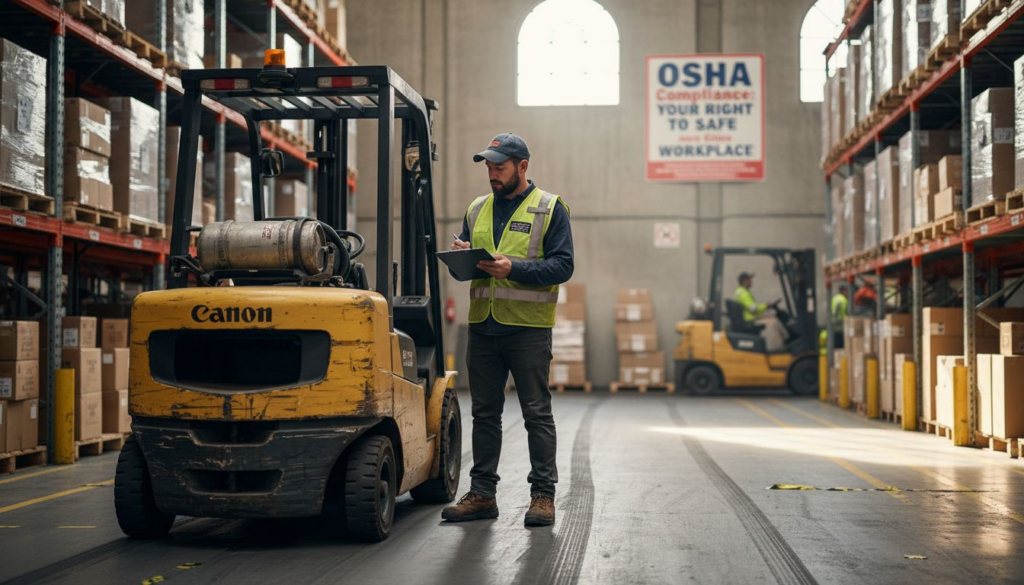

Meeting strict OSHA standards for forklift training is more than a yearly checklist for American warehouse managers. In 2025, evolving regulations demand modern safety protocols and ongoing skills verification. Employers are now required to provide refresher training at least every three years or sooner if incidents occur, with training tailored to workplace-specific hazards and equipment. Staying updated on these changes helps protect employees while avoiding costly compliance penalties.
| Point | Details |
|---|---|
| Modern Training Standards | Forklift training in 2025 emphasizes a holistic approach that includes technical competency, psychological preparedness, and continuous learning. |
| Specialized Certifications | Certifications have become more specialized to reflect advanced technological requirements and safety protocols in various industrial environments. |
| Rigorous Evaluation Processes | Employers must implement ongoing performance reviews and ensure comprehensive documentation of operator training and certifications. |
| OSHA Compliance | Compliance with OSHA standards is essential for workplace safety and requires detailed record-keeping, equipment maintenance, and continuous training. |
Forklift training standards represent more than just regulatory requirements – they are comprehensive safety protocols designed to protect workers and optimize workplace efficiency. In 2025, these standards have evolved to address emerging technological advancements and complex industrial environments. Forklift training standards now encompass a holistic approach to operator preparation, risk management, and operational excellence.
The core elements of forklift training standards in 2025 focus on several critical dimensions:
Modern training standards recognize that operator competency extends beyond basic mechanical skills. They now require a multidimensional approach that combines technical knowledge, psychological readiness, and continuous learning. Employers must implement rigorous evaluation processes that assess not just theoretical understanding, but practical application in complex, dynamic work environments.
Here’s how forklift training standards in 2025 differ from earlier approaches:
| Aspect | Traditional Training | Modern 2025 Standards |
|---|---|---|
| Focus | Basic operation | Holistic safety protocols |
| Technology Integration | Minimal digital content | Advanced digital systems |
| Evaluation | One-time assessment | Ongoing performance review |
| Operator Preparedness | Mechanical skills only | Psychological readiness too |
| Recertification Frequency | Every few years | Regular, scheduled updates |
Certification Requirements have become more sophisticated, demanding:
Forklift training in 2025 is not about completing a checklist – it’s about creating a culture of safety and operational excellence.
Pro tip: Invest in comprehensive training programs that go beyond minimum compliance requirements and focus on developing well-rounded, safety-conscious forklift operators.
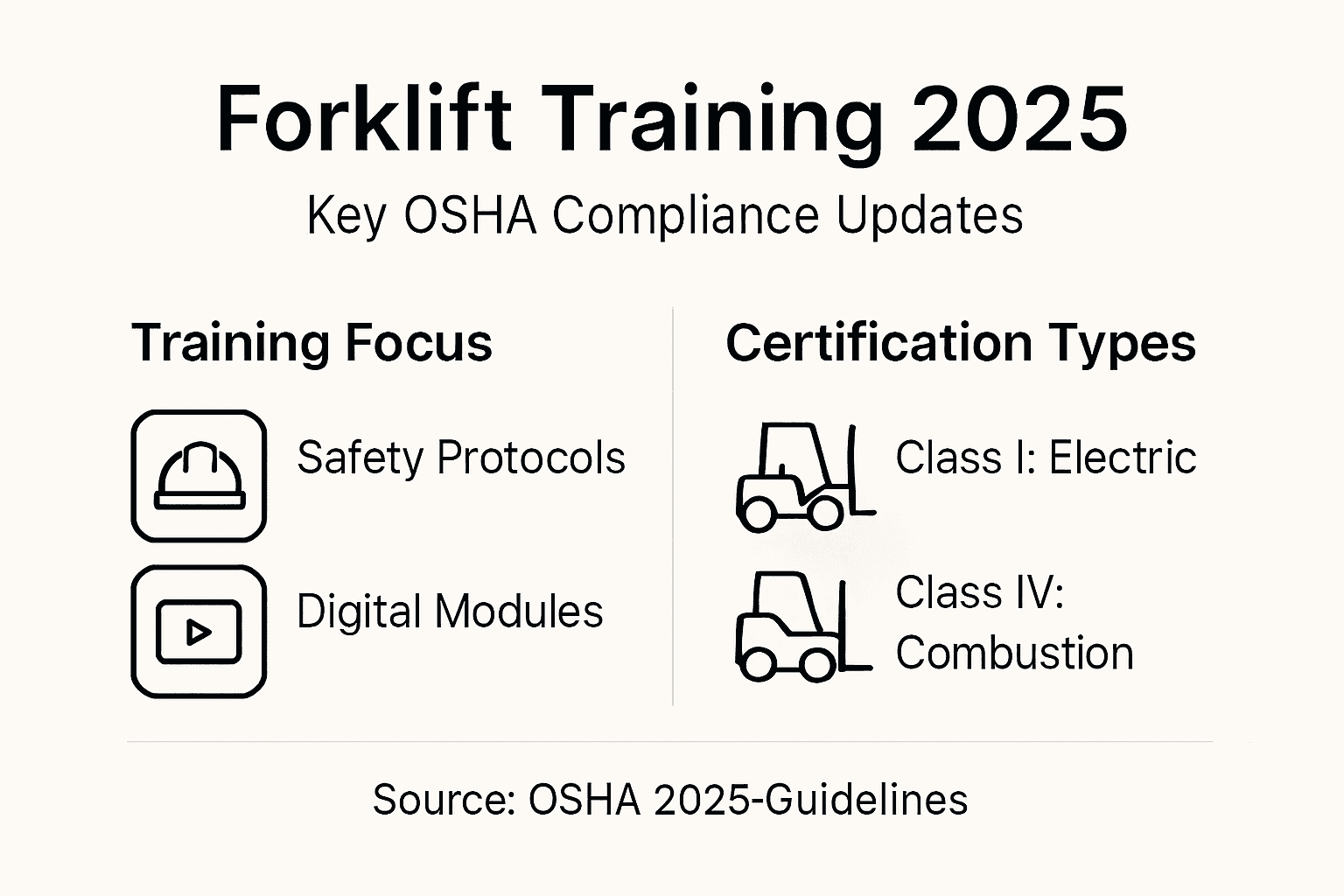
Forklift certifications in 2025 have become increasingly specialized, reflecting the complexity of modern workplace environments and technological advancements. Types of forklift certifications now encompass a wide range of specialized training programs designed to address specific industrial needs and safety requirements.
The primary categories of forklift certifications include:
Each certification type requires specific training modules that go beyond basic operational skills. These comprehensive programs now integrate advanced safety protocols, technological competency, and industry-specific operational techniques. Employers must ensure operators not only understand mechanical controls but also develop critical thinking skills for complex workplace scenarios.
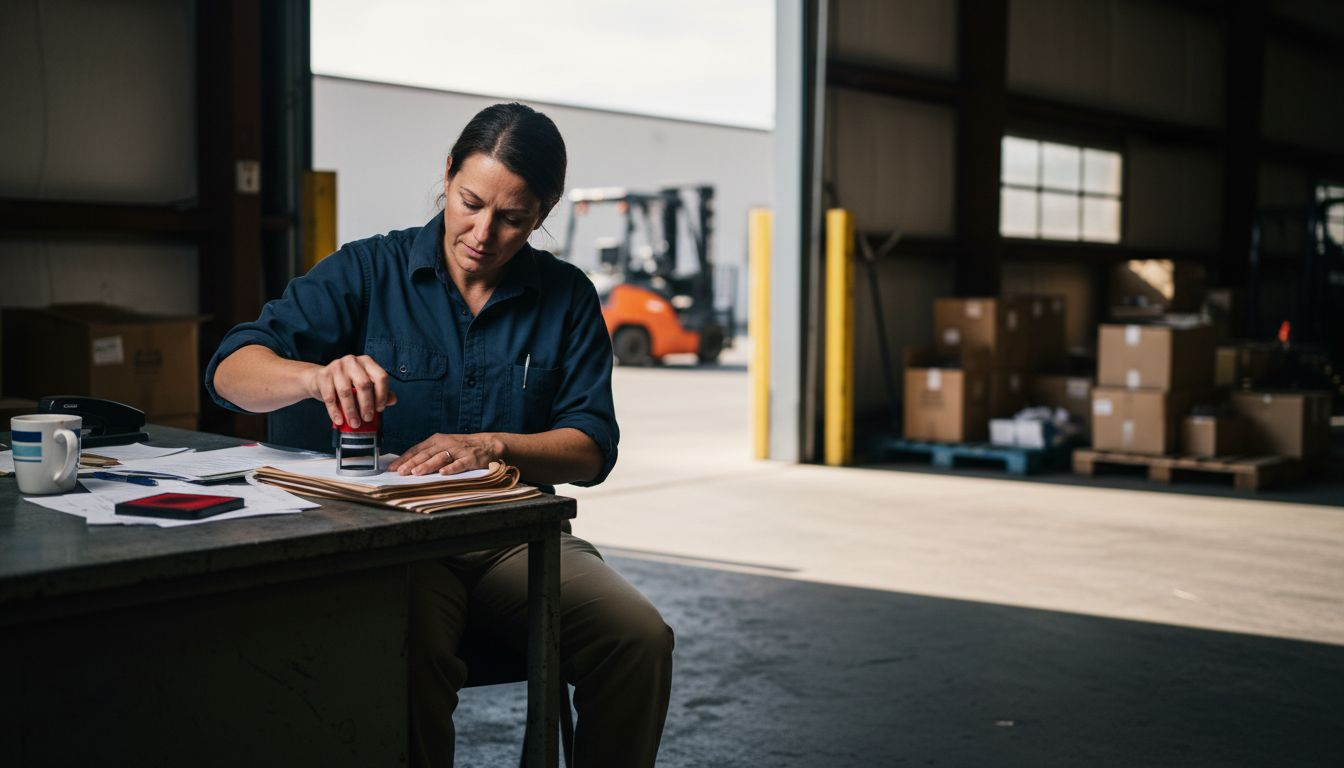
Below is a quick reference guide to forklift certification types and their workplace environments:
| Certification Class | Typical Equipment Description | Common Workplaces |
|---|---|---|
| Class I | Electric rider forklifts | Indoor warehouses |
| Class IV | Engine trucks, cushion tires | Manufacturing floors |
| Class V | Engine trucks, pneumatic tires | Outdoor shipping areas |
| Class VII | Rough terrain forklifts | Construction/agriculture |
Certification Requirements have become increasingly rigorous, demanding:
Modern forklift certification is a dynamic process that transforms operators from mere machine handlers to safety-conscious workplace professionals.
Pro tip: Invest in comprehensive certification programs that provide cross-training across multiple forklift classes to maximize operator versatility and workplace value.
The forklift certification process has evolved into a comprehensive, multi-stage approach that goes far beyond traditional training methods. Forklift evaluation processes now demand rigorous assessment of both theoretical knowledge and practical skills, ensuring workplace safety and operational excellence.
The certification process typically involves several critical stages:
Employer responsibilities in the certification process have become increasingly complex. Organizations must now implement a structured evaluation framework that includes:
Modern certification standards emphasize not just technical proficiency, but also critical thinking, situational awareness, and adaptive problem-solving skills. Employers must develop evaluation methods that assess an operator’s ability to make split-second decisions in dynamic workplace environments.
Forklift certification is no longer a simple checkbox – it’s a comprehensive process of developing safety-conscious, highly skilled professionals.
Pro tip: Implement a digital tracking system to monitor individual operator certifications, ensuring no critical training deadlines are missed and maintaining consistent workplace safety standards.
The landscape of forklift safety regulations continues to evolve, with OSHA compliance standards becoming increasingly stringent and comprehensive. Employers must navigate a complex web of legal requirements that extend far beyond simple training protocols, encompassing holistic workplace safety management and proactive risk mitigation.
Key legal responsibilities for employers include:
OSHA regulations under 29 CFR 1910.178 establish clear legal mandates that organizations must follow. These standards outline specific expectations for:
The potential consequences of non-compliance can be severe, with penalties ranging from substantial financial fines to potential legal action and operational shutdowns. Modern organizations must view OSHA compliance not as a bureaucratic requirement, but as a critical investment in workplace safety and operational integrity.
Legal compliance is not just about avoiding penalties – it’s about creating a culture of safety that protects workers and enhances organizational performance.
Pro tip: Develop a comprehensive digital compliance tracking system that automatically monitors training deadlines, certification status, and documentation requirements to ensure ongoing OSHA regulatory adherence.
Forklift safety compliance is fraught with potential missteps that can expose organizations to significant legal and operational risks. Forklift safety standards reveal numerous critical areas where businesses frequently fall short of regulatory requirements.
Common compliance pitfalls include:
Many organizations unknowingly expose themselves to significant risks through seemingly minor oversights. The most critical compliance vulnerabilities typically manifest in:
The financial and legal consequences of non-compliance can be devastating. Penalties can range from substantial fines to potential operational shutdowns, making proactive risk management essential for organizational survival.
Compliance is not about perfection, but about demonstrating a genuine commitment to workplace safety and continuous improvement.
Pro tip: Implement a comprehensive digital compliance management system that provides real-time tracking of training status, certification deadlines, and regulatory updates to minimize compliance risks.
Ensuring compliance with the evolving forklift training standards and OSHA regulations can feel overwhelming. This article highlights critical challenges like comprehensive operator evaluation, technological integration, and continuous safety training that every employer must address. You need to build not just mechanical skill but also situational awareness and ongoing certification management to protect your workforce and avoid costly penalties.
Take control of your compliance journey today with expert solutions from Forkliftacademy.com. Our extensive OSHA-certified forklift training and certification programs are tailored for 2025 requirements. Whether you need individual certification or comprehensive business training plans, we provide practical tools, digital tracking, and onsite options. Start now by exploring our Forklift Certification Archives – Top Osha Forklift Certification and strengthen your team’s safety culture. Learn more about maintaining best practices in Forklift Safety Archives – Top Osha Forklift Certification to keep pace with regulatory changes.
Don’t wait for compliance risks to escalate. Visit https://forkliftacademy.com and secure your team’s expertise and certification today.
Forklift training standards in 2025 are comprehensive safety protocols that focus on technical competency, safety protocols, technological integration, and psychological preparedness to ensure operator safety and workplace efficiency.
Modern forklift training standards emphasize a holistic approach that includes ongoing performance reviews, advanced digital technology training, and psychological readiness, unlike traditional methods that focused mainly on basic operation skills.
In 2025, forklift certifications include various classes such as Class I: Electric Motor Rider Trucks, Class II: Electric Motor Narrow Aisle Trucks, and Class VII: Rough Terrain Forklift Trucks, each requiring specific training modules and hands-on evaluation.
Employers are responsible for maintaining training documentation, ensuring continuous training and skills reassessment, conducting regular hazard assessments, and keeping detailed records of equipment maintenance to comply with OSHA regulations.




 Optimized by Seraphinite Accelerator