


Over a thousand workplace injuries each year are linked to inadequate forklift training across American job sites. Ensuring every operator receives high quality instruction keeps businesses running safely and smoothly. Forklift trainers shoulder the vital task of turning safety rules into everyday practice, protecting both workers and companies from costly accidents. Discover what responsibilities set expert American forklift trainers apart and why their methods are crucial for top workplace safety.
| Point | Details |
|---|---|
| Forklift Trainer Responsibilities | Forklift trainers are crucial for workplace safety, developing training programs that adhere to OSHA standards and evaluate operator competence. |
| OSHA Requirements | Trainers must possess recognized credentials and extensive knowledge to deliver effective safety training and meet regulatory standards. |
| Training Procedures | A comprehensive approach including theoretical and hands-on components helps operators develop practical skills essential for safe equipment operation. |
| Legal Liabilities | Trainers must carefully document training and evaluations to mitigate legal risks and ensure compliance with safety regulations. |
Forklift trainers play a critical role in workplace safety by ensuring operators understand and implement proper equipment operation techniques. These professionals are responsible for developing comprehensive training programs that meet OSHA safety standards and prepare operators to handle industrial vehicles with precision and care.
The core responsibilities of a forklift trainer extend far beyond basic instruction. They must possess deep technical knowledge and practical experience in forklift operations, enabling them to effectively evaluate operator competence across various workplace environments. This involves creating structured training modules that cover multiple critical components:
Successful forklift trainers must demonstrate exceptional communication skills, technical expertise, and a commitment to maintaining the highest safety standards. They transform theoretical knowledge into practical skills, ensuring that operators can confidently and safely navigate complex industrial settings while minimizing workplace accidents and potential equipment damage.
OSHA establishes rigorous standards for forklift trainers to ensure workplace safety and operator competence. Comprehensive training programs must be developed and implemented by qualified professionals who possess the necessary knowledge, experience, and skills to effectively educate and evaluate forklift operators.
The regulatory requirements for forklift trainers are extensive and multifaceted. Trainers must demonstrate their expertise through recognized credentials or proven professional experience, meeting specific qualifications that validate their ability to deliver high-quality safety instruction. These qualifications typically include:
Trainers are responsible for developing a structured training curriculum that encompasses both theoretical instruction and hands-on practical training. This comprehensive approach ensures that forklift operators not only understand safety principles but can also apply them effectively in real-world industrial environments. The ultimate goal is to create a training framework that minimizes workplace accidents, promotes operator confidence, and maintains the highest standards of industrial safety.

Forklift trainers play a pivotal role in developing comprehensive safety training programs that meet rigorous industry standards. Their core responsibilities extend beyond simple instruction, encompassing a structured approach to educating and evaluating forklift operators in complex industrial environments.
The training procedure involves a multifaceted approach that includes both theoretical and practical components. Trainers must design and implement comprehensive instruction modules that cover critical aspects of forklift operation and workplace safety. Key elements of this training procedure include:
Successful training goes beyond mere technical instruction. Trainers must create an immersive learning experience that transforms theoretical knowledge into practical skills, ensuring operators can confidently and safely navigate complex industrial settings. This approach requires a deep understanding of equipment mechanics, safety regulations, and effective teaching methodologies that can adapt to diverse workplace environments and individual learning styles.
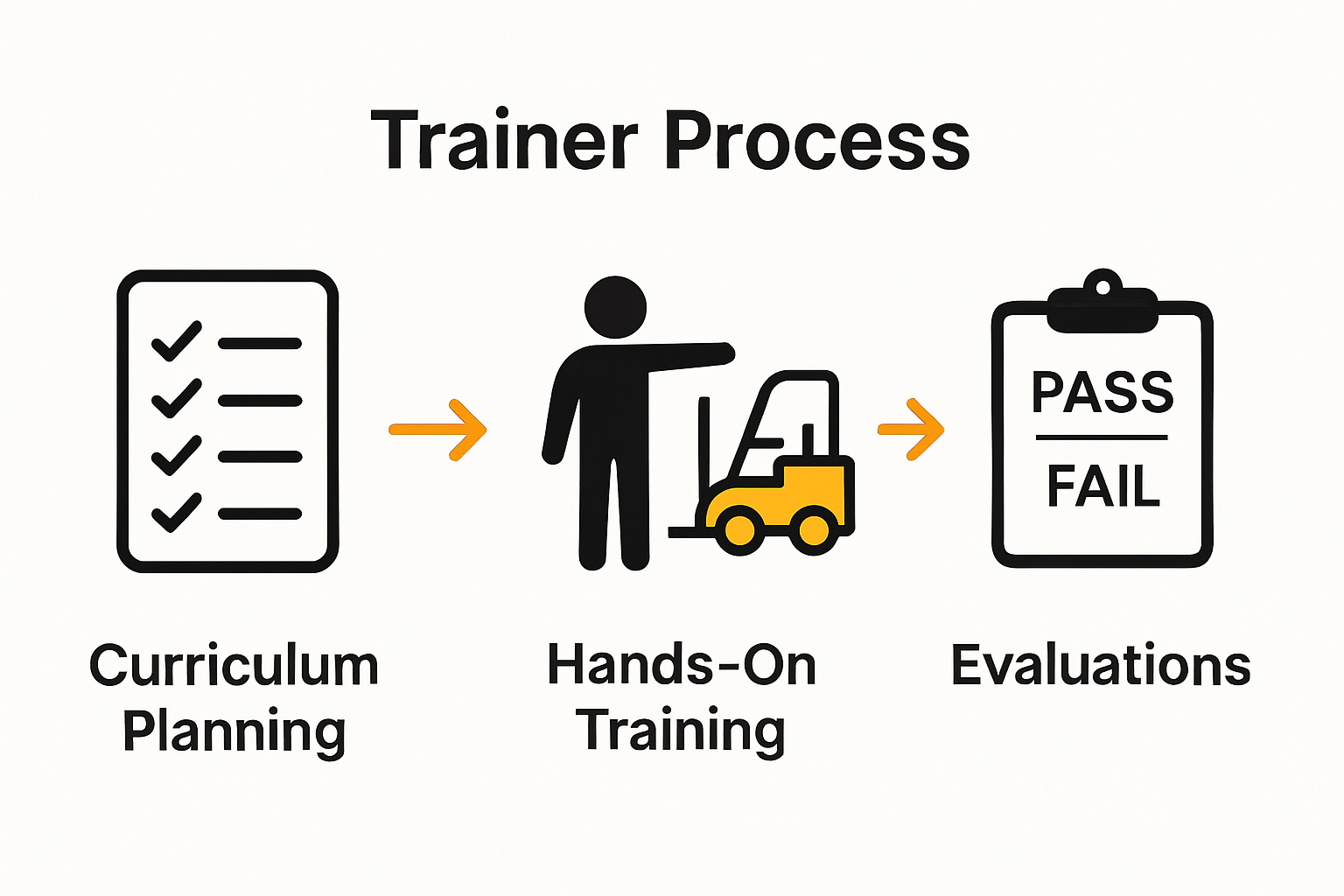
Forklift trainers shoulder the critical responsibility of conducting comprehensive performance evaluations that ensure operator competence and workplace safety. These evaluations are not merely procedural checkboxes, but sophisticated assessments that determine an operator’s ability to safely navigate complex industrial environments.
The certification process involves multiple key components that systematically assess an operator’s skills and knowledge. Trainers must meticulously document and validate each operator’s capabilities through:
Regulatory guidelines mandate periodic reassessment, typically requiring comprehensive evaluations at least once every three years. These rigorous certification processes protect not just individual workers, but entire workplace ecosystems by ensuring that only fully qualified operators interact with potentially dangerous industrial equipment. Trainers must remain vigilant, adapting their evaluation techniques to evolving workplace technologies and safety standards, while maintaining the highest levels of professional accountability and precision.
Forklift trainers bear significant legal responsibilities in maintaining workplace safety through comprehensive training and risk management strategies. Their role extends far beyond simple instruction, serving as critical guardians against potential workplace accidents and associated legal consequences.
The legal landscape surrounding forklift operation is complex and unforgiving. Trainers must meticulously document every aspect of operator training and evaluation to protect both the organization and individual workers from potential litigation. Key legal compliance elements include:
Ultimately, forklift trainers serve as the critical link between regulatory requirements and workplace safety. They must navigate a complex intersection of legal mandates, technical expertise, and human performance, ensuring that every operator is not just technically qualified, but genuinely prepared to handle industrial equipment safely and responsibly. Their meticulous approach to training and certification directly mitigates potential legal risks and protects both workers and organizations from devastating workplace incidents.
Understanding the extensive responsibilities of a forklift trainer is crucial for maintaining workplace safety and meeting OSHA requirements. This article highlights challenges such as developing comprehensive training programs, conducting precise evaluations, and managing detailed documentation to minimize legal risks. If you are seeking solutions to confidently handle these duties while ensuring regulatory compliance and operator competence, there is a straightforward way forward.
Explore proven resources and expert-designed programs in the Forklift Certification Archives – Top Osha Forklift Certification.
Take control of your training process now by choosing Forkliftacademy.com. With over 20 years of industry experience, extensive OSHA-compliant courses, and flexible onsite or online training options, you can ensure your operators are fully prepared and legally compliant. Visit https://forkliftacademy.com to access tailored training solutions or learn more about essential safety practices in our Forklift Safety Archives – Top Osha Forklift Certification. Start building a safer, more efficient workplace today.
Forklift trainers are responsible for developing and implementing comprehensive training programs that educate operators on safe forklift operation, workplace hazard identification, safety protocol implementation, and compliance with OSHA standards.
To become a forklift trainer, individuals must possess proven technical knowledge of forklift operations, an understanding of safety protocols, and the ability to conduct thorough performance evaluations, usually backed by recognized certifications or extensive professional experience.
Forklift operators should typically undergo comprehensive performance evaluations and recertification at least once every three years to ensure continued competence and adherence to safety standards.
Comprehensive documentation of training sessions, performance assessments, safety protocol verification, skill reassessments, and certifications must be meticulously maintained to meet legal compliance and support workplace safety.