
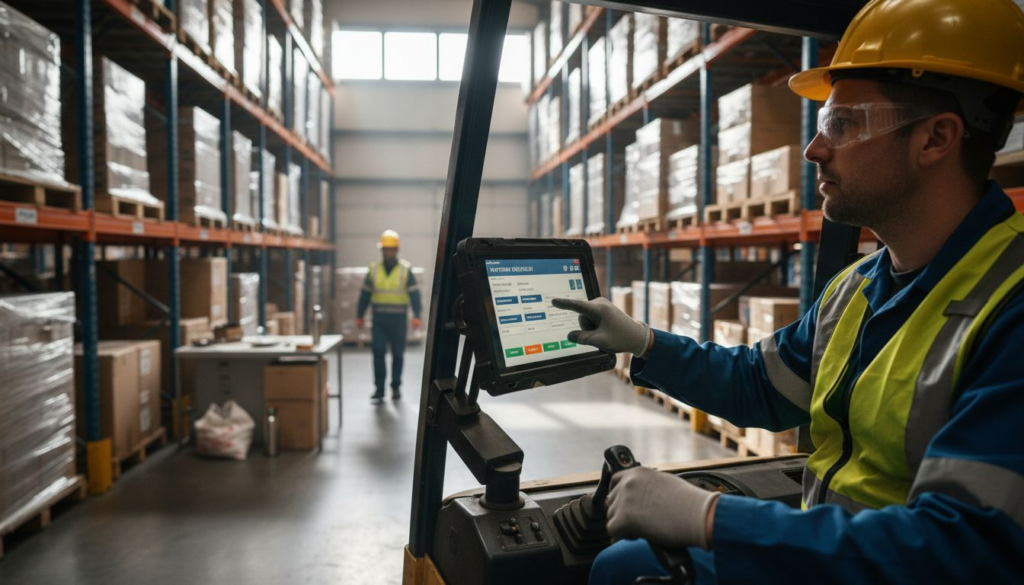

Even experienced warehouse safety managers know that forklifts present constant risks on busy floors. Keeping up with OSHA compliance and reducing accidents requires more than traditional safeguards. Today, modern warehouses are adopting intelligent monitoring systems and autonomous guided vehicles that combine real-time data processing and advanced sensor networks to protect workers and streamline operations. This article provides actionable insights into the latest forklift safety technology trends transforming American warehouse environments.
| Point | Details |
|---|---|
| Advanced Safety Technologies | Modern warehouses are implementing advanced safety systems like Proximity Detection and Load Stability to enhance worker safety and operational efficiency. |
| Automated Systems Enhance Safety | Autonomous Guided Vehicles and intelligent monitoring systems significantly reduce collision risks and improve workplace safety protocols. |
| Training and Compliance Importance | Comprehensive training on new technologies and compliance management is essential for maximizing safety and reducing workplace accidents. |
| ROI Considerations | Despite upfront costs, the long-term savings from fewer injuries and improved efficiency make investing in forklift safety technologies economically beneficial. |
Modern warehouses are experiencing a technological revolution in forklift operations, driven by advanced safety innovations designed to protect workers and enhance operational efficiency. Autonomous guided vehicles are transforming how materials are moved and managed, introducing unprecedented levels of precision and safety.
The core technological advancements in forklift safety include several critical components:
These technologies go beyond traditional safety mechanisms by integrating intelligent monitoring systems that can predict and prevent potential accidents before they occur. Modern warehouses are now equipped with forklifts that can automatically slow down when human workers are detected nearby, providing an additional layer of protection.
Automated Guided Vehicles (AGVs) represent the cutting edge of warehouse technology, offering remarkable improvements in both safety and efficiency. These sophisticated machines utilize complex sensor networks and machine learning algorithms to navigate warehouse environments with minimal human intervention.
Pro tip: Implement comprehensive training programs that specifically address new technological safety features to ensure your workforce can effectively interact with advanced forklift systems.
Modern warehouses are increasingly adopting sophisticated safety systems to protect workers and enhance operational efficiency. Advanced forklift safety technologies have evolved dramatically, integrating cutting-edge sensors, mechanical innovations, and intelligent monitoring capabilities that fundamentally transform workplace safety protocols.
The primary categories of advanced forklift safety systems include:
Electric and diesel-powered forklifts now incorporate intelligent safety interfaces that go far beyond traditional mechanical safeguards. These systems use complex algorithms to predict potential collision risks, automatically adjust vehicle performance, and provide real-time feedback to operators about potential safety hazards.
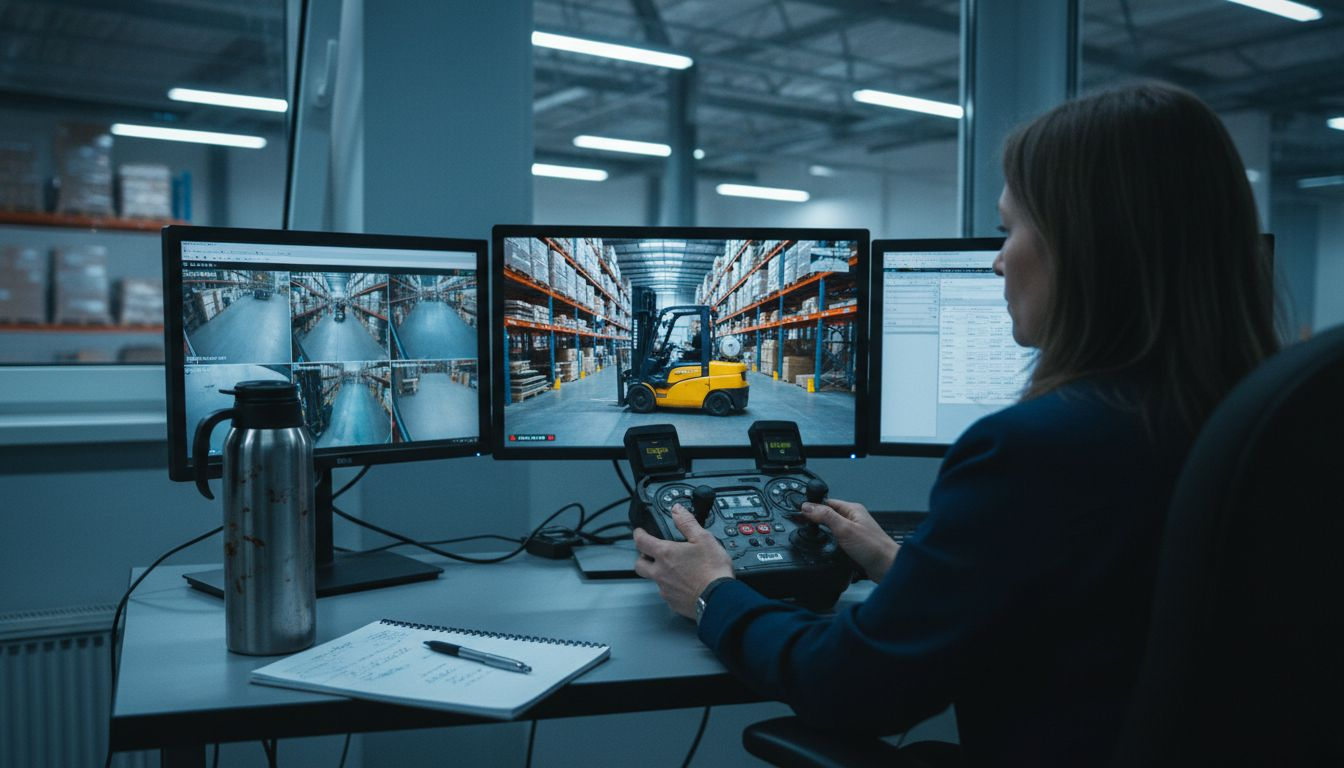
Remote control capabilities have also emerged as a critical safety innovation, allowing operators to manage forklifts from safer distances and providing enhanced visibility in challenging warehouse environments. By minimizing direct human proximity to heavy machinery, these technologies significantly reduce workplace accident risks.
Pro tip: Conduct quarterly technology assessments to ensure your forklift safety systems remain updated with the latest protective innovations.
Here is a summary of how major forklift safety technologies enhance warehouse operations:
| Technology Type | Core Function | Impact on Workplace | Example Benefit |
|---|---|---|---|
| Proximity Detection | Senses humans near forklifts | Reduces collision risk | Prevents injuries in busy areas |
| Load Stability | Monitors and balances loads | Minimizes tipping accidents | Protects inventory and equipment |
| Operator Health Monitor | Tracks fatigue and performance | Increases attentiveness | Fewer errors during long shifts |
| Remote Control Systems | Allows distant forklift operation | Lowers exposure to hazards | Operates safely in tight spaces |
Warehouse safety has been revolutionized by advanced sensor technologies that provide unprecedented levels of situational awareness and accident prevention. Autonomous forklift platforms now integrate sophisticated sensor networks that dramatically enhance operational safety and precision.
The core sensor technologies transforming forklift safety include:
These intelligent sensor networks work together to create a comprehensive safety ecosystem. By combining multiple sensing technologies, modern forklifts can generate immediate alerts, predict potential collision risks, and automatically adjust operational parameters to prevent accidents.
The integration of onboard computers with advanced sensors enables real-time data processing that goes far beyond traditional safety mechanisms. These systems can instantly analyze complex warehouse environments, tracking multiple moving objects simultaneously and providing operators with critical safety information before potential hazards emerge.
Pro tip: Regularly calibrate and update sensor systems to maintain their accuracy and effectiveness in protecting warehouse personnel.
Navigating the complex landscape of workplace safety requires sophisticated technological solutions that align with stringent OSHA requirements. Training management systems have become critical tools for ensuring comprehensive forklift operator compliance and documentation.
OSHA’s key compliance technology requirements encompass several essential elements:
Modern compliance technology transforms traditional safety management by providing warehouse managers with unprecedented visibility into operator qualifications, training status, and potential risk factors. These advanced systems go beyond simple record-keeping, offering intelligent insights that help prevent accidents and maintain regulatory standards.
The integration of digital platforms enables warehouses to create comprehensive safety ecosystems that continuously monitor, evaluate, and improve forklift operational protocols. By leveraging technology, organizations can proactively address potential compliance gaps and demonstrate their commitment to worker safety.
Pro tip: Implement a centralized digital compliance management system that provides real-time tracking and automated alerts for training renewals and safety certifications.
Investing in advanced forklift safety technologies requires careful financial analysis and strategic planning. Advanced safety technology implementation presents both significant challenges and compelling economic opportunities for warehouse managers.
The primary financial considerations include:
Most organizations discover that the long-term benefits of safety technology investments significantly outweigh initial implementation expenses. Advanced systems can dramatically reduce workplace accidents, which typically cost businesses hundreds of thousands of dollars in direct and indirect expenses annually.
The most substantial barriers to technology adoption include organizational resistance, complex integration processes, and uncertainty about return on investment. Successful implementation requires a comprehensive change management strategy that addresses technical challenges and builds stakeholder confidence in new safety technologies.
Pro tip: Conduct a pilot program with detailed ROI tracking to demonstrate the tangible financial benefits of safety technology investments to key organizational decision-makers.
Consider these key financial and operational factors when adopting forklift safety technology:
| Consideration | Short-Term Impact | Long-Term Impact |
|---|---|---|
| Upfront Cost | Capital outlay required | Offsets through accident reduction |
| Training Investment | Staff time commitment | Enhanced workforce safety culture |
| Integration Effort | Potential workflow disruption | Streamlined operations and fewer delays |
| ROI Evidence | May be unclear initially | Measurable savings and improved safety |
Adopting advanced forklift safety technology is essential for protecting your workforce and meeting evolving OSHA requirements. This article highlights critical challenges such as integrating intelligent monitoring systems, proximity sensors, and operator health tracking to reduce accidents and ensure regulatory compliance. Understanding these innovations can help you avoid costly workplace incidents while enhancing operational efficiency.
Take control of safety by expanding your knowledge with our comprehensive Forklift Safety Archives at Forkliftacademy.com.
Get certified with OSHA-compliant training programs designed to complement the latest safety technologies. Whether you prefer online courses or onsite training, our over 20 years of experience ensures you receive the highest quality safety education. Visit Forkliftacademy.com now to discover how to improve your forklift skills and maintain full compliance in a technologically advanced warehouse environment.
Modern warehouses are adopting various advanced technologies to enhance forklift safety. Key innovations include proximity detection systems, load stability technologies, operator health monitoring, and remote control capabilities, all designed to predict and prevent potential accidents.
Proximity detection systems utilize 360-degree sensors to track human movement. They automatically slow down forklifts or provide visual and audible alerts when workers are detected nearby, drastically reducing the risk of collisions and injuries.
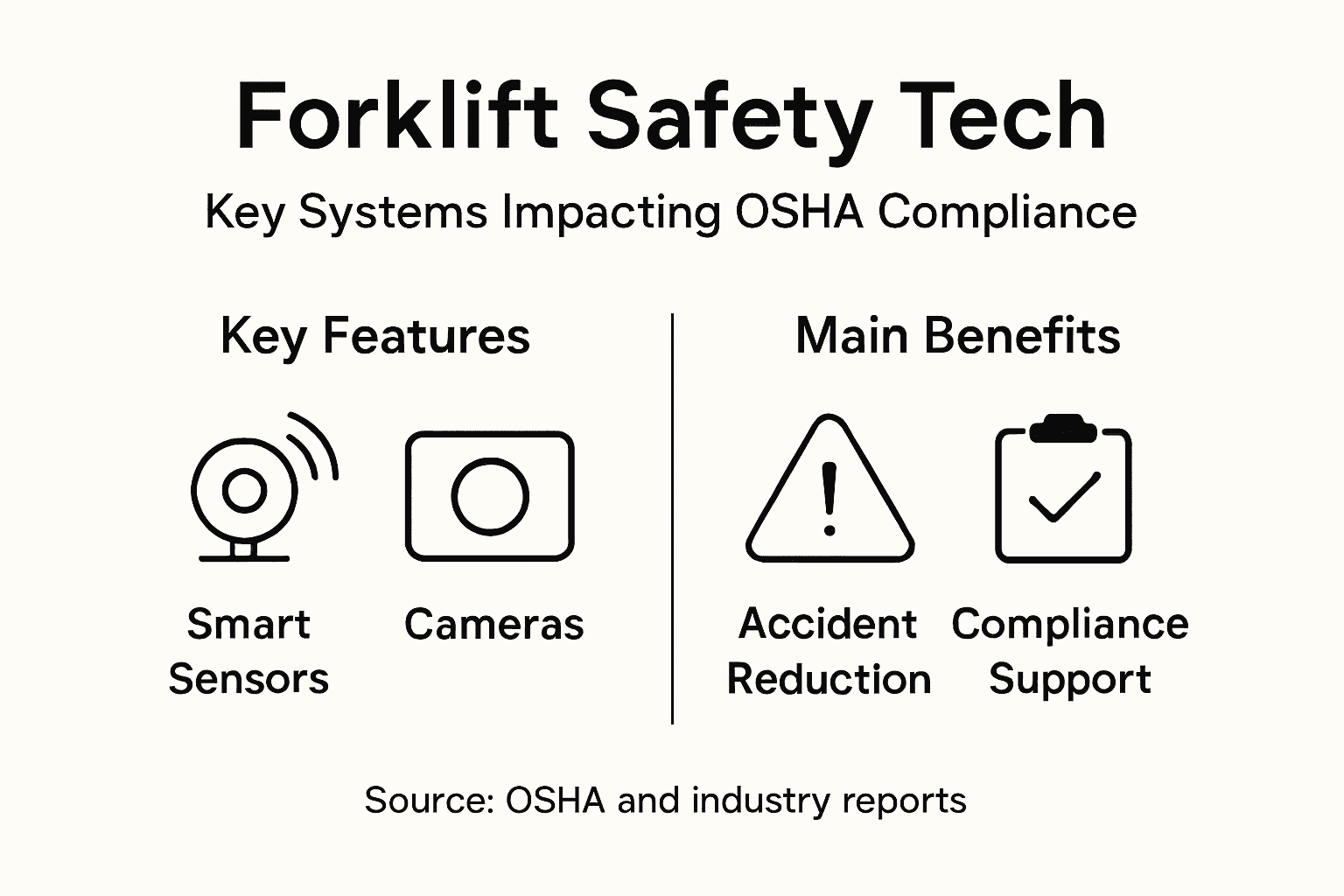
Smart sensors are integral to complying with OSHA regulations by providing real-time monitoring of warehouse environments. They facilitate accurate documentation of safety performance and training compliance, helping organizations meet regulatory standards more effectively.
Regularly updating and calibrating forklift safety technologies is essential to maintain their accuracy and effectiveness. This ensures that advanced safety systems provide optimal protection for workers and prevent accidents, ultimately contributing to workplace compliance and safety standards.