
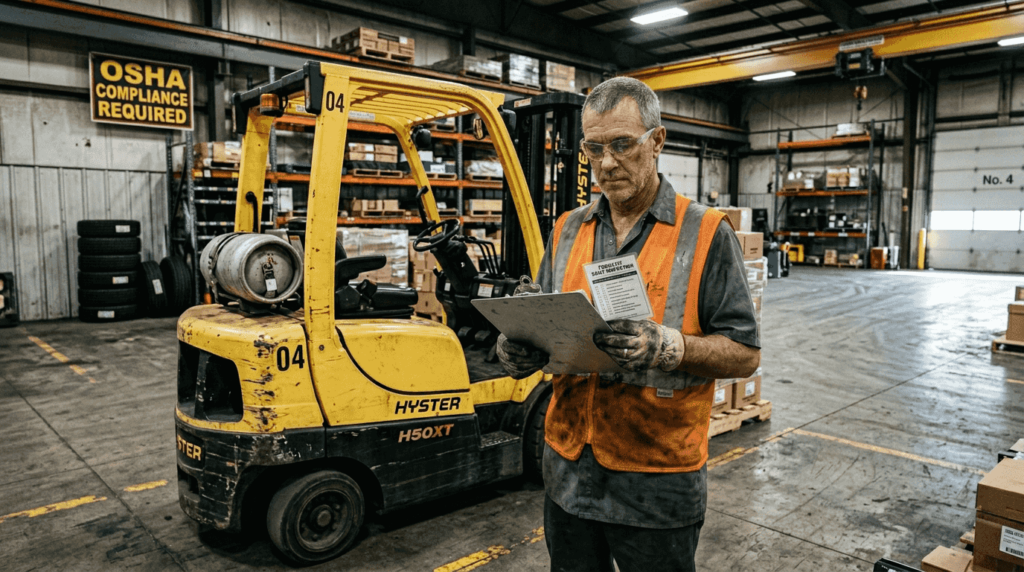

Every year, forklift accidents cause nearly 100 deaths and thousands of serious injuries across U.S. warehouses and distribution centers. These incidents result in devastating human costs and financial losses reaching millions in penalties, lawsuits, and downtime. OSHA mandates rigorous daily inspections to prevent these tragedies, but compliance requires more than good intentions. A comprehensive 2026 forklift safety checklist gives warehouse managers the practical framework needed to meet regulatory standards, protect workers, and avoid costly violations that can shut down operations.
| Point | Details |
|---|---|
| Daily inspections required | OSHA mandates pre-operation forklift inspections before every shift to identify safety hazards |
| Documentation protects liability | Proper inspection records serve as legal evidence of due diligence during accident investigations |
| Neglect leads to violations | Ignoring identified issues results in OSHA citations, accidents, and operational shutdowns |
| High accident costs | Forklift incidents generate millions annually in injury costs, penalties, and productivity losses |
OSHA’s powered industrial truck standards establish clear expectations for warehouse managers responsible for forklift operations. The agency mandates daily pre-operation inspections to catch potential hazards before they cause injuries. This requirement isn’t optional or subject to interpretation.
Regulation 29 CFR 1910.178(q)(7) specifies that forklifts must be inspected every shift they operate. Managers who skip inspections or allow operators to bypass this critical safety step face serious consequences. OSHA citations for inspection failures carry substantial penalties, but the real cost comes from preventable accidents that harm workers and damage equipment.
Compliance protects your workforce and shields your organization from regulatory action. Inspections must cover specific areas:
Operator training plays an essential role in effective compliance. Even the most detailed checklist fails if operators lack the knowledge to identify problems or understand why each inspection point matters. Certified operators recognize warning signs that untrained workers miss, making forklift training standards 2025 a foundational element of any safety program.
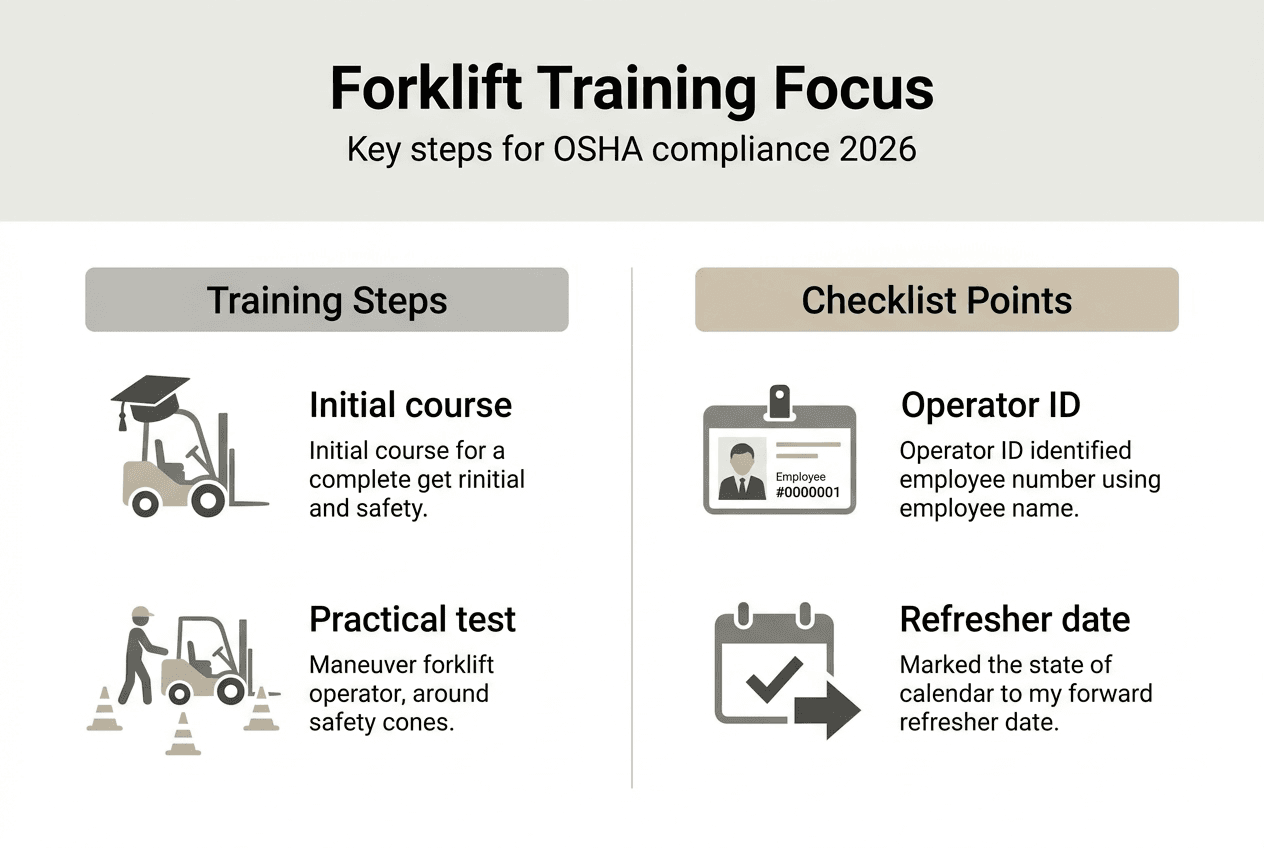
Managers should verify that all operators meet current forklift operator requirements 2025 and receive refresher training when regulations update. Your inspection program only works when qualified personnel execute it consistently. Review OSHA forklift inspection requirements regularly to ensure your procedures align with current standards.
Building a practical inspection tool requires understanding what makes checklists effective versus merely compliant. Your checklist should guide operators through systematic evaluation while creating documentation that protects your organization.
Essential checklist components must address three categories. Structural items include frame integrity, fork condition, mast alignment, and overhead guard stability. Operational elements cover steering response, brake function, hydraulic performance, and control accuracy. Safety equipment encompasses lights, horns, backup alarms, seat belts, and fire extinguishers.
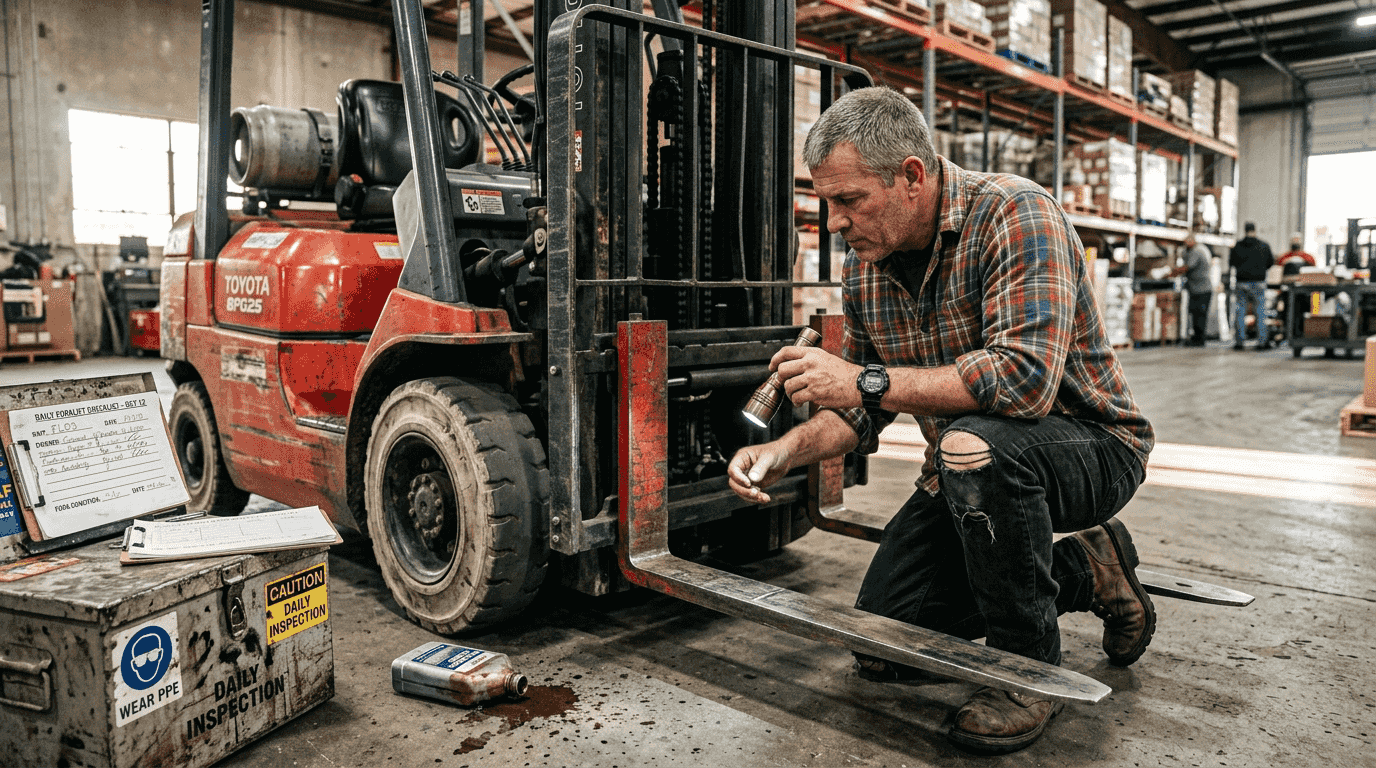
Proper documentation transforms inspections from routine tasks into legal protection. Each completed checklist should capture the date, shift, operator name, forklift identification number, and specific findings. When inspectors discover issues, documentation must detail the problem, severity, and corrective action taken or scheduled.
Effective checklists drive action, not just paperwork. Operators who identify problems need clear procedures for reporting and removing equipment from service. Your system should specify:
Common pitfalls undermine even well-designed programs. Managers who allow operators to skip inspections during busy periods create dangerous precedents. Workers who check boxes without actually examining components render the entire process meaningless. Failing to address identified issues signals that safety takes a backseat to productivity, encouraging future negligence.
Pro Tip: Laminate pocket-sized checklists for operators to carry during inspections, making the process faster and more consistent while protecting documents from warehouse conditions.
Operator involvement ensures thoroughness and accountability. Workers who understand why each inspection point matters perform more careful evaluations. Training should explain how specific failures lead to accidents, connecting abstract checklist items to real safety outcomes. Consult the forklift safety checklist guide for detailed implementation strategies.
Your checklist becomes more valuable when integrated with broader safety initiatives. Connect inspection findings to maintenance schedules, training needs, and equipment replacement planning. This approach transforms compliance documentation into operational intelligence that improves safety and efficiency. The business forklift training guide offers frameworks for building comprehensive safety systems.
Systematic inspection execution separates effective safety programs from checkbox exercises. Operators need clear procedures that guide them through comprehensive evaluations without wasting time or missing critical components.
Follow this sequential inspection process:
Visual checks catch problems that functional tests miss. Regular inspection of forklift components prevents accidents by identifying wear before failure occurs. Operators should look for frayed cables, loose connections, damaged hoses, and worn components during every inspection.
This comparison table shows how inspection checks detect common forklift problems:
| Common Issue | Detection Method | Safety Impact |
|---|---|---|
| Hydraulic leaks | Visual fluid inspection | Loss of lift control, fire hazard |
| Brake wear | Functional brake test | Extended stopping distance, collisions |
| Damaged forks | Visual crack inspection | Load drops, crushing injuries |
| Tire deterioration | Tread and sidewall check | Tip-overs, loss of control |
| Faulty backup alarm | Audio equipment test | Pedestrian strikes, fatalities |
Pro Tip: Use smartphone cameras to photograph any questionable conditions during inspections, creating visual records that help maintenance teams diagnose problems and document pre-existing damage.
Operator accountability starts with clear expectations and consistent enforcement. Supervisors should randomly verify that operators complete thorough inspections rather than rushing through checklists. Spot checks reinforce the message that safety matters more than speed. Review the forklift inspection process guide for supervisor oversight techniques.
Thorough inspections require adequate time allocation. Managers who schedule operators so tightly that proper inspections become impossible create pressure to cut corners. Build 10 to 15 minutes into shift starts for inspection completion and documentation. This investment prevents accidents that cost far more in injuries, equipment damage, and regulatory penalties. The step by step forklift training program teaches operators efficient inspection techniques that maintain thoroughness without excessive time consumption.
Inspection completion means nothing without proper verification and documentation. Records prove compliance during OSHA audits and provide legal protection when accidents occur despite safety efforts. Managers need systems that ensure inspections happen consistently and documentation remains accessible.
Documented inspections serve as evidence of organizational commitment to safety and operator diligence. When accidents trigger investigations, inspection records demonstrate that management took reasonable precautions. Missing or incomplete documentation suggests negligence, even when actual safety practices were adequate.
Organizing inspection records requires balancing accessibility with long-term storage. Digital systems offer searchability and backup redundancy that paper files lack. Cloud-based platforms let supervisors review inspections remotely and flag concerning patterns across multiple forklifts or operators. Physical binders work for smaller operations but require disciplined filing and protection from warehouse conditions.
Routine audits prevent inspection programs from degrading over time. Monthly reviews should verify that:
This documentation table details required record elements:
| Documentation Element | Required Information | Retention Period |
|---|---|---|
| Inspection date and shift | Specific date and shift identifier | Minimum 3 years |
| Operator identification | Full name and certification number | Minimum 3 years |
| Forklift identification | Unit number and equipment type | Minimum 3 years |
| Inspection findings | Specific issues or “no defects found” | Minimum 3 years |
| Corrective actions | Repairs completed or scheduled | Minimum 3 years |
| Supervisor verification | Signature confirming review | Minimum 3 years |
Documentation best practices protect compliance and support continuous improvement. Store records in multiple formats to prevent loss from equipment failure or physical damage. Maintain consistent terminology across all documentation so trends become apparent during analysis. Train supervisors to review inspection records weekly rather than letting problems accumulate unnoticed.
Common documentation errors undermine otherwise solid safety programs. Incomplete checklists missing operator signatures or dates lack credibility during audits. Generic notations like “checked” or “OK” provide no detail about actual conditions observed. Backdated inspections created after accidents become obvious during investigation and suggest fraudulent compliance efforts. Review forklift inspection procedures OSHA standards to ensure your documentation meets regulatory expectations.
Verification systems should catch falsified inspections before they create liability. Supervisors who occasionally observe operators during inspections deter checkbox completion without actual evaluation. Maintenance records that contradict inspection findings reveal dishonest documentation. Equipment conditions that deteriorate suddenly suggest inspections missed gradual wear that careful operators would have noticed.
Implementing a comprehensive inspection checklist represents just one element of effective forklift safety management. Your operators need ongoing training that keeps skills sharp and knowledge current as regulations evolve. Forklift Academy delivers OSHA-aligned programs that transform compliance from a burden into a competitive advantage.
Our train the trainer online course empowers your supervisors to deliver consistent, high-quality instruction across your entire workforce. You gain flexibility to certify new operators immediately rather than waiting for external trainers while maintaining the rigor that OSHA demands. This approach reduces costs and improves safety culture by making training an internal priority.
Certification renewals keep your team compliant with top OSHA forklift certification standards. Our programs address the latest regulatory updates and industry best practices, ensuring your operators recognize new hazards and understand current safety protocols. Regular recertification reinforces proper inspection techniques and reminds workers why thorough evaluations matter. Explore OSHA forklift certification requirements to build a training schedule that maintains continuous compliance.
OSHA regulation requires daily forklift inspections before each shift begins. This means a forklift operating two shifts daily needs two separate inspections, one before each use period. The requirement applies regardless of how recently the equipment was last inspected or whether the same operator used it previously.
Damaged hydraulic lines, worn tires, malfunctioning brakes, and inoperative backup alarms represent the most frequent inspection findings. Fork damage including cracks or bends appears regularly, along with fluid leaks from hydraulic systems or engines. Regular inspection of forklift components catches these problems before they cause accidents. Missing or damaged overhead guards and defective lights also appear commonly, particularly on older equipment or heavily used units.
Complete inspection records demonstrate that your organization exercised reasonable care and followed OSHA requirements during audits or accident investigations. Documented inspections serve as evidence that operators performed required safety checks and management addressed identified problems. This documentation can significantly reduce liability exposure and penalty severity when incidents occur. Well-maintained records also reveal patterns that guide preventive maintenance and equipment replacement decisions, improving safety while controlling costs.
Operators must immediately tag defective equipment out of service and notify their supervisor of the specific problem discovered. The forklift should not be operated until qualified maintenance personnel repair the issue and authorize return to service. Detailed documentation of the problem, including photos when possible, helps maintenance diagnose and fix issues efficiently. Consult your forklift safety checklist guide for specific reporting procedures that match your facility’s protocols.