 Skip to content
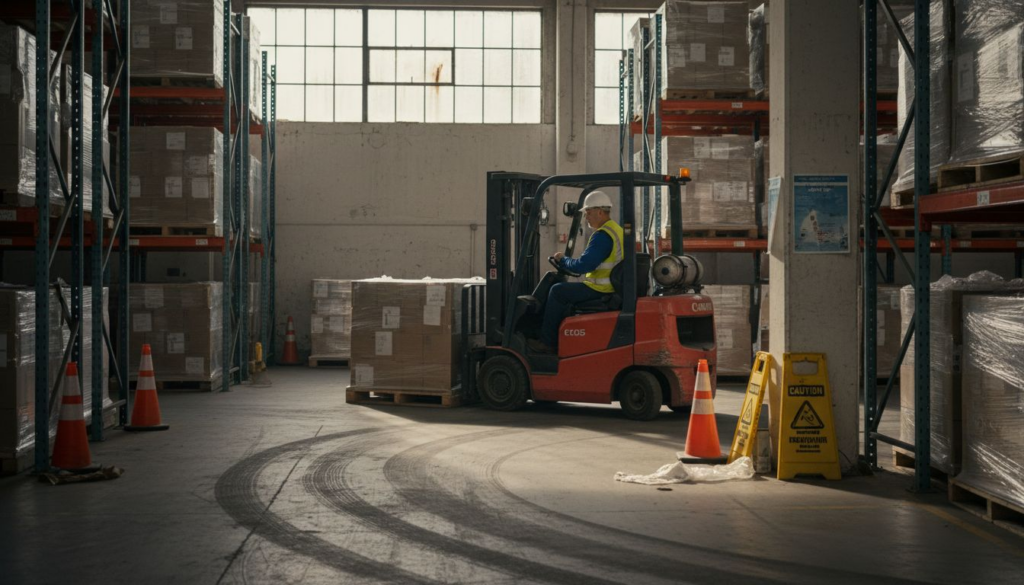

Forklift hazards in American warehouses often hide in plain sight, turning routine operations into potential risks that threaten both workers and managers. Maintaining compliance with OSHA’s stringent forklift safety regulations is more than a checklist—it means actively recognizing and controlling dangers ranging from falling loads to operator errors. This article offers clear guidance, actionable insights, and practical solutions to help warehouse safety managers prevent accidents and build a culture of continuous safety improvement.
| Point | Details |
|---|---|
| Comprehensive Training | Ongoing training and certification for forklift operators is crucial to reduce accidents and improve safety awareness. |
| Safety Culture | Developing a proactive safety culture is essential for recognizing and mitigating forklift-related hazards effectively. |
| Regular Maintenance | Scheduled inspections and maintenance of forklifts are necessary to prevent mechanical failures and enhance reliability. |
| Hazard Assessment | Continuous hazard assessments help identify risks in the workplace, ensuring timely corrective measures are implemented. |
Forklift-related workplace hazards represent complex safety challenges that demand comprehensive understanding and proactive management. Powered industrial trucks are critical equipment in many industrial settings, but they also introduce significant risks to worker safety when not properly handled.
Workplace forklift hazards encompass a wide range of potential dangers that can lead to serious injuries or fatalities. These risks typically fall into several key categories:
The National Institute for Occupational Safety and Health (NIOSH) emphasizes that forklift incidents are not random occurrences but preventable events. Most workplace accidents involve multiple contributing factors, including inadequate training, poor workplace design, and insufficient safety protocols.
Forklift hazards are not just about equipment, but about creating a comprehensive safety culture that prioritizes worker protection and systematic risk management.
Operator qualifications play a critical role in mitigating these risks. Federal regulations explicitly prohibit anyone under 18 from operating forklifts and mandate comprehensive training and certification. This ensures that only qualified personnel with proper skills and knowledge interact with these powerful machines.
Here’s a summary of how different workplace factors contribute to forklift safety risks:
| Workplace Factor | Risk Contribution | Recommended Mitigation |
|---|---|---|
| Training Quality | Impacts operator errors | Provide ongoing certification |
| Workplace Design | Affects collision risks | Optimize aisles and lighting |
| Maintenance Frequency | Influences equipment reliability | Schedule regular inspections |
| Safety Protocols | Shapes hazard awareness | Implement strict documentation |
Pro tip: Conduct monthly safety audits and refresh operator training to continuously identify and mitigate potential forklift-related workplace hazards.
Warehouse environments present a complex landscape of potential forklift-related hazards that demand comprehensive understanding and strategic safety management. Workplace forklift hazards vary significantly based on specific environmental conditions and operational dynamics.
The primary types of forklift hazards in warehouse settings can be categorized into several critical areas:
Each hazard type represents a unique challenge that requires specialized safety protocols. Physical environment plays a crucial role in determining potential risks, with factors like surface conditions, lighting, and workspace design directly impacting forklift operation safety.
Effective hazard management is not about eliminating all risks, but creating systematic approaches to recognize, mitigate, and control potential dangerous scenarios.
Operational hazards extend beyond physical infrastructure. Human factors such as operator fatigue, inadequate training, and momentary lapses in concentration can transform routine warehouse operations into potentially dangerous situations. Forklift hazards and solutions emphasize the critical nature of comprehensive safety training and continuous risk assessment.
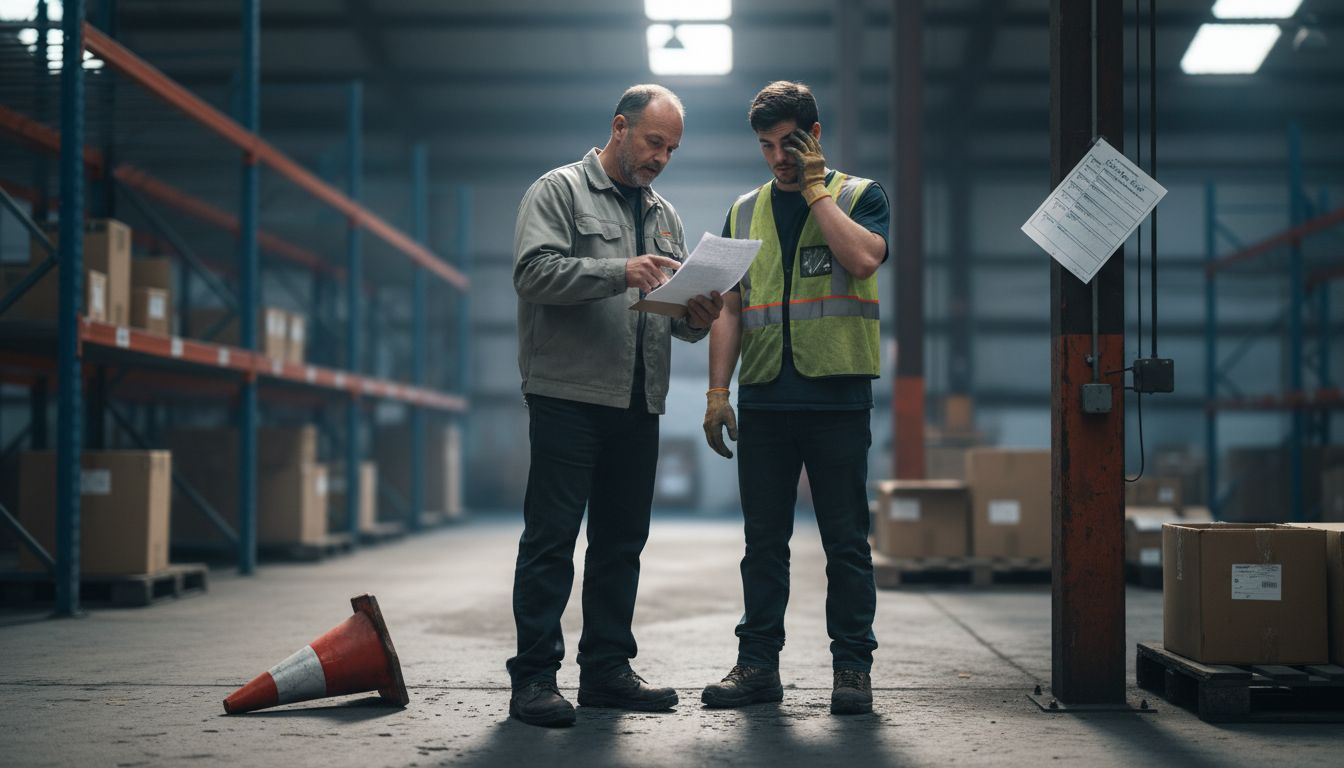
Pro tip: Implement a dynamic hazard mapping system that continuously updates and communicates potential risks in real-time across warehouse operational zones.
Forklift operations involve complex interactions that can quickly escalate into dangerous situations when safety protocols are not rigorously followed. Forklift-related accidents represent a significant workplace safety concern with potentially devastating consequences for workers and organizations.
The most frequent accident scenarios in warehouse environments typically involve several critical risk categories:
Human factors play a crucial role in these accident scenarios. Operator decision-making and situational awareness are often the most critical elements in preventing potential catastrophes. Workplace safety reports consistently highlight that most incidents result from preventable human errors rather than equipment failures.
Workplace safety is not about eliminating all risks, but creating a culture of continuous awareness and proactive risk management.
Statistical analysis reveals that approximately 70% of forklift accidents could be prevented through comprehensive training, strict adherence to safety protocols, and implementing robust workplace safety systems. The most vulnerable workers are often those with limited experience or inadequate safety education.
Pro tip: Develop a comprehensive incident reporting system that captures near-miss events and provides immediate feedback to prevent potential future accidents.
Navigating the complex landscape of forklift safety regulations requires a comprehensive understanding of OSHA’s stringent compliance requirements. The Occupational Safety and Health Administration has established detailed standards that mandate specific protocols for forklift operations across various industries.
Key compliance duties for employers encompass several critical areas:
Regulatory framework under 29 CFR 1910.178 provides explicit guidelines that cover general industry, maritime, and construction workplace environments. Employers bear the ultimate responsibility for ensuring that every aspect of forklift operation meets these rigorous standards.
Compliance is not a one-time achievement, but a continuous commitment to workplace safety and risk management.
The legal implications of non-compliance are significant. OSHA compliance standards outline potential penalties, including substantial fines and legal repercussions for businesses that fail to implement proper safety protocols. These regulations are designed to protect workers and create a culture of proactive safety management.
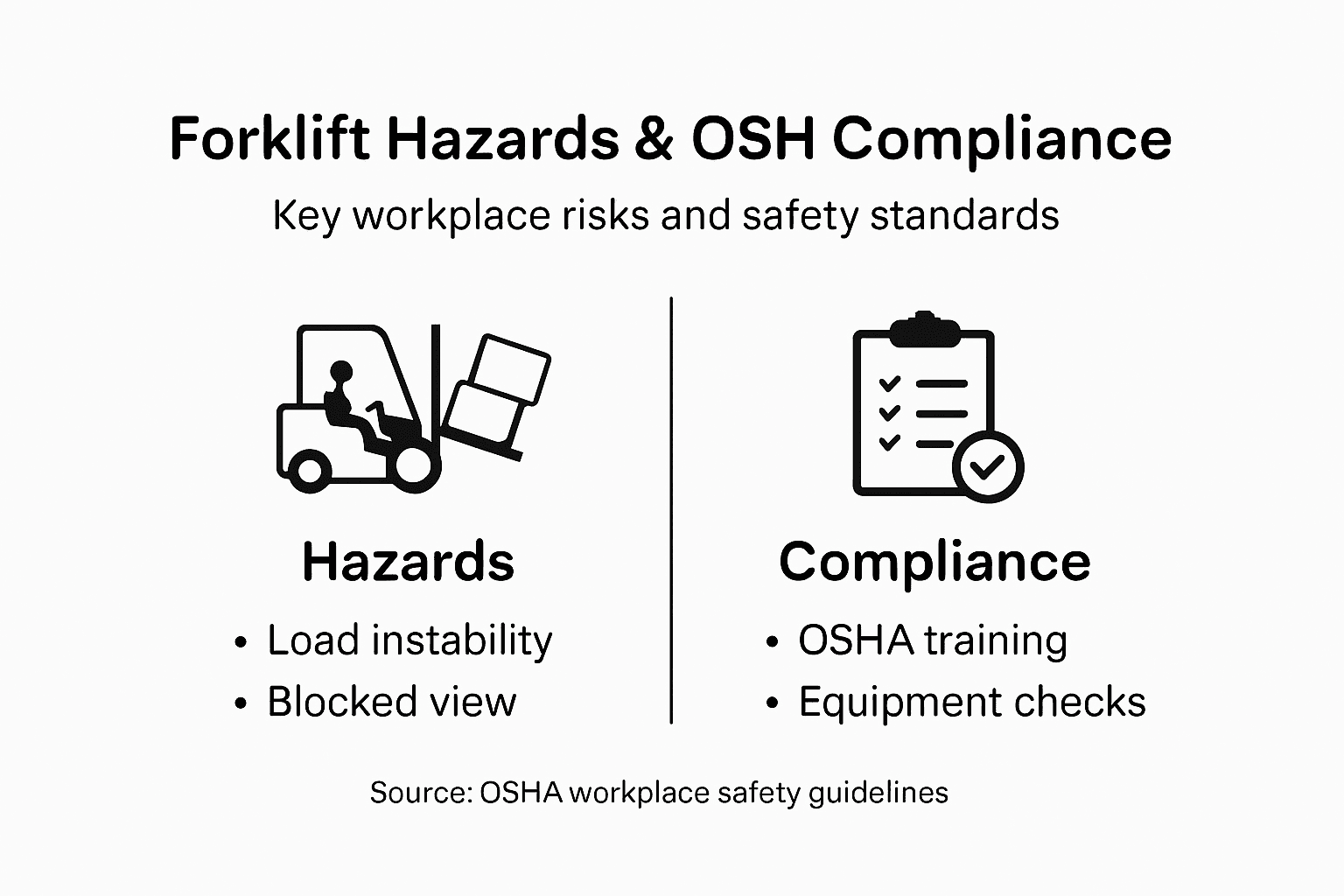
The table below compares OSHA compliance tasks by impact and responsibility:
| OSHA Compliance Task | Impact on Safety | Employer Responsibility |
|---|---|---|
| Operator Training | Reduces human error | Mandatory for all operators |
| Equipment Evaluation | Prevents equipment failures | Arrange scheduled checks |
| Hazard Assessment | Identifies new risks | Conduct ongoing reviews |
| Record Keeping | Enables accountability | Maintain detailed logs |
Pro tip: Develop a comprehensive internal audit system that continuously monitors and updates forklift safety practices to ensure ongoing OSHA compliance.
Preventing forklift-related workplace accidents requires a multi-layered approach that combines comprehensive safety protocols and training strategies. Successful hazard prevention goes beyond simple rule enforcement, demanding a proactive and holistic safety management system.
Key strategies for effective hazard prevention include:
Operational awareness plays a critical role in preventing potential incidents. Employers must create an environment that prioritizes safety through continuous education, real-time risk assessment, and immediate corrective actions.
Safety is not a destination, but a continuous journey of awareness, education, and proactive risk management.
Engineering and administrative controls are essential components of a comprehensive prevention strategy. Workplace safety recommendations emphasize the importance of integrating multiple layers of protection, including technological solutions, procedural guidelines, and human factor considerations.
Pro tip: Implement a dynamic risk assessment system that provides real-time feedback and immediate intervention strategies for potential forklift-related hazards.
Understanding the complex risks linked with forklift-related workplace hazards is critical for protecting your team and meeting OSHA regulations. If you are facing challenges with operator errors, equipment maintenance, or creating a safer warehouse environment the right training and certification can empower you to manage these risks effectively. Our focused approach addresses key pain points such as comprehensive hazard identification, operator qualifications, and adherence to regulatory frameworks detailed in OSHA standards.
Don’t wait for an accident to highlight gaps in your safety program. Visit Forklift Safety Archives to explore specialized safety resources and enroll in OSHA-compliant training at forkliftacademy.com. Whether you need individual certification or customized onsite business solutions our expert programs deliver the knowledge and confidence to create a safer workplace. Take the step now to protect your workers and ensure full compliance by checking out our detailed Forklift License Archives. Begin your journey toward risk-free forklift operations today.
Forklift-related hazards include load instability, collision risks, operator errors, mechanical failures, and environmental challenges such as uneven surfaces or poor lighting.
Employers can ensure compliance by providing comprehensive operator training, conducting regular equipment evaluations and inspections, performing hazard assessments, maintaining detailed documentation, and offering ongoing education.
Preventative strategies include implementing comprehensive training programs, ensuring regular equipment maintenance, optimizing workplace design to minimize collision risks, and using engineering controls such as physical barriers.
Operator training is critical because it reduces human error, ensures proper load handling, and enhances situational awareness, ultimately lowering the risk of forklift-related accidents.




 Optimized by Seraphinite Accelerator