 Skip to content
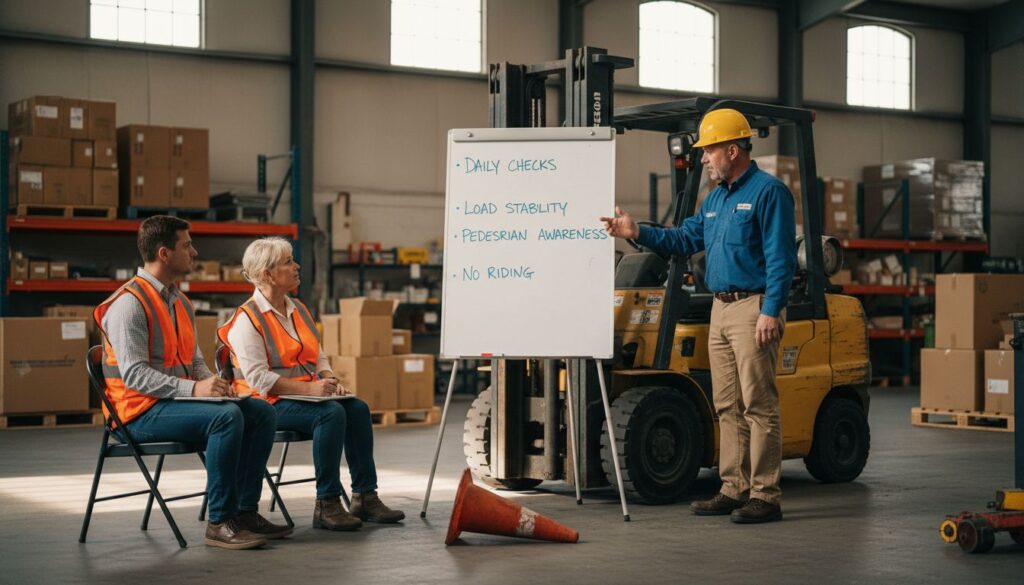

Over 95,000 workplace injuries each year in american warehouses involve forklifts, showing just how vital proper training is for safety. Many american businesses rely on these powerful machines every day, but even experienced operators can become complacent without regular updates. Forklift refresher courses keep skills sharp, help companies meet strict regulations, and most importantly, protect both workers and equipment from preventable harm.
| Point | Details |
|---|---|
| Mandatory Refresher Training | Forklift refresher courses are required by OSHA to maintain operator competence and safety compliance, triggered by specific operational changes or incidents. |
| Legal Obligations | Employers must keep accurate training records and ensure operator retraining occurs under defined scenarios to avoid severe OSHA penalties. |
| Benefits of Training | Regular refresher training enhances operator skills, reduces workplace accidents, and results in lower insurance costs, benefitting both employees and employers. |
| Risks of Non-compliance | Skipping refresher training increases the likelihood of accidents, legal liabilities, and reputational damage, highlighting the importance of proactive safety measures. |
Forklift refresher courses are mandatory safety training programs designed to ensure operators maintain their skills and comply with workplace safety regulations. These courses are not optional extras but critical components of professional equipment operation, mandated by OSHA training requirements for maintaining operator competence and workplace safety.
Under OSHA guidelines, forklift refresher training becomes necessary under specific circumstances. Operators must receive recertification when they demonstrate unsafe operating practices, are involved in accidents or near-miss incidents, are assigned to different truck types, or when significant workplace conditions change. The primary goal is preventing potential workplace accidents by ensuring operators remain current with best practices and safety protocols.
Typically, these refresher courses combine both theoretical instruction and practical evaluation. Participants review critical safety procedures, equipment handling techniques, and updated operational guidelines. The training usually includes classroom-based learning where operators review safety regulations, operational standards, and potential workplace hazards, followed by hands-on practical assessments that validate their continued competence in equipment operation. By understanding recertification requirements, operators can proactively maintain their professional credentials and contribute to a safer work environment.
Key components of an effective forklift refresher course often include:
Operators who consistently engage in these training programs demonstrate their commitment to professional development and workplace safety, ultimately protecting themselves and their colleagues from potential equipment-related risks.
OSHA establishes comprehensive legal requirements for forklift operator training through specific federal regulations that mandate rigorous safety protocols. Under standard 29 CFR 1910.178(l), employers bear the critical responsibility of ensuring operators receive proper training, evaluation, and recertification to maintain workplace safety and operational competence.
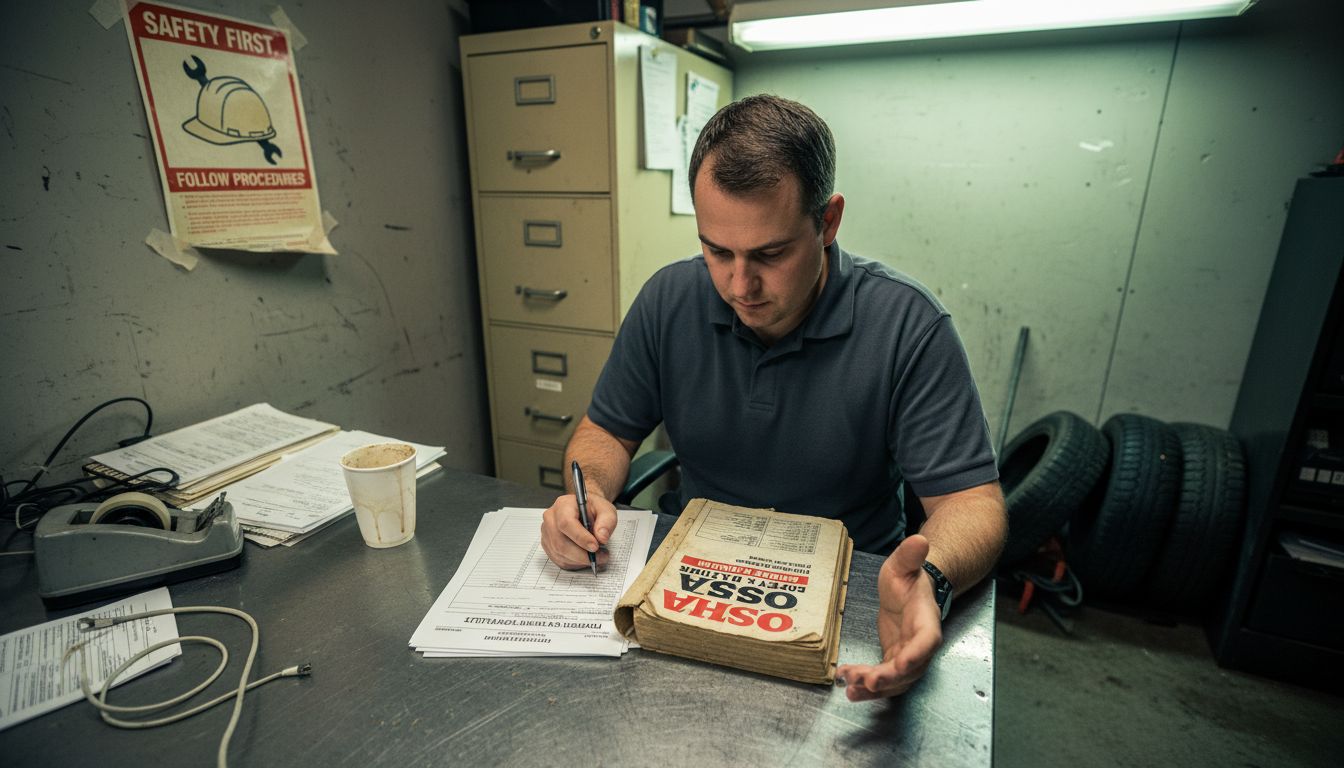
The legal framework requires employers to conduct refresher training under specific circumstances. Mandatory retraining becomes necessary when an operator demonstrates unsafe practices, is involved in an accident or near-miss incident, is assigned to operate a different type of industrial truck, or when workplace conditions undergo significant changes. OSHA compliance guidelines emphasize that these requirements are not optional recommendations but legally binding obligations designed to prevent workplace accidents and protect worker safety.
Documentation plays a crucial role in meeting OSHA standards. Employers must maintain comprehensive training records that demonstrate:
Violating these standards can result in significant legal and financial consequences. OSHA can impose substantial fines for non-compliance, with penalties potentially ranging from thousands to tens of thousands of dollars depending on the severity and frequency of violations. Proactive training and meticulous record-keeping are not just best practices but essential legal requirements for businesses utilizing powered industrial trucks.
Forklift operator training follows a structured schedule mandated by OSHA requirements to ensure continuous workplace safety. Operators must undergo comprehensive training and evaluation at specific intervals and under particular circumstances that trigger mandatory refresher courses.
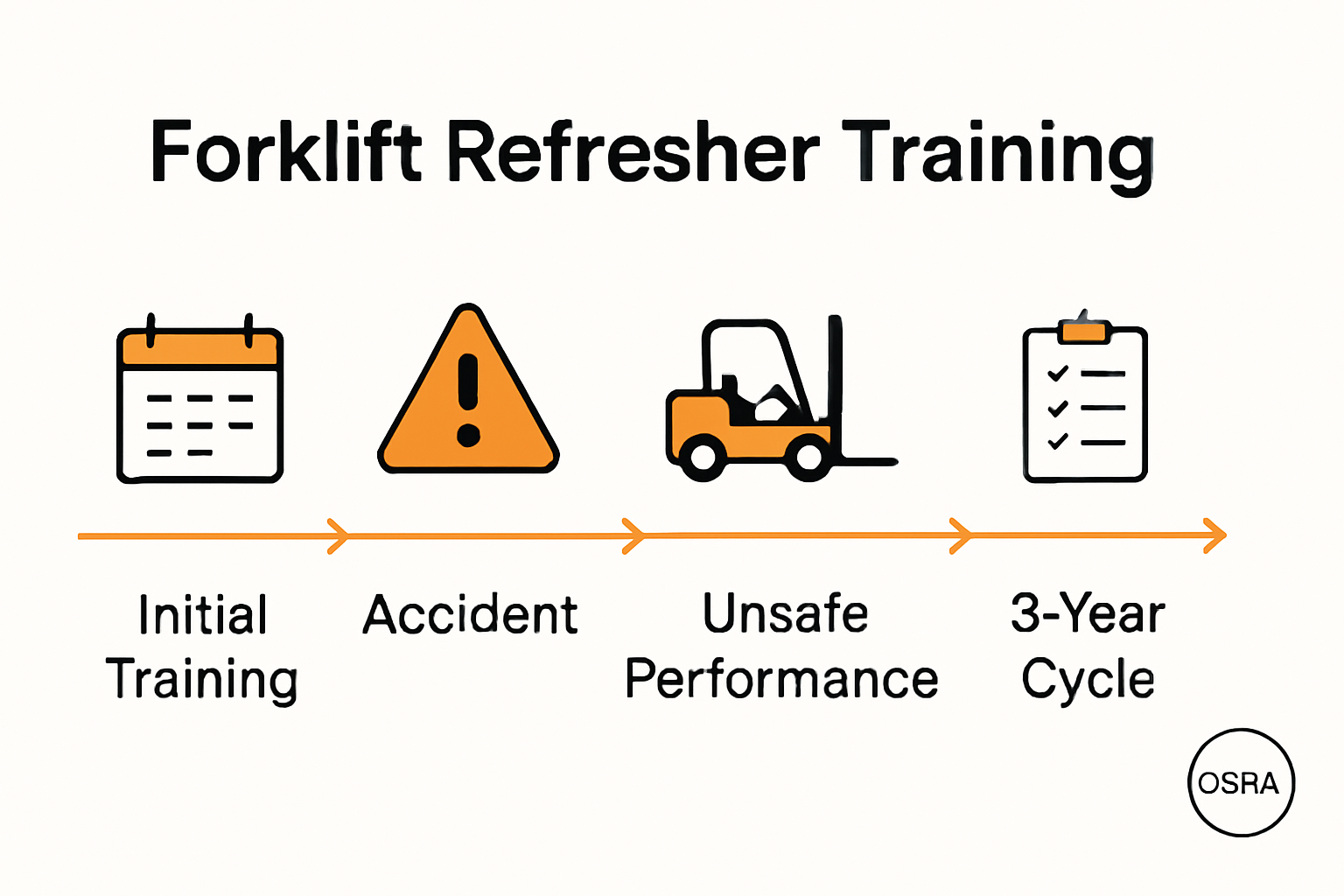
According to OSHA guidelines, operators require mandatory recertification in several key scenarios. These include demonstrating unsafe operating practices, being involved in accidents or near-miss incidents, getting assigned to different truck types, or experiencing significant workplace condition changes. The standard evaluation cycle requires a comprehensive reassessment at least every three years to validate an operator’s ongoing competence and safety awareness.
The training frequency and requirements can be broken down into several critical trigger points:
Employers must maintain meticulous documentation of each operator’s training history, ensuring that all recertification requirements are met promptly and comprehensively. Proactive monitoring of operator performance and consistent training updates are essential to maintaining a safe working environment and preventing potential workplace accidents.
Forklift refresher training delivers substantial advantages for both individual operators and their employers, creating a comprehensive safety ecosystem that goes beyond basic compliance. Cost-effective training strategies demonstrate significant returns through reduced workplace incidents and enhanced operational efficiency.
For operators, the benefits extend far beyond mere certification. Continuous training sharpens technical skills, increases confidence, and provides opportunities for career advancement. Employers gain substantial protections through reduced accident risks, lower insurance premiums, and improved overall workplace productivity. The training process ensures operators remain current with the latest safety protocols, equipment technologies, and operational best practices.
Key advantages of comprehensive forklift refresher training include:
Ultimately, investing in regular forklift refresher courses represents a strategic approach to workplace safety. By prioritizing continuous learning and skill development, organizations create a culture of safety that protects both human resources and operational infrastructure, ultimately driving long-term business success and employee well-being.
Neglecting forklift refresher training exposes businesses to substantial legal, financial, and operational risks that can devastate workplace safety and organizational stability. OSHA compliance requirements clearly outline the severe consequences of failing to maintain up-to-date operator certifications and training protocols.
The most immediate and critical risks involve potential workplace accidents and injuries. Operators without recent training are more likely to make critical errors, mishandle equipment, and create dangerous scenarios that endanger themselves and their coworkers. These lapses in skill and safety awareness can lead to catastrophic incidents, resulting in significant medical expenses, workers compensation claims, potential legal liability, and permanent damage to the company’s reputation.
Key risks of skipping forklift refresher training include:
Financial implications extend far beyond immediate incident costs. Organizations that fail to prioritize ongoing training face potential shutdown orders, massive regulatory fines, and long-term reputational damage that can fundamentally undermine business operations and employee trust. Proactive training is not just a regulatory requirement but a critical investment in workplace safety and organizational resilience.
The challenge of maintaining up-to-date forklift skills and meeting OSHA refresher training requirements can feel overwhelming. Key concerns like preventing workplace accidents, ensuring ongoing operator competence, and avoiding costly penalties are crucial. This article highlighted the importance of regular training cycles, OSHA compliance, and practical skill assessments. You need a reliable partner offering convenient, OSHA-compliant refresher courses that reduce risks while enhancing operator confidence.
Discover how Forkliftacademy.com addresses these exact challenges with proven, easy-to-access solutions. Our offerings include comprehensive online programs and hands-on training at multiple U.S. locations that ensure you meet legal mandates and keep your team safe. From refresher courses to advanced certification, we help you stay ahead with the latest safety protocols and training technologies. Learn more in our Forklift Certification Archives – Top Osha Forklift Certification for a deeper dive.
Ready to eliminate the stress of forklift recertification while safeguarding your workplace? Visit Forkliftacademy.com now and take the first step toward effortless compliance and safer operation. Check out our detailed resources in the Forklift Safety Archives – Top Osha Forklift Certification to stay informed and prepared.
A forklift refresher course is a mandatory safety training program designed to ensure operators maintain their skills and comply with workplace safety regulations, as mandated by OSHA.
Refresher training is required when an operator demonstrates unsafe practices, is involved in accidents or near-miss incidents, is assigned to a different type of forklift, or when there are significant changes in workplace conditions.
According to OSHA guidelines, forklift operators should undergo mandatory comprehensive evaluation and refresher training at least every three years or when specific triggers, such as incidents or equipment changes, occur.
Benefits of refresher training include improved operator competence, reduced workplace accident rates, enhanced operational efficiency, lower insurance costs, and compliance with OSHA regulations.




 Optimized by Seraphinite Accelerator