 Skip to content
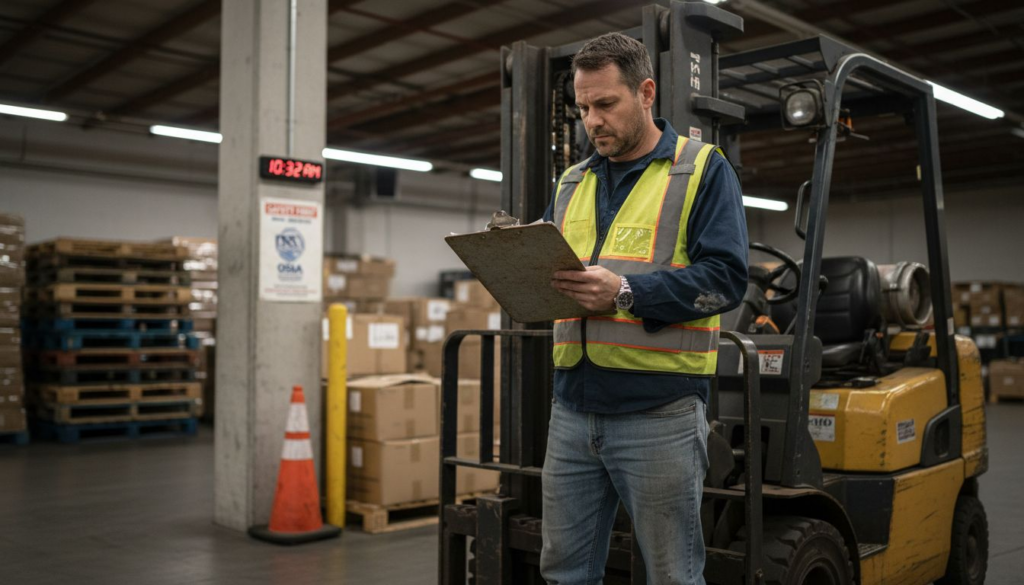

Did you know timely forklift recertification reduces accident rates by up to 30%? This mandated OSHA process ensures operators maintain critical safety skills and stay legally compliant. Whether you’re a warehouse manager or forklift operator, understanding recertification timing, requirements, and delivery methods protects your workplace and career. This guide clarifies OSHA recertification standards, practical steps, and how to avoid costly compliance failures.
| Point | Details |
|---|---|
| Mandatory 3-Year Cycle | OSHA requires forklift operators recertify every three years minimum under 29 CFR 1910.178. |
| Early Triggers Exist | Accidents, unsafe observations, or equipment changes require immediate recertification. |
| Training Components | Recertification includes practical skills evaluation and updated safety regulation review. |
| Online and Onsite Valid | Both delivery methods meet OSHA standards when properly administered. |
| Safety and Legal Impact | Compliance reduces accidents significantly and prevents costly OSHA penalties. |
Forklift recertification is a periodic mandatory evaluation and training process that verifies operators maintain safe, competent forklift operation skills. OSHA mandates forklift operators be recertified every three years to maintain compliance under standard 29 CFR 1910.178. This legal requirement exists to ensure ongoing competency as safety standards evolve and operator skills remain sharp.
Understanding forklift recertification basics prevents workplace accidents and legal exposure. Recertification is not optional or discretionary. Employers and operators face serious consequences for non-compliance, including OSHA fines, increased liability, and elevated accident risk.
Key aspects of forklift recertification include:
Pro Tip: Mark recertification deadlines on your calendar 60 days in advance. This buffer time prevents last-minute scrambles and ensures uninterrupted legal operation.
The recertification process validates that operators understand current equipment safety features, proper load handling techniques, and updated OSHA regulations. Without regular recertification, skills degrade and operators miss critical safety updates that protect lives and property.
OSHA establishes clear legal requirements for forklift operator recertification timing and triggers. The three-year recertification cycle represents the minimum standard. Recertification can also be triggered sooner than three years if an operator is observed operating unsafely or involved in an accident, per OSHA guidance.
Employers bear primary responsibility for ensuring timely OSHA recertification requirements compliance. This includes scheduling training, maintaining documentation, and monitoring operator performance between recertification cycles.
Specific events requiring immediate recertification include:
Documentation requirements form a critical compliance component. Employers must maintain written records showing each operator’s recertification training completion date, evaluation results, and trainer credentials. These records prove compliance during OSHA audits and demonstrate due diligence in workplace safety management.
Failure to maintain proper recertification documentation carries the same penalties as operating without certification. OSHA inspectors routinely request these records during workplace visits. Missing or incomplete documentation triggers citations and fines, even when operators possess current skills.
Employers should establish tracking systems monitoring each operator’s certification expiration date. Automated reminders help prevent lapses that create legal exposure and operational disruptions when uncertified operators must be removed from equipment.
Forklift recertification training combines practical skills assessment with theoretical knowledge updates. Recertification includes practical evaluation of operator skills and review of safety regulations to update operators on changes in standards. This dual approach ensures operators demonstrate physical competency while understanding current safety requirements.
The recertification process follows these core steps:
Practical evaluation tests real-world skills operators use daily. Evaluators observe load pickup and placement, turning radius management, ramp navigation, and emergency response procedures. Operators must demonstrate proficiency in pre-operation inspections, identifying hazards, and following workplace-specific safety protocols.
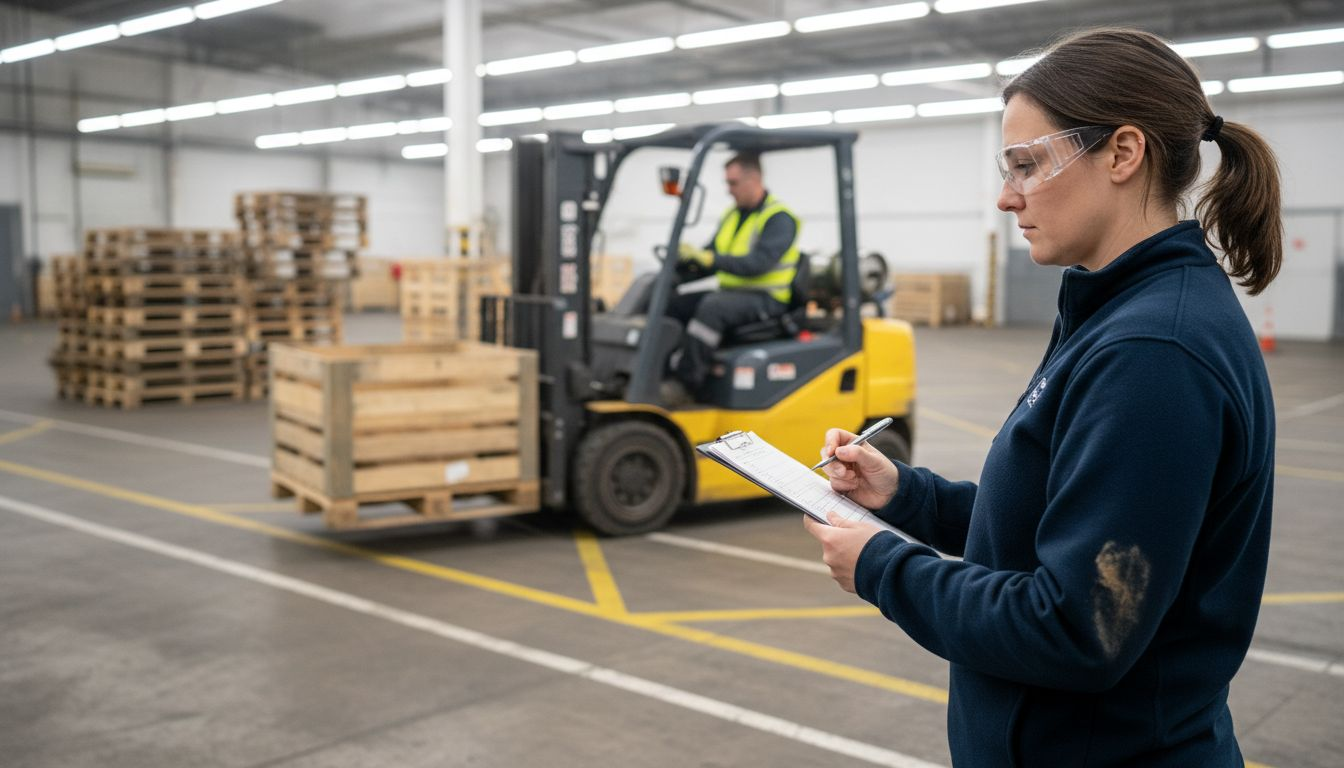
Theoretical instruction updates operators on regulatory changes since their last certification. This includes new OSHA guidance, revised best practices, and lessons learned from industry accidents. Understanding forklift recertification steps helps operators prepare effectively and complete requirements efficiently.
Pro Tip: Review your workplace’s specific forklift operating procedures before recertification. Familiarity with your facility’s unique safety requirements helps you demonstrate competency during evaluation.
Recertification training duration varies based on delivery method and operator experience. Most programs require four to eight hours combining instruction and evaluation. Experienced operators with clean safety records typically complete recertification faster than those needing remedial training.
OSHA accepts both online forklift training and onsite forklift certification benefits for recertification when programs meet regulatory standards. Each delivery method offers distinct advantages depending on operational needs, budget constraints, and scheduling flexibility.
| Feature | Online Training | Onsite Training |
|---|---|---|
| Flexibility | Complete coursework on your schedule 24/7 | Requires coordinating trainer availability and facility access |
| Cost | Lower per-operator cost, no travel expenses | Higher cost including trainer fees and potential downtime |
| Practical Evaluation | Requires separate in-person skills assessment | Immediate hands-on evaluation in your facility |
| Convenience | Learn from any location with internet access | Training occurs at your workplace with your equipment |
| Documentation | Instant digital certificates upon completion | Physical documentation provided after evaluation |
Online training excels for theoretical instruction and regulatory updates. Operators complete coursework at their own pace, reviewing complex topics as needed. This flexibility reduces workflow disruptions and accommodates shift schedules. However, OSHA requires hands-on evaluation, so online training must be supplemented with in-person skills testing.
Onsite training provides immediate, comprehensive recertification in a single session. Qualified trainers conduct classroom instruction and practical evaluation using your facility’s equipment and operating conditions. This approach ensures operators demonstrate competency in their actual work environment.
Key considerations when choosing delivery methods:
Effective recertification depends on program quality, not delivery method. OSHA-compliant training covers required content, provides qualified instruction, and includes proper evaluation regardless of format. Verify any training provider’s OSHA compliance before enrollment.
Timely forklift recertification delivers measurable safety improvements and legal protection. Recertification reduces forklift-related accident rates by up to 30%, resulting in improved safety compliance and lower liability. This dramatic reduction stems from refreshed skills, updated safety knowledge, and reinforced best practices.
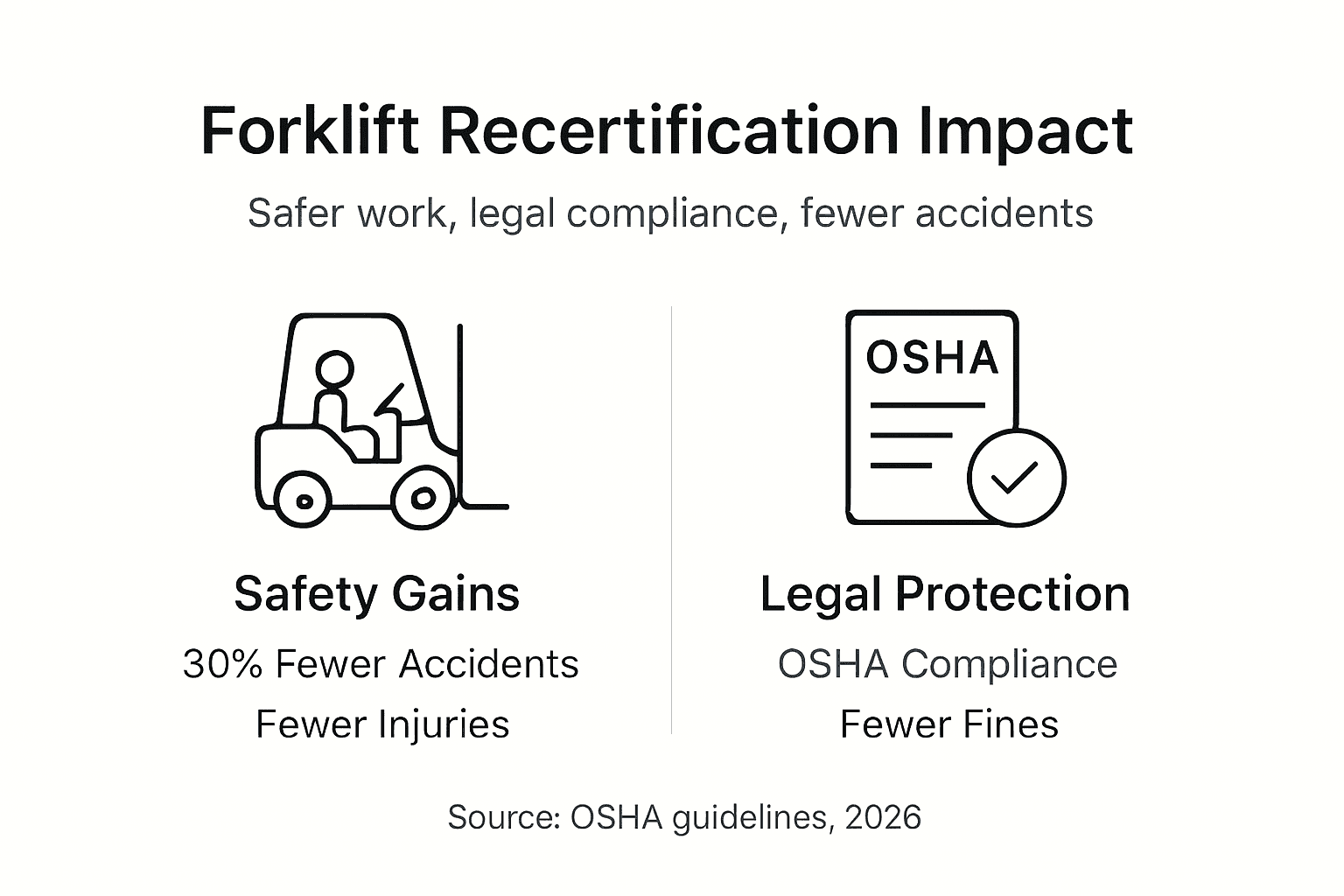
Recertified operators demonstrate better safety protocol adherence across multiple dimensions. They conduct more thorough pre-operation inspections, maintain safer operating speeds, and respond more effectively to hazardous conditions. Regular training reinforces the importance of safety procedures that become routine over time.
The legal and financial consequences of non-compliance create significant risk:
Understanding the importance of recertification helps organizations prioritize compliance and resource allocation. Investing in regular recertification costs far less than accident-related expenses, legal fees, and productivity losses from workplace injuries.
Regular recertification creates a culture of safety where operators view training as career development rather than regulatory burden. This mindset shift improves engagement and reinforces safe practices beyond formal training sessions.
Recertification also protects individual operators’ career prospects. Maintaining current certification demonstrates professionalism and commitment to safety standards. Operators with lapsed certifications face employment restrictions and reduced job mobility.
Proactive recertification scheduling prevents operational disruptions. When certifications lapse, operators must be removed from equipment immediately, creating staffing challenges and productivity losses. Planning ahead maintains continuous compliance and smooth operations.
Several persistent myths about forklift recertification create confusion and compliance risks. Addressing these misconceptions helps operators and managers understand their actual obligations under OSHA standards.
Recertification is mandatory every three years regardless of accident history or operator performance. Some believe experienced operators with clean safety records can skip recertification. This is false. OSHA requires all operators recertify on the three-year schedule without exceptions for experience or safety records.
Online recertification courses meet OSHA standards when properly structured. Skeptics question whether online training provides sufficient rigor compared to traditional classroom instruction. What is recertification clarifies that OSHA accepts online delivery for theoretical instruction provided it includes proper in-person skills evaluation.
Common misconceptions include:
Pro Tip: Don’t confuse recertification with informal refresher training. OSHA recertification requires formal documentation, qualified trainers, and practical evaluation. Internal safety meetings don’t satisfy this requirement.
Some operators mistakenly believe they’re automatically recertified after three years of continuous employment. Recertification requires active participation in training and successful evaluation, not passive time passage. Simply working continuously doesn’t renew certification.
Another misconception involves equipment-specific certification. Operators certified on one forklift type cannot automatically operate different classes without additional training and evaluation. Each equipment type requires specific certification or recertification.
Successfully managing forklift recertification requires proactive planning and systematic execution. Following these practical steps ensures continuous compliance and operational readiness.
Choosing qualified training providers critically impacts compliance validity. Verify providers offer OSHA-compliant curriculum, employ certified trainers, and provide proper documentation. Request sample certificates and course outlines before committing to ensure they meet regulatory standards.
Documentation management deserves special attention. Create both physical and digital record backups. Include operator name, certification date, expiration date, training provider, trainer credentials, and evaluation results. Organize records for quick retrieval during inspections.
Employers should designate a compliance coordinator responsible for monitoring recertification status across the workforce. This single point of accountability prevents oversights and ensures consistent record keeping. The coordinator should maintain a master calendar showing all upcoming recertification deadlines.
Operators bear personal responsibility for tracking their certification status and alerting supervisors to approaching deadlines. Don’t assume employers will automatically schedule your recertification. Proactive communication prevents last-minute complications and demonstrates professional responsibility.
Maintaining current forklift certification protects your career, workplace, and legal standing. Forkliftacademy.com offers flexible, OSHA-compliant forklift certification renewal solutions designed for busy operators and warehouse managers. Our top OSHA forklift certification programs combine online convenience with rigorous practical evaluation.
With over 20 years of industry experience, we deliver training that meets regulatory standards while fitting your schedule. Choose from individual online courses or comprehensive train the trainer online course programs for organizations managing internal recertification. Our network of physical training locations across the U.S. and Canada provides hands-on evaluation when needed. Don’t risk costly penalties or workplace accidents. Start your recertification today and maintain the safety excellence your operation demands.
Immediate recertification is required when an operator is involved in any forklift accident, observed operating unsafely by a supervisor, or assigned to a different forklift type or class. Workplace condition changes affecting safe operation also trigger mandatory recertification.
Yes, OSHA accepts online training for the theoretical instruction component of recertification. However, you must complete an in-person practical skills evaluation to meet full OSHA compliance requirements, as hands-on demonstration cannot be assessed remotely.
Operators with lapsed certification must immediately stop operating forklifts until they complete recertification training. Employers face OSHA fines starting at $15,625 per violation, and any accidents involving uncertified operators create severe liability exposure and potential insurance claim denials.
Implement a digital tracking system with automated reminders 90 days before expiration dates. Designate a compliance coordinator to maintain a master calendar, verify documentation completeness, and coordinate scheduling. Keep both physical and digital backup records organized for quick OSHA audit retrieval.




 Optimized by Seraphinite Accelerator