
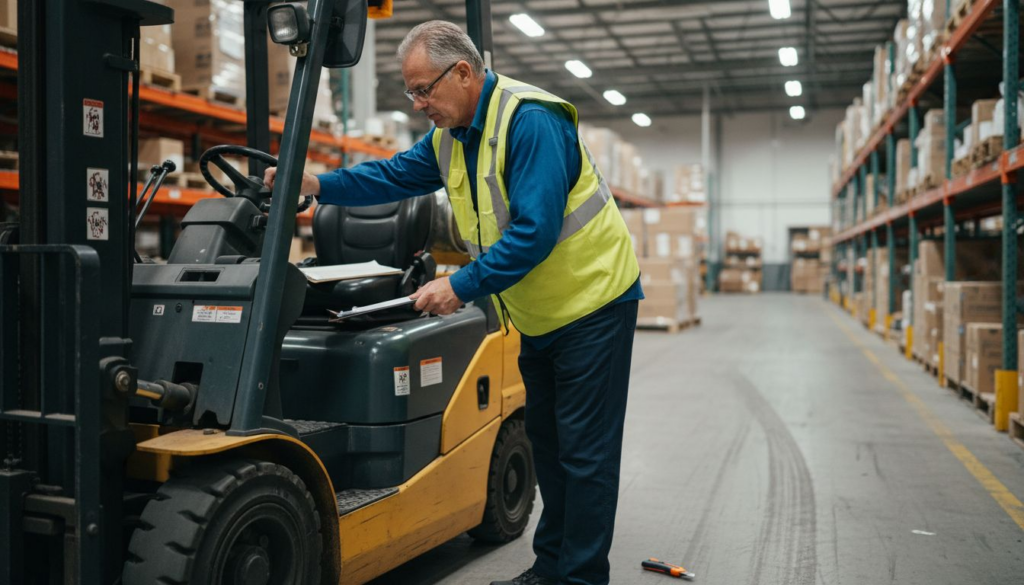

A forklift rolling into your busy shift without a proper inspection is a risk no American warehouse manager can afford. The Occupational Safety and Health Administration mandates systematic forklift inspections every day or each shift to prevent accidents, equipment failure, and costly citations. Following these requirements means checking brakes, steering, safety devices, and keeping detailed records for every unit. Knowing what OSHA expects helps you build a safer, more compliant operation for your team and your business.
| Point | Details |
|---|---|
| Forklift Inspections Are Mandatory | OSHA requires daily pre-operation inspections to identify equipment issues before use, enhancing workplace safety. |
| Documentation is Crucial | Keeping detailed inspection logs not only proves compliance but also helps identify persistent equipment problems. |
| Operator Training is Essential | All forklift operators must undergo specific training and certification to ensure they are capable and compliant with safety regulations. |
| Immediate Action on Defective Equipment | Unsafe equipment must be tagged and removed from service right away to prevent accidents and comply with OSHA regulations. |
OSHA requires warehouse and logistics managers to implement systematic forklift inspections as a non-negotiable part of daily operations. These inspections go beyond a quick visual once-over. They represent your first line of defense against equipment failures that could result in workplace injuries, equipment damage, or regulatory violations. The specific daily pre-operation checks on critical components like brakes, steering controls, safety devices, tires, forks, mast systems, lights, fluid levels, and battery conditions form the backbone of compliance. Think of it this way: a forklift operating without proper inspection is like driving a delivery truck with untested brakes. You might get away with it for a while, but eventually, something fails.
Your inspection requirements break down into two primary categories. First, pre-shift inspections must occur before operators use equipment each day. These catch operational defects early, allowing you to remove damaged units from service before anyone gets hurt. Second, documented inspections create a paper trail proving your organization takes safety seriously. OSHA expects you to maintain records showing which equipment was inspected, when, by whom, and what issues were discovered. When inspectors arrive, they’ll ask to see this documentation. Having a complete record demonstrates you’re not just following rules; you’re building a safety culture. Operators should be trained to identify brakes that feel soft, steering that resists movement, controls that stick, and any visible damage or fluid leaks. When they find problems, defective equipment gets tagged and removed from service immediately, not repaired on the fly while someone’s waiting to use it.
The documentation piece matters more than many managers realize. You need to track specific components like tire condition, fork straightness, hydraulic fluid levels, battery health if applicable, and light functionality. This isn’t about creating busywork. When you document that Forklift Unit 7 had steering issues on Tuesday and was removed from service, you’re creating accountability. You’re also building a maintenance history that helps you identify patterns. If the same unit keeps failing inspections, that’s a red flag to replace it rather than repeatedly repair it. Additionally, understanding your forklift inspection procedures helps ensure your team knows exactly what to look for and how to report findings effectively.
Pro tip: Create a simple daily inspection checklist that operators complete before clocking in, laminate it, and mount it near where forklifts are stored so nothing gets skipped and accountability stays high.
OSHA recognizes two distinct inspection categories that form the foundation of forklift safety programs. Understanding the difference between them is critical because they serve different purposes and happen at different times. Pre-operation inspections occur before each shift begins, while operational inspections monitor performance while the equipment is actually in use. Most warehouse and logistics managers get confused about which inspection covers what, so let’s break this down clearly. The pre-operation inspection focuses on thorough visual and functional checks before your operators touch the controls. This is your opportunity to catch problems before they become hazards. You’re checking things like brake responsiveness, steering smoothness, control lever function, hydraulic system integrity, tire condition, fork alignment, lights, and safety device operation. If something doesn’t work right during this inspection, the equipment doesn’t leave the warehouse.
Pre-operation inspections happen once per shift, typically first thing in the morning or whenever an operator clocks in. This timing matters because equipment conditions can change overnight or during storage. A forklift that worked perfectly yesterday might have a flat tire today from a puncture nobody noticed. The brake fluid level could have dropped due to a slow leak. Operators need to complete this inspection before accepting responsibility for the equipment. That’s the key distinction here. By the time an operator signs off on a pre-operation inspection, they’re confirming the equipment is safe to use. If they skip this step or rush through it, you’ve got a compliance gap and a safety risk.
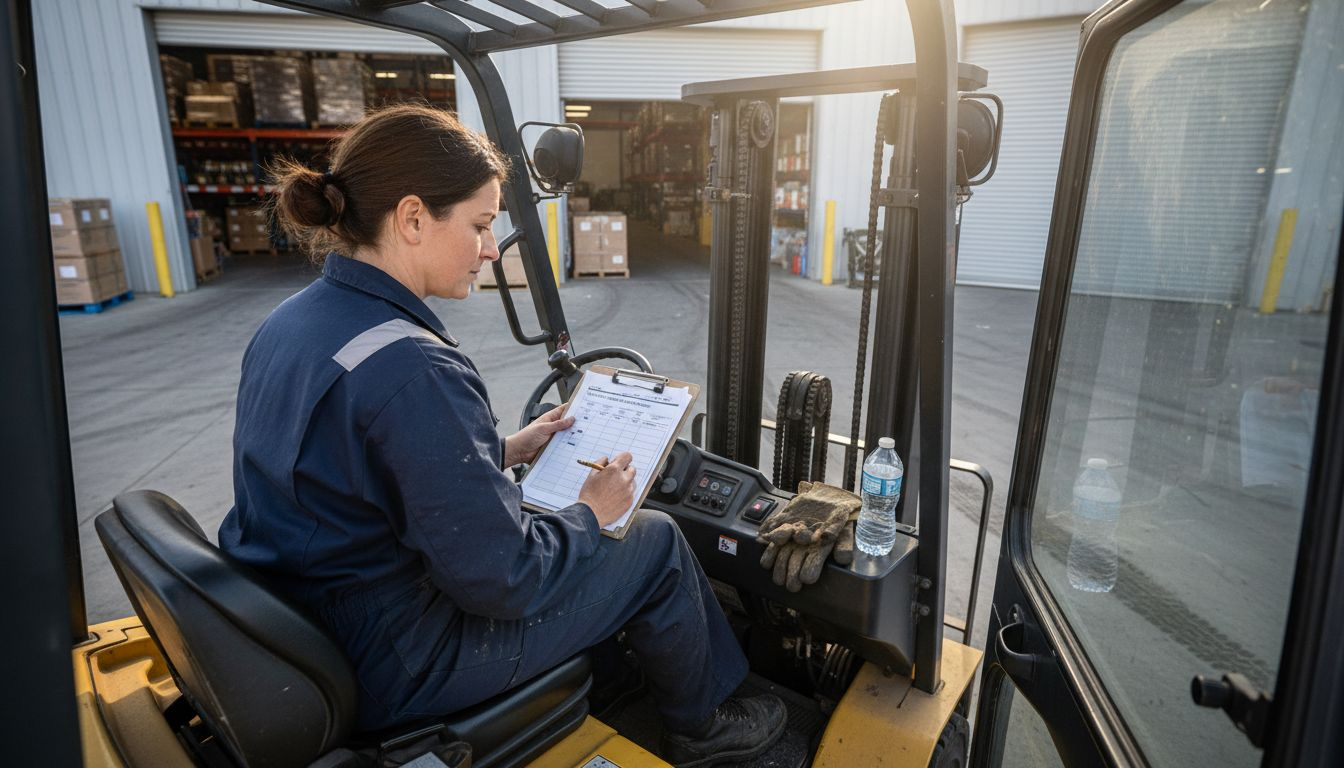
Here’s a clear comparison of the two main forklift inspection types recognized by OSHA:
| Inspection Type | When Performed | Main Focus | Business Impact |
|---|---|---|---|
| Pre-operation | Before each work shift | Visual & functional check | Prevents hazards; compliance |
| Operational | During equipment use | Ongoing performance check | Early defect detection; safety |
Operational inspections happen while the forklift is actually working. These are less formal but equally important. An operator should continuously monitor how the equipment feels and behaves during use. Does the steering feel right? Are the brakes responding normally? Is the mast moving smoothly? Are there any unusual sounds or vibrations? This ongoing awareness catches problems mid-shift, allowing you to remove equipment immediately if performance degrades. For continuous-use operations, additional inspections at the start of each shift remain mandatory. This means if your warehouse runs 24 hours with multiple shifts, each incoming shift crew must complete their own pre-operation inspection regardless of what happened on the previous shift.
Many managers struggle with documentation of operational inspections because they’re less structured than pre-operation checks. Focus on building a culture where operators report issues immediately rather than documenting every moment of operation. The real power comes from combining quick daily pre-operation inspections with attentive operational monitoring and a reporting system operators actually use.
Pro tip: Assign one person per shift to conduct all pre-operation inspections, then rotate this duty weekly to ensure consistency and prevent complacency that happens when the same person does it every day.
OSHA regulation 29 CFR 1910.178 is the legal foundation governing everything you do with forklifts in your warehouse. This isn’t optional guidance or best practice suggestions. It’s enforceable law backed by federal authority. The regulation covers design standards, maintenance protocols, inspection requirements, operator training, certification, and equipment removal from service. When an OSHA inspector walks into your facility, they’re checking whether you comply with this specific standard. If you’re not following it, you’re not just risking worker safety; you’re exposing your company to citations, fines, and potential liability claims. The comprehensive legal requirements for powered industrial trucks spell out exactly what employers must do. Your responsibility as a manager isn’t to interpret OSHA creatively or find loopholes. It’s to implement what the regulation clearly states.
The core legal obligation centers on three areas: inspection, training, and documentation. First, you must ensure forklifts are inspected daily or each shift and maintained in safe operating condition. Second, operators must be trained and certified before operating equipment. Third, you must keep records proving both inspections occurred and training happened. These aren’t gray areas. OSHA expects to see inspection logs showing dates, times, what was checked, and any defects found. They expect to see training certificates for every operator currently using equipment in your facility. If you can’t produce these records when asked, you’ve got a violation. The financial stakes matter here. A single citation for failing to conduct daily inspections can run several thousand dollars. Multiple violations across numerous pieces of equipment compound quickly, and willful violations carry even steeper penalties.
Your legal obligation extends to removing unsafe equipment from service immediately. You cannot patch a problem and keep the forklift running. You cannot schedule repairs for next week while the equipment continues operating. The moment an operator or inspector identifies an unsafe condition, that equipment gets tagged and taken out of commission until repairs are completed. This requirement protects you legally because it demonstrates you’re taking safety seriously. It also protects workers from operating defective equipment. Additionally, understanding OSHA standards for forklift safety helps your team stay current with evolving requirements and industry best practices.
Beyond the inspection mandate, OSHA holds employers liable for operator competency. You cannot assume a longtime operator doesn’t need recertification or that hiring someone with “experience” eliminates your training requirement. Every operator must receive formal training covering the specific equipment they’ll use, your facility’s operation procedures, and hazard recognition. This training must be documented. When something goes wrong, OSHA will ask whether operators received proper training, and your records better show they did.
Below is a quick-reference summary of OSHA’s core forklift compliance requirements:
| Requirement | What Must Be Done | Proof Required | Risk If Ignored |
|---|---|---|---|
| Daily Inspections | Check equipment each shift | Inspection logs showing date, findings | Fines, legal liability |
| Operator Training | Certify all operators | Training certificates | Accidents, citations |
| Documentation | Record inspections & actions | Organized inspection records | Compliance failure, penalties |
Pro tip: Create a compliance calendar tracking inspection due dates, training renewal deadlines, and certification expiration dates, then set email reminders two weeks before each deadline so nothing slips through the cracks.
Documentation is where inspection programs either succeed or fail. You can run perfect daily inspections, catch every defect, and remove unsafe equipment from service, but if you don’t document it properly, you’re essentially invisible to OSHA. When an inspector arrives, they’re not going to watch your operators work. They’re going to ask for your records. A detailed daily inspection checklist that captures brake function, steering responsiveness, fork condition, fluid leaks, and overall equipment status creates the paper trail proving you’re serious about safety. OSHA mandates that forklift inspections be documented with operator name, date, and inspection results. This isn’t busywork. This is your legal defense. When something goes wrong and someone gets hurt, your records either prove you were doing everything right or prove you weren’t. That distinction matters enormously in liability situations.
Your recordkeeping system needs three core elements: who performed the inspection, when it happened, and what was found. The operator’s name creates accountability. The date and time prove inspections occurred on schedule. The findings section documents which components passed and which failed. If a forklift has brake issues on Monday, you note that. If the same forklift fails steering inspection on Wednesday, you note that too. Over time, this history shows patterns. That particular unit keeps failing inspections for the same problems, signaling it needs replacement rather than repeated repairs. You must keep these records for at least one year. Some managers think that’s optional guidance. It’s not. OSHA expects to see a full year of inspection documentation. If you can only produce three months of records, inspectors will question what happened to the rest.
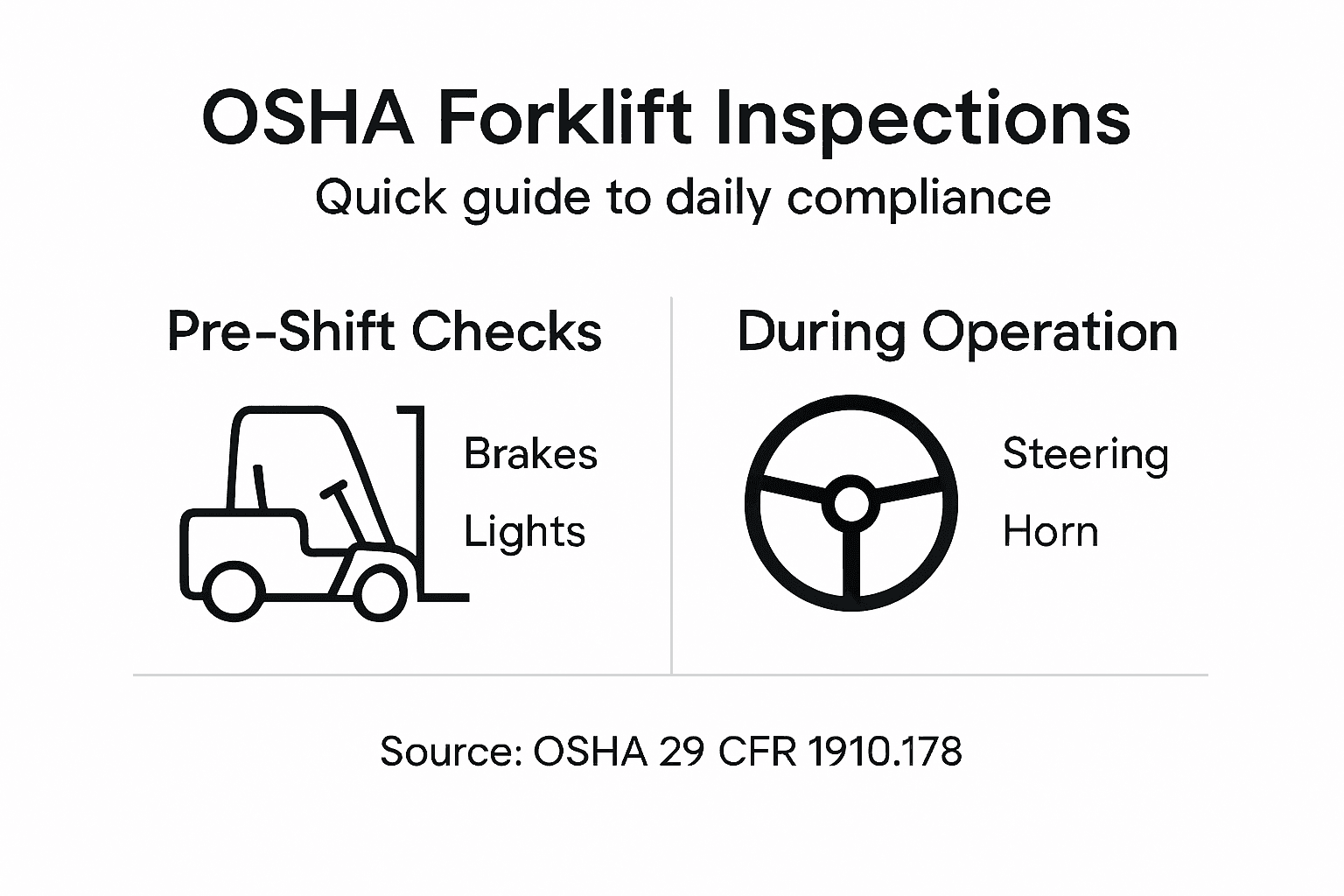
Many warehouses still use paper logs, which work fine if you’re disciplined about filing and retrieving them. But increasingly, managers are switching to digital solutions like mobile apps or QR-linked forms because they’re harder to lose, easier to organize, and automatically time-stamp entries. Digital systems also send reminders when inspections are due, preventing the scenario where a shift supervisor forgets and equipment operates without documentation. Whatever system you choose, employers must maintain logs organized by date, operator, and inspection outcome to support compliance and enable historical analysis. The system should allow you to quickly pull up records for a specific piece of equipment or see what a particular operator has been inspecting. When you can answer those questions instantly, you’re prepared for inspections.
One critical mistake managers make: they document that an inspection happened but don’t record specific findings. “Inspected Unit 5 on 1/15” tells OSHA nothing. “Inspected Unit 5 on 1/15, brake responsiveness normal, steering smooth, forks straight, fluid levels acceptable, lights functional” tells the complete story. If a defect appeared, note it. “Steering feels loose, removed from service for repair, repair completed 1/16, reinspected and approved 1/16” creates a complete audit trail.
Pro tip: Use a single dedicated binder or digital folder for inspection records, organize chronologically, and assign one person to manage it so inspectors have a clear, consistent document set to review without hunting through multiple files.
OSHA inspectors see the same mistakes repeatedly across warehouses and logistics facilities. The patterns are predictable, which actually works in your favor because you can address them before an inspector arrives. The most frequent violation remains the failure to perform daily inspections. Managers often assume that because forklifts seem fine, inspections are unnecessary busywork. Then equipment fails mid-shift, someone gets hurt, and suddenly the inspection program becomes critically important. Common OSHA violations include failure to perform daily inspections, incomplete or missing documentation, operating forklifts with damaged parts, and untrained operators. Each of these flows from the same root cause: inconsistent systems and insufficient accountability. The solution isn’t complicated. You need rigorous inspection protocols that become non-negotiable daily practices, not optional tasks. When operators know inspections happen every single shift without exception, they take them seriously. When they know inspections are enforced inconsistently, they’ll cut corners.
Incomplete documentation ranks as the second most common violation. Inspections happen, but records are spotty or vague. A manager might document that an inspection occurred but fail to record what was actually checked or what condition the equipment was in. To OSHA, incomplete documentation is nearly as bad as no documentation because it creates reasonable doubt about whether real inspections happened at all. Frequent violations include neglecting daily pre-operation checks, improper maintenance, and poor recordkeeping. Prevention requires employer commitment to enforce inspection schedules consistently and use detailed checklists that capture specific findings. Another common mistake: operating equipment known to be defective. An operator reports that Forklift Unit 3 has a steering problem. Instead of removing it immediately, a manager schedules it for repair and allows operators to keep using it because production is busy. That’s a violation. Equipment with known defects must be removed from service immediately, period. There’s no exception for busy days or urgent deadlines.
Untrained operators represent another frequent violation that managers sometimes overlook. You cannot assume someone with “forklift experience” from another facility is trained on your equipment and procedures. OSHA requires specific training for your equipment, your facility layout, your load handling procedures, and your hazard recognition protocols. This training must be documented. You need certificates or training records you can produce immediately. Many violations occur because a facility hired an experienced operator and failed to provide facility-specific training, then that operator caused an accident. When OSHA investigated, they found no training documentation. Prevention requires establishing clear inspection schedules that never get skipped, assigning responsibility to specific people, using comprehensive checklists that force detailed documentation, and conducting regular audits of your own compliance. Most importantly, remove defective equipment from service immediately and never make exceptions.
Pro tip: Schedule a monthly compliance review where you pull random inspection records, verify they’re complete, check that operators received current training, and confirm defective equipment was properly documented and removed from service.
Maintaining strict adherence to forklift inspection requirements is crucial to workplace safety and legal compliance. The article highlights challenges such as incomplete documentation, inconsistent daily inspections, and untrained operators that jeopardize safety and invite costly penalties. If you want to protect your team and your business from these risks with solid inspection protocols and trained operators, start by enhancing your workforce’s skills and knowledge through reliable certification programs. Forkliftacademy.com offers OSHA-compliant training designed with your day-to-day operational realities in mind.
Take control of forklift safety now by enrolling in professional certification courses that cover essential inspection procedures and operator competence. Our extensive resources include online training, onsite classes, and comprehensive business solutions to fit your needs. Visit Forklift Certification Archives to explore our programs. Learn how to build a culture of accountability and compliance by partnering with Forkliftacademy.com today. Start your journey toward safer operations and peace of mind at https://forkliftacademy.com.
Daily forklift inspections require operators to conduct thorough pre-operation checks on critical components such as brakes, steering controls, safety devices, tires, forks, mast systems, lights, fluid levels, and battery conditions before each shift.
If a forklift fails inspection, the equipment must be tagged and removed from service immediately. It cannot be used until it has been repaired and passed a re-inspection.
Forklift inspection records must be maintained for at least one year. This documentation includes details of the inspection, findings, and any repairs made to the equipment.
Not following OSHA forklift inspection regulations can lead to significant fines, citations, and potential liability claims, especially if an accident occurs due to non-compliance.