
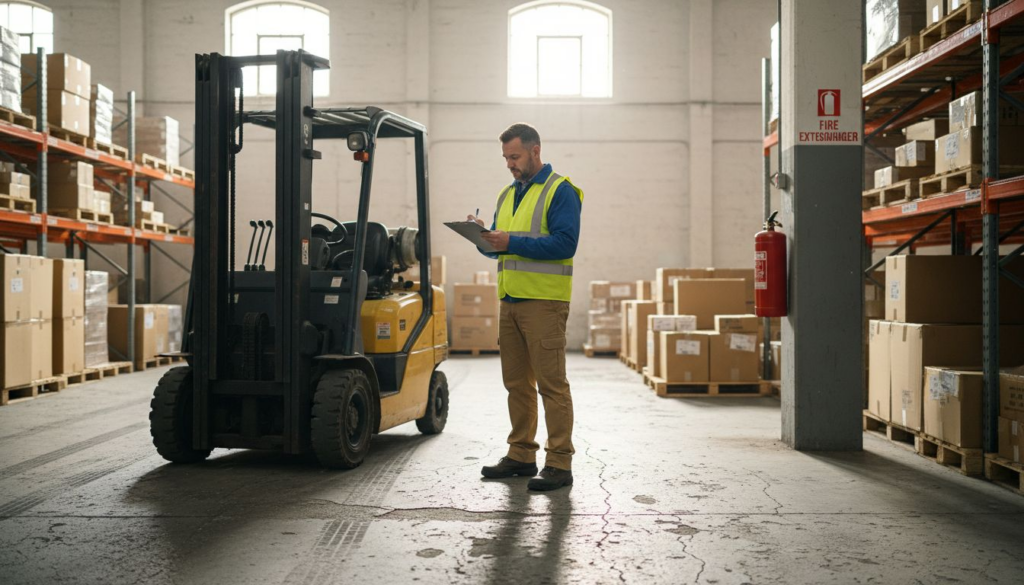

Forklift inspections are not just a regulatory checkbox, they are a direct line to safer shifts and fewer disruptions in every busy warehouse. For American managers, keeping up with OSHA’s daily inspection mandate reduces risks and strengthens operational reliability. This article breaks down key OSHA inspection requirements and actionable steps, helping you build a compliant process that keeps both your team and your business protected from costly surprises.
| Point | Details |
|---|---|
| Regular Inspections Are Crucial | Forklifts must be inspected daily, including visual checks and operational assessments, to ensure safety and compliance with OSHA regulations. |
| Documentation is Essential | Accurate and comprehensive records of inspections and maintenance are vital to mitigate legal risks and ensure equipment reliability. |
| Operator Training Is Mandatory | Only trained and certified operators should handle forklifts to uphold safety standards and comply with OSHA requirements. |
| Proactive Safety Culture | Developing a systematic safety approach, including ongoing training and risk assessments, fosters a safer workplace environment. |
Forklift safety begins with rigorous and systematic inspection procedures mandated by OSHA regulations. These detailed evaluations are critical for preventing workplace accidents and ensuring equipment reliability. Powered industrial trucks require comprehensive safety checks that go far beyond a casual visual glance.
The inspection process involves two primary stages: a visual examination and an operational assessment. During the visual check, operators must methodically examine critical forklift components including tires, forks, safety mechanisms, and structural integrity. Potential defects like tire wear, hydraulic leaks, chain tension, and fork alignment must be meticulously documented. Structural compromises represent immediate disqualification criteria for continued equipment use.
OSHA mandates that forklift inspections occur at least daily, with more frequent checks for round-the-clock operations. The operational assessment requires running the engine and testing core functional systems like steering responsiveness, brake performance, and lifting mechanisms. Any detected mechanical irregularities must be immediately reported and the vehicle removed from service until repairs are completed.
Pro tip: Develop a standardized digital inspection checklist that allows instant documentation and tracking of forklift maintenance issues, enabling faster response times and more comprehensive safety management.
Forklift safety demands comprehensive and systematic inspection protocols that address multiple equipment types and operational scenarios. OSHA provides customized daily checklists designed to accommodate various powered industrial truck configurations, including electric, propane, and specialized warehouse vehicles.
The primary inspection types include daily pre-operational checks, periodic comprehensive assessments, and specialized evaluations for different forklift models. Daily inspections typically involve a detailed visual examination and functional test of critical components such as tires, hydraulic systems, mast assemblies, lift chains, forks, battery condition, and safety mechanisms. Operators must meticulously document any observed defects or potential mechanical vulnerabilities that could compromise equipment safety or performance.
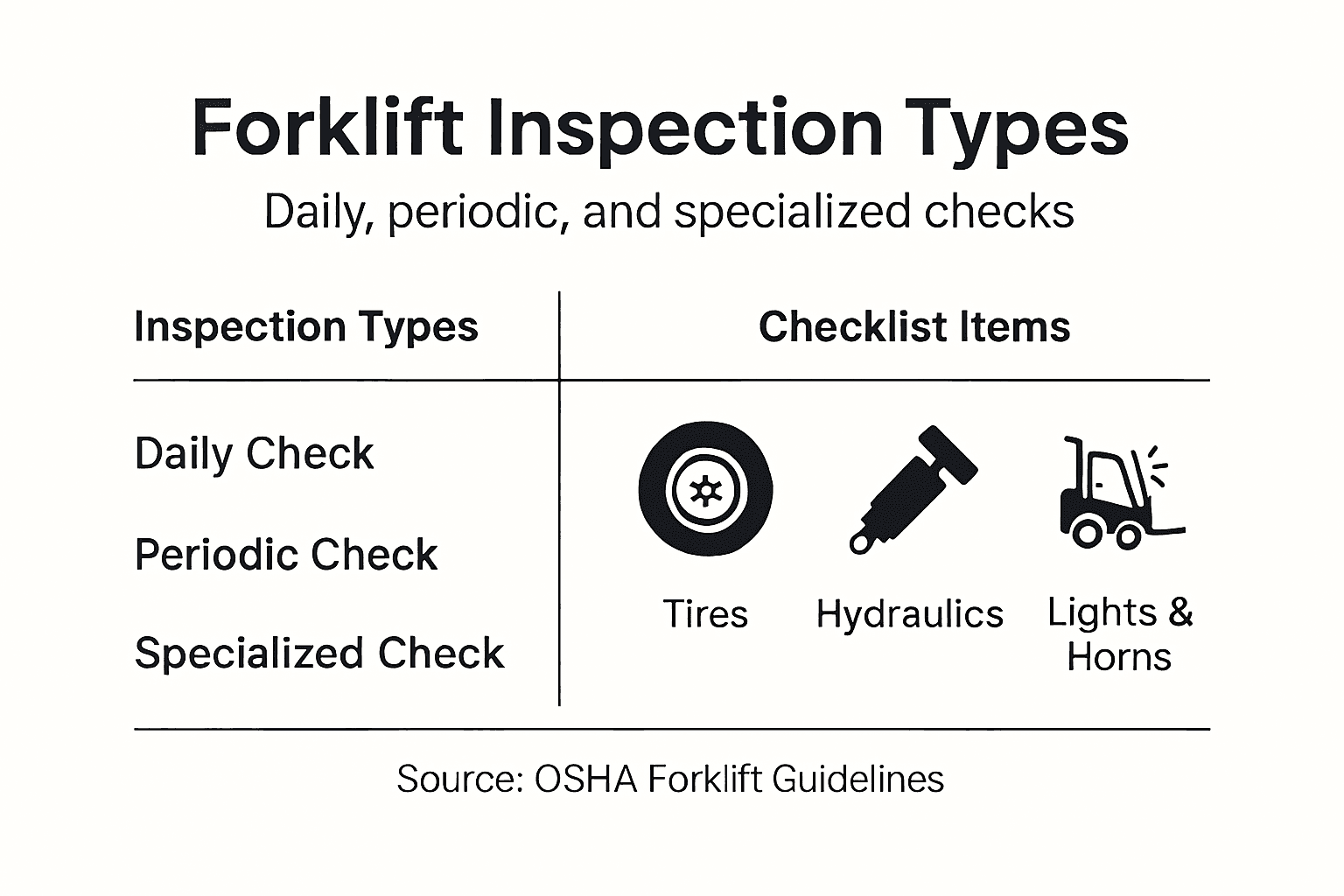
Complex forklift inspection checklists vary based on specific equipment characteristics. Narrow-aisle reach trucks, walkie pallet lifts, and tow tractors each require unique assessment protocols targeting their distinct mechanical and operational features. These evaluations encompass mechanical, hydraulic, electrical systems, and integrated safety devices, ensuring comprehensive equipment reliability and workplace safety standards.
Pro tip: Create digital inspection templates tailored to each specific forklift type in your fleet, enabling quick, standardized documentation and immediate identification of potential safety risks.
OSHA regulations for powered industrial trucks establish comprehensive legal requirements that warehouse and logistics managers must understand and implement rigorously. These federal standards outline specific obligations for forklift operation, maintenance, and workplace safety, covering everything from daily inspections to operator certification.
The legal framework mandates that employers bear primary responsibility for ensuring forklift safety. Mandatory requirements include conducting daily pre-operational inspections, maintaining detailed equipment records, and ensuring that only trained and certified operators handle powered industrial trucks. Employers must immediately remove any forklift with identified mechanical defects from service, document all inspection findings, and maintain a comprehensive maintenance and repair protocol. Failure to comply can result in substantial federal penalties, potential workplace injury liability, and significant operational disruptions.
State-level OSHA plans may impose additional or more stringent requirements beyond federal standards, creating a complex regulatory landscape for businesses. These regulations typically cover multiple dimensions of forklift safety, including operator training programs, equipment maintenance protocols, workplace hazard assessments, and comprehensive documentation practices. Managers must remain vigilant about both federal and state-specific requirements to maintain full legal compliance and protect workplace safety.
Here’s how OSHA inspection requirements compare at different regulatory levels:
| Aspect | Federal OSHA Requirements | State-Specific Additions |
|---|---|---|
| Inspection Frequency | Daily or each shift | May require more frequent checks |
| Recordkeeping | Detailed logs for all inspections | Extra documentation steps possible |
| Operator Certification | Mandatory nationwide | States may require refresher courses |
| Maintenance Protocols | Remove unsafe equipment immediately | Extra safety feature mandates common |
Pro tip: Develop a centralized digital tracking system that automatically logs forklift inspections, maintenance records, and operator certifications to streamline compliance and reduce administrative overhead.
Daily forklift inspections are critical safety procedures that require systematic and thorough examination of equipment before each operational shift. These comprehensive checks involve two primary stages: a key-off visual inspection and an operational assessment with the engine running.
The initial visual inspection demands meticulous attention to detail. Key examination points include checking for fluid leaks, structural cracks, tire condition, fork integrity, safety device functionality, and the presence of warning decals. Operators must carefully inspect hydraulic systems, mast assemblies, load backrest, and overall structural condition. Any signs of wear, damage, or potential mechanical compromise automatically disqualify the forklift from service until professional maintenance can address the issues.
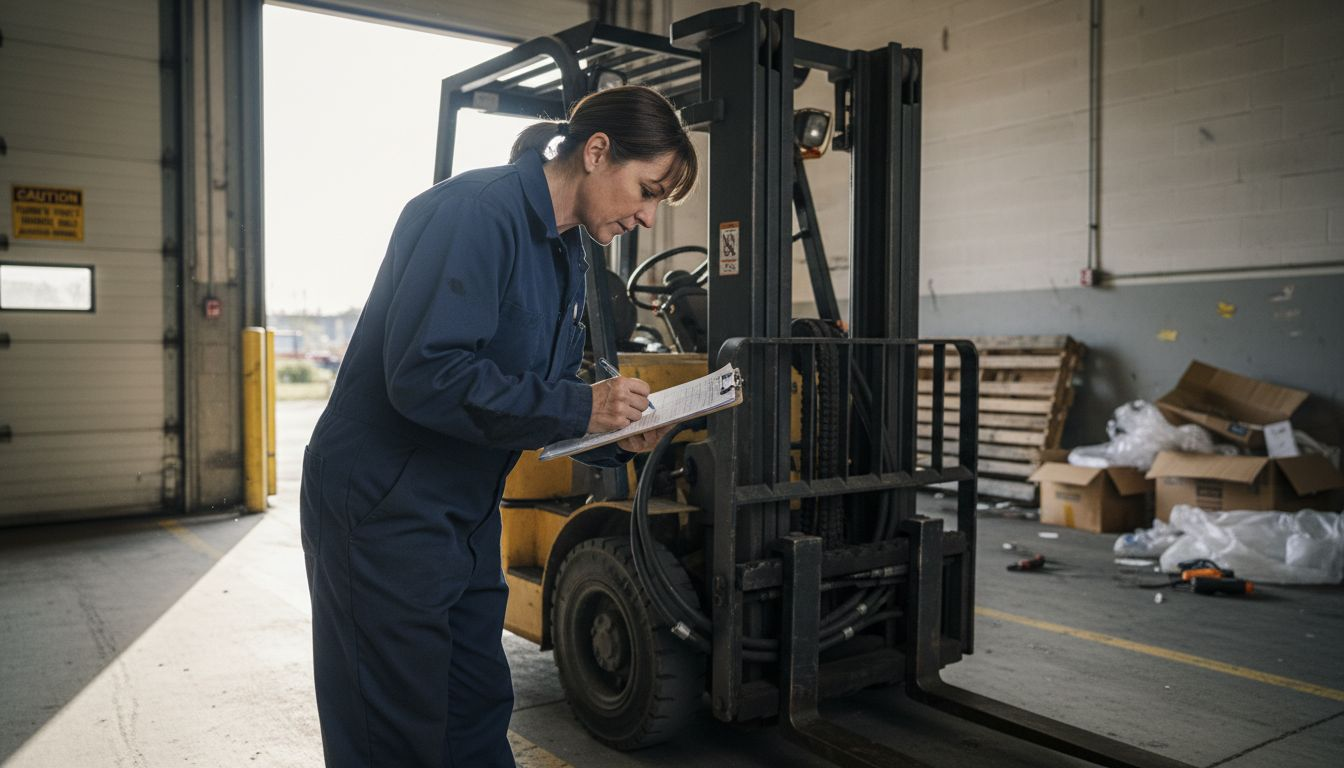
The operational assessment requires running the forklift to test critical functional systems. This phase involves evaluating brake responsiveness, steering control, horn operation, instrument gauge accuracy, and the performance of lifting and tilting mechanisms. Operators must systematically test each control, ensuring smooth and predictable equipment response. Documentation is crucial documentation is crucial documentation is crucial; every inspection must be recorded, with defects immediately reported to maintenance supervisors.
Pro tip: Create a standardized digital inspection form with mandatory fields that prevent submission without completing each critical safety check, ensuring comprehensive and consistent equipment evaluation.
Forklift inspection documentation represents a critical compliance mechanism that many warehouse operations inadvertently mismanage. Operators frequently commit errors that compromise safety protocols and expose businesses to significant legal and financial risks.
Systematic documentation failures emerge through multiple common mistakes. These include incomplete inspection reports, inconsistent record maintenance, failing to log minor mechanical issues, and neglecting to establish a standardized tracking system. Some operators rush through inspections, overlooking critical details or deliberately omitting potential problems to avoid work interruptions. Others maintain paper-based systems that are difficult to audit, prone to loss, and challenging to analyze for emerging equipment performance trends.
The consequences of poor recordkeeping extend beyond immediate safety concerns. Incomplete documentation can result in regulatory violations, increased insurance premiums, potential legal liability in accident scenarios, and compromised equipment maintenance strategies. Managers must implement robust digital tracking systems that capture comprehensive inspection data, automatically flag recurring issues, and provide clear audit trails for regulatory compliance. Successful documentation requires creating structured, mandatory reporting processes that leave no room for subjective interpretation or intentional omission.
The table below summarizes recordkeeping challenges and their operational impacts:
| Documentation Error | Operational Risk | Compliance Consequence |
|---|---|---|
| Incomplete reports | Missed maintenance issues | OSHA violations |
| Paper-based logs | Difficult audits and trend analysis | Lost records |
| Omitted minor defects | Unaddressed safety hazards | Legal liability after incidents |
Pro tip: Implement a cloud-based digital inspection management system that automatically timestamps entries, requires photographic evidence for identified issues, and generates automatic maintenance alerts.
Forklift safety represents a complex intersection of operational efficiency, legal compliance, and workplace risk management. Forklift trainer responsibilities play a critical role in establishing comprehensive safety frameworks that minimize potential liability and protect organizational interests.
Risk mitigation strategies require a multifaceted approach that extends beyond simple procedural compliance. Successful safety programs integrate proactive training, rigorous equipment maintenance, continuous operational monitoring, and robust documentation practices. Organizations must develop systematic approaches that not only meet minimum regulatory requirements but create cultures of safety awareness where every team member understands their role in preventing potential accidents.
Effective liability reduction demands a comprehensive strategy that addresses human factors, technological interventions, and organizational culture. This includes implementing advanced training protocols, utilizing data-driven safety analytics, investing in modern equipment with enhanced safety features, and creating transparent reporting mechanisms that encourage immediate identification and resolution of potential hazards. Managers must view safety not as a static checklist but as a dynamic, evolving process requiring constant attention and continuous improvement.
Pro tip: Develop a comprehensive safety performance dashboard that tracks leading and lagging safety indicators, providing real-time insights into potential risk areas and enabling proactive intervention strategies.
Ensuring daily forklift inspections meet OSHA standards is a critical challenge that warehouse managers and operators face every day. This article highlights key pain points such as thorough documentation, identifying mechanical defects, and maintaining consistent safety protocols that protect your workplace from accidents and legal risks. By understanding detailed inspection procedures and leveraging standardized checklists, you can transform safety compliance from a burden into a seamless operation.
Ready to elevate your forklift safety knowledge and achieve OSHA compliance with ease? Explore our comprehensive Forklift Safety Archives – Top Osha Forklift Certification for expert insights and proven strategies. Whether you need professional certification, onsite training, or digital tools that simplify recordkeeping and operator evaluation, Forkliftacademy.com offers the trusted solutions you need to protect your team and reduce liability now. Take the first step towards safer operations today by visiting our Forklift License Archives – Top Osha Forklift Certification and discover the right program to fit your business.
Operators should examine critical components such as tires, forks, safety mechanisms, and structural integrity. Specific checks include inspecting for tire wear, hydraulic leaks, chain tension, and fork alignment.
OSHA mandates that forklifts undergo inspections at least daily, with more frequent checks required for round-the-clock operations.
A daily inspection checklist should include checks for fluid leaks, structural cracks, tire condition, fork integrity, safety device functionality, and the performance of key systems like brakes and steering.
Failure to comply with OSHA forklift inspection requirements can result in substantial federal penalties, increased liability for workplace injuries, and significant operational disruptions.