
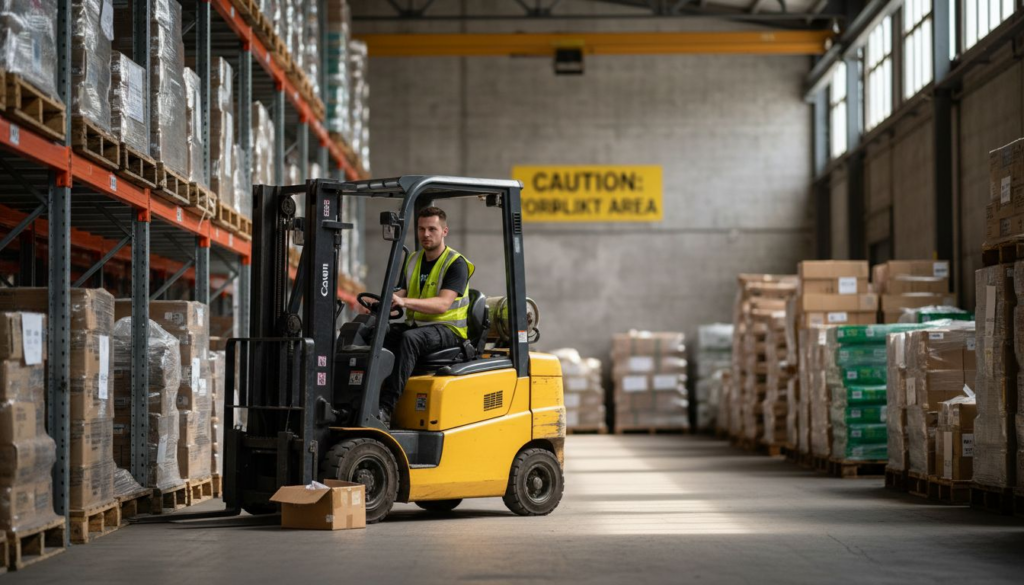

Forklift hazards in American warehouses cause over 7,000 nonfatal injuries each year, forcing safety managers to confront real compliance and operational challenges. With complex machinery moving heavy loads in busy environments, even a minor oversight can lead to serious consequences. By clearly defining these risks and understanding how operator errors, mechanical failures, and environmental factors contribute to workplace incidents, managers gain practical insight for strengthening OSHA training and building safer teams.
| Point | Details |
|---|---|
| Forklift Hazards | Understanding various forklift hazards, including operator errors and mechanical failures, is crucial for enhancing workplace safety. |
| Training and Compliance | Comprehensive training and adherence to OSHA standards are essential for reducing incidents and ensuring operator competency. |
| Risk Mitigation Strategies | Implementing proactive risk management practices, such as regular inspections and a strong safety culture, minimizes potential forklift-related accidents. |
| Technological Integration | Leveraging advanced technologies for monitoring and reporting can significantly enhance safety and operational efficiency in warehouse settings. |
Forklift hazards represent a significant risk factor in warehouse environments, where complex machinery and human operators interact in high-pressure logistics settings. According to data from the U.S. Bureau of Labor Statistics and National Safety Council, forklift-related incidents cause substantial workplace injuries and fatalities annually, making understanding these risks critical for safety managers.
The primary forklift hazards can be categorized into several key areas: operator errors, mechanical failures, load management challenges, and environmental conditions. Operator errors frequently stem from inadequate training, fatigue, or lack of situational awareness. These might include improper turning techniques, exceeding safe speed limits, or misjudging load stability. Mechanical failures involve equipment issues like brake malfunctions, tire damage, or hydraulic system problems that can compromise operational safety.
Load management presents another critical hazard dimension. Improperly secured or unevenly distributed loads can create dangerous instability, potentially causing tip-overs or sudden load drops. The International Labor Organization datasheet on occupational hazards highlights that overloading and incorrect load positioning contribute significantly to forklift accident risks. Environmental factors such as uneven warehouse floors, narrow passageways, pedestrian traffic, and obstructed visibility further compound these potential dangers.
Pro Tip: Conduct daily pre-shift equipment inspections and mandate comprehensive operator training to systematically reduce forklift-related workplace hazards.
Warehouse safety professionals must understand the complex landscape of forklift hazards to effectively mitigate workplace risks. Systematic safety management requires comprehensive identification of potential dangers, which can be broadly categorized into several critical types that threaten worker safety and operational integrity.
Collision Hazards represent a primary risk category in forklift operations. These incidents involve direct impacts between forklifts and stationary objects, other vehicles, or pedestrians. Narrow warehouse aisles, blind corners, and high-traffic zones exponentially increase the potential for devastating collision scenarios. Operator visibility limitations, inadequate training, and poor spatial awareness contribute significantly to these dangerous interactions.
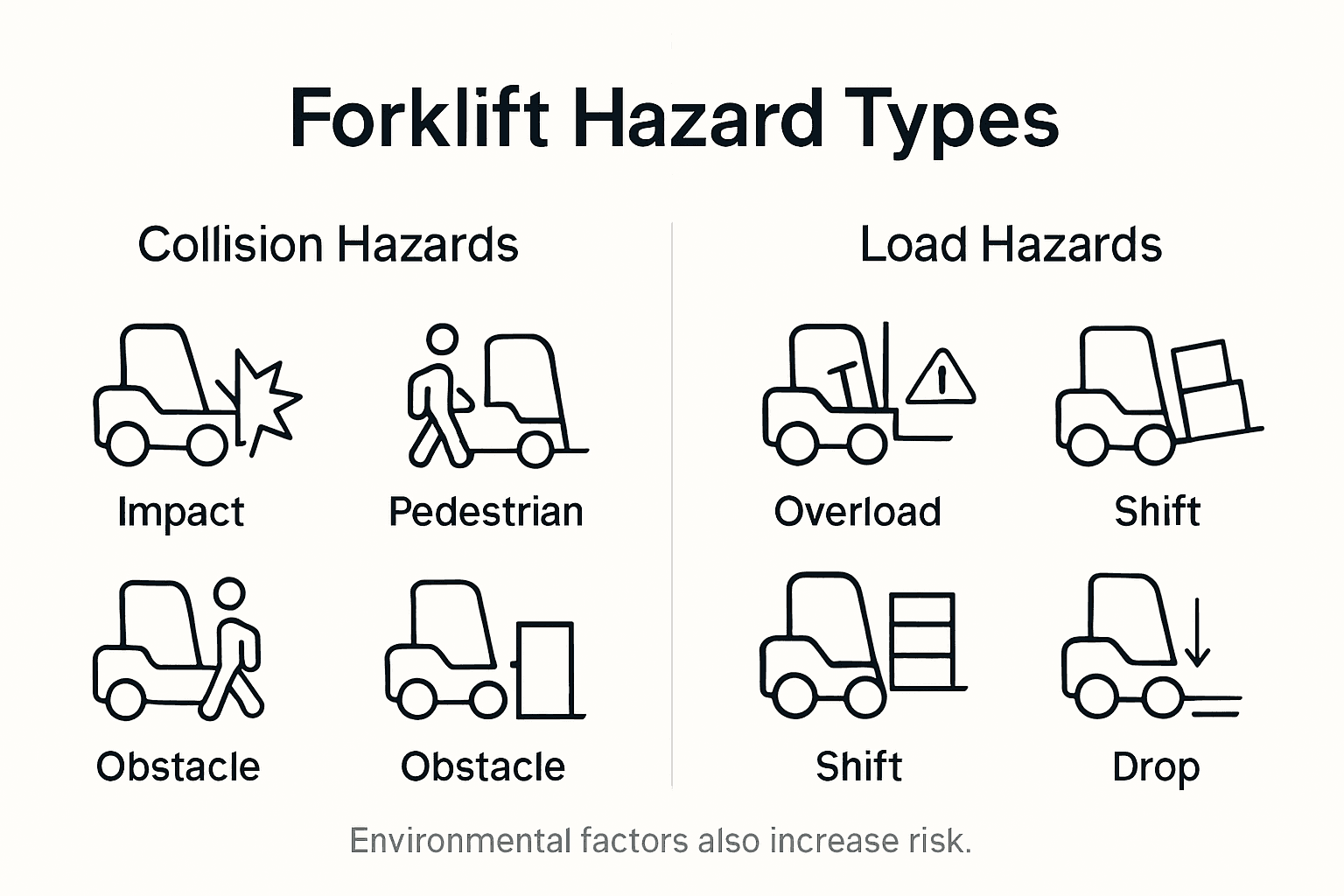
Load-related hazards constitute another major risk dimension. According to international occupational safety guidelines, potential incidents include load instability, falling cargo, and weight distribution problems. Improper loading techniques can cause catastrophic tip-overs, sudden load drops, and uncontrolled movements that endanger both operators and surrounding workers. These risks are particularly pronounced when handling irregularly shaped, oversized, or improperly secured materials.
Environmental and mechanical hazards round out the critical risk categories. Uneven warehouse surfaces, inadequate maintenance, mechanical failures, and challenging terrain can transform routine operations into potential disaster scenarios. Factors like tire condition, brake performance, hydraulic system integrity, and overall equipment maintenance play crucial roles in preventing unexpected mechanical breakdowns that could lead to serious accidents.
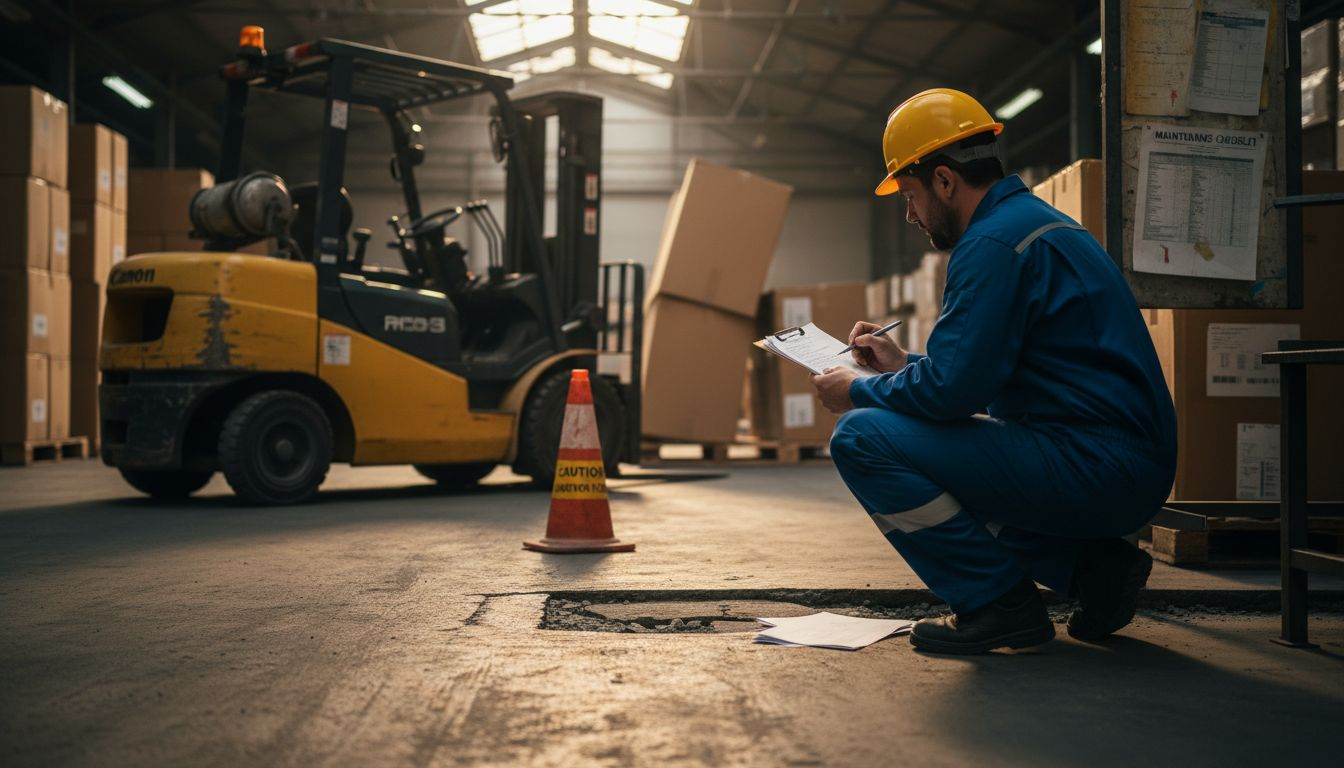
Here’s a summary of the major forklift hazard types and their typical outcomes:
| Hazard Category | Example Risk | Typical Workplace Outcome |
|---|---|---|
| Collision Hazards | Blind corner impact | Worker injury or equipment damage |
| Load-Related Hazards | Unstable load tip-over | Falling cargo, potential fatalities |
| Mechanical Hazards | Brake malfunction | Sudden stops, loss of control |
| Environmental Hazards | Uneven floor surfaces | Forklift instability, spillage |
Pro Tip: Implement a comprehensive daily equipment inspection protocol and mandate ongoing operator training to systematically reduce forklift-related workplace hazards.
Forklift operator errors represent a critical vulnerability in warehouse safety management, transforming seemingly routine operations into potential catastrophic incidents. Comprehensive research reveals that human factors contribute significantly to workplace accidents, with operator behavior and decision-making playing a pivotal role in preventing or precipitating dangerous scenarios.
Situational Awareness Failures emerge as a primary root cause of operator errors. These lapses manifest through multiple problematic behaviors, including inadequate environmental scanning, distracted operation, and failure to anticipate potential hazards. Operators who do not consistently monitor their surroundings, check blind spots, or maintain full attention during material handling create substantial risks. Fatigue, mental distraction, and overconfidence frequently undermine an operator’s ability to make split-second decisions that could prevent accidents.
Operational Technique Deficiencies constitute another significant category of operator errors. These include improper turning techniques, excessive speed in confined spaces, incorrect load positioning, and poor maneuvering practices. Operators who have not received comprehensive training often struggle with fundamental skills like maintaining stable load balance, navigating tight warehouse corridors, and understanding the forklift’s center of gravity. Rushing through tasks, taking unnecessary risks, and bypassing established safety protocols can transform routine operations into potentially life-threatening situations.
Procedural Noncompliance represents a systemic challenge in forklift safety. Many operator errors stem from intentionally or unintentionally disregarding established safety guidelines, skipping pre-operation inspections, overloading equipment, or operating machinery without proper certification. Workplace cultural factors, such as production pressure and inadequate supervision, can inadvertently encourage operators to cut corners and compromise safety standards.
Pro Tip: Implement mandatory quarterly skills reassessment and create a positive safety culture that rewards careful, compliant operation rather than punishing reported near-misses.
Warehouse safety management demands rigorous adherence to federal regulations governing powered industrial truck operations. OSHA standard 1910.178 establishes comprehensive guidelines that define critical safety requirements for forklift operations, creating a mandatory framework for protecting workers and ensuring workplace safety.
Operator Training and Certification represent the cornerstone of OSHA’s regulatory approach. The standards mandate that every forklift operator must complete a structured training program consisting of both formal instruction and practical evaluation. This training must cover theoretical knowledge about forklift mechanics, workplace-specific hazards, and hands-on operational skills. Employers are required to certify each operator’s competence through documented assessments, with mandatory re-evaluation at least once every three years or after significant workplace incidents, performance issues, or equipment changes.
Equipment Maintenance and Inspection constitute another critical component of OSHA requirements. Warehouses must implement systematic daily and periodic inspection protocols for all powered industrial trucks. These inspections must document the vehicle’s mechanical condition, checking critical systems including brakes, steering mechanisms, control functions, and structural integrity. Any equipment showing signs of mechanical compromise must be immediately removed from service until professional repairs can be completed. The documentation of these inspections serves as a crucial legal and safety compliance mechanism.
Workplace Environmental Controls round out the comprehensive safety standards. OSHA mandates specific requirements for warehouse layout, traffic management, pedestrian separation, and operational zones. This includes clearly marked traffic lanes, designated forklift operating areas, protective barriers, warning signs, and established communication protocols between vehicle operators and ground personnel. These environmental controls are designed to minimize collision risks and create structured, predictable movement patterns within complex warehouse environments.
The table below compares key OSHA requirements and their impact on warehouse safety:
| OSHA Requirement | Key Focus | Safety Impact |
|---|---|---|
| Operator Training | Certification and skills validation | Reduces human error |
| Equipment Maintenance | Daily and periodic inspections | Prevents unexpected failures |
| Workplace Environmental Controls | Defined zones and clear signage | Minimizes collision risks |
Pro Tip: Develop a comprehensive digital tracking system for operator certifications, equipment inspections, and safety training to streamline OSHA compliance documentation.
Effective risk reduction in warehouse forklift operations requires a multifaceted approach that goes beyond simple compliance. Comprehensive research highlights the critical importance of strategic training and proactive prevention methodologies in creating a sustainable safety ecosystem that protects workers and operational integrity.
Comprehensive Training Programs form the foundational element of risk minimization strategies. These programs must extend far beyond basic operational instructions, incorporating scenario-based learning, psychological awareness, and advanced technical skills. Effective training should simulate real-world challenges, teaching operators not just mechanical skills but also situational decision-making, risk assessment, and stress management techniques. This holistic approach transforms operators from mere equipment users to active safety participants who can anticipate and prevent potential hazards.
Technological Integration represents another critical dimension of risk prevention. Advanced fleet management systems, real-time tracking technologies, and predictive maintenance algorithms can provide unprecedented insights into operational risks. These technologies enable warehouses to monitor equipment performance, track operator behaviors, identify potential safety anomalies, and implement proactive intervention strategies. Sensors, digital checklists, and automated reporting mechanisms create a data-driven approach to safety management that transcends traditional reactive models.
Cultural Transformation emerges as the most sophisticated risk prevention strategy. Building a genuine safety culture requires more than rules and training programs. It demands leadership commitment, transparent communication, continuous learning opportunities, and a systemic approach that rewards safety-conscious behaviors. This involves creating psychological safety where workers feel empowered to report near-misses, suggest improvements, and engage actively in developing safer workplace practices without fear of retribution or professional consequences.
Pro Tip: Implement a quarterly safety innovation challenge that rewards warehouse teams for developing and presenting practical risk reduction strategies.
Understanding forklift hazards is the first step toward creating a safer warehouse environment. This article highlights common risks like operator errors, load instability, and mechanical failures that can lead to costly accidents or serious injuries. If you are looking to prevent these dangers and reinforce OSHA compliance, prioritizing comprehensive operator training and ongoing evaluation is essential.
Unlock the full potential of your workforce with solutions from Forklift Safety Archives – Top Osha Forklift Certification.
Act now to equip your team with the skills and knowledge they need to reduce risks from day one. Visit Forkliftacademy.com for OSHA-compliant training options, including onsite programs, online courses, and customized business packages. Discover how over 20 years of industry expertise can help you enhance safety, improve efficiency, and maintain regulatory compliance. Take the next step to protect your people and your business today by exploring our Forklift License Archives – Top Osha Forklift Certification and start your journey to safer forklift operations.
Forklift hazards in warehouses typically include operator errors, mechanical failures, load management challenges, and environmental conditions that can impact operational safety.
Operator errors, often due to inadequate training, fatigue, or lack of situational awareness, can lead to improper maneuvering, misjudging load stability, and hazardous collisions, increasing the risk of accidents.
OSHA requires that forklift operators complete structured training programs, including both formal instruction and practical evaluation, with certified competence documented and renewed at least every three years.
Minimizing risks involves implementing comprehensive training programs, conducting regular equipment inspections, integrating advanced technology for monitoring, and fostering a strong safety culture within the workplace.