
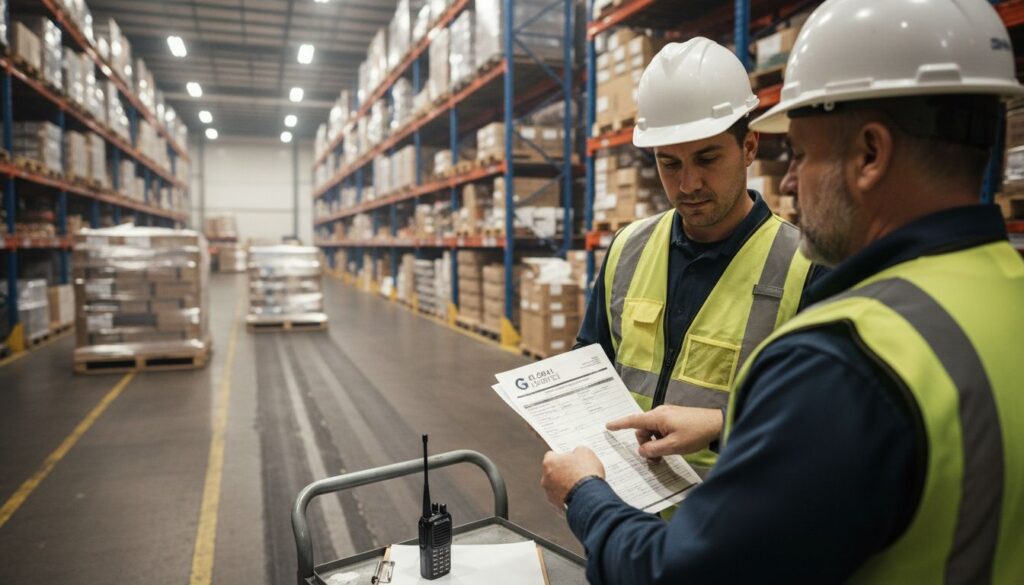

More than 34,000 workplace injuries in American warehouses each year are linked to forklift accidents. Ensuring only qualified operators are behind the wheel makes a real difference for safety and compliance. By taking a close look at qualifications, testing knowledge, and following OSHA requirements, you can protect employees and avoid costly mistakes.
| Valuable Insight | Clear Explanation |
|---|---|
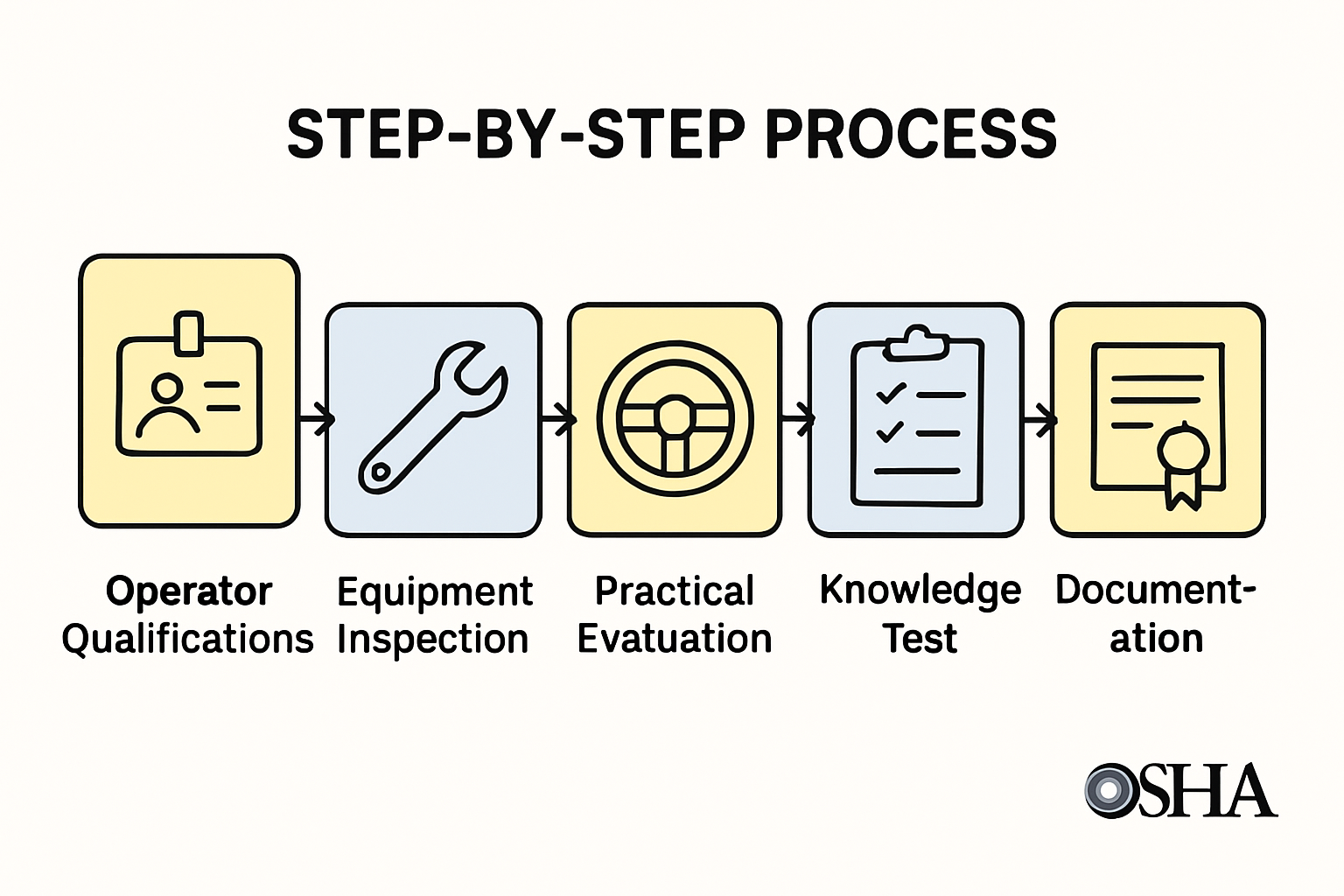
| 1. Evaluate Operator Qualifications Thoroughly | Comprehensive assessments should include training documentation, practical demonstrations, and performance evaluations to ensure safety compliance. |
| 2. Conduct Detailed Equipment Inspections | Rigorous pre-operation checks must cover fluid levels, tire conditions, and safety devices to prevent accidents and ensure equipment reliability. |
| 3. Perform Structured Performance Evaluations | Regular practical assessments in real-world scenarios help verify operators’ skills and readiness, ensuring safe forklift operations. |
| 4. Review Knowledge and Safety Tests | Written examinations must gauge operators’ understanding of safety protocols and equipment mechanics to identify knowledge gaps. |
| 5. Document Results for OSHA Compliance | Accurate and thorough record-keeping of evaluations and training is essential to meet OSHA requirements and enhance workplace safety. |
Evaluating forklift operator qualifications is a critical process that ensures workplace safety and regulatory compliance. When assessing operator readiness, you need to systematically review multiple aspects of an individual’s skills, knowledge, and performance capabilities.
The comprehensive assessment begins with reviewing formal training documentation that confirms the operator has completed required instructional programs. This documentation should include evidence of both classroom learning and practical training experiences. Employers must verify that operators have received thorough instruction on equipment operation, safety protocols, workplace hazards, and specific machine handling techniques. Key evaluation components include written test results, practical skills demonstrations, and supervisor observations of actual performance in realistic working conditions.
During the qualification assessment, pay close attention to an operator’s ability to perform critical tasks such as pre operational equipment inspections, safe maneuvering in confined spaces, load management, and understanding of workplace safety regulations. Watching an operator perform these tasks provides direct insight into their competence and readiness. Operators who demonstrate hesitation, incorrect technique, or lack of situational awareness may require additional training or supervised practice before being considered fully qualified.
Warning: Never assume an operator is qualified based solely on previous experience. Always conduct a comprehensive, documented evaluation that meets OSHA standards and confirms individual competency.
Inspecting forklift equipment is a crucial step in maintaining workplace safety and ensuring regulatory compliance. Your thorough examination will help prevent potential accidents and identify any mechanical issues before they become serious problems.
OSHA mandates a comprehensive pre operation equipment inspection that covers multiple critical components. Begin by checking fluid levels carefully, looking for any signs of leaks or contamination. Examine the tires thoroughly for wear, damage, or uneven pressure that could compromise stability. Inspect the forks for any cracks, bends, or structural weaknesses that might impact load bearing capacity. Verify that all safety decals are clearly visible and intact, ensuring operators can easily read critical warning information.
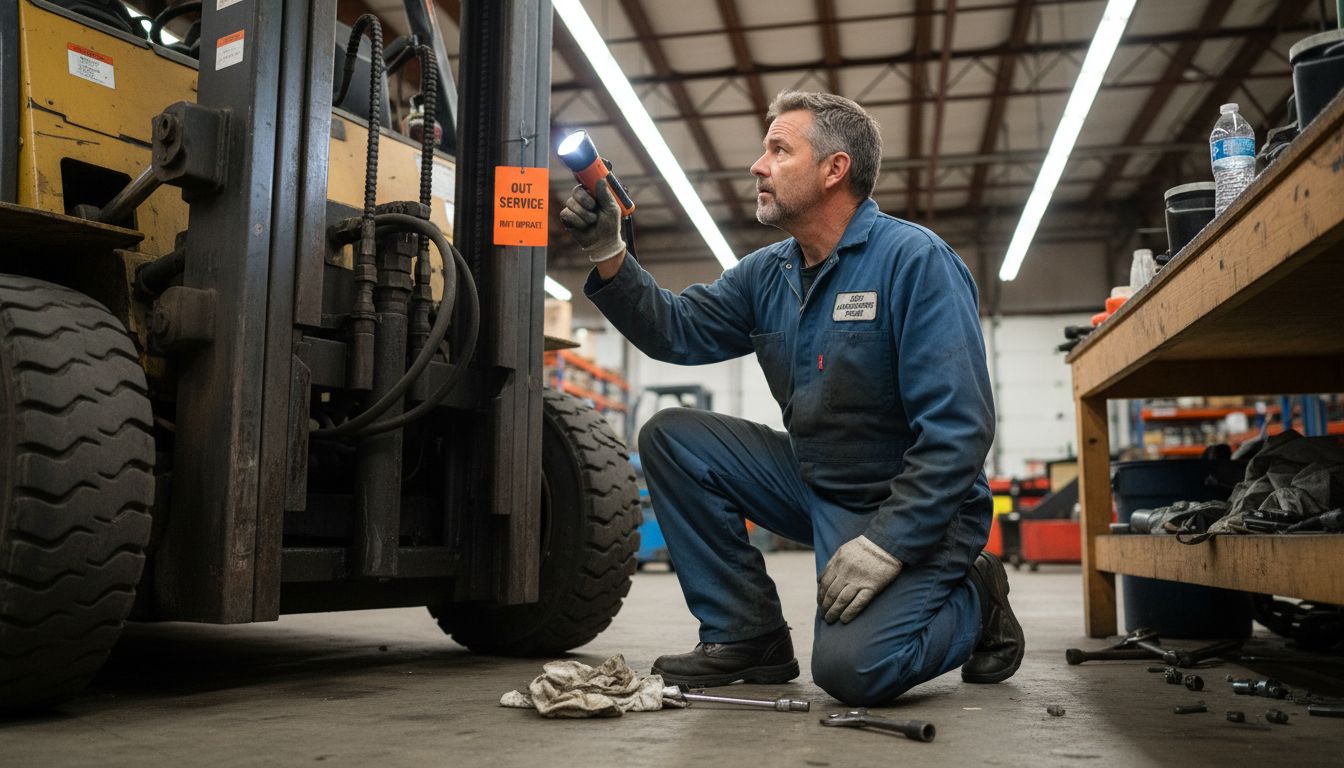
Pay special attention to the forklift’s safety devices and operational mechanisms. Test all controls to confirm smooth and responsive movement. Check hydraulic systems for any signs of wear or potential failure. Verify that safety features like warning lights, backup alarms, and emergency shut off switches function correctly. Detailed OSHA checklists provide comprehensive guidance on what to examine during your inspection, including specific requirements for different types of powered industrial trucks.
Warning: Never operate a forklift that fails any part of the safety inspection. Even minor issues can lead to catastrophic accidents or equipment failure. When in doubt, remove the equipment from service and have it professionally evaluated before returning it to operation.
A practical performance evaluation is the critical moment where you transform theoretical training into real world operational competence. This step determines whether an operator can safely and effectively handle a forklift in actual workplace conditions.
OSHA requires comprehensive operator performance assessments that go beyond simple observation. Your evaluation should include a structured series of practical tests that simulate real workplace scenarios. Begin by having the operator perform a complete pre operational inspection to demonstrate their understanding of equipment safety protocols. Next, assess their ability to maneuver the forklift through tight spaces, demonstrating precise control and spatial awareness. Evaluate load handling techniques including pickup, transport, and placement of various sized loads, watching for smooth movements and proper technique.
Key performance indicators include smooth acceleration and braking, accurate positioning, appropriate speed management, and consistent adherence to safety guidelines. Observe how the operator responds to unexpected situations such as sudden obstacles or uneven surface conditions. Pay close attention to their situational awareness, use of safety equipment, and ability to anticipate potential hazards. Document each aspect of the performance carefully, noting both strengths and areas requiring additional training.
Warning: A single performance evaluation is not enough. OSHA mandates reassessment every three years or immediately if an operator demonstrates any safety deficiencies. Continuous monitoring and periodic retraining are essential to maintaining workplace safety and operational excellence.
Reviewing written knowledge and safety tests is a critical component of ensuring comprehensive forklift operator competence. This step helps verify that operators understand the theoretical foundations of safe equipment operation beyond practical skills.
OSHA emphasizes comprehensive formal instruction methods that go far beyond simple memorization. Your written test should cover multiple critical areas including equipment mechanics, workplace safety protocols, hazard recognition, load management principles, and emergency response procedures. Develop assessment questions that require operators to demonstrate genuine understanding rather than rote recall. Include scenario based questions that challenge operators to apply their knowledge to complex real world situations. Consider incorporating visual diagrams, equipment schematics, and workplace layout illustrations to test spatial reasoning and operational comprehension.
The evaluation should systematically assess an operator’s depth of safety knowledge. Include sections that test understanding of personal protective equipment, proper inspection techniques, load capacity calculations, and regulatory compliance requirements. Look for nuanced responses that demonstrate critical thinking about workplace safety rather than simply selecting correct multiple choice answers. Pay special attention to questions that reveal an operator’s ability to anticipate potential risks and make sound judgments in challenging operational scenarios.
Warning: A written test is not just a checkbox exercise. It is a critical tool for identifying potential knowledge gaps that could compromise workplace safety. Any significant deficiencies should trigger additional targeted training to ensure complete operator preparedness.
Documenting forklift operator evaluation results is more than a bureaucratic exercise. It represents a critical safeguard for workplace safety and legal compliance, creating a comprehensive record of each operator’s training and performance.
OSHA mandates specific documentation requirements that employers must meticulously follow. Your documentation package should include a comprehensive certification form for each operator that captures essential details. This includes the operator’s full name, precise date of training and evaluation, and the complete identification of the individuals who conducted the training and assessment. Create a standardized template that allows you to systematically record performance metrics, written test scores, practical skill evaluations, and any identified areas requiring additional training or improvement.
Each certification document serves as a legal record demonstrating your commitment to workplace safety and regulatory compliance. Maintain these documents in an organized manner that allows for quick retrieval during potential OSHA inspections. Digital storage with secure backup systems can provide an efficient and reliable method of record keeping. Include detailed notes about the evaluation process, specific skills demonstrated, and any recommendations for further training. Ensure that the documentation provides a clear narrative of the operator’s competence and readiness to safely operate industrial trucks.
Warning: Incomplete or poorly maintained documentation can result in significant OSHA penalties and potentially compromise workplace safety. Treat these records as critical legal documents that protect both your employees and your organization.
The challenge of thoroughly evaluating forklift operators and equipment to meet OSHA standards can feel overwhelming. From assessing operator qualifications to documenting results, every step demands precision and compliance. Your goal is clear: guarantee safety, avoid costly penalties, and maintain a workforce fully prepared for real-world forklift operations by following thorough evaluation methods including written tests and practical performance checks.
At Forkliftacademy.com, we understand these critical pain points and offer tailored solutions designed to simplify and streamline this complex process. Explore our comprehensive Forklift License Archives for certification programs developed to meet OSHA requirements while enhancing safety awareness. Our dedicated Forklift Safety Archives provide additional resources for ongoing education and compliance support.
Don’t wait until an audit or incident reveals gaps in your training approach. Visit Forkliftacademy.com now to access industry-leading online and onsite training programs that empower you to confidently manage operator evaluations, maintain rigorous documentation, and secure full OSHA compliance today.
To assess forklift operator qualifications, begin by reviewing formal training documentation that confirms completion of required programs. Next, conduct practical evaluations to observe operators handling critical tasks like pre-operational inspections and safe maneuvering.
A pre-operation equipment inspection should include checking fluid levels, verifying tire condition, and looking for any damage to forks and safety devices. Document all findings and ensure that all safety features, such as warning lights and emergency shut-off switches, are functioning properly.
To conduct an effective practical performance evaluation, set up a series of structured tests that simulate real workplace scenarios. Observe the operator’s ability to perform tasks including pre-operational inspections and load handling, and document their performance metrics systematically.
Written knowledge and safety tests should cover equipment mechanics, workplace safety protocols, and emergency response procedures. Include scenario-based questions that require operators to apply their knowledge in practical situations to ensure thorough understanding.
To properly document forklift operator evaluations, create a certification form that captures the operator’s full name, evaluation date, and details of the evaluators. Maintain organized records that include performance metrics and notes about the evaluation process to ensure compliance with OSHA standards.
Forklift operators should be reassessed every three years or immediately if any safety deficiencies are identified. Schedule these reassessments to maintain ongoing compliance and ensure the continued safety of operations.