


More than 20,000 workplace injuries in American industries each year involve forklifts, yet most accidents could be prevented with the right training. For anyone stepping onto a busy warehouse floor, knowing how to handle a forklift is more than just a job requirement. This guide explains exactly what a forklift course covers, why it matters for American safety standards, and how certification can protect both workers and businesses.
| Point | Details |
|---|---|
| Forklift Training is Mandatory | OSHA mandates that only trained operators can handle forklifts, underscoring the importance of formal training for workplace safety. |
| Comprehensive Training Components | Effective forklift courses include classroom instruction, practical training, and performance evaluation to ensure operators are competent. |
| Regular Evaluation and Certification | Operators must undergo recertification every three years to stay updated on safety protocols and equipment handling. |
| Employer Responsibilities | Employers are responsible for creating training programs that comply with OSHA standards to enhance workplace safety and minimize risks. |
A forklift course is a comprehensive training program designed to equip operators with the essential skills and knowledge required to safely and effectively operate powered industrial trucks. OSHA mandates that only trained and competent operators are permitted to handle these complex machines, making formal training not just recommended, but legally required for workplace safety.
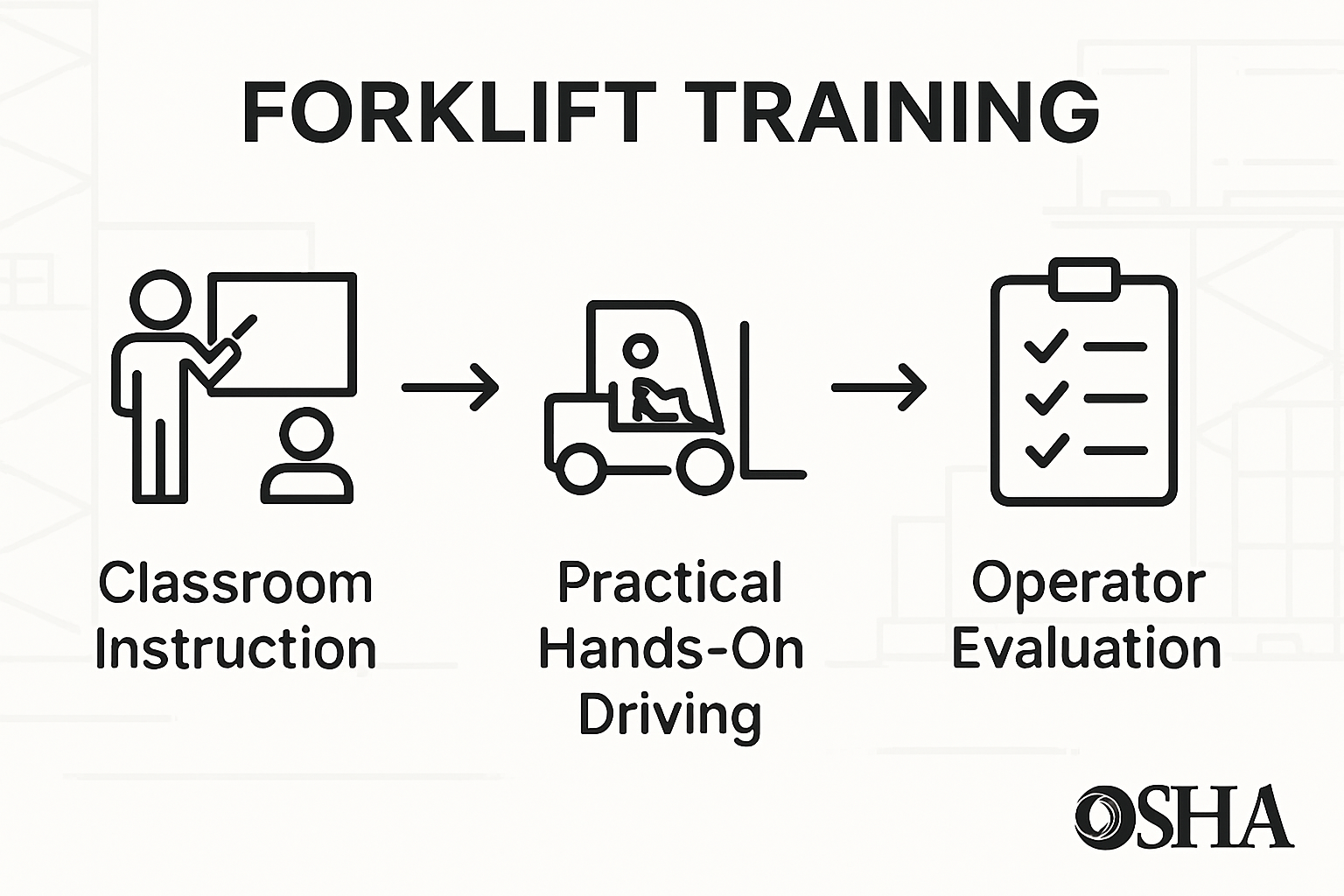
The core purpose of a forklift course extends far beyond simple machine operation. These training programs are strategically structured to address three critical components: formal instruction, practical training, and performance evaluation. Comprehensive training must cover safe operation principles, specific vehicle types, and workplace hazards as outlined in OSHA standard 29 CFR 1910.178. Participants learn not just how to operate a forklift, but how to navigate complex workplace environments while minimizing risks to themselves and their colleagues.
Typical forklift courses include detailed modules covering several key areas:
Ultimately, a forklift course transforms an inexperienced worker into a skilled, safety-conscious professional capable of handling powerful industrial equipment with precision and confidence. By investing in comprehensive training, employers protect their workforce, reduce workplace accidents, and ensure regulatory compliance.
OSHA standards play a critical role in defining comprehensive forklift operator training requirements, establishing precise guidelines that employers must follow to ensure workplace safety. Specific regulations outlined in 29 CFR 1910.178 mandate that employers are responsible for certifying each operator’s competence through a structured training and evaluation process.
The regulatory framework requires a multi-step approach to forklift operator training that goes far beyond simple instruction. Employers must demonstrate that each operator is competent to operate powered industrial trucks safely, which involves three fundamental components:
Key regulatory requirements include comprehensive coverage of critical safety elements:
Failure to comply with these OSHA standards can result in significant penalties, including substantial fines and potential workplace shutdown. By implementing rigorous training programs that meet or exceed these regulatory requirements, employers protect their workforce, minimize accident risks, and demonstrate a commitment to professional safety standards.
Powered industrial trucks encompass a wide range of specialized equipment designed for material handling in diverse workplace environments. OSHA’s comprehensive training requirements apply to multiple types of industrial vehicles, including low lift trucks, high lift trucks, guided industrial vehicles, and rough terrain forklifts.
The standard outlined in 29 CFR 1910.178 covers several critical categories of powered industrial equipment, each requiring specific operational knowledge:
Each equipment type presents unique operational challenges and safety considerations. Operators must receive targeted training that addresses the specific mechanical characteristics, load handling capabilities, and environmental limitations of their assigned vehicle. Understanding the nuanced differences between equipment types is crucial for maintaining workplace safety and preventing potential accidents.
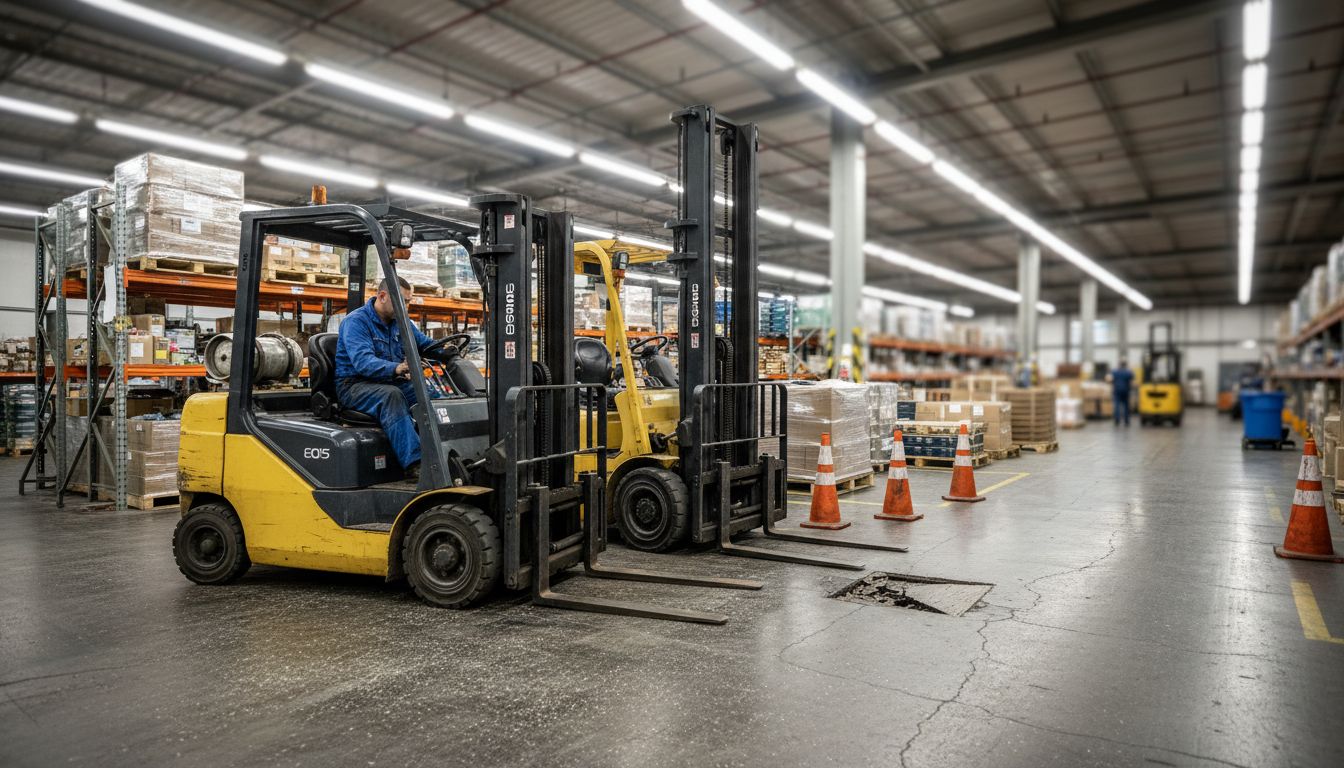
Interestingly, OSHA’s regulations specifically exclude certain types of heavy machinery from these training requirements, such as earth-moving equipment and vehicles used for over-the-road hauling. This targeted approach ensures that training resources are focused on the most critical material handling and industrial transportation equipment used in workplace settings.
Practical skills training forms the cornerstone of effective forklift operator preparation, focusing on developing comprehensive safety competencies beyond theoretical knowledge. OSHA emphasizes that training must cover general safe operation principles, vehicle-specific knowledge, and workplace hazard awareness, ensuring operators can confidently navigate complex workplace environments.
Critical safety practices integrated into training programs include:
Practical training guidelines specifically highlight the importance of demonstrating safe loading and unloading procedures, with a particular focus on understanding load stability, center of gravity, and potential operational risks. Operators must develop muscle memory and situational awareness through hands-on exercises that simulate real-world challenges.
Successful training transforms novice operators into skilled professionals who can anticipate potential risks, make split-second decisions, and maintain a safety-first mindset. By combining theoretical knowledge with rigorous practical skills development, forklift courses create competent operators who protect themselves, their colleagues, and workplace assets.
Forklift certification represents a critical compliance mechanism that ensures operators possess the necessary skills and knowledge to safely manage powered industrial trucks. Employers must carefully document and evaluate operator competence through a comprehensive certification process, which involves multiple structured stages of assessment and verification.
The certification process typically encompasses three fundamental components:
OSHA mandates that certification records include specific documentation requirements, which must capture:
Critically, operators must undergo recertification and performance re-evaluation at least every three years. This recurring assessment ensures that operators maintain their skills, adapt to new safety protocols, and remain current with evolving workplace equipment and regulatory standards. Employers who neglect these systematic evaluation processes risk significant penalties and compromise workplace safety.
Employer training obligations represent a critical component of workplace safety and regulatory compliance in forklift operations. Employers are fundamentally responsible for developing and implementing comprehensive training programs that meet rigorous OSHA standards, ensuring operators possess the necessary skills to perform their jobs safely and effectively.
Key employer responsibilities include:
Common training mistakes can compromise workplace safety and expose employers to significant legal and financial risks, such as:
Ultimately, successful forklift training transcends mere regulatory compliance. Employers who invest in comprehensive, thoughtful training programs create safer work environments, reduce accident potential, and demonstrate a genuine commitment to workforce development and employee protection. Proactive approach and meticulous attention to training details can transform potential workplace hazards into opportunities for professional growth and operational excellence.
Navigating the complex requirements of OSHA forklift training can feel overwhelming. This article highlights the importance of comprehensive courses that cover everything from formal instruction and practical skills to strict certification and re-evaluation processes. If you aim to safeguard your workplace while empowering operators with essential safety knowledge, addressing critical elements like hazard recognition and vehicle-specific operation is key. Avoid costly penalties and reduce accident risks by ensuring your team is fully prepared to meet OSHA standards.
Take control of workplace safety today by exploring our OSHA-compliant forklift certification programs at Forklift Certification Archives. Whether you need individual training or scalable business solutions, Forkliftacademy.com offers trusted, flexible options to build competence and confidence. Learn more about maintaining safe operation practices by visiting our Forklift Safety Archives and start securing your operators’ certifications now!
A forklift course is designed to equip operators with essential skills and knowledge for safely and effectively operating powered industrial trucks, adhering to OSHA standards.
Forklift operator training typically includes formal instruction, hands-on practical training, and performance evaluation to ensure operators can navigate workplace environments safely.
A typical forklift course covers various powered industrial trucks, including counterbalanced sit-down forklifts, reach trucks, pallet jacks, and rough terrain forklifts, among others.
Forklift operators must undergo recertification and performance re-evaluation at least every three years to ensure they maintain their skills and stay updated on safety protocols.