

Over 40 percent of workplace injuries involve equipment mishandling, spotlighting just how essential forklift certification is for every American job seeker interested in industrial roles. Forklift operators face strict safety standards, and meeting certification requirements is not just a formality—it is a vital safeguard for your career and for the people around you. Whether you are new to the field or aiming to advance, learning the practical steps for certification gives you a real advantage in the job market.
| Key Takeaway | Explanation |
|---|---|
| 1. Confirm Eligibility First | Ensure you are at least 18 years old and have all necessary documents to start the certification process. |
| 2. Choose the Right Training Program | Research and select a program that fits your needs in terms of cost, flexibility, and certification recognition. |
| 3. Master Training Content | Complete both theoretical and practical training effectively to be prepared for exams and evaluations. |
| 4. Prepare for the Written Test | Review key safety and operational topics thoroughly as multiple-choice questions will assess your knowledge. |
| 5. Maintain Certification Compliance | Track your certification status and complete renewal training every three years to ensure ongoing eligibility. |
Before diving into forklift certification, you need to understand your eligibility and prepare the right documentation. This step ensures you meet the legal requirements and can smoothly progress through the training process.
To get started, you must first confirm that you are at least 18 years old and physically capable of operating heavy machinery safely. OSHA mandates that only trained and competent operators are permitted to operate powered industrial trucks, which means you cannot simply walk into a job without proper certification. You will need several key documents ready: a valid government issued photo ID, proof of age, and potentially your high school diploma or equivalent.
Employers are strict about documentation, so being prepared matters. According to workplace safety regulations, employers require written certification that includes your name, training date, evaluation date, and the name of training personnel. Pro tip: Make photocopies of all your documents and keep digital backups to streamline the certification process.
Once you have gathered your documents, you are ready to move forward to the next stage of forklift certification training. Your thorough preparation now will save you time and potential headaches later in the process.
Registering for a forklift certification program is your gateway to becoming a professional industrial truck operator. This step transforms your career aspirations into actionable training that meets industry safety standards.
Your registration process will depend on whether you choose an online or in person training program. Start by researching programs that offer comprehensive forklift certification options, comparing their curriculum, cost, and flexibility. Most reputable programs will require you to provide basic personal information, proof of age, and potentially pass a preliminary screening to ensure you can physically handle the job requirements.
When selecting a program, pay close attention to the course structure. Some offer flexible online modules you can complete at your own pace, while others provide intensive hands on training with experienced instructors. Pro tip: Check if the program provides a certification card recognized by OSHA and potential employers. Many training centers offer both classroom instruction and practical skills training, giving you a well rounded learning experience.
After completing your registration, you will typically receive confirmation materials and instructions for your upcoming training. Get ready to take the first significant step toward a new career in industrial equipment operation.
Completing your forklift certification training is a critical step in becoming a professional industrial truck operator. Whether you choose online or classroom training, you will need to master both theoretical knowledge and practical skills to successfully obtain your certification.
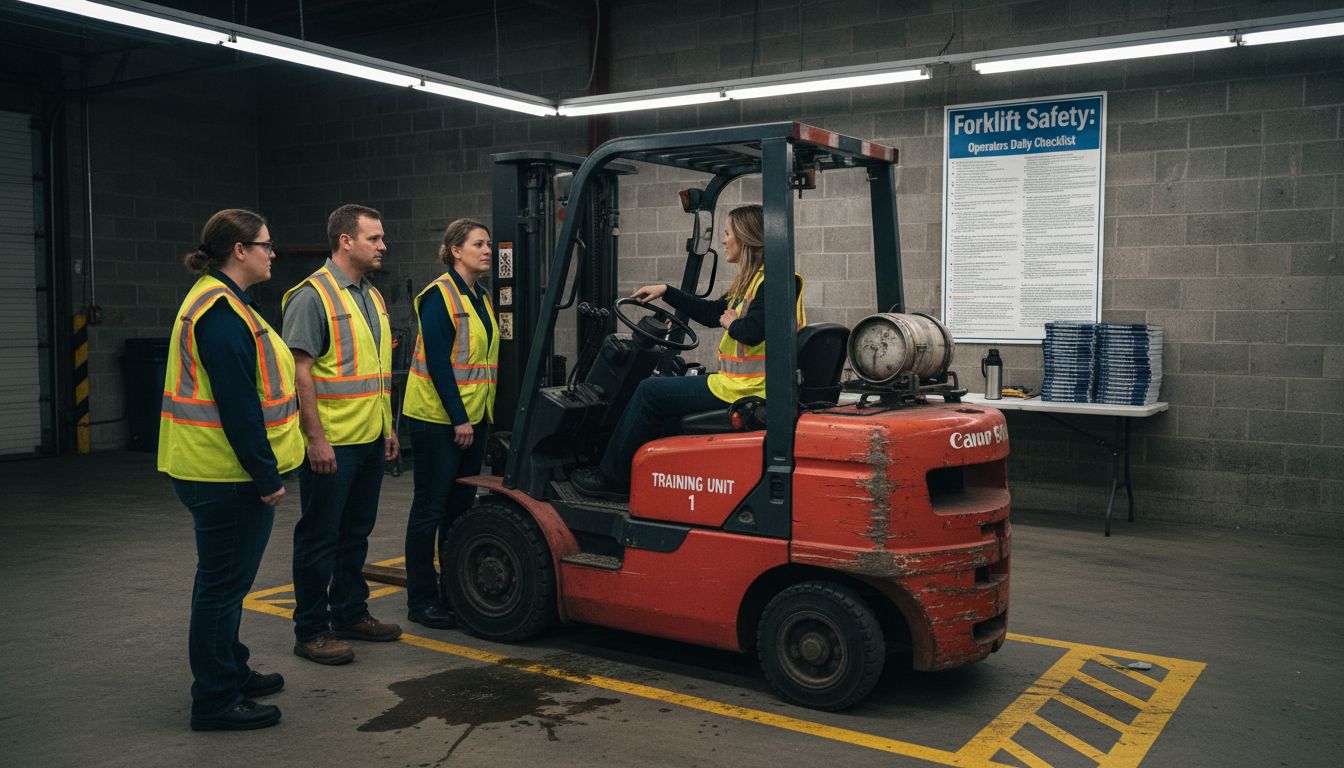
For those pursuing online training modules, expect a flexible learning experience that allows you to progress at your own pace. These digital courses typically include comprehensive video tutorials, interactive quizzes, and detailed safety modules covering equipment operation, workplace hazards, and OSHA regulations. You will need a reliable internet connection and a computer to access the materials. Most online programs require you to demonstrate comprehension through multiple choice exams and sometimes include virtual simulation exercises to test your understanding.
Classroom training offers a more hands on approach with direct instructor interaction and practical equipment operation. In these programs, you will spend time in both lecture settings learning safety protocols and in training facilities practicing actual forklift maneuvers. Pro tip: Actively participate in both theoretical and practical sessions to maximize your learning potential. Instructors often provide real world insights that cannot be replicated in online environments.
After successfully completing either training format, you will be prepared to take your final certification evaluation and demonstrate your newfound skills to potential employers.
The written OSHA forklift certification test is your gateway to demonstrating the critical safety knowledge required for professional equipment operation. This examination will assess your understanding of workplace safety protocols, equipment handling procedures, and regulatory compliance essential for responsible forklift operation.
To prepare for the test, carefully review all materials from your training program and focus on key areas of assessment. The forklift certification guide typically covers topics like equipment inspection, load handling, workplace hazard recognition, and specific operational guidelines. Most tests include multiple choice questions that evaluate your comprehension of safety standards, proper equipment maintenance, and potential workplace risk scenarios. You will need to demonstrate a thorough understanding of OSHA regulations, understanding of different forklift classes, and comprehensive knowledge of safe operational practices.
During the exam, read each question carefully and take your time selecting answers. Pro tip: If you are unsure about a specific question, eliminate obviously incorrect options first and then make your best informed selection. Many certification programs allow you to review and flag questions for later review, so manage your time strategically. Most written tests require a minimum score of 70 percent to pass, so comprehensive preparation is key to your success.
Once you successfully complete the written examination, you will be one step closer to receiving your official forklift certification and launching your career in industrial equipment operation.
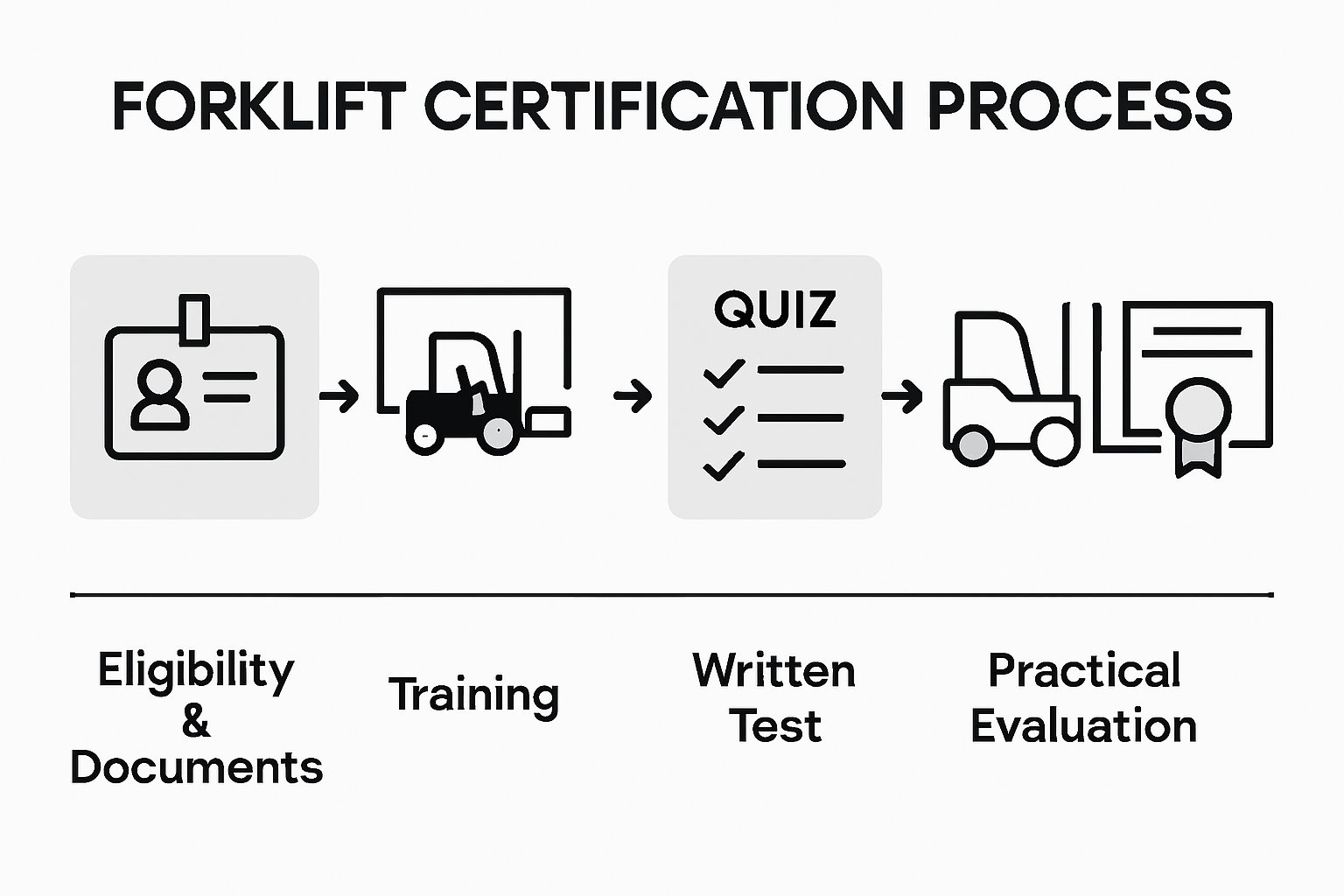
The practical evaluation is your opportunity to demonstrate the hands on skills you have learned during forklift training. This critical assessment will test your ability to safely operate industrial trucks in real world scenarios and prove your competence to potential employers.
OSHA requires employers to evaluate each operator’s performance in the workplace to ensure they can operate powered industrial equipment safely. The practical exam typically involves a comprehensive skills assessment where an instructor will observe your ability to perform essential tasks such as maneuvering loads, navigating tight spaces, understanding equipment controls, conducting pre operation inspections, and maintaining proper safety protocols. You will need to showcase precise control, situational awareness, and adherence to established safety guidelines during the evaluation.
During the practical test, focus on demonstrating smooth and controlled movements, proper load handling techniques, and strict safety consciousness. Pro tip: Communicate clearly with the evaluator, verbalize your actions, and show that you understand potential workplace hazards. Most practical evaluations include tasks like picking up and moving pallets, stacking loads at various heights, driving through obstacle courses, and performing precise maneuvers that test your equipment handling skills.
Successfully completing the practical evaluation represents the final step in your certification journey, bringing you closer to becoming a professionally recognized forklift operator.
Certification is more than just receiving a document it is an ongoing commitment to workplace safety and professional development. Understanding how to verify and maintain your forklift certification is crucial for sustaining your professional credentials and employability.
OSHA requires employers to certify that each operator has been trained and evaluated in accordance with established standards, which means you must actively manage your certification status. This involves keeping detailed records of your training, tracking renewal dates, and staying current with any required refresher courses or skill assessments. Most certifications remain valid for three years, after which you will need to complete recertification training to demonstrate continued competence and knowledge of current safety protocols.
Pro tip: Create a personal certification tracking system that alerts you well in advance of your renewal deadline. Some employers and training centers offer digital tracking tools that can help you stay organized. Keep copies of all your certification documents in both physical and digital formats, ensuring you can quickly provide proof of your qualifications when needed. Certification records must be maintained for at least three years from the original training date, so develop a reliable document storage strategy.
By proactively managing your certification, you demonstrate professional responsibility and commitment to workplace safety, making yourself a more valuable and attractive candidate in the industrial equipment operation field.
Navigating the complexities of forklift certification can feel overwhelming when trying to meet strict OSHA requirements and prove your practical skills. This guide breaks down each essential step so you understand how to prepare documentation, register, complete training, pass assessments, and maintain compliance. But you do not have to face these challenges alone. At Forkliftacademy.com, we specialize in providing clear, OSHA-compliant forklift certification programs tailored for both individuals and employers across the United States and Canada.
Start your certification with confidence by exploring our extensive resources on Forklift Certification Archives – Top Osha Forklift Certification. Our flexible online and onsite training solutions offer you the convenience and hands-on practice required to excel in both the written and practical evaluations. Don’t wait until last minute renewals or complicated paperwork slow you down. Visit Forkliftacademy.com now to secure your spot and gain access to expert guidance, digital tracking tools, and industry-leading training products. Take the next step toward a safer workplace and a stronger professional future today.
Expand your career potential by checking helpful insights in our Career Archives – Top Osha Forklift Certification. Embrace the opportunity to be expertly trained, evaluated, and certified in full compliance with OSHA standards.
To be eligible for forklift certification, you must be at least 18 years old and physically capable of operating heavy machinery safely. Begin by gathering required documents, including a valid government-issued photo ID and proof of age, so you can move forward with the training process.
Registering for a forklift certification program typically involves researching available options and deciding between online or in-person training. Select a program, complete the required personal information, and verify any specific prerequisites before finalizing your registration.
Forklift certification training modules generally cover both theoretical knowledge and practical skills. Prepare to engage with video tutorials, quizzes, and safety protocols, regardless of whether you choose online or classroom training, to ensure comprehensive understanding before the final exam.
To prepare for the written OSHA forklift certification test, review all training materials thoroughly, focusing on key topics like equipment inspection and workplace hazards. Practice answering multiple-choice questions to strengthen your comprehension, aiming for a minimum passing score of 70 percent.
To schedule and perform the practical evaluation, confirm your readiness by demonstrating essential skills learned during your training. Ensure you can confidently operate industrial trucks, follow safety protocols, and effectively communicate your actions to the evaluator during the test.
To maintain your forklift certification, actively manage your certification status by keeping track of renewal dates and meeting any required refresher courses. Establish a personal tracking system to alert you well in advance of your renewal deadline to ensure continuous compliance and professional development.