
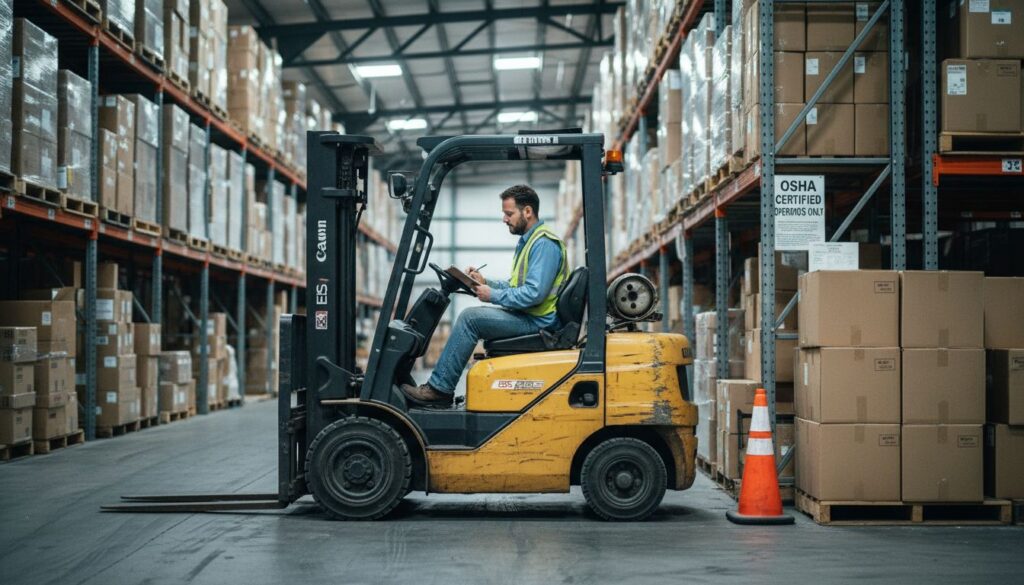

More than eight thousand workplace injuries every year in American warehouses involve forklifts, highlighting just how serious these machines can be. Most American businesses underestimate the complexity of forklift certification, often assuming a single training session is enough. Understanding the real requirements matters because proper certification does not just check a box, it safeguards workers’ lives and shields companies from significant legal trouble. Learn what makes forklift certification critical for American employers and the most persistent misconceptions.
| Point | Details |
|---|---|
| Importance of Certification | Forklift certification is essential for workplace safety and compliance with OSHA regulations. It requires comprehensive training tailored to specific equipment and environments. |
| Specialized Training Requirements | Operators must undergo specific training for different forklift types and be recertified periodically. A single certification does not cover all equipment. |
| Legal and Financial Implications | Non-compliance with OSHA regulations can lead to substantial financial penalties and legal liabilities for businesses. Proper training and documentation are crucial. |
| Strategic Certification Approach | Businesses should adopt a systematic approach to certification, including initial assessments, tailored training, and ongoing safety management for effective compliance. |
Forklift certification is more complex than many businesses realize. Proper operator training isn’t just a bureaucratic requirement – it’s a critical safety protocol that protects workers and prevents workplace accidents. While many assume certification is a simple one-time process, the reality involves comprehensive training tailored to specific equipment and workplace environments.
One of the most prevalent misconceptions is that a single forklift certification qualifies an operator for all types of industrial vehicles. In reality, different forklift models require specialized training specific to their unique operational characteristics. Counterintuitively, operators must be recertified periodically and receive additional training when transitioning between equipment types, such as moving from a counterbalance truck to a reach truck.
Businesses frequently misunderstand the legal implications of improper certification. OSHA regulations mandate that employers provide comprehensive training that covers not just operational skills, but also risk assessment, equipment maintenance, and workplace safety protocols. Failing to comply can result in substantial financial penalties and potentially expose companies to significant liability in the event of workplace incidents. Key certification requirements include:
Understanding these nuanced certification requirements helps businesses create safer work environments and maintain regulatory compliance. The investment in thorough forklift certification training goes far beyond checking a box – it represents a fundamental commitment to workplace safety and operational excellence.
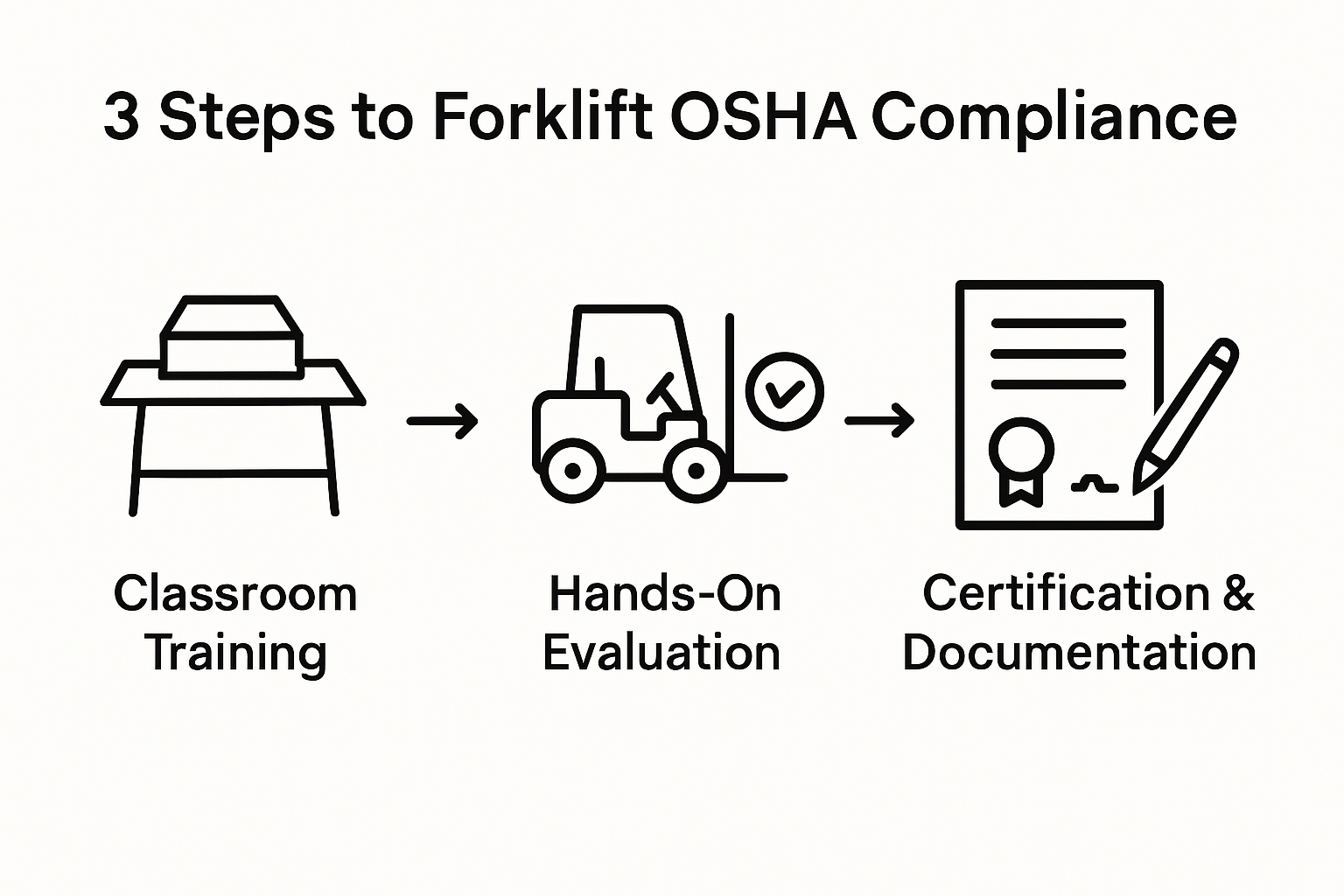
Forklift certification programs are not a one-size-fits-all solution. Comprehensive training encompasses multiple specialized programs designed to address the diverse needs of industrial operations and equipment variations. Different certification types ensure operators receive targeted instruction matched to their specific workplace requirements and equipment models.
The landscape of forklift certification includes several key program categories. Operators can pursue training for specific equipment classes, including counterbalance trucks, reach trucks, pallet jacks, and specialized industrial vehicles. Each certification focuses on unique operational techniques, safety protocols, and equipment-specific handling skills. Employers must recognize that an operator certified on one forklift type may require additional training when transitioning between different equipment configurations.
Certification programs typically follow a structured approach that balances theoretical knowledge with practical skill development:
Beyond standard operator certifications, advanced programs like train-the-trainer certification provide opportunities for experienced professionals to develop advanced instructional skills. These specialized programs enable knowledgeable operators to become certified instructors, creating sustainable safety training ecosystems within organizations and helping to propagate best practices across industrial workplaces.
OSHA regulations represent a critical framework for ensuring workplace safety, particularly in industries involving heavy machinery like forklifts. Legal compliance is not optional but a mandatory requirement that protects workers and shields businesses from potentially devastating financial and legal consequences. Understanding OSHA compliance requires a comprehensive approach that goes beyond basic training protocols.
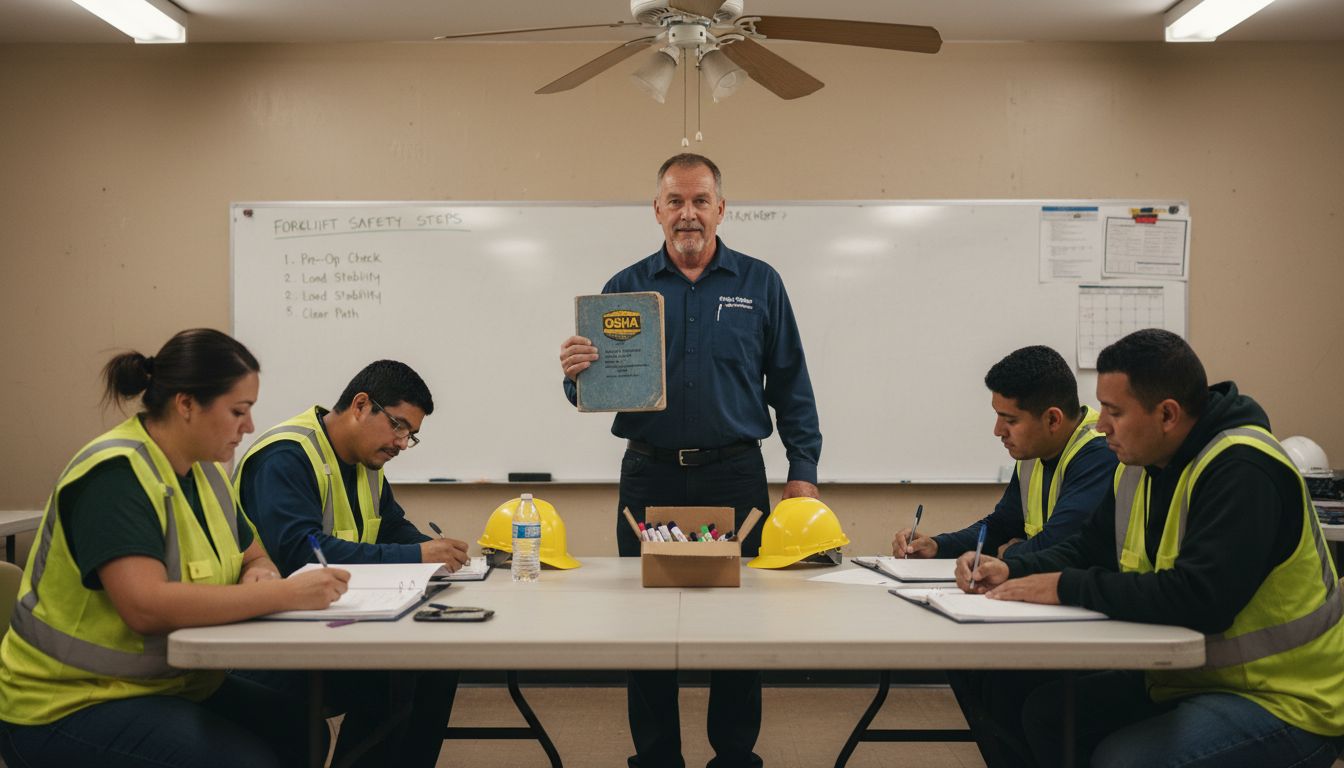
The Occupational Safety and Health Administration mandates specific requirements for forklift operator certification. These regulations demand that every operator complete a structured training program that includes both classroom instruction and practical evaluation. Employers must document each operator’s training, maintain current certifications, and provide periodic refresher courses. Critically, OSHA requires that operators demonstrate proficiency in equipment operation, workplace safety protocols, and risk assessment before being permitted to independently operate industrial vehicles.
Key components of OSHA forklift certification compliance include:
Beyond standard compliance, forklift safety standards encourage businesses to develop proactive safety cultures. Voluntary Protection Programs demonstrate that exceptional safety practices can transform workplace environments, reducing accidents and creating more efficient, secure operational frameworks. Businesses that view OSHA requirements as minimum standards rather than maximum limitations will consistently outperform their competitors in safety performance and operational excellence.
Achieving comprehensive forklift certification requires a systematic, multi-dimensional approach that goes beyond simple employee training. Business-wide certification demands a strategic framework that addresses individual operator skills, organizational protocols, and ongoing safety management. Forklift operator training programs provide the foundation for creating a robust safety infrastructure that protects workers and ensures regulatory compliance.
The certification process involves several critical stages that businesses must methodically implement. Initial assessment is crucial, requiring a comprehensive inventory of existing equipment, operator skill levels, and current safety practices. Organizations must develop a tailored training strategy that accounts for different equipment types, operational environments, and individual operator experience levels. This approach ensures that each team member receives targeted instruction aligned with their specific workplace responsibilities.
Key steps for achieving comprehensive business-wide certification include:
Successful certification extends beyond mere compliance. Train-the-trainer certification enables businesses to develop internal safety experts who can perpetuate best practices, create sustainable training ecosystems, and continuously elevate workplace safety standards. By investing in comprehensive certification strategies, organizations transform regulatory requirements from bureaucratic obligations into meaningful opportunities for operational excellence and worker protection.
Forklift certification compliance is far more than a bureaucratic checkbox – it represents a critical safety imperative with substantial financial and legal implications. Workplace safety hinges on understanding the potential consequences of overlooking proper training and operational protocols. Common misconceptions about forklift operation can transform seemingly minor oversights into catastrophic workplace incidents.
The financial and legal risks associated with non-compliance are severe and multifaceted. OSHA can impose substantial monetary penalties ranging from thousands to hundreds of thousands of dollars for repeated or willful violations. Beyond immediate financial penalties, businesses face potential legal liability, increased insurance premiums, worker compensation claims, and potential operational shutdowns. Organizations that fail to maintain comprehensive certification records or permit untrained operators to handle equipment expose themselves to significant legal vulnerabilities.
Common compliance mistakes that businesses frequently encounter include:
Effective risk management goes beyond avoiding penalties. Train-the-trainer certification empowers organizations to develop internal safety cultures that proactively identify and mitigate potential operational risks. By transforming compliance from a reactive obligation to a strategic organizational priority, businesses can create safer, more efficient workplaces that protect both employees and bottom-line performance.
Struggling to meet OSHA requirements while ensuring your operators are fully certified and safe Is your business looking for training that covers equipment-specific handling and periodic recertification Our comprehensive Forklift Certification Archives – Top Osha Forklift Certification address these critical challenges Headquartered in the United States and Canada with trusted onsite and online programs we emphasize practical skills along with regulatory compliance to protect your workforce and minimize liability
Take control of workplace safety today by partnering with Forkliftacademy.com Our specialized forklift training services include tailored operator courses, train-the-trainer certification kits, and compliance solutions that transform your safety culture Act now to access over 20 years of industry expertise and the latest training innovations Visit Uncategorized Archives – Top Osha Forklift Certification to learn more and get started on developing a safer, OSHA-compliant workforce
Forklift certification involves classroom instruction, practical hands-on training, performance evaluations, documentation of completion, and regular recertification every three years.
Forklift operators typically need to be recertified every three years to ensure they remain compliant with OSHA regulations and maintain their operational skills.
Failure to comply with OSHA regulations can result in hefty fines, increased liability in workplace accidents, and potential operational shutdowns due to non-compliance.
No, different forklift models require specific training. Operators certified on one type may need additional training to operate different models, ensuring they are familiar with unique operational characteristics.