 Skip to content
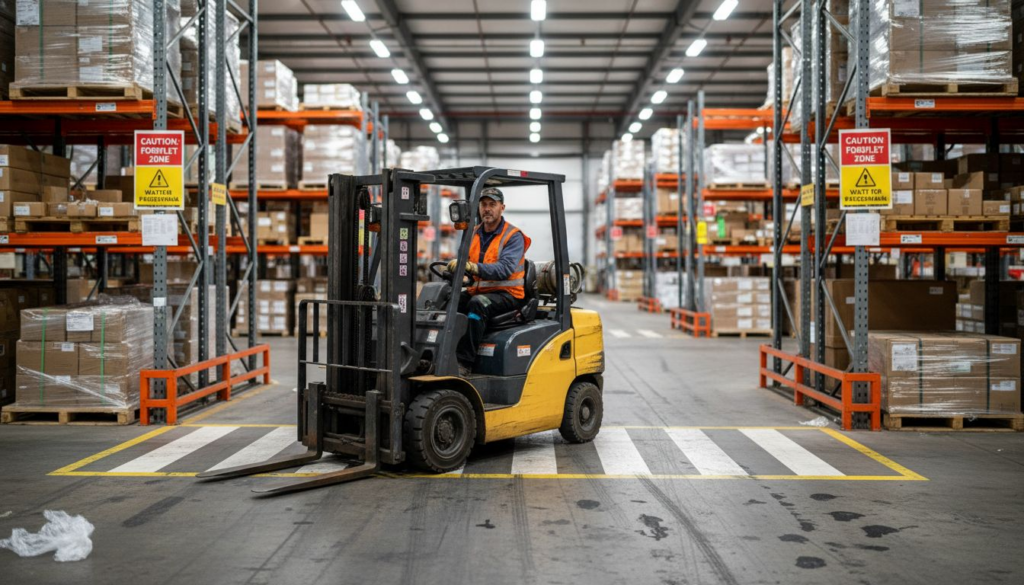

Warehouse floors can quickly turn hazardous when forklift safety takes a back seat. For American safety managers, choosing the right accident prevention strategies is more than a checklist—it’s your team’s survival guide in a shifting environment. From operator training and equipment maintenance to enforcing OSHA standards and fostering a culture of awareness, this article breaks down comprehensive forklift accident prevention so you can create a safer, more compliant workplace.
| Point | Details |
|---|---|
| Proactive Training is Essential | Regular operator training and certification are crucial to preventing forklift accidents and ensuring workplace safety. |
| Regular Maintenance is Key | Conducting consistent equipment inspections and maintenance prevents mechanical failures that can lead to accidents. |
| Workplace Design Matters | Strategic layout and clear traffic control measures significantly enhance safety and reduce collision risks in industrial environments. |
| Documentation is Critical | Maintaining comprehensive records of operator qualifications and equipment maintenance helps in defending against liability claims and ensures compliance with OSHA standards. |
Forklift accidents pose significant risks in warehouse and industrial environments, demanding comprehensive prevention strategies that protect workers and maintain operational safety. Understanding these strategies requires a systematic approach focused on identifying potential hazards, implementing robust training programs, and creating a culture of safety awareness.
Effective forklift accident prevention starts with recognizing the primary risk factors. OSHA accident prevention guidelines emphasize several critical prevention strategies:
Operator training represents the foundational element of accident prevention. This involves not just initial certification but ongoing education about potential workplace hazards, proper forklift handling techniques, and understanding the specific dynamics of different work environments. Operators must learn to anticipate potential risks, understand vehicle limitations, and maintain constant situational awareness.
Maintenance plays an equally crucial role in preventing accidents. Regular equipment inspections help identify potential mechanical issues before they become dangerous problems. This includes checking tire conditions, brake functionality, hydraulic systems, and ensuring all safety mechanisms are fully operational.
Proactive maintenance and consistent training are the twin pillars of effective forklift accident prevention.
Workplace layout and design also significantly impact forklift safety. This involves creating clear traffic patterns, establishing designated pedestrian zones, ensuring proper lighting, maintaining clean and organized workspaces, and installing protective barriers where necessary.
Pro tip: Implement a quarterly safety review program that includes operator retraining, equipment assessment, and comprehensive workplace hazard analysis to continuously improve your forklift safety strategy.
Forklift accidents represent a serious workplace safety challenge, with national injury statistics revealing significant risks in industrial and warehouse environments. Understanding the types and underlying causes of these accidents is crucial for developing effective prevention strategies that protect workers and minimize operational disruptions.
The most common types of forklift accidents include:
Tip-over accidents represent the most dangerous and frequent type of forklift incident. These typically occur when operators navigate uneven surfaces, turn at high speeds, or attempt to lift loads beyond the vehicle’s rated capacity. Factors contributing to tip-overs include improper load distribution, operator inexperience, and failure to maintain proper center of gravity.
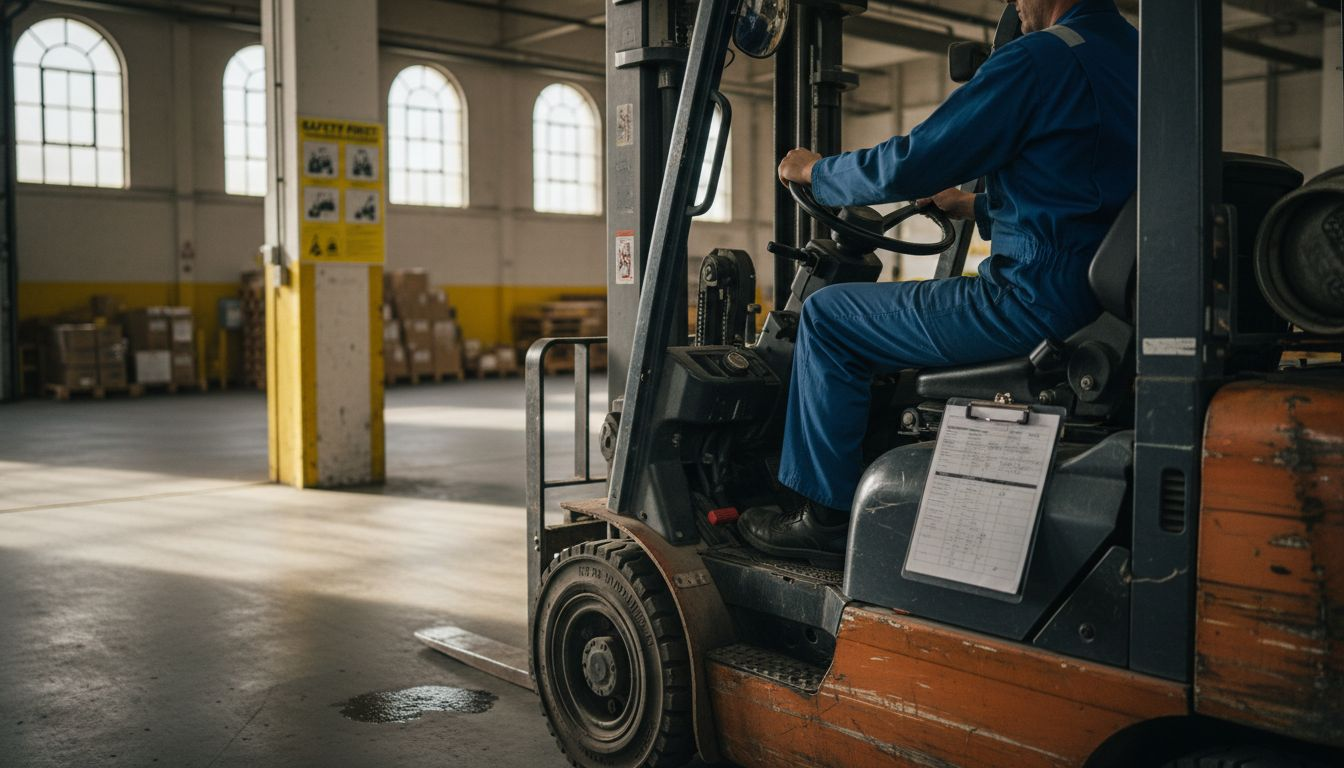
Collision incidents frequently result from limited visibility, inadequate training, and poor workplace traffic management. Operators may struggle with blind spots, especially when carrying large or obstructive loads, leading to unexpected impacts with pedestrians, other vehicles, or stationary equipment.
Here’s a summary of common forklift accident types and how workplace factors contribute to each:
| Accident Type | Typical Workplace Cause | Example Impact |
|---|---|---|
| Tip-over | Uneven surfaces, high-speed turns | Equipment damage, severe injury |
| Collision | Poor visibility, traffic confusion | Pedestrian harm, property loss |
| Load-related | Overloading, improper attachments | Dropped goods, injuries |
| Pinning/Crushing | Crowded zones, lack of barriers | Broken bones, liability claims |
Operator error accounts for approximately 70% of forklift-related workplace accidents, highlighting the critical importance of comprehensive training and safety protocols.
Load-related accidents emerge from improper loading techniques, exceeding weight limits, or using inappropriate attachments. These incidents can cause catastrophic equipment failure, unexpected load drops, and potential worker injuries. Precise load handling requires extensive training, constant situational awareness, and strict adherence to manufacturer guidelines.
Pro tip: Conduct weekly safety briefings that review recent near-miss incidents and reinforce proper forklift operation techniques to continuously improve workplace safety awareness.
OSHA establishes comprehensive guidelines to prevent forklift-related workplace accidents, focusing on systematic approaches that protect workers and ensure operational safety. Forklift operator training requirements represent the cornerstone of these critical safety standards, mandating rigorous certification and ongoing education for all industrial truck operators.
The primary OSHA requirements for forklift accident prevention include:
Operator training is the most crucial element of OSHA’s prevention strategy. Employers must develop structured training programs that cover both theoretical knowledge and practical skills. This includes understanding vehicle mechanics, workplace-specific hazards, proper load handling techniques, and safe maneuvering procedures. OSHA mandates that training must be specific to the types of industrial trucks operators will actually use in their work environment.
Workplace assessment represents another critical OSHA requirement. Employers must conduct thorough evaluations of potential hazards, including analyzing traffic patterns, identifying potential collision zones, and implementing clear safety markings and pedestrian pathways. These assessments must be documented and updated regularly to reflect changing workplace conditions.
OSHA regulations require that forklift operators be formally evaluated at least once every three years to ensure continued competence and safety awareness.
Equipment maintenance and inspection protocols are equally important. OSHA requires comprehensive pre-operation inspections, documented maintenance records, and immediate removal of any forklift with identified mechanical issues. These requirements ensure that equipment remains in optimal working condition, minimizing the risk of accidents caused by mechanical failures.
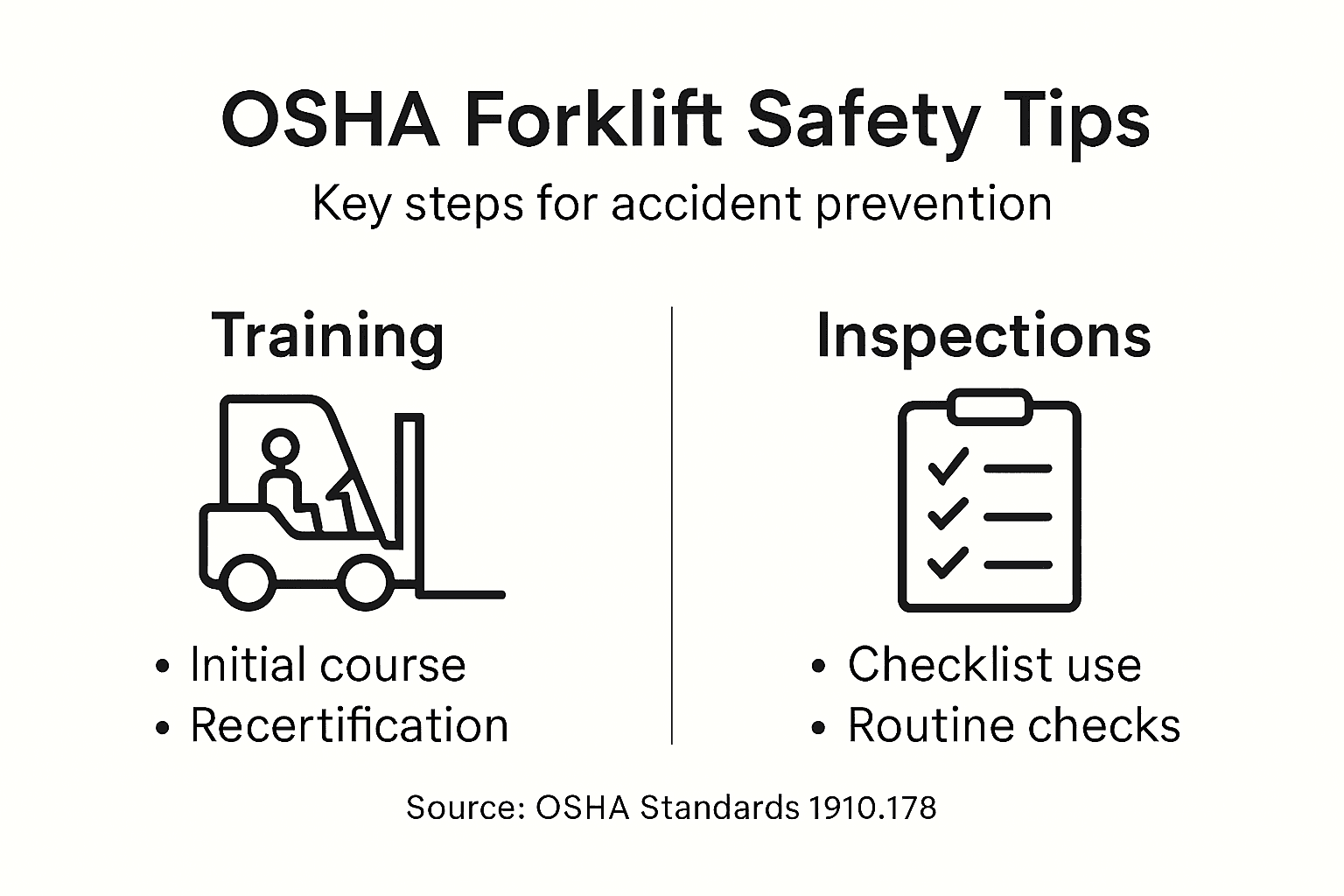
Pro tip: Develop a comprehensive safety checklist that covers all OSHA training and inspection requirements, and conduct monthly internal audits to ensure ongoing compliance and worker safety.
Forklift training and certification systems are critical for ensuring workplace safety and operational efficiency. Comprehensive training protocols represent the foundation of preventing workplace accidents and maintaining regulatory compliance.
A robust forklift training and certification system should include:
The initial training phase is crucial and must cover multiple critical components. Trainees need comprehensive understanding of vehicle mechanics, operational guidelines, safety protocols, and potential workplace hazards. This theoretical foundation ensures operators comprehend the complexities of forklift operation beyond basic mechanical skills.
Practical training goes beyond classroom learning, requiring direct supervised operation in simulated and actual workplace environments. Instructors must assess each operator’s ability to navigate complex scenarios, handle different load types, and demonstrate precise vehicle control. Skill evaluation involves observing operators’ decision-making processes, spatial awareness, and adherence to safety protocols.
Effective certification requires both theoretical knowledge and demonstrated practical competence in real-world operational conditions.
Recertification and ongoing training are equally important. Most safety experts recommend comprehensive skill reassessment every three years or immediately following any significant incident. These periodic evaluations help identify potential skill degradation, introduce updated safety technologies, and reinforce critical operational standards.
Pro tip: Develop a digital tracking system for individual operator training records to ensure timely recertification and maintain comprehensive documentation of skills progression.
Effective workplace design represents a critical strategy in preventing forklift-related accidents. Comprehensive safety management approaches focus on creating environments that minimize potential collision risks and enhance operational safety.
Key elements of strategic workplace design include:
Traffic control methods are essential for managing the complex interactions between forklifts and other workplace movement. This involves creating systematic approaches that separate pedestrian and vehicle traffic, establish clear right-of-way protocols, and implement visual communication strategies that enhance spatial awareness and reduce potential collision risks.
Engineering controls play a crucial role in workplace safety design. This includes installing physical barriers, creating raised pedestrian walkways, implementing one-way traffic systems, and using technological solutions like proximity sensors and automated warning systems. These interventions create structured environments that naturally guide safe movement and reduce potential accident scenarios.
Effective workplace design transforms safety from a reactive process to a proactive, integrated system of accident prevention.
Administrative controls complement physical design strategies by establishing clear operational protocols. These include developing comprehensive traffic management plans, implementing mandatory safety training, creating strict speed regulations, and establishing clear communication protocols for shared workspace interactions.
This reference table outlines how workplace design features enhance operational safety:
| Workplace Design Feature | Key Safety Benefit | Example Implementation |
|---|---|---|
| Pedestrian walkways | Prevents vehicle-people collisions | Painted floor lines |
| Lighting enhancements | Improves visibility, reduces blind spots | LED overhead lights |
| Speed limit signage | Controls forklift movement speeds | Clearly posted signs |
| Strategic barriers | Separates traffic zones, limits access | Safety railings or bollards |
Pro tip: Conduct a quarterly workplace traffic flow audit to identify and immediately address potential design vulnerabilities that could compromise forklift operational safety.
Forklift operations present complex legal and operational challenges that can result in significant financial and safety consequences. Common OSHA violations in forklift operations highlight the critical importance of understanding potential mistakes and their associated liability risks.
The most prevalent mistakes that increase organizational liability include:
Uncertified operators represent one of the most significant liability risks for organizations. When businesses allow individuals without proper training and certification to operate forklifts, they expose themselves to potential lawsuits, workers’ compensation claims, and substantial OSHA penalties. These risks extend beyond immediate financial implications and can severely damage an organization’s reputation and operational credibility.
Load handling mistakes frequently contribute to accident risks and potential legal challenges. Improper techniques such as overloading, unbalanced loads, or using inappropriate attachments can lead to catastrophic equipment failures, property damage, and serious worker injuries. Each of these incidents creates potential legal vulnerabilities that can result in significant financial and regulatory consequences.
Proactive safety management is far less expensive than defending against workplace accident litigation.
Maintenance-related oversights create another critical area of liability exposure. Failing to conduct regular equipment inspections, ignoring manufacturer-recommended maintenance schedules, and neglecting to document repair and service records can create substantial legal risks. These lapses can directly contribute to equipment failures and workplace accidents.
Pro tip: Implement a comprehensive digital documentation system that tracks operator certifications, equipment maintenance records, and safety training to create a defensible record of your organization’s commitment to workplace safety.
Forklift accidents demand focused solutions that meet OSHA standards and protect your team. This article highlights critical challenges like operator error, inadequate training, and equipment maintenance lapses that put workers at risk every day. If your goal is to reduce tip-overs, collisions, and load-related incidents by developing a comprehensive safety culture then targeted training is essential.
Gain confidence through OSHA-compliant certification programs designed to address these exact pain points including practical operator skills, regular safety assessments, and proper maintenance techniques. Our expertise spans over 20 years, emphasizing safety, compliance, and operational efficiency to help you foster safer work environments.
Explore our Forklift Safety Archives to deepen your knowledge and get actionable insights.
Take control of your forklift safety strategy today. Visit Forkliftacademy.com for flexible online and onsite training options that empower your team with essential skills and certifications. Discover how our Forklift Certification Archives can transform your workplace safety. Don’t wait until accidents happen secure your compliance and protect your workforce now.
The primary strategies include comprehensive operator training, regular equipment maintenance checks, adherence to manufacturer operating instructions, implementation of workplace safety protocols, use of personal protective equipment (PPE), and conducting routine risk assessments.
Forklift operators should receive training initially and undergo recertification every three years or immediately following any significant incident to ensure continued competence and safety awareness.
The most common types of forklift accidents include tip-over accidents, collisions with pedestrians or stationary objects, falls from elevated platforms, load-related incidents, struck-by accidents, and pinning or crushing accidents.
OSHA requires that employers develop structured training programs that include both theoretical and practical instruction, conduct periodic performance evaluations, and ensure that all operators are certified for the specific types of industrial trucks they will operate.




 Optimized by Seraphinite Accelerator