 Skip to content
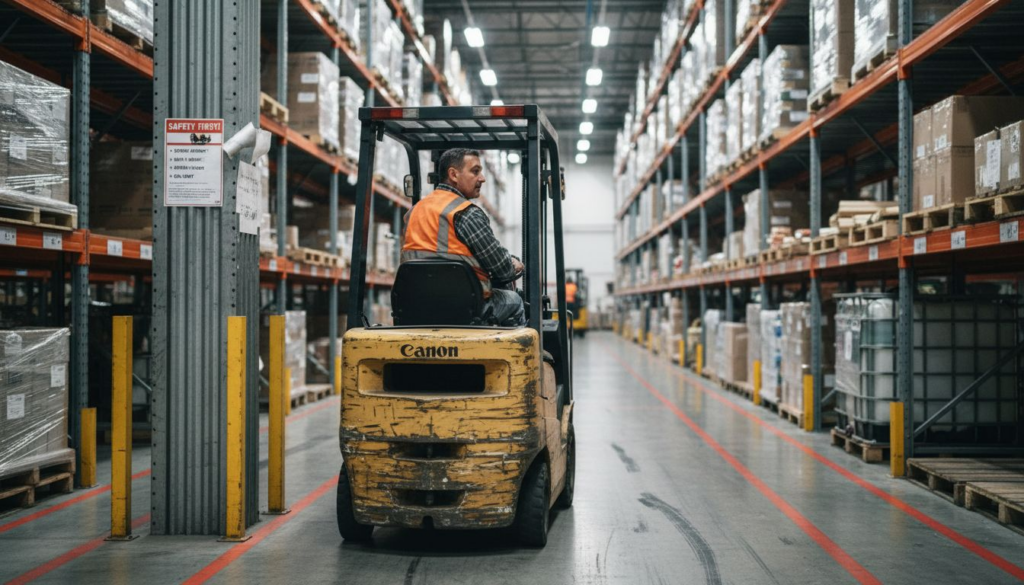

Forklift accidents result in over one hundred deaths and thousands of injuries every year within American warehouses, costing millions in claims and lost productivity. For warehouse safety managers, even one incident can threaten both worker well-being and OSHA compliance. This clear overview breaks down proven strategies to help American teams identify key risks, address operator training, and strengthen accident prevention protocols that truly protect your workplace.
| Point | Details |
|---|---|
| Accident Prevention Requires Comprehensive Strategies | Implementing rigorous operator training, regular equipment inspections, and clear workplace designs is essential to reduce forklift accidents. |
| Understand Accident Types and Causes | Recognize key accident types like tip-overs and pedestrian strikes, and address their primary causes to enhance safety measures. |
| Follow OSHA Standards for Safety | Compliance with OSHA regulations for operator certification and equipment maintenance is crucial for minimizing workplace hazards and avoiding legal liabilities. |
| Prioritize Operator Training and Maintenance | Comprehensive training and systematic maintenance practices significantly impact overall safety, driving down accident rates and improving operational efficiency. |
Forklift accidents represent a significant workplace safety challenge, causing hundreds of injuries and fatalities annually across American warehouses and industrial settings. Understanding the core fundamentals of accident prevention is critical for protecting workers and maintaining regulatory compliance. Comprehensive safety strategies require a multifaceted approach that addresses equipment, operator training, and workplace design.
The primary causes of forklift accidents typically fall into three critical categories: operator error, equipment malfunction, and insufficient workplace safety protocols. Operator errors often stem from inadequate training, fatigue, or lack of situational awareness. Equipment issues can include mechanical failures, poor maintenance, or using forklifts outside their designed specifications. Workplace design problems might involve congested spaces, inadequate pedestrian zones, or poorly marked traffic pathways.
Effective accident prevention demands a holistic strategy that integrates multiple safety components. This includes rigorous operator training programs, regular equipment inspections, clear workplace markings, implementation of speed limits, and creating dedicated pedestrian zones. Operators must understand load handling techniques, maintain constant awareness of their surroundings, and follow strict safety protocols. Visual communication tools like floor markings, warning signs, and designated traffic lanes can significantly reduce collision risks.
Pro tip: Conduct daily pre-shift equipment inspections and maintain a safety log to track potential mechanical issues before they become dangerous operational risks.
Forklift accidents in warehouses represent complex and potentially life-threatening scenarios that demand comprehensive understanding and proactive prevention. Global safety research reveals four primary accident categories that warehouse managers must recognize and mitigate: tip-overs, pedestrian strikes, falling loads, and collisions with stationary objects.
Tip-Over Accidents are among the most dangerous forklift incidents. These occur when operators navigate uneven surfaces, take sharp turns at high speeds, or improperly load materials that compromise the vehicle’s center of gravity. Factors like unbalanced loads, driving on inclines, or operating on unstable ground can quickly transform a routine task into a potentially fatal scenario. Tip-overs can result in serious operator injuries, equipment damage, and potential crush injuries.
Pedestrian strikes represent another critical accident type, where forklifts inadvertently contact warehouse workers. These incidents often happen in congested spaces with limited visibility, blind corners, or inadequate safety markings. Common scenarios include backup accidents, crossway interactions, and situations where pedestrians unexpectedly enter a forklift’s operational zone. The consequences can range from minor injuries to fatal accidents, underscoring the importance of clear traffic management and strict separation protocols.

Pro tip: Implement a comprehensive zone marking system with color-coded floor indicators to clearly delineate forklift paths and pedestrian walkways, reducing the risk of unexpected human-vehicle interactions.
Here’s a comparison of major forklift accident types and their key risk factors:
| Accident Type | Primary Causes | Potential Consequences |
|---|---|---|
| Tip-Over | Unbalanced loads, sharp turns, inclines | Equipment damage, serious injury |
| Pedestrian Strike | Poor visibility, congested spaces | Minor to fatal injuries |
| Falling Load | Improper securing, overloading | Material loss, operator harm |
| Collision (Stationary Object) | Distracted driving, unclear paths | Facility or forklift damage |
Forklift safety in American workplaces is governed by precise OSHA regulatory standards that establish comprehensive legal requirements for operator safety, equipment maintenance, and workplace protocols. These standards, codified under 29 CFR 1910.178, represent a critical framework designed to minimize workplace accidents and protect industrial workers from potential hazards associated with powered industrial trucks.
Operator Certification and Training stand as the cornerstone of OSHA’s forklift safety regulations. Employers must ensure that every forklift operator completes a structured training program that includes both theoretical instruction and practical evaluation. This mandatory certification process requires operators to demonstrate competence in vehicle operation, understand equipment limitations, perform pre-shift inspections, and recognize potential workplace hazards. Importantly, operators must be at least 18 years old and must be recertified every three years or after any significant incident that raises performance concerns.
The legal standards also impose strict requirements on employers regarding equipment maintenance, workplace design, and operational protocols. This includes mandating regular equipment inspections, establishing clear traffic patterns, implementing pedestrian safety zones, and maintaining detailed documentation of training and maintenance records. Violations of these standards can result in significant financial penalties, potential legal liabilities, and increased workplace risk. Employers must proactively develop comprehensive safety programs that not only meet but exceed minimum regulatory requirements.
Pro tip: Create a digital tracking system for forklift operator certifications and equipment maintenance logs to ensure consistent compliance and easy documentation during OSHA inspections.
This summary highlights core OSHA forklift safety requirements and their business impact:
| OSHA Requirement | Business Impact | Compliance Frequency |
|---|---|---|
| Operator Certification | Lower accident rates, legal protection | Every 3 years, or as needed |
| Regular Equipment Inspections | Fewer breakdowns, safer operations | Daily and scheduled checks |
| Workplace Traffic Controls | Reduced accident risk, smoother workflow | Continuous |
| Training Documentation | Readiness for audits, legal compliance | Ongoing |
Forklift safety hinges on a comprehensive approach that integrates rigorous operator training strategies and systematic equipment maintenance across workplace environments. This holistic methodology requires more than simple compliance—it demands a proactive culture of safety that addresses both human performance and mechanical reliability.
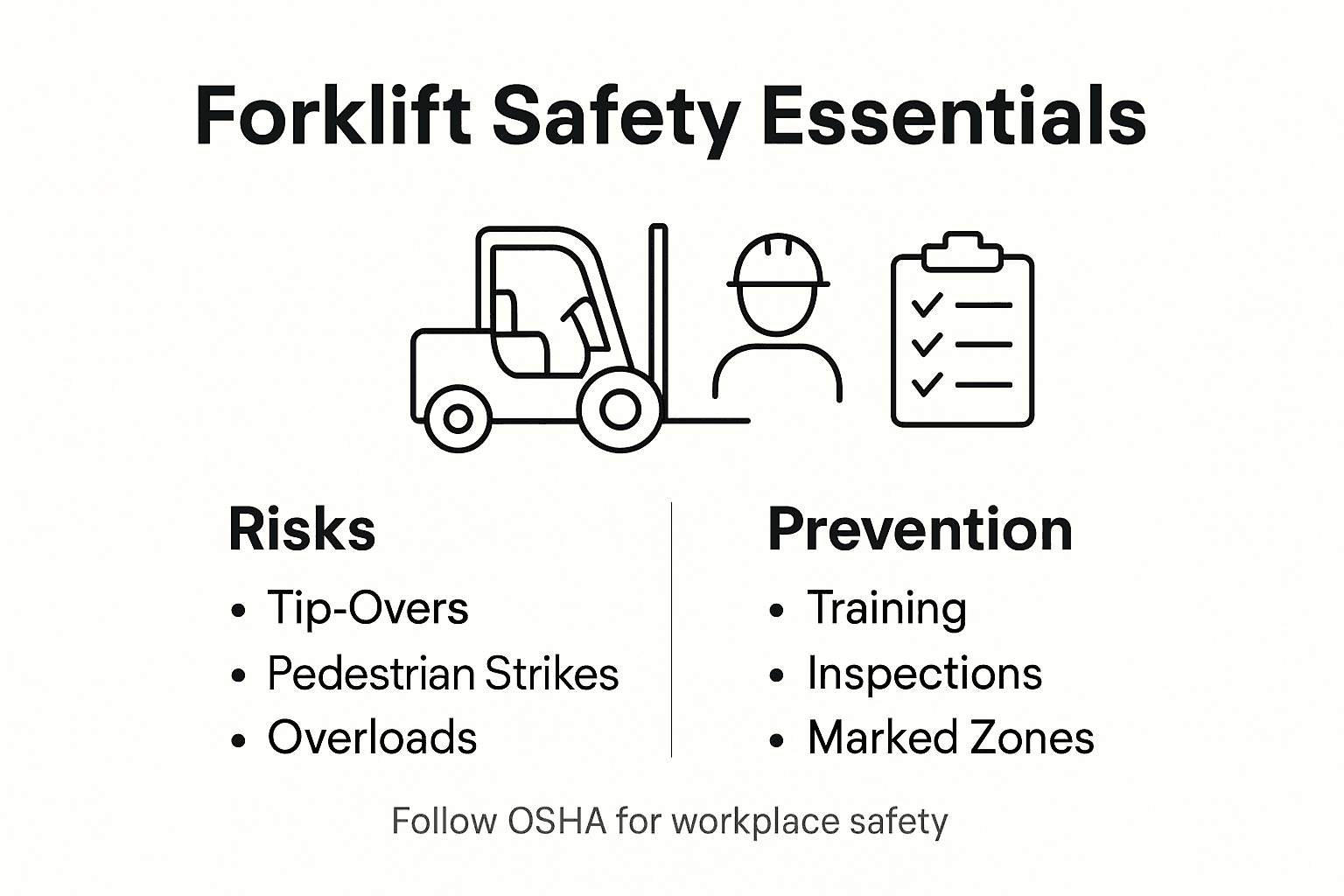
Operator Training Fundamentals must go beyond basic instruction, focusing on scenario-based learning that prepares workers for real-world challenges. Effective training programs should include detailed classroom instruction, hands-on practical assessments, and periodic skill evaluations that test operators’ ability to navigate complex warehouse situations. Critical training elements include load management techniques, spatial awareness, equipment limitations, emergency response protocols, and understanding the unique dynamics of different forklift models and workplace configurations.
Equipment maintenance represents the second critical pillar of forklift safety. Regular, systematic inspections and preventive maintenance can dramatically reduce unexpected mechanical failures that compromise workplace safety. Operators should be trained to conduct comprehensive daily pre-shift inspections, documenting any potential issues, unusual equipment behaviors, or signs of wear. These inspections should cover critical components including hydraulic systems, tire conditions, brake functionality, mast operations, and electrical systems. Maintenance protocols must follow manufacturer guidelines and incorporate both routine scheduled services and responsive repair mechanisms that address emerging equipment concerns.
Pro tip: Develop a digital maintenance tracking system that links operator observations with maintenance records, creating a transparent and proactive equipment management workflow.
Warehouse forklift operations involve complex safety challenges that demand meticulous attention and proactive risk management. Detailed research on forklift hazards reveals that most workplace accidents stem from preventable human errors and systemic operational shortcomings rather than equipment failures. Understanding these risks is the first critical step toward creating a safer industrial environment.
Visibility and Spatial Awareness represent fundamental challenges in forklift operations. Operators frequently encounter blind spots, restricted sightlines, and complex spatial environments that increase accident potential. Common mistakes include inadequate scanning techniques, failure to use spotter personnel in congested areas, and misunderstanding vehicle turning dynamics. Operators must develop comprehensive situational awareness, constantly monitoring their surroundings, anticipating potential obstacles, and understanding the precise movement characteristics of their specific forklift model.
Load management and equipment interaction constitute another significant hazard category. Improper load securing, exceeding weight capacities, and unstable material positioning can transform routine tasks into potentially catastrophic scenarios. Warehouse managers must implement strict protocols that mandate precise load calculation, proper weight distribution, and comprehensive operator training on load dynamics. Critical prevention strategies include establishing clear loading zones, using standardized securing methods, and conducting regular equipment and operator competency assessments.
Pro tip: Implement a mandatory pre-shift equipment and load assessment checklist that requires operators to physically verify load stability, equipment condition, and workspace clearance before initiating any material handling task.
Forklift accidents caused by operator error, equipment issues, and unsafe workplace designs demand more than just awareness. They require proven training solutions that ensure every forklift operator is fully prepared and compliant with OSHA standards. If protecting workers and avoiding costly penalties are top priorities, now is the time to act. Our Forklift Safety Archives offer detailed training resources that address critical topics like accident prevention fundamentals, operator certification, and hazard identification.
Take control of your workplace safety today by exploring tailored training programs at Forkliftacademy.com. With over 20 years of experience delivering OSHA-compliant forklift and scissor lift certifications through online and onsite formats, we make compliance simple and effective. Whether you need individual certifications or full business solutions including onsite training and train-the-trainer kits, your path to safer operations starts here. Visit our Forklift Certification Archives now and empower your team with the knowledge they need to work safely and confidently.
The primary causes of forklift accidents typically include operator error, equipment malfunction, and insufficient workplace safety protocols. Operator errors can arise from inadequate training, fatigue, or lack of situational awareness, while equipment issues involve mechanical failures or poor maintenance. Workplace design problems might include congested spaces and poorly marked traffic pathways.
Improving safety during forklift operations involves implementing comprehensive training programs, conducting regular inspections of equipment, establishing clear workplace markings and traffic patterns, and creating dedicated pedestrian zones to enhance visibility and reduce collision risks.
OSHA requires that every forklift operator completes a structured training program that includes both theoretical instruction and practical evaluation. Operators must be at least 18 years old and complete recertification every three years or after any significant incident. Employers must also maintain detailed records of training and equipment inspections.
A forklift operator training program should include scenario-based learning, hands-on practical assessments, and periodic skill evaluations. Key training elements should cover load management techniques, spatial awareness, emergency response protocols, and a thorough understanding of different forklift models and their operational limitations.




 Optimized by Seraphinite Accelerator