

Finding the right approach to forklift safety is a daily challenge for any American warehouse manager responsible for both equipment and team. Powered industrial trucks handle much more than just moving pallets—they represent sophisticated machines with operational, safety, and training requirements set by OSHA. Understanding the key characteristics of powered industrial trucks and their regulatory classifications will help you build a safer, more compliant workplace for every operator.
| Point | Details |
|---|---|
| Powered Industrial Trucks (PITs) | PITs are essential tools for material handling in industrial settings, categorized by design and power sources. |
| OSHA Classifications | OSHA classifies PITs into seven classes based on their specific operational characteristics and intended environments. |
| Employer Responsibilities | Employers are required to provide rigorous training, maintain safety protocols, and keep detailed records to comply with OSHA standards. |
| Training Necessity | Comprehensive training and certification are mandatory for all operators to prevent workplace accidents and ensure safety compliance. |
Powered industrial trucks (PITs) are motorized vehicles designed for material handling in industrial environments. Defined by OSHA, these vehicles are critical tools for moving, lifting, and transporting materials across warehouses, factories, and construction sites.
These specialized vehicles come in multiple configurations, each engineered for specific workplace needs:
Powered industrial trucks are not simply generic transportation devices. They represent sophisticated machinery engineered to enhance workplace productivity while maintaining strict safety standards. Key characteristics include:
Operational classifications matter significantly in understanding these vehicles. OSHA’s comprehensive guidelines categorize powered industrial trucks based on their power source, operational characteristics, and intended workplace environment.
Proper training and certification are legally required for all powered industrial truck operators.
Pro tip: Always verify specific operational requirements and safety protocols for the exact type of powered industrial truck in your workplace.
OSHA has developed a comprehensive classification system for powered industrial trucks to ensure workplace safety and standardize operational guidelines. Industrial truck classifications are based on design, power source, and intended operational environment.
The primary classification categories include:
Each classification represents a unique set of operational characteristics and safety requirements. Powered industrial truck regulations are designed to address the specific hazards associated with different truck types and industrial environments.
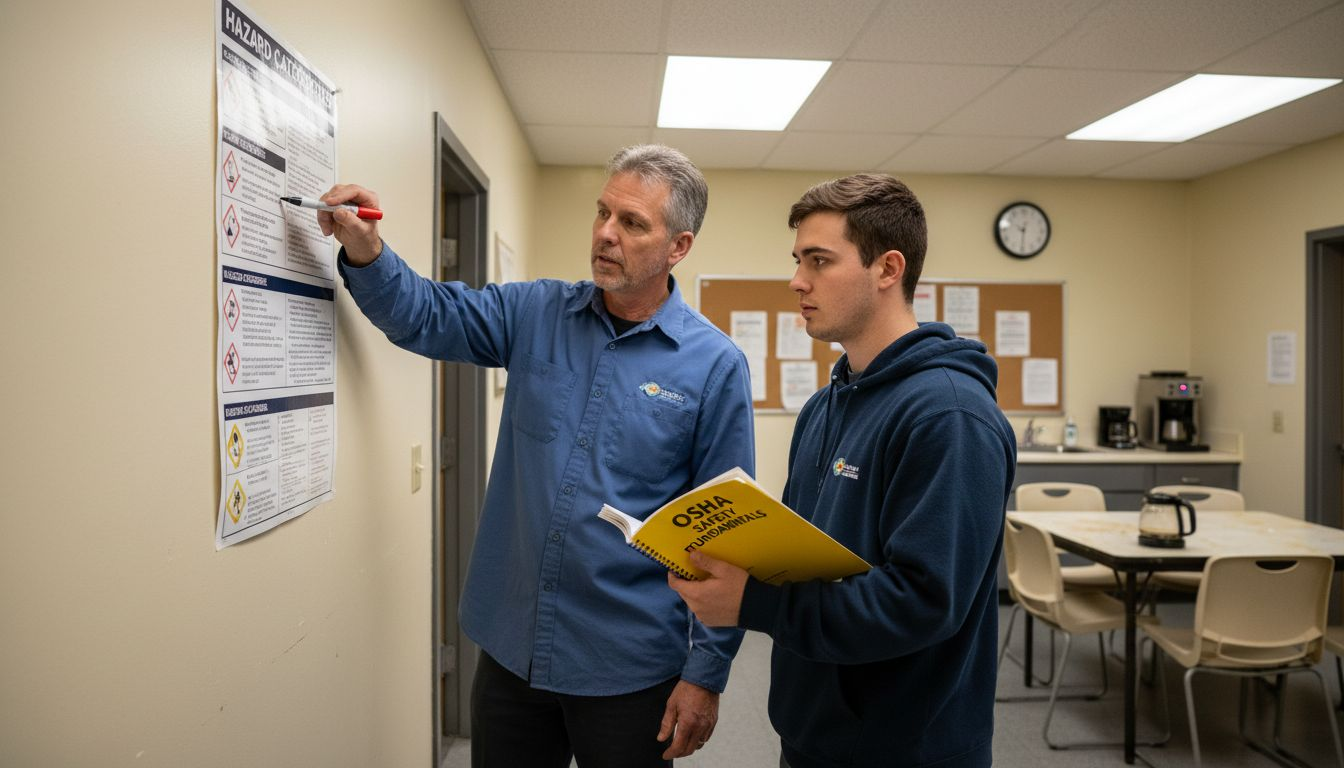
Here’s a quick reference guide to OSHA powered industrial truck classes and their ideal use environments:
| OSHA Class | Power Source Type | Typical Use Environment |
|---|---|---|
| I | Electric motor | General warehouses |
| II | Electric, narrow aisle | High-density storage areas |
| III | Electric hand/hand-rider | Loading docks, short transport |
| IV | Internal combustion, solid tires | Indoor floors, smooth surfaces |
| V | Internal combustion, pneumatic tires | Outdoor yards, rough terrain |
| VI | Electric/combustion tractors | Towing, assembly lines |
| VII | Internal combustion, rough terrain | Construction sites, lumber yards |
Key differentiating factors for these classifications include:
Understanding these classifications is crucial for selecting the right equipment and ensuring workplace safety.
Pro tip: Consult your workplace safety manager to determine the specific powered industrial truck classification most appropriate for your operational needs.
Powered industrial trucks are complex machines with sophisticated design elements crucial for safe and efficient material handling. Critical operational features encompass multiple engineering and safety components that determine their performance and workplace functionality.
Key structural components include:
Operational principles demand precise understanding of several critical factors:
Safety equipment specifications are integral to truck design, with essential protective elements such as:
Compare some critical safety features and their risk mitigation impact:
| Safety Feature | Workplace Risk Addressed | Operator Benefit |
|---|---|---|
| Overhead guard | Falling objects | Enhanced head protection |
| Load backrest extension | Shifting loads | Prevents tip-over |
| Emergency shut-off | Equipment failure | Quick hazard response |
| Warning system | Pedestrian incidents | Improves awareness |
Understanding the physics of truck operation is critical to minimizing workplace risk and ensuring effective material handling.
Fundamental operational guidelines require operators to:
Pro tip: Always complete a comprehensive equipment check before initiating any material handling task to ensure optimal safety and performance.
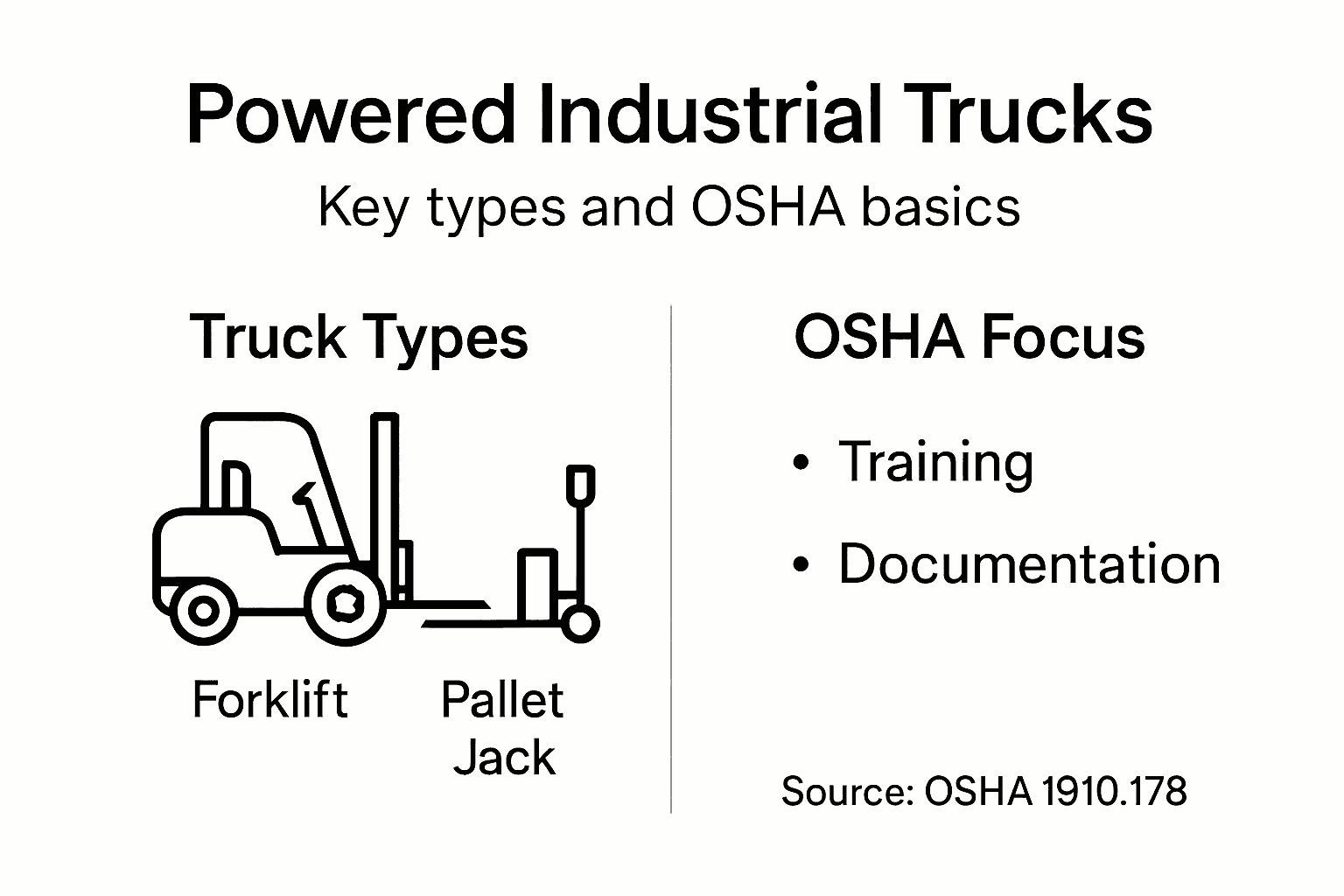
OSHA regulatory standards establish comprehensive requirements for powered industrial truck management, placing significant responsibilities on employers to ensure workplace safety and operational compliance.
Key employer responsibilities include:
The training requirements are extensive and multifaceted:
Mandatory training components mandate that employers:
Employers bear direct legal responsibility for ensuring powered industrial truck safety and operator competence.
Specific regulatory compliance requirements from OSHA regulations include:
Pro tip: Develop a comprehensive training and documentation system that exceeds minimum OSHA requirements to demonstrate proactive workplace safety commitment.
Powered industrial truck training requires far more comprehensive preparation than many employers realize. Misconceptions about operator qualifications and safety protocols can lead to dangerous workplace scenarios.
Top misconceptions about powered industrial trucks include:
Critical mistakes that frequently occur in workplace settings:
Dangerous operational errors warehouse managers must prevent:
Comprehensive training and strict adherence to OSHA standards are the only ways to prevent potentially fatal workplace accidents.
Common OSHA violations typically stem from:
Pro tip: Implement a robust documentation system that tracks every aspect of operator training, certification, and periodic performance evaluations to demonstrate proactive safety management.
Understanding the complexities of powered industrial trucks and adhering to OSHA regulations is essential to keeping your workplace safe and productive. If you are challenged with ensuring proper operator certification, maintaining consistent safety standards, or navigating the detailed classifications of industrial trucks this is your opportunity to take control of your training needs. Our offerings focus on critical aspects like OSHA compliance, operator certification, and safety protocols highlighted in the article.
Start improving your workplace safety and compliance by exploring our comprehensive Forklift License Archives – Top Osha Forklift Certification for tailored certification programs and check out expert advice on Forklift Safety Archives – Top Osha Forklift Certification to deepen your knowledge of essential safety practices. Whether you need individual courses or company-wide solutions, visit Forkliftacademy.com now to take the first step in achieving OSHA standards with trusted, industry-leading training designed to protect your team and enhance operational efficiency.
Powered industrial trucks (PITs) are motorized vehicles specifically designed for material handling in industrial environments, such as warehouses and factories, allowing for the movement, lifting, and transportation of heavy materials.
OSHA classifies powered industrial trucks into seven classes based on design, power source, and intended use environment, including electric motor rider trucks, internal combustion engine trucks, and rough terrain forklifts.
Critical safety features for powered industrial trucks include overhead guards, load backrest extensions, emergency shut-off mechanisms, and visibility enhancing features, which all contribute to reducing workplace risks.
Training requirements for powered industrial truck operators include classroom instruction, hands-on practical training, operator evaluation, and periodic performance reassessments to ensure compliance with OSHA safety standards.