
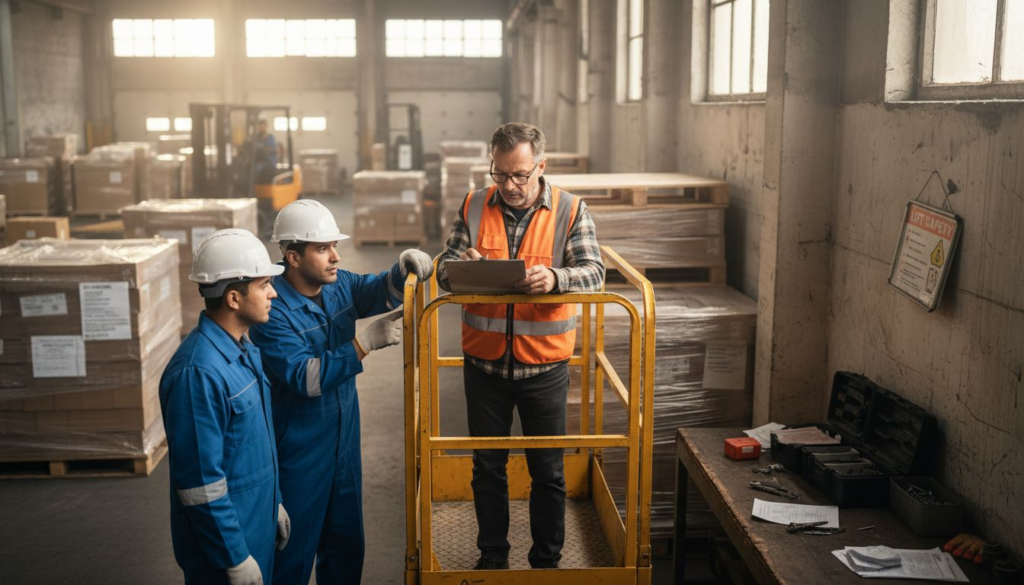

Keeping your warehouse safe and efficient can feel overwhelming when scissor lifts are part of the daily workflow. One missed safety requirement or overlooked training detail can put your entire operation at risk—and leave you exposed to regulatory fines and workplace accidents. The solution is practical: certification for managers directly responsible for scissor lift operations. Certified managers gain the tools to reduce hazards, protect workers, and keep your facility running smoothly. Get ready to discover actionable benefits that go beyond legal compliance. The following list reveals how scissor lift certification transforms compliance, safety, productivity, insurance costs, maintenance routines, and team morale—putting you firmly in control of your warehouse’s safety and success.
| Key Message | Explanation |
|---|---|
| 1. Ensure OSHA Compliance | Certification helps managers understand OSHA regulations, preventing violations and costly fines. Proper training ensures adherence to safety standards in scissor lift operations. |
| 2. Reduce Workplace Accidents | Scissor lift certification teaches essential safety practices that prevent accidents, such as falls and tip-overs, enhancing employee safety at all times. |
| 3. Boost Team Confidence | Trained operators gain confidence, leading to smoother operations and efficient task completion. A confident workforce moves purposefully, reducing delays and enhancing productivity. |
| 4. Lower Insurance Costs | Proper certification can reduce insurance premiums by demonstrating a commitment to safety. Fewer incidents lead to lower claims, saving the company money over time. |
| 5. Support Career Growth | Investing in employee certification signals value and creates opportunities for advancement, improving retention and loyalty within the workforce. |
OSHA regulations require that scissor lift operators receive proper training and certification. Managers who obtain scissor lift certification gain the knowledge to ensure their teams meet these federal safety standards and avoid costly violations.
Scissor lifts fall under specific OSHA regulations. According to federal standards, scissor lifts are classified as mobile supported scaffolds and must comply with strict safety requirements including proper guardrails, regular inspections, and operator training documentation.
Without proper certification, your facility faces real risks:
Certified managers understand exactly what OSHA requires. They can implement safety protocols that actually work in your warehouse environment, not just check boxes on compliance forms.
Scissor lift certification transforms compliance from a burden into a practical system that protects both your workers and your bottom line.
Proper documentation becomes automatic when managers are certified. You’ll have clear records showing that operators received training covering manufacturer instructions, hazard awareness, and operational procedures. This documentation protects you if OSHA ever questions your safety practices.
The certification process covers the specific safety standards your facility must maintain. Managers learn to conduct proper inspections, identify hazard conditions, and ensure equipment remains in safe working order. This knowledge prevents accidents before they happen.
Your certified manager becomes your compliance champion. They can train new operators consistently, conduct routine safety meetings, and catch compliance gaps before inspectors do. One manager prevents problems across your entire operation.
Pro tip: Keep all certification records and training documentation organized in one digital location so you can quickly prove OSHA compliance during inspections and maintain the required reevaluation schedule.
Scissor lift accidents are preventable. When managers understand the hazards and enforce proper safety practices, your team goes home safe every day. Scissor lift certification gives you the knowledge to eliminate these risks before they cause injuries.
Scissor lifts present specific dangers that certification training addresses directly. The main hazards include falls from elevated platforms, tip-overs when loads shift, and contact with overhead power lines. Each of these can be prevented through proper training and equipment enforcement.
Certified managers know exactly what safety measures work. You learn to enforce guardrail use, require operators to stabilize lifts on completely level surfaces, and prohibit moving scissors while workers are elevated. These practices eliminate the most common accident scenarios.
Weather conditions matter more than most managers realize. Wind, rain, and icy surfaces create tip-over risks and reduce visibility. Your certification training covers how to assess weather and make safe operational decisions.
A certified manager becomes your accident prevention expert, catching hazards other supervisors might miss.
Proper load management prevents tip-overs and structural failures. Certification training covers weight distribution, securing loads correctly, and recognizing when equipment reaches capacity limits. These skills directly prevent equipment failure during operations.
Your certified approach saves lives through these specific protections:
Certified managers can quickly train new operators on your facility’s specific conditions. This consistent training prevents accidents caused by operator confusion or incomplete instruction. Your team develops a strong safety culture where accidents become rare.
Emergency procedures become automatic when your manager has proper training. Knowing how to respond to hydraulic failures, power outages, or entrapment situations reduces injury severity when accidents do occur.
Pro tip: Conduct monthly safety briefings with your operators covering one specific hazard at a time, using real examples from your facility to reinforce the importance of the safety rules from your certification training.
Confident operators work faster and safer. When your team knows they have proper training backing their decisions, they move with purpose instead of hesitation. Scissor lift certification creates this confidence throughout your warehouse.
Workers gain real confidence when they understand the equipment. Certification training covers how scissor lifts work, what they can handle, and how to recognize dangerous situations. This knowledge transforms nervous operators into capable professionals.
Hesitation costs time and money. An operator who second-guesses themselves moves slowly, takes unnecessary breaks, and creates bottlenecks in your workflow. Trained operators work smoothly because they trust their skills.
Your certified manager becomes the confidence builder for the entire team. You can answer questions, demonstrate techniques, and reinforce proper practices. This visible expertise spreads confidence throughout your operation.
Confidence eliminates the friction that slows down warehouse operations and creates safety risks.
Productivity increases when safety concerns disappear. Workers stop worrying about whether they are doing things correctly and focus on completing tasks efficiently. Working safely at heights becomes second nature, freeing mental energy for productivity.
Downtime from accidents vanishes when prevention works. A single serious injury disrupts operations for days or weeks while investigations happen and new workers get trained. Prevention keeps your team working consistently.
Proper training reduces these productivity drains:
Your team also experiences less stress when standards are clear. Everyone knows exactly what is expected and how to meet those expectations. This clarity creates a workplace where people want to stay.
Operators appreciate managers who invest in their development. Providing certification shows you care about their skills and safety. This investment improves morale and reduces turnover, saving you training costs.
Pro tip: Recognize and publicly acknowledge operators who maintain the safety standards from their certification training, creating a culture where proper practices become a source of pride for your team.
Insurance companies reward safety. When you demonstrate proper training and certification through documented programs, insurers recognize that your facility operates at lower risk. This translates directly into lower premiums for your business.
Your certification becomes a financial asset. Insurance providers often offer premium discounts when employers show OSHA compliance through proper certification and training documentation. These savings accumulate year after year.
Documentation protects you legally. If an accident occurs, your certified manager’s records prove you took reasonable precautions and trained operators properly. This protection matters enormously in claims or litigation scenarios.
Liability exposure decreases significantly with proper training. When you can demonstrate that your team received comprehensive safety instruction, courts and insurance companies view your operation more favorably. You are protected by showing due diligence.
Certification transforms your company from a liability risk into a safety-conscious operation worthy of insurance rate reductions.
Fewer accidents mean fewer claims. Certified managers prevent incidents through proper enforcement of safety protocols and equipment maintenance. Scissor lift safety features and certifications ensure your equipment operates reliably, which reduces claim frequency and severity.
Claim costs are expensive beyond just the premium increases. Medical treatment, workers compensation, investigations, and lost productivity drain your budget. Prevention is far cheaper than managing incidents.
Your insurance savings compound from multiple factors:
Insurance agents track your safety record closely. A facility with certified managers and zero accidents year after year becomes an attractive client. You negotiate from a position of strength when renewal time comes.
Risk mitigation through certification protects your entire operation. Your company avoids the financial devastation of major incidents while enjoying lower operating costs. This is a win that impacts your bottom line immediately.
Your business also gains reputation value. Clients, partners, and potential employees recognize that your certified operation maintains high safety standards. This reputation opens doors to better business opportunities.
Pro tip: When contacting your insurance agent about your scissor lift certification, provide detailed documentation of all training dates, operator names, and certification completion records to demonstrate your commitment to risk reduction and secure the best possible premium rate.
Maintenance isn’t optional, it is survival. Equipment that breaks down disrupts your entire warehouse operation. Scissor lift certification teaches managers the maintenance practices that keep machines running reliably.
Certified managers understand preventive maintenance. Rather than waiting for equipment to fail, you learn daily inspection routines and follow manufacturer maintenance schedules. This approach catches problems before they become expensive breakdowns.
Daily inspections become automatic with proper training. Your operators check hydraulic fluid levels, inspect guardrails, test platform stability, and look for visible damage before using equipment. These quick checks prevent most mechanical failures.
Manufacturer specifications matter more than most managers realize. Each scissor lift model has specific maintenance intervals and procedures. Your certification teaches you to follow these guidelines exactly, ensuring equipment remains within operational limits.
A well-maintained scissor lift runs smoothly, safely, and predictably, eliminating the chaos of unexpected equipment failures.
Downtime costs far more than maintenance expenses. When equipment breaks, you lose productivity, delay projects, and frustrate your team. Certified managers prevent this through consistent maintenance discipline.
Proper handling extends equipment life significantly. When operators understand how to use equipment correctly, they avoid stress on hydraulic systems, avoid overloading platforms, and prevent mechanical wear. Understanding equipment maintenance importance ensures your investment lasts years longer.
Your certification covers these critical maintenance practices:
Maintenance documentation becomes organized and systematic. You develop a maintenance schedule that tracks when equipment was serviced, what work was completed, and what issues were found. This record protects you legally and prevents repeated failures.
Your team learns to operate within equipment limits. Overloading, rough handling, and improper operation cause mechanical failures that maintenance cannot prevent. Proper operation combined with maintenance creates reliability.
Managers who understand maintenance communicate better with technicians. You know what questions to ask, what problems might occur, and how to describe equipment issues accurately. This speeds repairs and reduces downtime.
Pro tip: Create a simple maintenance checklist for operators to complete before each shift, then review these checklists weekly to identify patterns that indicate developing problems before equipment fails unexpectedly.
Your best employees want to grow. When you invest in scissor lift certification for your team, you signal that you value their development and see them as long-term assets. This commitment builds loyalty that money alone cannot buy.
Certification creates measurable career advancement. Employees gain recognized credentials that enhance their skills and employability. A certified operator becomes more valuable to your company and more marketable in the job market.
Formal training improves morale significantly. Employees feel invested in when their managers provide structured learning opportunities. This sense of being valued increases job satisfaction and reduces the urge to seek employment elsewhere.
Certified employees become your future leaders. Someone who understands scissor lift operations thoroughly can eventually supervise other operators, train new workers, or advance into safety coordinator roles. You build internal talent from the ground up.
Certification transforms ordinary warehouse positions into career-track opportunities that attract and retain quality workers.
Turnover costs your company dearly. Recruiting, hiring, and training replacement workers drains resources and disrupts operations. Retention through career development is far cheaper than constant replacement cycles.
Your facility gains a competitive advantage in hiring. Quality workers prefer employers who invest in their skills. When you offer formal certification credentials, you attract better applicants and keep experienced workers longer.
Employee retention provides these business benefits:
Certified employees take more pride in their work. They understand they have achieved something meaningful, not just completed a job. This pride translates into better quality work and fewer mistakes.
Your company saves money on recruitment advertising and screening when experienced workers stay. Replacements require months to reach the productivity level of experienced employees. Retention keeps productivity steady and high.
Career growth encourages workers to stay long-term. An operator who sees a path to advancement within your company becomes invested in your success. This creates a positive cycle where experience and morale both increase.
Pro tip: After certification, discuss career advancement opportunities with your operators, showing them how additional training or experience can lead to supervisory roles, training positions, or safety leadership within your facility.
Below is a comprehensive table summarizing the key points and benefits discussed about scissor lift certification and its impact in workplace environments.
| Focus Area | Coverage Details | Advantages |
|---|---|---|
| Compliance with OSHA | Training ensures adherence to OSHA standards, including inspection compliance and operator training. | Avoids fines, enhances safety standards, and ensures smooth inspections. |
| Accident Reduction | Identification and mitigation of hazards like falls and tip-overs. | Decreases accident rates, ensures safe operations, and mitigates workplace risks. |
| Team Confidence and Productivity | Training instills operator confidence and knowledge about equipment use. | Boosts efficiency, ensures safety, and reduces operational downtime. |
| Insurance and Liability | Completion of certifications lowers operational risks and supports legal compliance. | Reduces insurance premiums and potential liability disputes. |
| Maintenance Optimization | Certification provides knowledge about equipment inspection and maintenance routines. | Prevents failures, ensures reliability, and extends equipment lifespan. |
| Employee Career Growth | Offers pathways for employee development and valuable credentialing. | Enhances retention, builds morale, and fosters leadership opportunities. |
Managing scissor lifts comes with serious responsibilities that include meeting OSHA regulations, minimizing workplace accidents, and boosting team confidence. If you want to overcome challenges like regulatory fines, accident risks, and equipment downtime, proper certification is essential. It empowers managers to create safer, more efficient workplace environments and protect their team members every day.
Take control now and invest in your team’s future with comprehensive training solutions from Forkliftacademy.com. Explore our Forklift Certification Archives to find OSHA-compliant programs designed to streamline equipment operation, lower liabilities, and enhance employee career growth. Visit Forklift Safety Archives to deepen your knowledge of vital safety protocols. Start securing your workplace safety and compliance today by choosing the training that fits your needs at Forkliftacademy.com.
The main benefits include improved compliance with OSHA regulations, reduced risk of workplace accidents, enhanced team confidence and productivity, lower insurance costs, streamlined equipment operation and maintenance, and support for employee career growth. Invest in certification to create a safer and more efficient work environment.
Scissor lift certification equips managers with the knowledge to meet OSHA regulations, which include training and documentation requirements. Ensure your team is properly trained and maintain organized records to avoid regulatory fines and potential work stoppages.
Yes, scissor lift certification provides managers with the training to enforce necessary safety measures, significantly reducing the likelihood of accidents. Implement safety protocols learned during certification to prevent common hazards, ensuring a safer workplace.
Scissor lift certification builds operator confidence, leading to faster and safer work completion. Focus on consistent training to eliminate hesitation and boost workflow efficiency, resulting in improved overall productivity in your warehouse.
Certification often leads to lower insurance premiums and reduced accident-related costs. Maintain records of your certification efforts to negotiate better rates with your insurance provider and save money in the long run.
Certification shows employees that you value their development, increasing job satisfaction and loyalty. Discuss post-certification career advancement opportunities to encourage employees to stay long-term and reduce costly turnover.